Family Card Game Night: Rotation Plans for Mixed Ages8 min read
A family card game night sounds simple until the table seats a five-year-old, a competitive teenager, and a grandparent who plays to win. One long game of anything leaves somebody bored, somebody confused, and somebody reaching for their phone. A rotation plan fixes all three problems at once.
The idea is to treat the evening like a playlist instead of a single album. Short games in a deliberate order keep the energy up, give each age group a slot where they shine, and bring the night to a natural close. Below is the 90-minute rotation that works for most mixed tables, plus the habits that make it run smoothly.
One deck gets handled a lot in 90 minutes, and a worn, sticky deck slows every deal. If your group plays weekly, the options in our roundup of the best card shufflers keep the cards moving between games and spare your favourite deck.
Family Card Game Night at a Glance: The 90-Minute Rotation
Here is the sample plan. Times are guides, not alarms: the point is the order, moving from the simplest game to the deepest one while energy and attention are still high.
| Time | Game | Ages | Why It Earns Its Slot |
|---|---|---|---|
| 0:00 | Go Fish or a matching game | 4+ | Everyone warms up, and the youngest player leads the first round |
| 0:20 | Crazy Eights | 6+ | A fast shedding game the whole table already knows |
| 0:45 | Rummy or Golf | 8+ | The strategy slot for older kids and adults, with younger kids teamed up |
| 1:10 | A pairs side game, or a final round of the night’s favourite | All ages | Ends the evening on the game everyone asks for again |
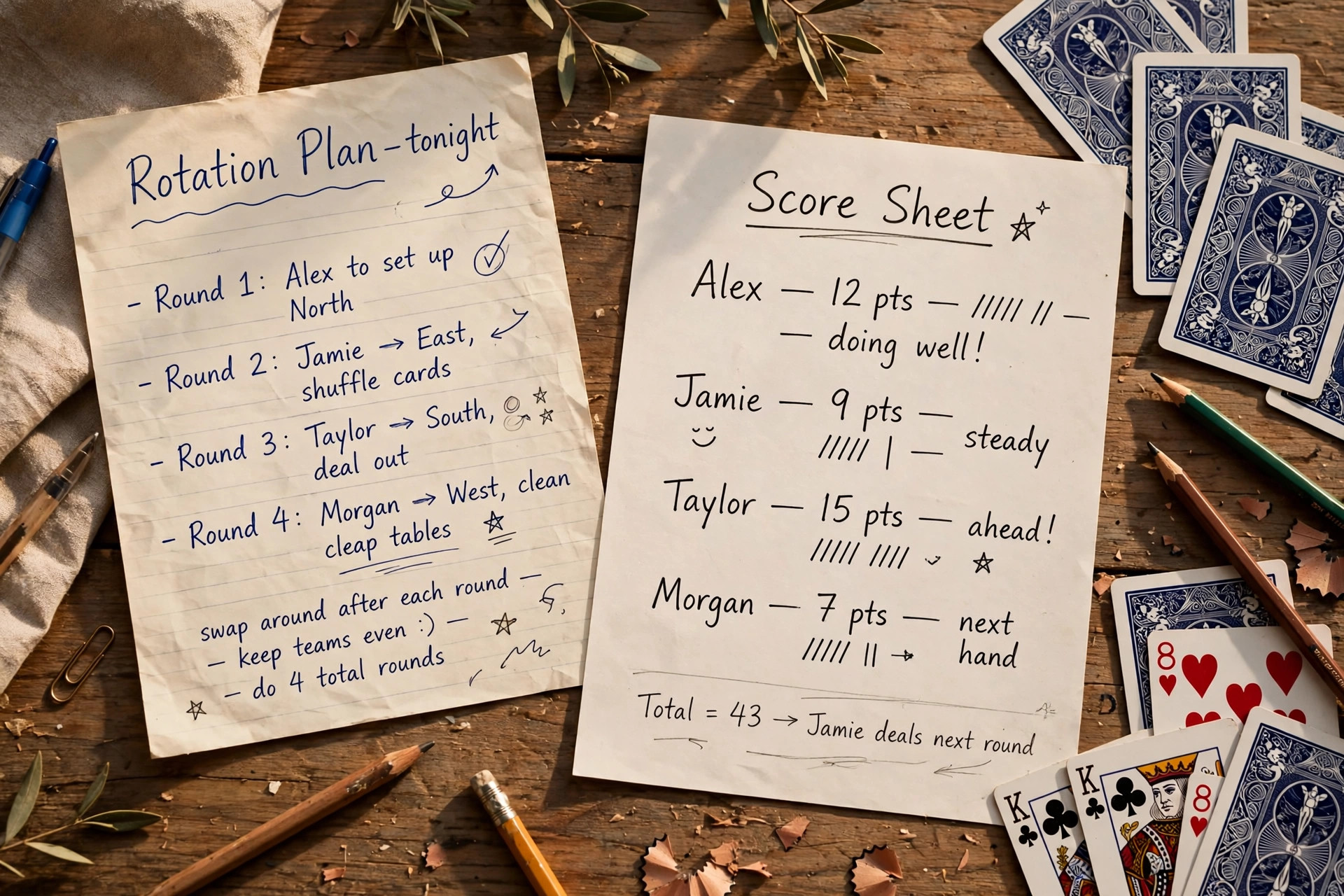
Notice what the order does. The opener asks almost nothing of anyone, so latecomers and shy kids settle in. The middle game is pure pace. The strategy slot lands when the youngest players are either teamed with an adult or happily drawing and sorting cards at the edge of the action. Then the night closes with a favourite, which is the part everyone remembers.
Why a Rotation Beats One Long Game
A single 90-minute game punishes a mixed table in predictable ways. Young children fade after about twenty minutes of one game. Teenagers disengage if the game never gets deeper. Adults who lose early face a long wait with nothing to do.
Short games reset all of that. Every new deal is a fresh start, so a bad game costs fifteen minutes instead of the whole evening. Rotation also builds in natural breaks for snacks, drinks, and bathroom trips between games, which matters more to a successful family card game night than any rulebook detail.
There is a teaching benefit too. Kids absorb one new game at a time, in rising order of difficulty, instead of facing a wall of rules at 7 p.m. By the fourth week, the opener your five-year-old needed help with is the game she insists on dealing herself.
Teaming Younger Kids With Adults
The single best trick for mixed ages card games is the team seat. Pair a young child with an adult and let them play as one player. The child holds the cards, plays them, and makes the final call. The adult’s job is to whisper options, not orders: “You could play the red seven, or save it.” This works because the child stays in charge of real decisions. She learns what a good play looks like from inside the game, and she feels the wins as her own. The adult, meanwhile, gets a genuinely interesting role instead of a dumbed-down one.
Rotate the pairings each week so kids team with different adults, and graduate players out of teams as soon as they ask. In the strategy slot, teams also balance the table: a grandparent-and-eight-year-old team is a fair match for a solo teenager.

One ground rule keeps teams fun: the adult never reaches across and plays the child’s card. Advice is allowed, takeovers are not. Tables that hold that line find kids ask to fly solo sooner, which is the whole point.
Keep Rounds Short: The Clock Is Your Friend
Mixed ages games survive on short rounds. Aim for games that finish a hand in five to fifteen minutes, and prefer scoring formats that can stop at any point: play Rummy to 100 instead of 500, or play a set number of Golf holes, since Golf is scored like its namesake, lowest total wins.
Agree the “last round” call out loud. A simple “two more hands after this one” prevents the classic ending where a tired child melts down mid-game because nobody warned her the night was nearly over. Ending while everyone still wants more is what gets the family back to the table next week.
Short rounds also protect the adults. A strategy game that overstays its welcome is the fastest way to turn a weekly habit into a monthly one.
The Winner-Rotation Rule: Last Week’s Winner Picks the Opener
Every rotation needs one tradition, and this is the one to steal: whoever wins the final game of the night chooses next week’s opening game. It gives the last game real stakes without money or prizes, and it spreads power around the table, because openers are the games the youngest players win most often.
Keep a running score sheet across the season. Note the date, the games played, and who won the decider. Kids who could not care less about tonight’s score will fight hard over a page that shows them leading Grandma by two wins since October. Rotate the dealer too, starting with the youngest player and moving up. Dealing is a small honour, it teaches shuffling and counting, and it stops one confident adult from running every game like a casino pit boss.
Adjusting the Rotation for Your Table
Treat the sample plan as a frame, not a script. If your table is all adults, drop the opener and give the strategy slot a second game. If your table is mostly under eight, flip the order: two light games while attention is fresh, one team game, and finish with the matching game they love.
Crazy Eights anchors the middle slot in most homes because it scales from three players to eight without changing character. Once the table has the base game down, our guide to crazy eights variations adds power cards and stacking rules that older kids especially enjoy.
A season of weekly rotations is hard on a single deck, and nothing kills momentum like a card stuck to the table. The automatic models in our guide to the best card shufflers earn their shelf space once your family card game night becomes a standing date: two decks in, a clean shuffle out, and the next game starts while the snacks are still warm.
Frequently Asked Questions
How long should a family card game night last?
Sixty to ninety minutes suits most mixed-age tables. Younger children fade after about twenty minutes in any single game, so a rotation of short games holds attention far better than one long session. End while everyone still wants more, and the habit survives to next week.
What are the best card games for mixed ages?
Go Fish and matching games suit ages four and up. Crazy Eights works from about six, and Rummy or Golf from about eight with team help. The best card games for mixed ages share three traits: a hand finishes quickly, luck keeps beginners in contention, and nobody is eliminated early.
How do you include a 4 or 5 year old in card games?
Team them with an adult as one player. The child holds the cards and makes the final call while the adult whispers options. Start with Go Fish or a matching game, deal them in for the opener even if they skip the strategy slot, and let them deal or sort cards between games.
How many games should you play in one game night?
Three or four short games fill 90 minutes comfortably. A simple opener, a fast middle game, one strategy slot, and a closing favourite is the pattern that works for most families. More games than that usually means each one is being rushed, and the night feels hectic instead of relaxed.
What if one person keeps winning every game?
Use the winner-rotation rule: last week’s winner picks the opener, which is usually a high-luck game the youngest players can win. Team formats, rotating dealers, and playing to low target scores all compress the gap. A season score sheet also helps, because even a dominant player has off weeks on paper.
Final Thoughts
A good family card game night is built, not improvised: simple game first, strategy later, rounds short, and a winner who earns the right to open next week. Start with the 90-minute rotation above, adjust one slot at a time, and write down what your table loves. Within a month, the plan runs itself and the only argument left is who deals.

How to Shuffle Cards Like a Pro Without Damaging Them

How to Teach Kids a New Card Game in 10 Minutes