How to Store and Replace Board and Card Game Pieces9 min read
Every game shelf has one: the box that rattles wrong. A missing die, a token that vanished under the sofa, a card that never made it back into the deck. Learning how to store game pieces properly is the cheapest way to protect the games you already own, because most lost pieces are not lost in dramatic fashion. They drift away one careless cleanup at a time. The good news is that storage is a solved problem. A few containers, one habit, and a simple inventory trick will keep almost any collection complete. And when a piece does go missing, replacement is usually easier than people expect, from publisher spare parts to stand-ins you already have in a drawer. Cards deserve a mention up front, because they are the pieces most games depend on. A deck stored well stays flat, clean, and complete for years, and it pairs with gentle handling at the table. If your group plays often, the machines in our guide to the best card shufflers reduce the bending and bridging that wear cards out fastest.
How to Store Game Pieces at a Glance
Different pieces fail in different ways, so they store best in different homes. Use this table as the default system for a family game shelf.
| Piece Type | Best Storage | How to Replace It |
|---|---|---|
| Cards | Sleeved or kept in a deck box, never loose in the box | Publisher spares, a matching generic deck, or print-and-play copies |
| Dice | Small zip bag or dice pouch inside the game box | Standard dice are commodity items; match the size and color |
| Tokens and counters | Compartment tray or small baggies, one per game | Coins, buttons, or generic token sets as stand-ins |
| Game boards | Flat and dry, stored in the bottom of the box | Rarely replaceable, so protect them with good storage habits |
| Miniatures and pawns | Foam tray or divided box so pieces never rub together | Generic pawns, or the publisher’s replacement program |
The pattern is simple: small pieces get containers, flat pieces stay flat and dry, and fragile pieces get padding. Everything else in this guide is detail on those three rules.
Start With a Parts Inventory
Before you reorganize anything, take one photo. Open each game, lay out every component the way the rulebook’s contents list shows it, and photograph the spread next to the open box. That single picture becomes your parts inventory, and it settles every future argument about whether a game is complete. The photo also makes counting painless. Card games are the obvious case: a standard deck should hold 52 cards plus any jokers the game uses, and our card game setup charts list the dealt counts for common games, which helps you spot a short deck before game night does. Count dice and tokens against the photo once or twice a year, ideally right after a big game weekend when losses are most likely. Store the photos in one album on your phone named for the game shelf. When a piece goes missing later, the inventory tells you exactly what you are hunting for, including color and size.
Storage Systems That Actually Work
The best system is the one your household will actually use after a tired Friday night game. For most families that means three cheap tools: small zip bags, a compartment tray or two, and labels.
Bag pieces by game, never by type across games. A bag of red tokens that belongs to one specific game is useful; a communal tub of every red token you own is a future headache. Write the game’s name on the bag with a marker, because six months from now nobody will remember which bag belongs where.
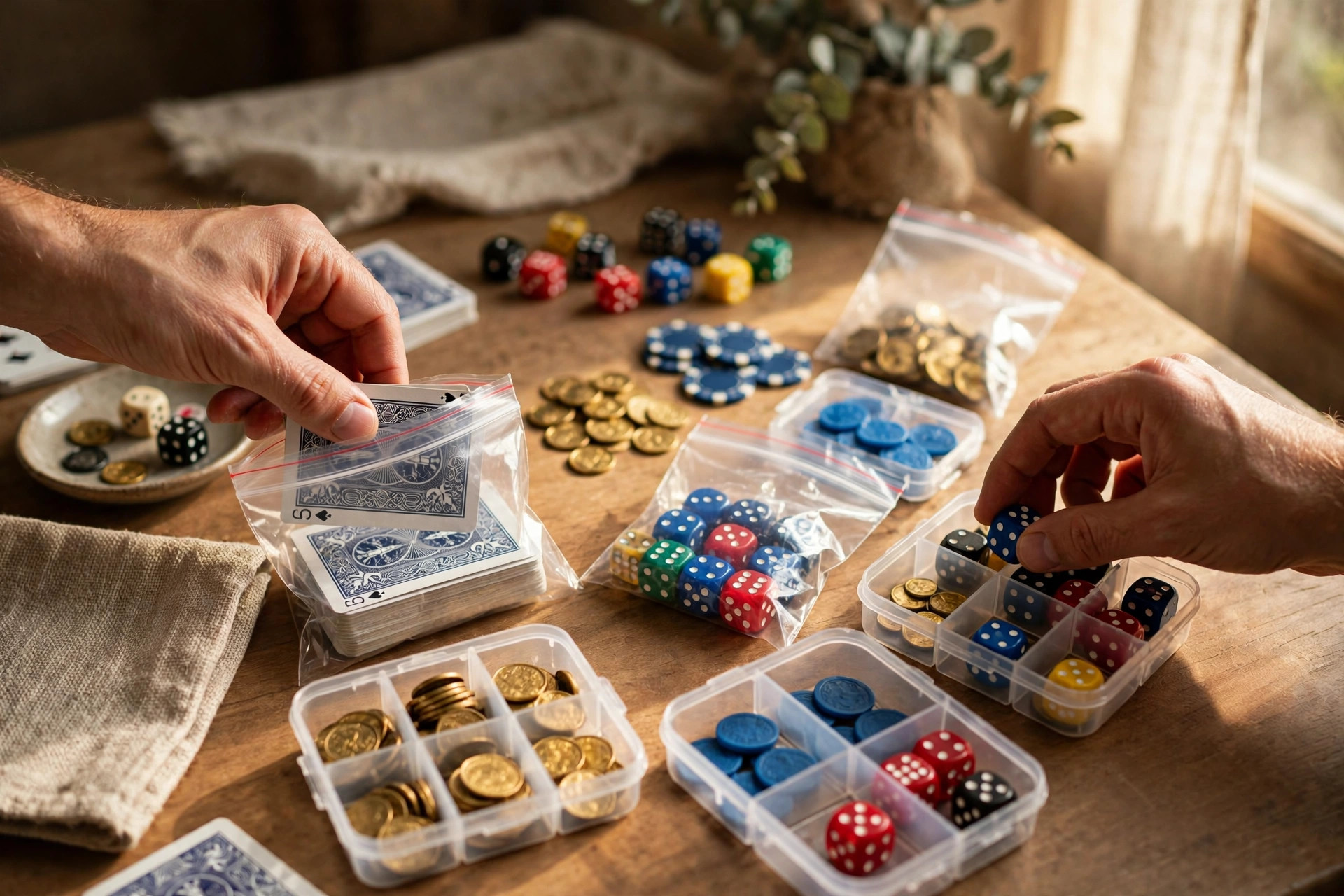
Compartment trays earn their keep in games with many small counters. A tray with a lid keeps setup fast, because players can play straight out of the compartments, and cleanup becomes tipping pieces back into the right cells. Craft and tackle organizers work well and cost little.
Whatever you choose, store game pieces inside their own box whenever possible. Pieces that live in the box travel with the rules, the board, and the inventory photo’s promise of completeness. Loose pieces stored “somewhere safe” are how collections quietly fall apart.
Cards Deserve Special Treatment
Cards fail by bending, sticking, and quietly going missing, so they need the most deliberate storage of any component. Sleeves are the gold standard for games played weekly: they stop edge wear, shrug off sticky fingers, and make a deck easy to count at a glance. For games played a few times a year, a simple deck box or a snug paper band is enough.
One warning worth repeating: never leave a rubber band directly around a deck for long-term storage. Bands dry out, stick to card edges, and leave stains and dents that no cleaning fixes. A deck box, a sleeve, or even a plain zip bag protects cards without the damage.
Humidity is the other enemy. Cards stored in a damp basement or garage swell and warp, and once a deck warps it never shuffles cleanly again. Keep card games in the living areas of the house where you would keep books, and add a silica gel packet to any box stored in a borderline spot. Gentle shuffling helps too, which is one more reason regular groups end up in our roundup of the best card shufflers: less riffling by hand means less bending over a deck’s lifetime.
How to Replace Lost Game Pieces
Replacement starts with the publisher. Many board and card game publishers run spare-parts or replacement programs, ranging from a simple web form to a small fee for a specific component. Check the publisher’s website or the back of the rulebook before improvising; an exact factory piece keeps a game whole and preserves any resale value.
Stand-Ins and Generic Replacements
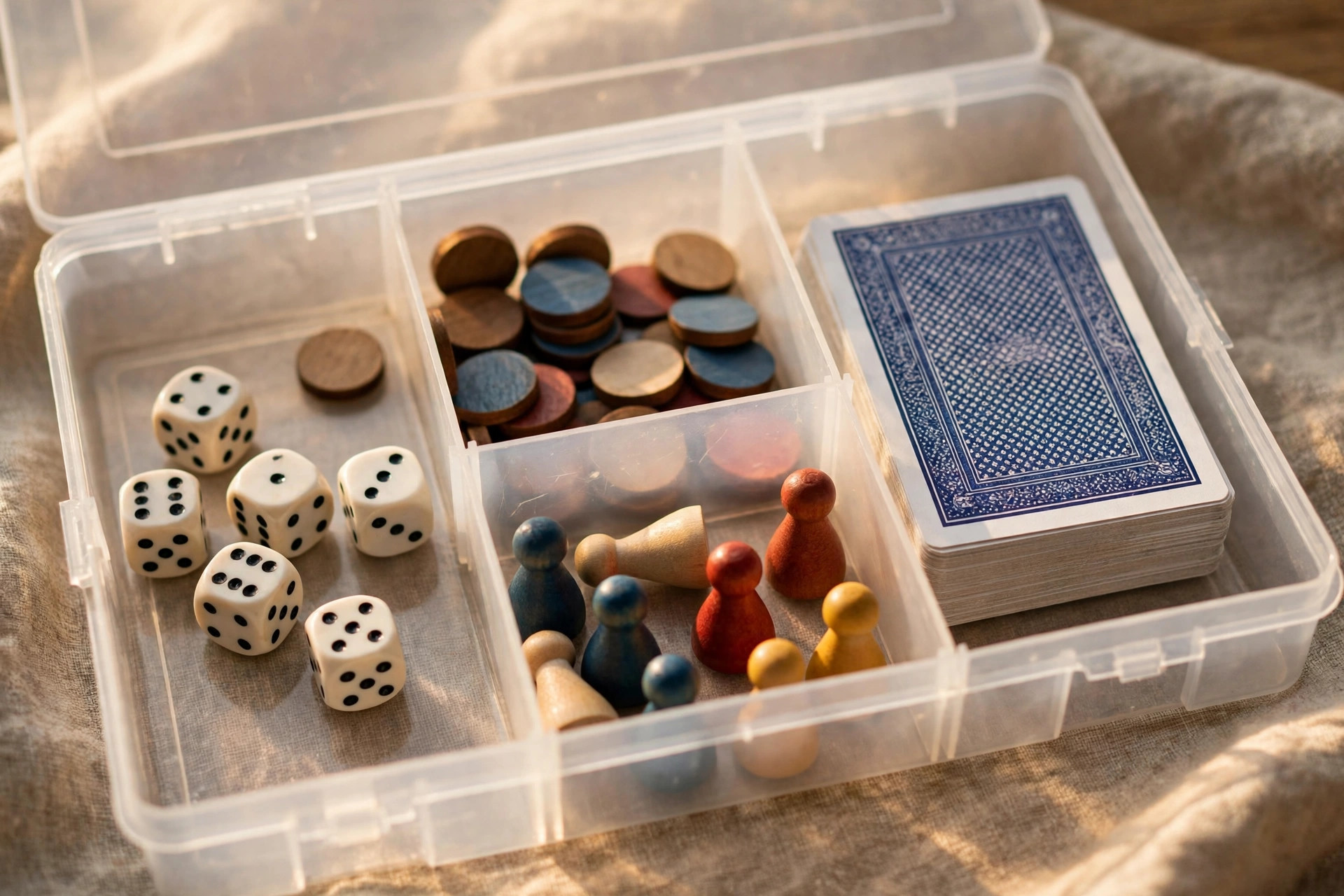
Dice are the easiest pieces to replace because standard dice are commodity items. Match the size, usually 16mm for board games, and the color, and a replacement is indistinguishable in play. Pawns, cubes, discs, and generic tokens are nearly as easy: craft stores and game suppliers sell them in bulk, and coins or buttons cover an emergency game night without apology.
Cards and Print-and-Play Fixes
A single missing card is trickier, because the back has to match. For a standard deck, swap in the same card from a matching spare deck. For a game’s custom cards, ask the publisher first. If the game is out of print, print-and-play copies are the fallback: print the missing card, sleeve it together with the rest of the deck, and the slight difference disappears because every card is sleeved. Sleeving the whole deck is the trick that makes almost any card replacement invisible in play.
Boards and One-of-a-Kind Pieces
Game boards and unique sculpted pieces are the hardest to replace, which is why the table above treats them as protect-first items. If a board is damaged, a publisher replacement or a secondhand copy of the game is usually the only clean fix. That reality is the strongest argument for the storage habits in this guide: the pieces you cannot replace deserve the most care.
Frequently Asked Questions
How do you store game pieces so they don’t get lost?
Keep every game’s pieces inside its own box, bagged or trayed by type, with a photo inventory of the full contents. Small zip bags labeled with the game’s name stop most losses, because pieces are counted at cleanup instead of swept into a general drawer. A quick count against the photo after big game nights catches losses while the piece is still in the room.
Can you order replacement pieces from game publishers?
Often, yes. Many publishers run spare-parts programs through their websites, offering individual cards, dice, tokens, and sometimes boards for a small fee or free. Check the publisher’s support page or the rulebook’s back page first. You will usually need the game’s exact name and edition, since components change between printings.
What can you use as a stand-in for a missing game piece?
Coins, buttons, and generic craft tokens cover counters and pawns. A same-size, same-color die replaces almost any standard die. For cards, use the matching card from a spare deck, or a printed copy inside a sleeve. Stand-ins work best when they match the original’s size and weight, so play feels unchanged.
How do you replace a missing card from a game?
Start with the publisher, since custom card backs are hard to match. If that fails, print the missing card and sleeve the entire deck so all cards feel and look identical from the back. For standard playing cards, a card from any matching deck works. Avoid marking or writing on a substitute card in an unsleeved deck; everyone will know where it is.
How should you store board games long term?
Store boxes upright or flat in a dry, room-temperature space away from sunlight, never in a damp basement or hot attic. Keep pieces bagged or trayed inside each box, add a silica gel packet in humid homes, and keep rubber bands away from cards. An annual count against a photo inventory keeps small losses from becoming permanent ones.
Final Thoughts
Complete games are a habit, not luck. Once you store game pieces the same way every time, cleanup takes two minutes and nothing wanders off. Bag the small pieces, sleeve or box the cards, photograph every game’s contents once, and count now and then. When something does go missing, start with the publisher, then fall back on the generic and print-and-play fixes above. Do that, and the box on your shelf will still rattle exactly the way it should, years from now.

Card Game Terms Glossary for Beginners: Trick, Meld, Trump and More

6 Best Card Shufflers for Your Next Card Game