How to Shuffle Cards Like a Pro Without Damaging Them9 min read
Most home decks die the same slow death: bowed cards, soft corners and edges that catch on every deal. The surprising part is that the damage rarely comes from playing. It comes from shuffling badly.
Learning how to shuffle cards properly is really two skills at once: mixing the deck well enough that the game is fair, and handling the cards gently enough that the deck survives for years.
The good news is that gentle and thorough are not enemies. The methods below range from the dead-simple overhand to a proper table riffle, and each one explains the trade-off between mixing power and wear. Pick the one that matches your hands and your deck.
If your group plays several nights a week and shuffling has become a chore, the automatic machines in our guide to the best card shufflers are worth a look. For everyone else, five honest methods and a few protective habits will do the whole job.
How to Shuffle Cards: 5 Methods Compared
Here is every method in this guide side by side. Start with the overhand if you are a true beginner, and work toward the riffle as your hands learn.
| Method | Difficulty | Wear on Cards | Best For |
|---|---|---|---|
| Overhand shuffle | Easy | Very low | Everyday family decks and casual games |
| Riffle shuffle | Moderate | Moderate, less if done on a table surface | Thorough mixing for serious games |
| Hindu shuffle | Easy | Low | Beginners and longer or oversized cards |
| Pile shuffle | Very easy | None | Counting a deck and checking it is complete; not true randomization |
| Wash / Corgi shuffle | Easy | Low, but messy | Teaching kids and rescuing very sticky decks |
No single method wins on everything. The overhand shuffle is kind to cards but slow to truly randomize, while the riffle is the fastest honest mix and the hardest on edges when done carelessly. Most experienced home players combine two methods, which is also what casinos do.
The Overhand Shuffle: The Gentle Everyday Method
If you are learning how to shuffle cards from scratch, start here. The overhand is the shuffle most people learn first, and it is still the kindest way to shuffle cards without bending them. Hold the deck in one hand, resting on your fingers with your thumb along one edge. With the other hand, lift small packets of cards off the top and drop them onto the front of the deck, working from top to bottom.
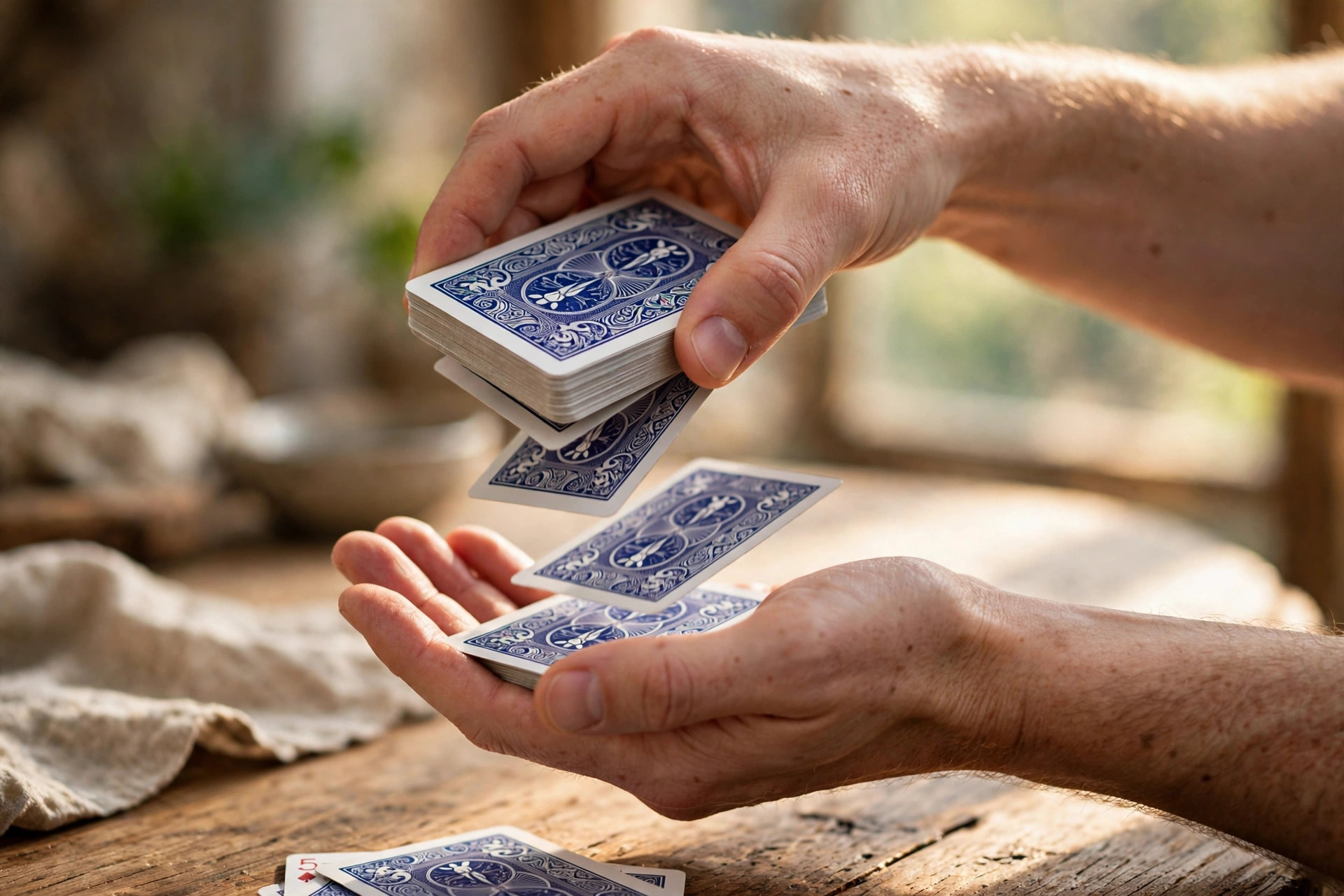
The trick is packet size. Dropping the whole deck in three big chunks barely mixes anything. Pull packets of five to ten cards and repeat the cycle at least six or seven times, and the order genuinely changes. Because the cards never bend or snap, an overhand shuffle done patiently is the best default for a deck you want to keep nice, such as a gifted or themed deck. Its weakness is real, though: cards near the top and bottom move less than cards in the middle. Pair the overhand with one other method, or finish with a cut, and that weakness mostly disappears.
The Riffle Shuffle: Thorough Mixing Without the Damage
The riffle is the gold standard for a fair mix. Split the deck into two roughly equal halves, hold one in each hand with the ends facing each other on the table, and lift the inner corners with your thumbs so the cards alternate and fall together in a zipper pattern. Press the interleaved deck straight, and you are done.
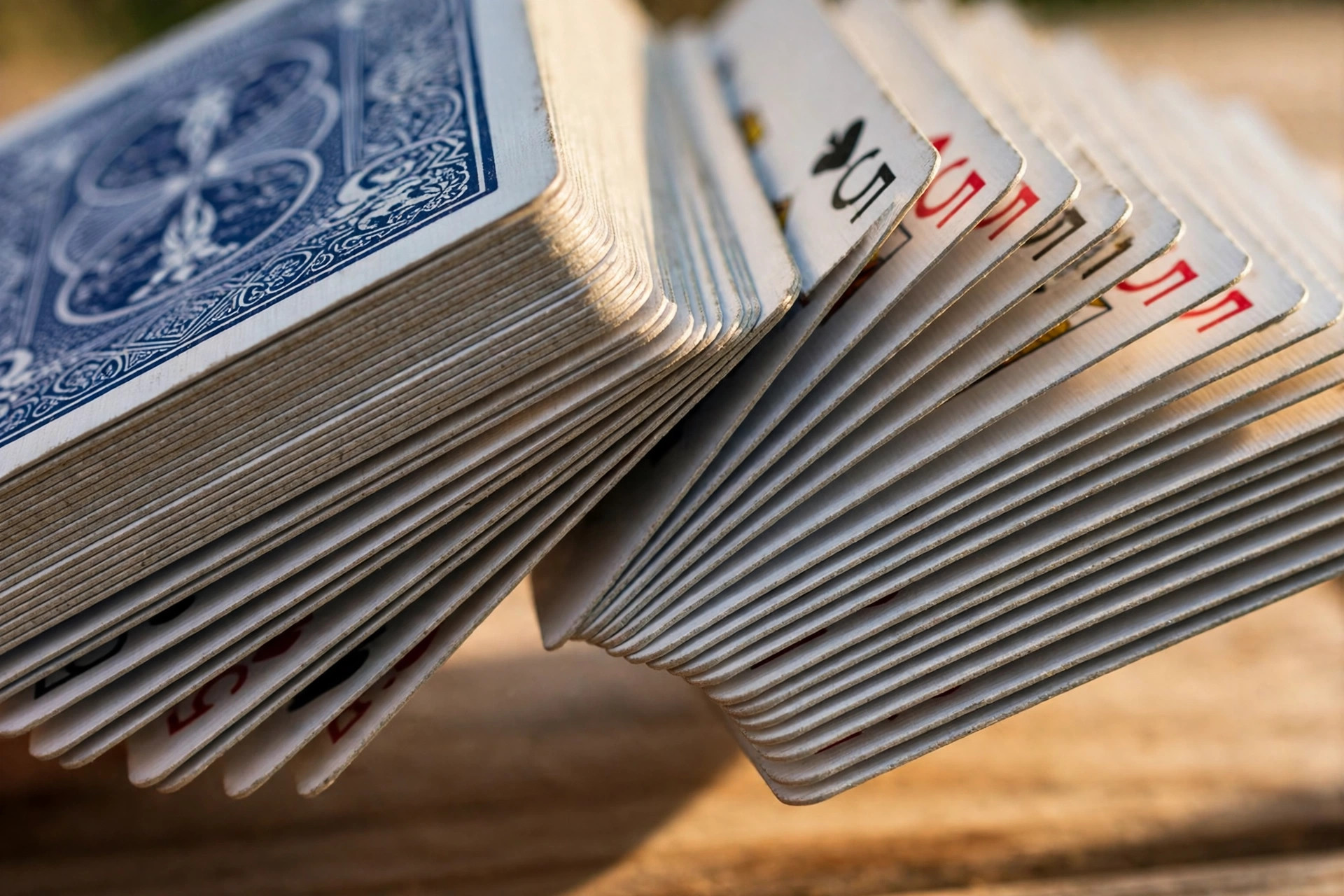
How many riffles do you need? Mathematicians Persi Diaconis and Dave Bayer worked this out: about seven riffle shuffles fully randomize a standard 52-card deck. Fewer than five leaves real patterns behind, and more than seven adds little. Seven is the number casinos use, and it is the number to aim for at home.
Where you riffle matters as much as how. Riffling on a table, with the cards sliding together flat, keeps the bend small and even. Riffling in the air forces you to bow both halves hard to make them interleave, and that bow is what permanently warps home decks. The famous bridge finish, arching the deck into a waterfall to push the cards together, looks great and is completely optional. A simple straight push-in on the table does the same job with less flex.
The Hindu Shuffle and the Wash: Easy Options for Beginners
The Hindu shuffle comes from card traditions in India and is the natural shuffle for anyone whose hands find the riffle awkward. Hold the deck face down in one hand, then use the other hand to pull small packets off the top and drop them into your waiting palm, over and over. It is similar in spirit to the overhand but the deck stays level, which suits longer cards and smaller hands. The wash, sometimes called a Corgi or scramble shuffle, is even simpler: spread the whole deck face down on the table and swirl the cards around with both hands for ten to fifteen seconds, then gather them back into a stack. It looks chaotic because it is, and it genuinely randomizes well. The costs are table space, a bit of edge wear from the sliding, and total chaos with a full room watching. For teaching kids to shuffle, though, nothing beats it, because there is no technique to fail at.
Both methods share one rule with every method here: never shuffle with dirty or wet hands. Skin oils and moisture are what make cards sticky and swollen in the first place, and a wash shuffle with damp hands does more harm than a dry riffle ever will.
The Pile Shuffle: Great for Counting, Not for Mixing
The pile shuffle deals the whole deck out into piles, usually four to seven, then stacks the piles back together. Dealers and tournament players use it for one specific job: counting the deck to prove all 52 cards are present before a game starts. It spreads the cards out where everyone can see them and catches a missing card instantly.
What it does not do is randomize. Dealing into piles rearranges the deck in a predictable pattern, and a player who watched the last hand can sometimes track runs of cards through it. Use the pile shuffle as a check, then follow it with real shuffling. Once the deck is verified complete, our card game setup charts tell you exactly how many cards to deal each player for the game you are starting.
Habits That Protect Your Cards Every Time You Shuffle
Method matters, but habits matter more. Shuffle on a clean, dry, smooth surface, ideally a play mat or tablecloth rather than bare wood with crumbs and drink rings. Keep the deck flat and squared between games, and store it in its box rather than loose in a drawer with a rubber band biting into the edges. Watch your grip pressure, too. Most bending happens not in the shuffle but in the squeeze, when a nervous player grips the deck like a handle. A relaxed hand shuffles better and damages less. And if a deck does start to stick, a light shuffle and a few hours in a dry room usually fix it; powder and sprays made for other games do not belong on playing cards.
High-volume game nights are the one case where hand shuffling loses. When the same deck is shuffled hundreds of times a month, the automatic options in our guide to the best card shufflers spread the wear across a machine instead of your favourite deck, and they keep the game moving between hands.
Frequently Asked Questions
How many times should you shuffle a deck of cards?
For a riffle shuffle, about seven times fully randomizes a 52-card deck, which is the benchmark casinos use. For an overhand or Hindu shuffle, aim for more repetitions with small packets, around ten full cycles, or combine two methods. A single quick shuffle of any kind is never enough.
Does riffle shuffling damage cards?
It can, but the damage comes from technique rather than the method itself. Riffling in the air forces the cards into a hard bow, which warps them over time. Riffling flat on a table keeps the bend gentle and even, and skipping the bridge finish removes most of the remaining flex.
What is the easiest way to shuffle cards for beginners?
The overhand shuffle is the easiest to learn and the gentlest on the deck: lift small packets off the top and drop them onto the front, over and over. For children, the wash shuffle is even simpler, spreading the cards face down and swirling them on the table before gathering them up.
How do you shuffle cards without bending them?
Shuffle on a table instead of in the air, keep your grip relaxed, and use low-flex methods like the overhand or Hindu shuffle for everyday games. If you riffle, let the cards fall together with a light thumb release rather than forcing them, and push the deck straight instead of bridging it.
Is a card shuffling machine worth it?
For a weekly game night, usually yes. A machine shuffles in seconds, treats every deck evenly, and saves the wear on a deck your group likes. Casual players who play once a month get the same fairness from a careful overhand plus a cut, so it depends on volume.
Final Thoughts
A pro shuffle is not a flourish. It is a fair mix, done the same calm way every time, on a clean table with dry hands. Learn the overhand for everyday games, the table riffle for serious ones, and the pile shuffle for checking the deck, and you will know how to shuffle cards for any game night that comes up. Your deck will thank you in the only way it can: by staying flat, slick and dealable for years instead of months.
Best Card Games for Two Players When You Are Tired of Gin Rummy

6 Best Card Shufflers for Your Next Card Game