
Hiking With Toddlers: Short Trails, Snacks and Bail-Out Plans8 min read
Hiking with toddlers is less about reaching a viewpoint and more about managing a small person’s energy, mood, and snack supply. The families who enjoy it share one secret: they plan toddler hikes at about half the ambition they first imagine. Shorter trail, earlier start, more food, and always an exit plan. None of that requires special gear or wilderness experience. It requires honest expectations about distance, a trail chosen for a two-year-old’s legs, and a turnaround point decided before anyone is tired. Get those three things right and a toddler hike becomes the easiest outdoor habit a family can build. Before your first outing, it helps to run through a basic hiking checklist so the essentials are packed once and stay packed. A ready daypack removes the morning scramble that sinks many family hikes before they start.
Hiking With Toddlers at a Glance: Distances by Age
Distance is where most first toddler hikes go wrong. Adults measure a trail in miles; toddlers measure it in interesting sticks. Use these ranges as a starting point and adjust for your own child.
| Toddler Age | Realistic Distance | Time on Trail | Notes |
|---|---|---|---|
| 18-24 months | 0.5 mile or less | 30-45 minutes | Mostly carried, with short walking bursts and long stops |
| 2-3 years | 0.5-1 mile | 1-1.5 hours | Long breaks; expect carrying for part of the return trip |
| 3-4 years | 1-2 miles | 1.5-2.5 hours | Easy terrain only, with planned snack stops along the way |
Notice that time grows faster than distance. A one-mile loop that takes an adult twenty minutes can fill a happy hour and a half with a three-year-old, and that is fine. The goal of hiking with toddlers is time outside, not mileage logged.
Choose the Right Trail
The best toddler trails are loops, because a loop never asks a tired child to retrace the boring part. Look for flat or gently rolling terrain, a surface without roots and loose rock, and something interesting in the first ten minutes: a creek, a bridge, a big tree, a pond with ducks. Early interest buys you the whole outing. Facilities matter more than scenery. A trailhead with toilets, a picnic table, and a parking lot close to the trail start will save a toddler hike more reliably than any view. Shade helps too, since toddlers overheat and burn faster than adults and complain about both at maximum volume. Finally, check the bail-out options before you go. The ideal toddler trail has a shortcut back, a shorter loop that shares the same start, or a playground near the trailhead where the outing can end happily even if the hike itself collapses at the halfway point.
Snacks Are the Real Itinerary
Ask experienced parents for toddler hiking tips and snacks come up before boots, before trails, before anything. A toddler’s mood on the trail tracks blood sugar more than fitness. Pack roughly twice the snacks you think you need, in small portions you can hand out one at a time.
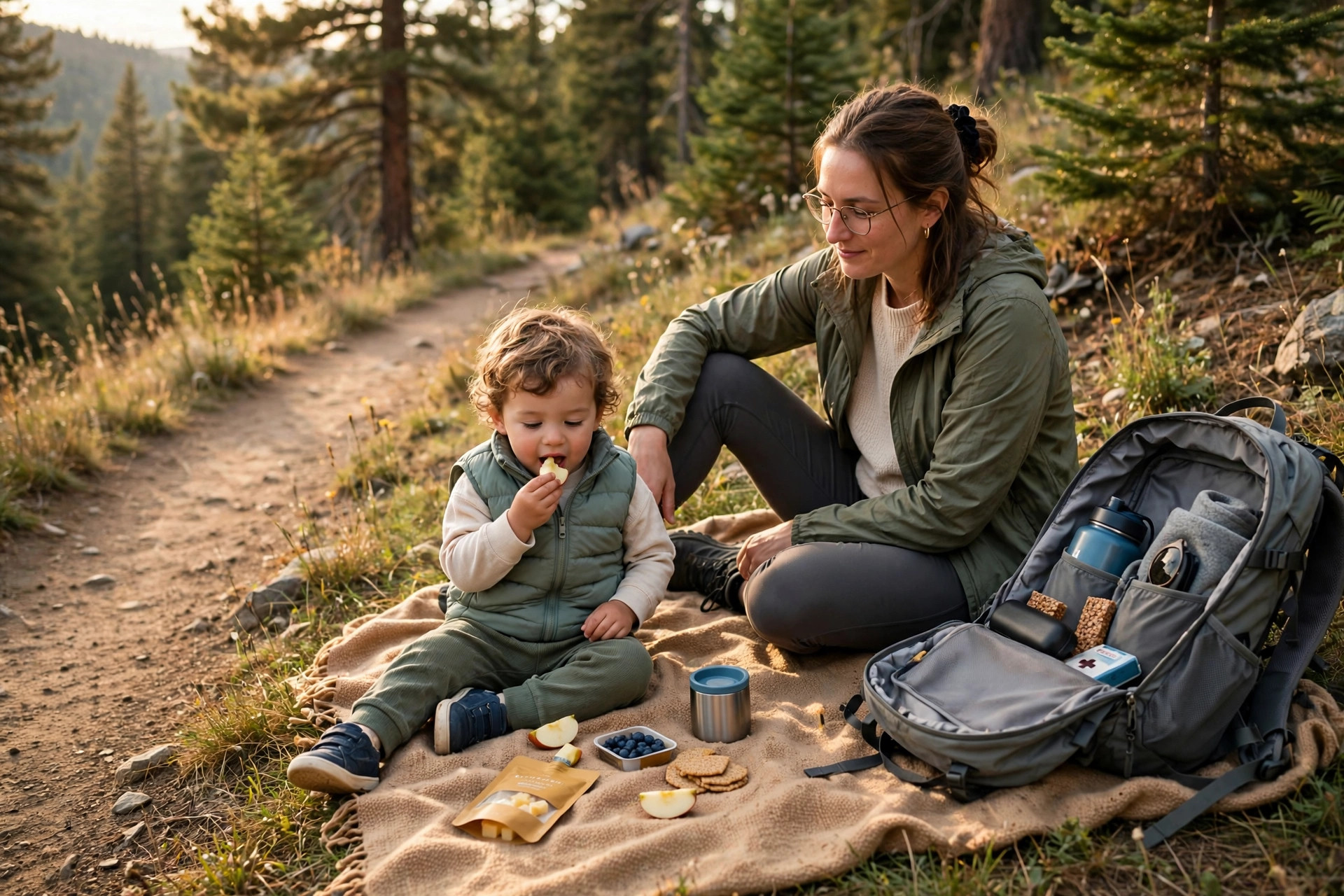
Strategy matters as much as quantity. Hold one special snack in reserve for the return trip, because the walk back is where motivation dies. Schedule the big snack stop at the turnaround point so it becomes the destination: a blanket, a view if you have one, and ten unhurried minutes. Bring water for everyone, and offer it at every stop whether your toddler asks or not. A full change of clothes waiting in the car, including socks, turns a mud puddle from a disaster into a story.
What to Pack for a Toddler Hike
Keep the pack simple and repeatable. The core list is water, more snacks than seems reasonable, wipes, a change of clothes for the toddler, sun protection, a basic first aid kit, and a bag for carrying out trash and any wet clothing. Our hiking checklist covers the full day-hike essentials if you want the complete version to build from. Dress your toddler in layers you can peel, with a hat that stays on and shoes that close firmly; this is not the outing for slip-on shoes that vanish into mud. One full spare outfit lives in the car, not the pack, because its job is the ride home. If rain is even a possibility, a cheap poncho or rain jacket for the adult carrying the child matters more than toddler rain gear, since a carried toddler mostly shelters under you.
Carry, Walk, or Both?
Plan on both. Most toddlers walk in enthusiastic bursts and then want up, usually at the furthest point from the car. A hiking carrier gives you a reliable way home and lets your toddler nap or rest while you cover ground, which makes it the single most useful piece of gear for hiking with toddlers under three.
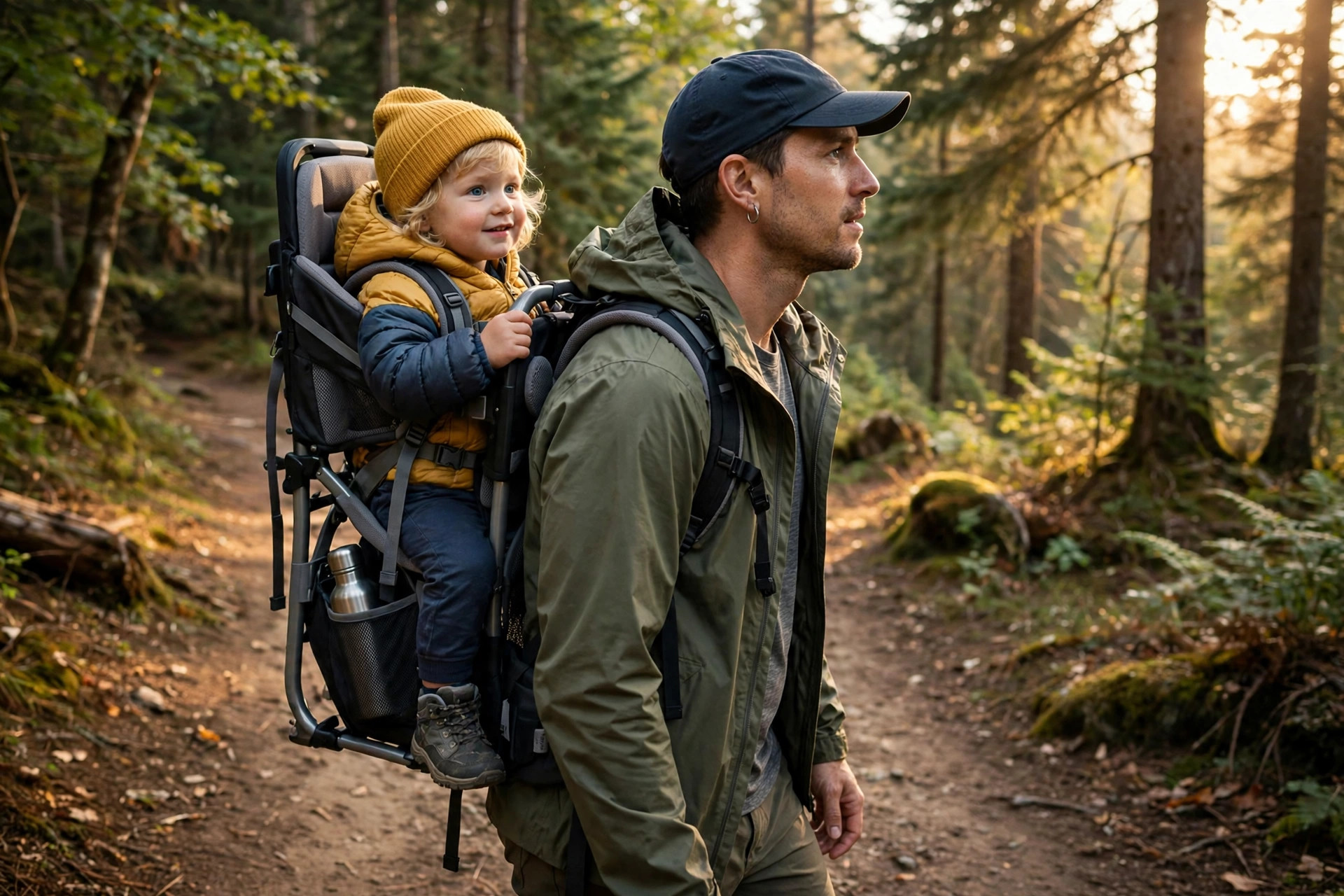
For three- and four-year-olds, a simple rhythm works: walk the interesting parts, ride the dull parts. Let your child set the walking pace without comment, because toddler pace with stops is the pace, and pushing it produces the meltdown you were trying to avoid. Short distances mean the carrier weighs less and less as your child grows into family hiking, and by four many kids walk a full easy mile proudly on their own.
Build a Bail-Out Plan Before You Start
Every toddler hike needs a planned exit, decided in the calm of the parking lot rather than the stress of a trailside meltdown. The simplest bail-out plan is a turnaround rule: pick a time or a landmark, and when you reach it, you turn around, no debate. Deciding the turnaround before the meltdown is the whole trick, because mid-meltdown negotiations with a two-year-old rarely end well.
Layer the plan. First option: shorten the loop at the marked shortcut. Second: one adult carries the toddler straight back while the other brings any older kids at their pace. Third: abandon the hike entirely for the playground or cafe near the trailhead, framed to the toddler as the plan all along.
A bail-out used early keeps hiking with toddlers fun, and fun is what brings everyone back next weekend. A hike pushed past the breaking point can put a small child off trails for months.
Frequently Asked Questions
How far can a toddler hike?
Most toddlers handle half a mile to two miles depending on age, spread over far more time than an adult would expect. Children under two are mostly carried, two- and three-year-olds manage up to a mile with long breaks, and confident four-year-olds can walk one to two easy miles. Terrain and snacks matter more than the number itself.
What should I bring when hiking with a toddler?
Bring water, about double the snacks you expect to use, wipes, sun protection, a basic first aid kit, and a full change of clothes for the toddler kept in the car. Add a carrier for children under three and a bag for trash and wet clothes. Pack the same kit every time so nothing essential gets forgotten.
What are the best snacks for toddler hikes?
Choose snacks that are portable, not too messy, and easy to eat in small handfuls: oat bars, crackers, cheese, cut fruit, raisins, and pouches all travel well. Pack variety in small portions so you can offer choices, and keep one favourite snack in reserve for the return trip, when motivation is lowest and a small reward works wonders.
When should you carry a toddler instead of letting them walk?
Carry your toddler on steep, rocky, or slippery sections, near water or drop-offs, and whenever tiredness shows up as stumbling or whining. Let them walk the flat, interesting stretches at their own pace. Most outings end up a mix: walking in bursts, riding for the dull or difficult parts, and that mix is completely normal.
What makes a good first trail for a toddler?
A short loop on flat, even ground with something interesting early on: a creek, bridge, pond, or big trees. Toilets and a picnic area at the trailhead help, and so does a shortcut or playground nearby as a bail-out. Under a mile is plenty for a first outing; success at a short distance beats an epic that ends in tears.
Final Thoughts
Hiking with toddlers rewards modest plans. Pick a short loop, pack more snacks than seems sensible, decide the turnaround before you start, and keep a bail-out in your back pocket. As your toddler grows, the distances stretch on their own, and our guide to hiking with kids picks up where toddler hikes leave off. Small trails, happy kids, and a family habit that lasts: that is the whole goal.

The Ultimate Guide to Hiking with Kids

How to Choose Kids Hiking Shoes vs Sneakers: When Boots Matter
