How to Teach Kids a New Card Game in 10 Minutes9 min read
Most card game lessons for kids die the same death: an adult reads rules aloud while small hands drift toward the snack bowl. The fix is to teach kids a card game the way kids learn everything else, by playing it badly for two minutes and then playing it better. You do not need the patience of a saint or a teaching degree. You need one sentence, a short demo, and the discipline to save the exceptions for later. This plan takes ten minutes from a shuffled deck to a real round your child can finish. It works for simple matching and shedding games first, and the same steps scale up to harder games as kids grow.
One small thing before you start: use a deck that shuffles smoothly, with cards that are not bent or sticky. Little hands struggle with a deck that clumps, and our roundup of the best card shufflers can take the shuffling job off the table entirely while kids learn.
The 10-Minute Plan to Teach Kids a Card Game at a Glance
Here is the whole method on one table. Five steps, ten minutes, and almost no talking at them.
| Minutes | Step | What to Do |
|---|---|---|
| 0-1 | Say the goal in one sentence | Tell them how a player wins, and nothing else yet |
| 1-3 | Show the cards and name the parts | Suits, ranks, and any special cards, using the real deck |
| 3-5 | Play an open-hand demo round | Everyone plays face up while you narrate each move |
| 5-8 | Play a real round with coaching | Hands hidden, but you advise out loud on every turn |
| 8-10 | Let them play mostly alone | Step back, answer questions, and let small mistakes stand |
The pattern matters more than the clock. Goal first, parts second, guided play third. Every section below expands one row of this table.
Pick the Right First Game for Their Age
The first time you teach kids a card game, the game itself does half the teaching. At four and five, start with matching and memory: Go Fish and simple pairs games work because the goal is visible, the cards are the whole game, and turns are short. At six and seven, shedding games land well: matching a card to a pile and trying to empty your hand gives a clear target and a little drama. At eight and up, kids can hold a small hand of hidden cards, plan one move ahead, and handle simple trick-taking basics. Whatever the age, choose a game you can explain with the cards in your hand. If the rules need a diagram, it is the wrong first game. Our card game setup charts show how many cards each common game deals at different player counts, which helps you pick a game whose hand size fits small hands.
Minutes 0-1: The Goal in One Sentence
Open with the win condition and stop talking. “First person to get rid of all their cards wins.” “Match the most pairs to win.” One sentence, said while holding the deck, gives kids a target to aim every later rule at. Resist adding “but” sentences. Every exception you mention now competes with the goal for space in a young memory. The exceptions will come up naturally in the demo round, attached to a real card in a real moment, which is exactly when they stick.
Minutes 1-3: Name the Parts With Real Cards
Fan the deck and name only what this game uses. Suits and ranks if matching matters, the special cards if the game has them, and the draw and discard piles if it has those. Skip anything the game does not use; a child does not need to know what a trump suit is to play a matching game. Let them handle the cards while you talk. Sorting a few cards by suit, or hunting through the deck for all the 7s, is a thirty-second game inside the lesson, and it checks that they can tell the cards apart before the round depends on it.
Minutes 3-5: The Open-Hand Demo Round
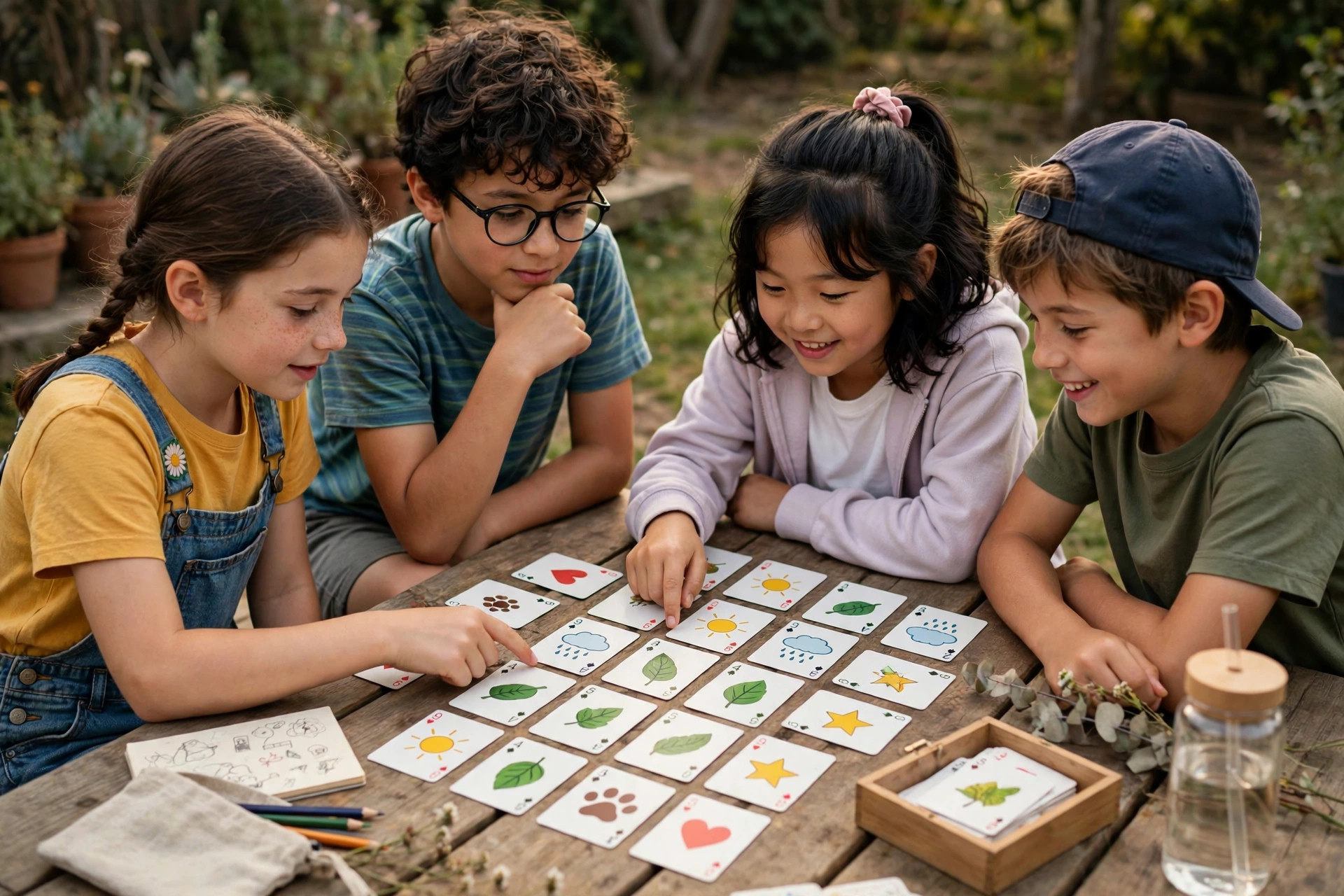
Deal a real hand to everyone, then turn every hand face up on the table. Play two or three turns at walking pace and narrate your thinking out loud: “The pile shows a red 6. I have a red card, so I can play this one.” Narration is the whole trick. Kids copy the decision, not the rule. When their turn comes in the demo, ask “what could you play here?” instead of telling them. Two correct answers from them are worth ten minutes of explanation from you. Keep the demo short on purpose. Two or three turns each is enough to show the loop of the game. You are teaching the shape of a turn, not finishing a match, and stopping while it is still fun leaves them wanting the real round.
Minutes 5-8: A Real Round With Coaching
Now hands go face down, or held privately, and the game is real, with one change: you coach out loud. Suggest, do not command. “You could play the 8 now, or save it. What do you think?” Questions build players; orders build spectators. When you teach kids a card game this way, let them win a turn or two honestly if the cards allow it, but do not throw the game. Kids can smell a gifted win, and a real small win teaches more. Correct only mistakes that break the game; a legal but weak play is a lesson they get to learn from the next card.
Minutes 8-10: Step Back and Let Them Play
For the last stretch, answer questions and nothing more. This is the part adults find hardest, and it is the part that makes the lesson real. A round they finish with two questions asked is a game they now know how to play. If a rule question comes up that you skipped earlier, answer it in one sentence and keep moving. If the same question keeps recurring, write the answer on a sticky note and park it by the deck; house rules on paper end repeat debates at the next game night.
Troubleshooting: When the Lesson Stalls
Three stalls cover almost every failed lesson. If a child cannot hold the cards, fan them face down in a row on the table, or use a simple card holder; hand size is a logistics problem, not a learning problem. If attention wanders, shorten the game rather than the lesson: play to half the usual score, or one quick round instead of a full match. If tears arrive, the game was probably too hard or the session too long, and the fix is to drop back a level for the next session rather than pushing through this one. Ending on a small win, even an unfinished round they happened to be ahead in, makes them ask to play again tomorrow, which is the real goal of the first lesson.
Choosing the Next Game
Once the first game sticks, add one new idea at a time: a game with one special card, then a game with simple scoring, then a game with hidden information. Each step reuses the same ten-minute plan, and each lesson gets faster because the basics, taking turns, matching, and drawing, are already in place. As the rotation grows, so does the shuffling, and small hands tire of it quickly. The automatic options in our best card shufflers guide earn their shelf space fast in a house that plays every week, and they keep the focus on the game instead of the deck.
Frequently Asked Questions
What is the easiest card game to teach a young child?
Go Fish is the classic first game because the goal is visible and every turn is one simple question. Matching pairs games played with a standard deck work just as well for four- and five-year-olds. Choose games with short turns, few special cards, and a win condition a child can see happening in front of them.
At what age can kids learn card games?
Most children can learn simple matching games at four or five, once they can recognize matching pictures, numbers, or suits. Shedding games like Crazy Eights suit six- and seven-year-olds, and by eight most kids can manage hidden hands, simple scoring, and the basics of trick-taking games with a little coaching.
How do you teach kids a card game without reading the rules aloud?
Replace the reading with a demo. State the goal in one sentence, name the cards the game actually uses, then play two or three turns with every hand face up while you narrate your choices out loud. Kids learn the decision pattern from watching real turns, and the exceptions stick when they appear in play.
What if my child keeps forgetting the rules?
That is normal for the first two or three sessions, and it usually means too many rules arrived at once. Go back to the open-hand demo for one round, answer the recurring question the same way every time, and write it on a sticky note kept with the deck so the answer never changes.
How long should a child’s first card game last?
Keep the first session to one short round, roughly ten to fifteen minutes including the lesson. Young players do better with a game that ends while they still want more. You can always deal a second round; you cannot easily rescue a session that dragged ten minutes past a child’s attention span.
Final Thoughts
Once you teach kids a card game this way, the rulebook reading never comes back. One sentence for the goal, a face-up demo, a coached round, and then your silence while they finish a round themselves: that is the whole method, and it fits inside ten minutes. Start with the simplest game you own, deal the demo round tonight, and let them surprise you. The second game you teach will take five minutes, and the third one they may teach you.

Crazy Eights Variations: Power Cards and Regional Rules

How to Shuffle Cards Like a Pro Without Damaging Them