
The 10 Essentials for Day Hikes, Updated for Families9 min read
A short family day hike rarely goes wrong in a dramatic way. It goes wrong in small ways: a turned ankle a mile from the car, a phone with no signal, a child who is suddenly cold, wet, and done. The 10 essentials for hiking exist for exactly those moments. They are the small set of items that turns a minor problem into a story you tell at dinner instead of a rescue call.
The list was built for mountaineers, not for a Saturday loop with a seven-year-old. So this guide keeps every one of the classic ten, then updates each one for family hiking: smaller sizes, shared loads, and the items kids actually need more of than adults do.
If you want the printable version, our hiking checklist covers the full pack list. Here, we focus on the ten items that should never leave the car behind, and how to adapt them when half your hiking party is under four feet tall.
The 10 Essentials for Hiking at a Glance
Here is the full list with the family update for each item. The left column is the classic essential; the right column is what changes when kids are along.
| The 10 Essentials | Family Update |
|---|---|
| Navigation | Map and compass, plus a downloaded offline trail map on a phone |
| Headlamp | One per adult, and a small one for each older kid |
| Sun protection | Hats, sunscreen, and sunglasses sized for kids |
| First aid | Add child dosing basics, tweezers, and any family medications |
| Knife and repair kit | A multitool plus a small roll of repair tape for torn gear |
| Fire starter | A lighter and firestarter in a waterproof bag, carried by adults only |
| Emergency shelter | A lightweight emergency bivy or space blanket for each person |
| Extra food | A full extra meal’s worth of snacks beyond the plan |
| Extra water | More than you expect to need, plus a filter or treatment backup |
| Extra clothes | A warm layer and rain shell for every family member, since kids get wet and cold faster |
Where the 10 Essentials List Comes From
The 10 Essentials were developed by The Mountaineers, the Seattle-based outdoor organization, and refined over decades of climbing and hiking instruction. The list first appeared in their mountaineering handbook in the 1970s and has been updated as gear changed: a flashlight became a headlamp, and a phone map joined the paper one. The important idea is that the list names functions, not products. You need a way to navigate, a way to see, a way to stay warm. Any gear that does the job counts. That is good news for families, because it means the 10 essentials for hiking can shrink to kid sizes and shared adult loads without breaking the system.
Navigation, Light, and Sun Protection
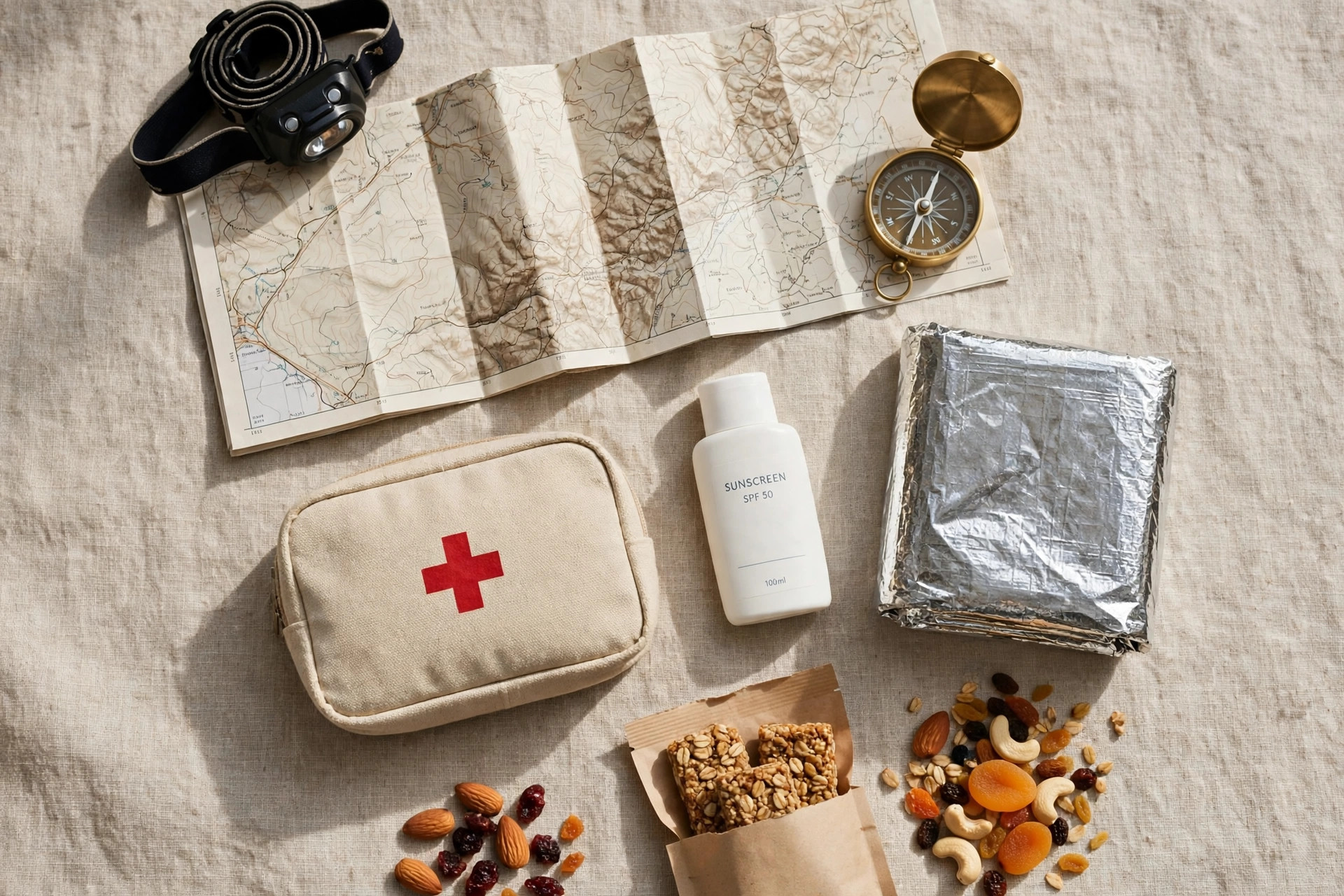
Navigation comes first because getting lost is the emergency that makes every other emergency worse. Carry a paper map and compass for the trail, and download an offline map to a phone before you leave home. Teach older kids to spot trail markers and junctions; a child who pays attention to the route is a real backup, not just a passenger. A headlamp is the second essential, and it matters even on a morning hike. A twisted ankle can turn a two-hour walk into a five-hour one, and dusk arrives fast under tree cover. Each adult should carry one, and older kids love having a small headlamp of their own. Sun protection sounds minor until a child burns on a breezy ridge where nobody felt hot. Pack hats, sunscreen, and sunglasses that actually fit small faces. Reapply sunscreen at every snack stop, because kids sweat it off faster than adults do.
First Aid, Tools, and Fire
A family first aid kit starts with the standard basics: bandages, antiseptic, blister care, and pain relief. Then add the family layer. That means any daily medications your family relies on, plus child-appropriate dosing of pain and allergy medicine, and tweezers for the splinters and ticks that find children first. The knife and repair kit essential is really a multitool and a few feet of repair tape wrapped around an old gift card. The tape patches a torn pack strap, a ripped rain jacket, or a shoe sole that starts to flap. You will use the tape ten times for every once you use the blade. Fire starter stays in an adult’s pack, in a waterproof bag: a simple lighter and a small firestarter cube. On a day hike it is emergency insurance only, a way to get warmth going if you are ever stuck out overnight. Kids should know it exists and that it is not a toy.
Shelter, Food, Water, and Extra Clothes
Emergency shelter is the essential families most often skip, because a space blanket looks like nothing. That is the point. One emergency bivy or space blanket per person weighs almost nothing and can keep a wet, cold child warm while you wait out weather or walk out slowly. Extra food means more than a granola bar in the bottom of the pack. Carry a full extra meal’s worth of snacks beyond what the hike calls for, and make it food your kids will eat when they are tired and picky. Morale is a safety item with children. Extra water follows the same logic: carry more than the plan needs, and add a small filter or treatment tablets as backup. Kids spill bottles, drop caps in the dirt, and drink twice as much on the uphill half. A filter turns any creek into a refill. Extra clothes finish the list. Every family member gets a warm layer and a rain shell, sized for them, even if the morning is sunny. Kids get wet and cold faster than adults, lose heat quicker, and complain about it at exactly the moment you can least afford a meltdown.
How to Split Hiking Essentials Between Packs
One adult carrying all ten essentials for four people ends up with a climbing pack on a nature walk. Split the load instead. Each adult carries a full personal set of the small items: headlamp, emergency shelter, extra layer, and their share of food and water.
Kids can carry more than you think, and carrying builds buy-in. A five-year-old can manage their own water, a snack, and a space blanket in a small pack. Older kids can add a headlamp, their rain shell, and the family map. Our guide to hiking with kids has more on matching pack loads to ages.
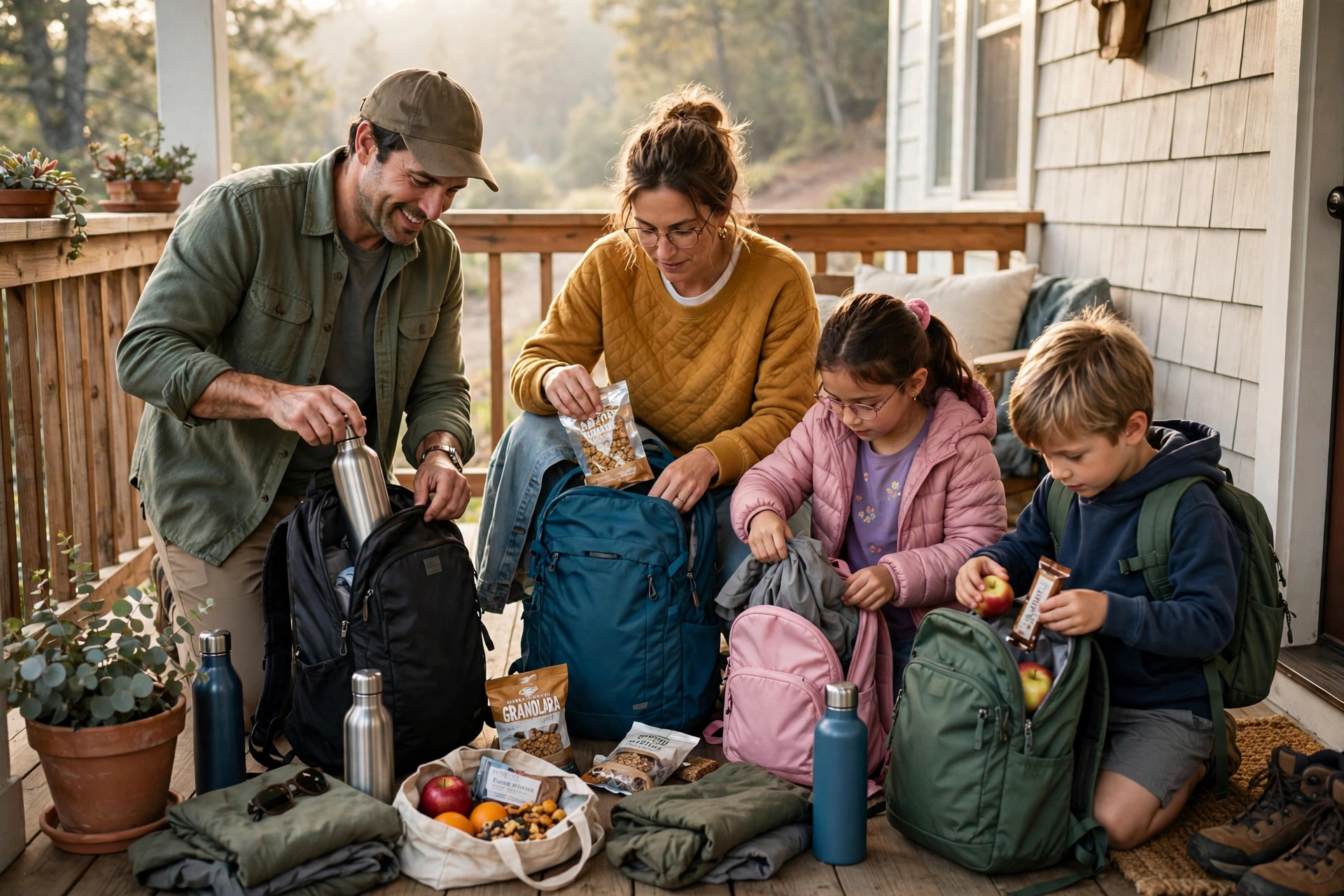
Keep one rule when you split things up: the group stays together, so the split only works if nobody hikes ahead out of sight. If your family tends to spread out on the trail, duplicate the critical items, especially shelter and light, in every pack.
Building Your Family Day Hike Checklist Around the Ten
The ten are the floor, not the ceiling. Your family’s real list adds the personal layer: diapers and wipes for the youngest hikers, a change of clothes waiting in the car, and the stuffed animal that prevents a trailhead crisis. Start from the ten, then add what your family specifically needs. The easiest way to make this stick is to keep a dedicated essentials pouch that lives in your hiking pack and never gets unpacked for other trips. Check it twice a year, swap the snacks, and test the headlamp batteries. Our full hiking checklist walks through the complete pack, item by item, if you want to build the rest of the kit around the essentials. With the pouch packed, the 10 essentials for hiking stop being a list you read and become a habit you barely think about. That is exactly what The Mountaineers intended.
Frequently Asked Questions
What are the 10 essentials for hiking?
The 10 essentials for hiking are navigation, headlamp, sun protection, first aid, knife, fire starter, emergency shelter, extra food, extra water, and extra clothes. The list comes from The Mountaineers and names functions rather than brands, so any gear that does each job counts, including kid-sized versions.
Do kids really need to carry the 10 essentials?
Kids do not need a full personal set, but they should carry the small items that fit them: their own water, snacks, rain shell, and an emergency blanket. Adults should duplicate the critical items like light and shelter. If the group stays together, a shared family set works well.
What is the most forgotten item on a day hike checklist?
The headlamp. Families plan to finish by lunch and leave lights at home, but a slow hiker, a wrong turn, or an injury can stretch a short hike past dusk. An emergency shelter runs a close second, because a space blanket feels unnecessary until the moment it is not.
How much extra water should a family carry?
Carry the water your plan calls for, then add roughly an extra half litre per person, plus a lightweight filter or treatment tablets as a backup. Kids spill and drink unpredictably, and a filter lets you refill from streams instead of turning back early on a hot day.
Can a phone replace a map and compass?
A phone with a downloaded offline map is a fine primary tool, but it should not be the only one. Batteries die, screens crack, and cold drains power fast. A paper map and basic compass weigh almost nothing, need no signal, and keep navigation covered if the phone fails.
Final Thoughts
None of the ten items is expensive, heavy, or hard to use. Together, they cover the short list of things that actually go wrong on family day hikes: getting lost, getting dark, getting cold, getting hurt, and running out of food and water. Build the pouch once, keep it in the pack, and split the load so everyone carries a share. Then forget about the list and enjoy the trail, which was the point of packing it in the first place.
How to Choose Kids Hiking Shoes vs Sneakers: When Boots Matter

Hiking With Toddlers: Short Trails, Snacks and Bail-Out Plans
