How to Choose Kids Hiking Shoes vs Sneakers: When Boots Matter8 min read
At every trailhead, some parent looks down at their child’s sneakers and wonders if they made a mistake. Usually, they did not. For a lot of family trails, ordinary sneakers are perfectly fine, and kids hiking shoes are an upgrade you buy for specific terrain, not a ticket you need to start hiking.
The honest answer is that the trail decides. Smooth, dry, well-packed paths forgive almost any footwear. Rocky scrambles, muddy stream crossings, and cold late-season trails punish thin soles and smooth treads.
This guide sorts out which trails need which shoes, how to fit them on feet that grow every few months, and when a real boot earns its place. Footwear is one line on the family gear list; our hiking checklist covers the rest of the pack. Start there if you are building the kit from scratch, then come back here for the shoe decision.
Kids Hiking Shoes vs Sneakers at a Glance
Match the trail to the shoe. This table covers the situations family hikers run into most often.
| Situation | Sneakers Are Fine | Choose Hiking Shoes or Boots |
|---|---|---|
| Smooth, dry, packed trails | Yes, regular trainers handle these comfortably | Only if your child prefers extra grip on loose corners |
| Rocky or rooty trails | Risky: thin soles bruise feet and smooth tread slips | Hiking shoes, for grip, a stiffer sole, and toe protection |
| Stream crossings and mud | No: sneakers soak through and stay wet for hours | Waterproof hiking shoes or boots that shed water and grip wet rock |
| Carrying a heavier kid pack or longer miles | Tiring over distance, with little support under load | Hiking shoes, for a firmer sole and more support on long days |
| Cold or snow-dusted trails | No: mesh uppers let cold straight through | Insulated, waterproof boots that keep small feet warm and dry |
When Sneakers Are Honestly Fine
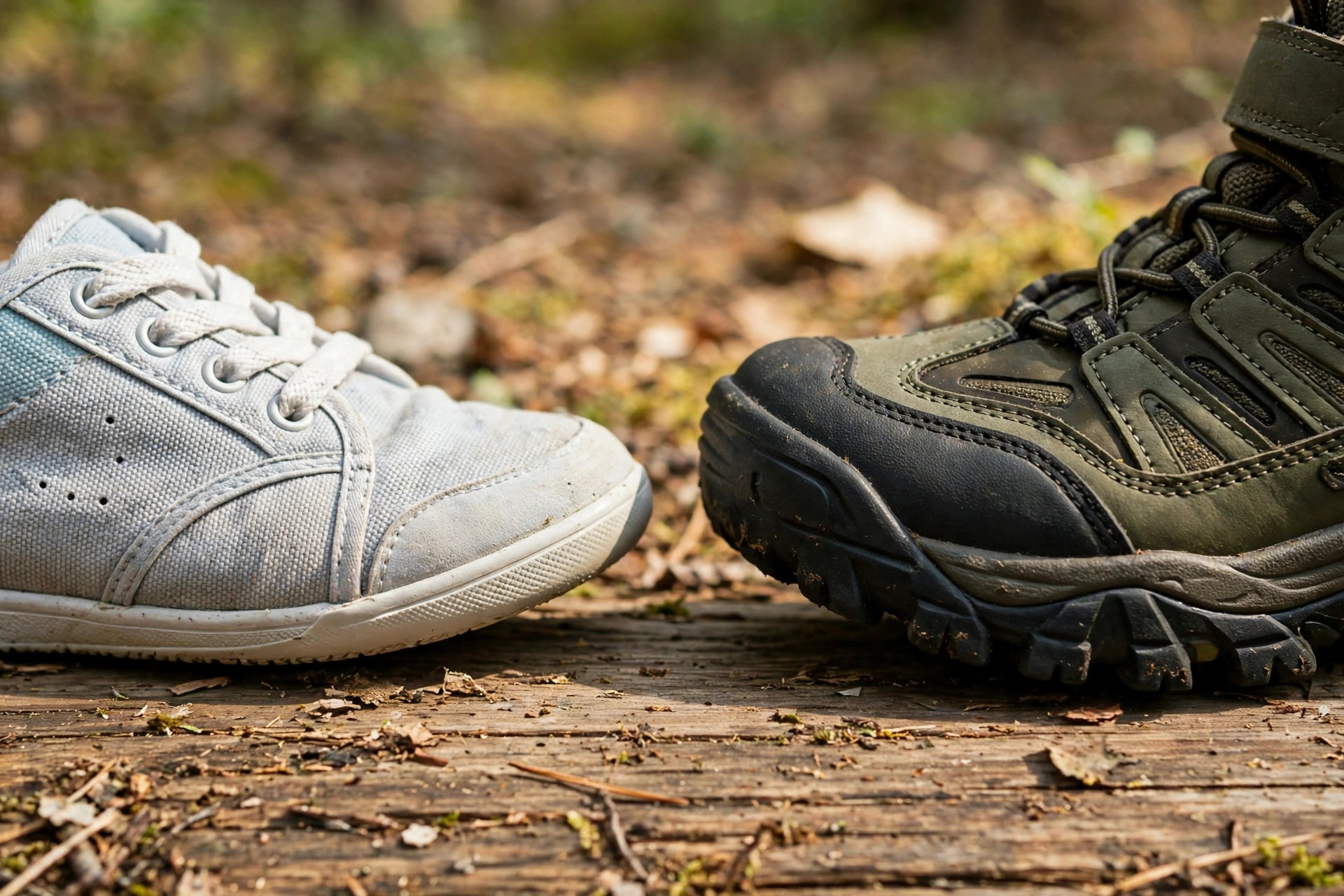
Most beginner family trails are short, graded, and dry, and sneakers were basically designed for them. If the path is a park loop, a rail trail, or a well-kept nature reserve boardwalk, a child in good-fitting trainers with decent tread will be comfortable and safe. Sneakers also win on cost and growth. Kids outgrow shoes in a single season, sometimes in a single growth spurt, and a pair of trainers gets worn to school, the park, and everywhere else. A dedicated trail shoe worn six times before it is outgrown is a harder purchase to justify. Check the tread before you decide. A sneaker with a worn-smooth sole is not fine anywhere, because grip is the one thing that matters on every trail. If the tread is deep and the fit is good, sneakers pass for easy terrain.
When Boots and Hiking Shoes Actually Matter
The case for kids hiking shoes starts with rocks and roots. A stiffer sole stops sharp stones bruising the bottom of a small foot, and a rubber toe cap saves toes on the tenth stubbed root of the day. On steep or loose descents, lugged tread grips where a flat sneaker sole skates.
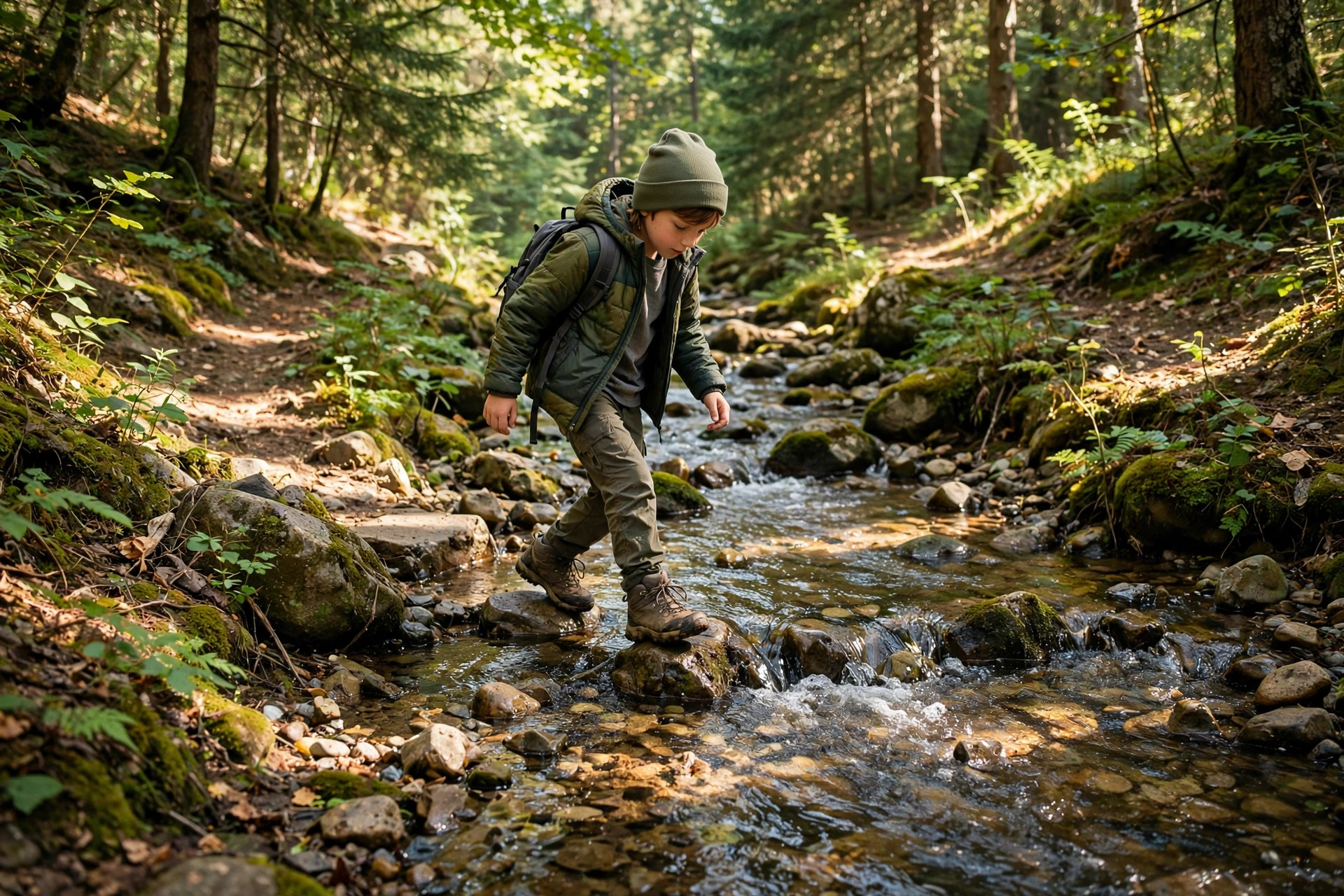
Water is the second argument. Trails with stream crossings, mud, or wet grass soak sneakers in the first ten minutes, and wet feet mean blisters and a miserable child for the rest of the hike. Waterproof hiking shoes or boots keep feet dry through crossings that would end a sneaker day early.
Cold is the third. On snow-dusted or late-autumn trails, mesh sneaker uppers let the cold straight in, while insulated boots keep small feet warm. Children lose heat faster than adults and complain about it later than they should, so cold-weather hikes are where boots matter most.
Hiking Shoes or Boots: Which Height to Pick
Between a low hiking shoe and a mid-height boot, most kids are better served by the shoe. Low-cut hiking shoes are lighter, easier to run in, and quicker to break in, and they cover the grip and toe protection most trails demand. The common worry is ankle support, but for most children it matters less than fit and grip. A boot that restricts a growing ankle does little if the fit is sloppy, while a well-fitted shoe with good tread prevents the slips that cause sprained ankles in the first place. Choose the boot when the trail is genuinely rough, the weather is cold or wet, or your child will carry a heavier pack over longer miles. Choose the shoe for everything else, and save the weight on small legs.
How Kids Hiking Shoes Should Fit
Fit matters more than any feature on the box. Shop in the afternoon, when feet are slightly swollen from the day, and bring the socks your child will actually hike in. There should be about a thumb’s width of room in front of the longest toe, enough for growth and downhill walking, but not so much that the foot slides and slams the front of the shoe.
Check three things in the store. First, the heel should stay seated when your child walks, with no lifting or rubbing. Second, the shoe should flex at the ball of the foot, not in the middle of the arch. Third, tread should be deep and widely spaced enough to shed mud rather than pack it smooth.
Because kids outgrow shoes fast, resist buying two sizes up to grow into. A sloppy fit causes more blisters and trips than a snug shoe ever will. Hand-me-downs are fine if the tread is still deep and the sole is not worn unevenly; otherwise the savings are not worth the slips.
Waterproof or Breathable: Picking the Upper
Waterproof kids hiking shoes suit wet climates, stream-heavy trails, and cold seasons. The trade-off is breathability: in hot, dry weather a waterproof lining makes small feet sweat, and sweaty feet blister too. Many families end up matching the shoe to the season rather than hunting for one pair that does everything.
For dry summer trails, a breathable mesh hiking shoe dries fast after a puddle and stays comfortable all day. For spring mud, autumn rain, and any hike where a child will definitely end up standing in a creek, waterproof wins. Whichever upper you choose, add it to the family’s shared kit list so the next size gets bought before the trailhead, not after a wet hike. Our hiking checklist is a good place to track sizes alongside the rest of your family hiking gear.
Break Them In Before the Big Hike
New shoes should never debut on the longest hike of the season. Break in new hiking shoes with a week of school runs, park trips, and one short trail walk first. Stiff soles and new heel counters need a few outings to soften, and a short hike reveals hot spots while the fix is still easy. If a big family trip is coming up, our guide to hiking with kids covers pacing, distance, and morale, which matter just as much as footwear once you are out there. Good shoes on a well-paced hike is the combination that keeps kids asking for the next one.
Frequently Asked Questions
Do kids need hiking shoes for easy trails?
No. On smooth, dry, packed trails, well-fitting sneakers with good tread are fine for most kids. Real trail shoes earn their cost on rocky, muddy, wet, or cold trails, where grip, toe protection, and waterproofing prevent the slips, bruises, and soggy feet that end hikes early.
What is the difference between kids hiking shoes and boots?
Hiking shoes are low-cut, lighter, and easier for kids to run in, while boots rise over the ankle and suit rougher trails, heavier packs, and cold or wet weather. For most children, fit and tread matter more than height, so a well-fitted shoe beats a sloppy boot.
How much room should be in kids hiking boots?
About a thumb’s width, roughly a centimetre, in front of the longest toe, checked while your child stands in their hiking socks. That space allows for growth and downhill walking. More room than that lets the foot slide, which causes blisters, jammed toes, and trips.
Are waterproof kids hiking shoes worth it?
They are worth it if your trails involve stream crossings, mud, wet grass, or cold weather, because dry feet stay warm and blister less. In hot, dry conditions, waterproof linings can make feet sweat, so a breathable shoe may be the better pick for summer-only hiking.
How long do kids hiking shoes last?
Usually one season, not because the shoe wears out but because the child outgrows it. Check fit every couple of months during growth spurts. A shoe with deep tread and an even sole can pass to a younger sibling; a shoe with smooth or unevenly worn tread should be retired.
Final Thoughts
Start with the trails you actually hike. Easy, dry paths need nothing more than good sneakers. Rocky, wet, cold, or longer trails justify real kids hiking shoes, fitted with a thumb of growing room and broken in before the big day. Buy for the terrain, fit for the foot, and let the sneakers handle the school run. Your child will not remember which shoes they wore, but they will remember whether their feet hurt, and that is the whole decision in one sentence.

9 Hiking Essentials to Add to Your Hiking Checklist

The Ultimate Guide to Hiking with Kids