Kite Wind Chart: Which Kite to Fly in 5, 10, 15 and 25 MPH Wind7 min read
Most failed kite days are not caused by a bad kite. They are caused by a good kite flown in the wrong wind. A small diamond that feels perfect at 10 mph can pull, spin, and stress its frame at 25 mph. This kite wind chart fixes that problem before you leave home. Use it to match your kite type to the forecast, choose the right line, and know when the smart move is to pack up and fly another day.
Start with our guide to the best kites for beginners if you are still choosing a kite, then match it to the wind here.
Our top picks, compared:
The Kite Wind Chart at a Glance
| Wind | How It Feels (Beaufort Feel) | Best Kite Types | Line and Safety Notes |
|---|---|---|---|
| 3 to 5 mph | Light air. Leaves barely move. | Large delta, light-wind parafoil | Light line, long tail, expect short flights. Most kites struggle here. |
| 5 to 10 mph | Light breeze. Leaves rustle, wind on your face. | Delta, diamond, small parafoil | Standard line is fine. Great for kids and first flights. |
| 10 to 15 mph | Moderate breeze. Small branches move. | Delta, diamond, parafoil, beginner stunt | The sweet spot. Check knots and bridles before launch. |
| 15 to 20 mph | Fresh breeze. Small trees sway. | Strong delta, parafoil, stunt kite | Stronger line, gloves for stunt kites, supervise kids. |
| 20 to 25 mph | Strong breeze. Large branches move. | Reinforced stunt kite, strong parafoil only | No beginner kites. Watch gusts, land early. |
| Over 25 mph | Strong wind. Trees move. | None for most flyers | Pack up. Frames snap and control is poor. |
This table is a guide, not a promise. Gusts matter more than averages.
What Wind Speed Is Best for Kites?
For most people, the best wind for kite flying is 8 to 18 mph. Beginner deltas and diamonds launch easily, stay up without constant work, and do not pull hard enough to tire out kids. Below that range you will do a lot of relaunching, and above it a lot of holding on.
Flying in 5 MPH Wind: Light Air, Big Kites
At 5 mph, patience matters more than power. Small or heavy kites often will not stay up at all. Choose a large delta with a light frame, or a light-wind parafoil with no heavy spars. Add a long, light tail to help it balance, then use a long-line launch and walk the kite up into cleaner air above the trees. Technique helps most here. Our guide on how to fly a kite covers the basic launch, and our guide on how to launch a kite solo gives the long-line method in full. Do not run to force a kite up: a steady walk back while letting out line is safer.
Flying in 10 MPH Wind: The Beginner Sweet Spot
At 10 mph, almost everything in a beginner bag will fly. Deltas lift with a short launch, diamonds feel lively without pulling hard, and small parafoils hold their shape. This is the best wind for teaching kids: the kite responds, but mistakes are gentle. Use this range to practice steady launches, gentle turns, and landing on purpose instead of crashing. Good line handling helps too, and our roundup of the best kite strings, reels and accessories explains winders and line weights.
Flying in 15 MPH Wind: More Pull, More Control
At 15 mph, flying gets more physical and more fun: parafoils pull hard, stunt kites perform properly, and deltas fly high and steady. Weak gear shows its limits here, so check three things before you launch:
- Frame and spars: look for cracks, loose fittings, and bent rods.
- Bridle and knots: a knot that slips at 8 mph can fail at 15 mph.
- Line condition: replace frayed line, do not trust it for one more flight.
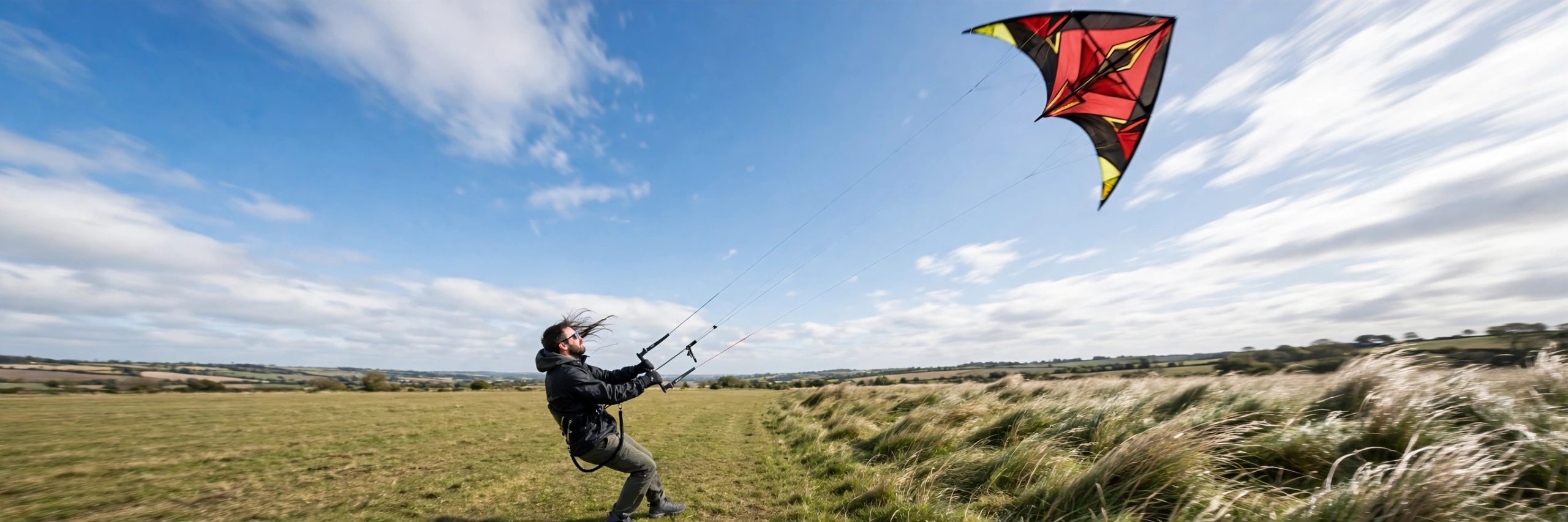
For stunt kite flyers, 12 to 18 mph is often the working range: enough pressure for clean corners and stalls, without the kite feeling twitchy or overpowered.
Can You Fly a Kite in 25 MPH Wind?
Yes, some experienced flyers can, but most recreational flyers should not. That is the most important line in this whole kite wind chart. At 20 to 25 mph, only strong, reinforced kites belong in the air. A standard beginner delta or diamond can overflex, invert, or snap a spar, and a large parafoil can pull an adult off balance or drag a child. If you do fly in the low 20s, use a kite rated for strong wind, fit the stronger line its maker recommends, wear gloves, and keep far more distance from roads, power lines, trees, and people. Land at the first sign of a frame bending or gusts pushing you around. Above 25 mph, do not launch. Save the kite for a better day.
Matching Kite Types to Wind, in Plain Terms
Delta: the most forgiving all-rounder. Light-wind deltas work from about 5 mph, standard deltas from 8 to 20 mph. If you own one kite, make it a mid-size delta.
Diamond: classic and fun in 6 to 15 mph, needs a tail, and struggles past 18 mph.
Parafoil: no rigid frame, packs small, flies from about 8 mph, but large parafoils pull hard as wind builds, so size down on a fresh day.
Stunt: needs steady wind, usually 8 to 20 mph for standard models, with vented models for stronger days.
Safety Notes That Apply at Every Wind Speed
Never fly near power lines, roads, airports, or in a thunderstorm, and leave any kite that lands on a power line where it is. Fly in open space, because trees create swirling air that makes even the right wind speed feel wrong. Watch the line, since line under tension can cut skin, and bring the kite down if wind keeps building. Landing early is a skill, not a failure.
Frequently Asked Questions
What is the best wind speed for flying a kite?
For most beginner kites, 8 to 18 mph is best. Deltas and diamonds launch easily, stay up without constant work, and do not pull too hard for kids. Below 5 mph most kites struggle to lift, and above 20 mph beginner kites can overflex or break.
Can you fly a kite in 5 mph wind?
Yes, with the right kite and some patience. Choose a large, light delta or light-wind parafoil, add a long tail, and use a long-line launch to reach cleaner air above the trees. Small or heavy kites usually will not stay up in 5 mph wind.
Can you fly a kite in 25 mph wind?
Experienced flyers with strong, reinforced kites sometimes do, but most people should not. At 25 mph beginner kites can snap spars, parafoils can pull a flyer off balance, and control is poor in gusts. Pack up above 25 mph and fly on a calmer day.
How do I know the wind speed without an anemometer?
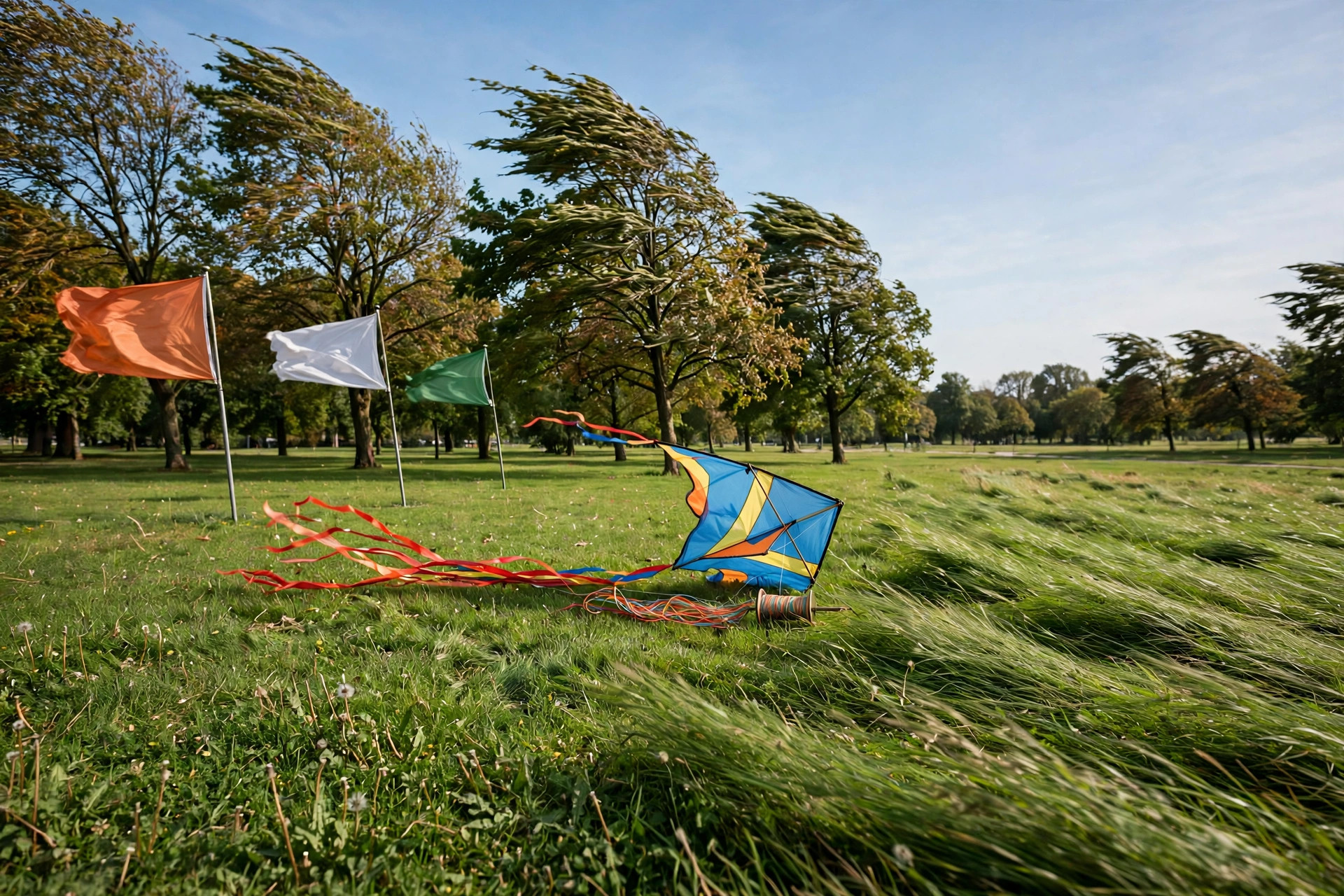
Use what you can see. Leaves rustling and wind on your face suggests 5 to 10 mph. Small branches moving points to 10 to 15 mph, and small trees swaying suggests 15 to 20 mph. A forecast app helps, but trees and flags at your field tell the local truth.
Why does my kite fly well one day and crash the next at the same wind speed?
Gusts and turbulence are usually the reason. Wind near trees, buildings, and hills swirls and drops suddenly, even when the average speed looks fine. Move to a more open field, let out more line to reach steadier air above the obstacles, or wait for a steadier day.
Final Thoughts
Keep this kite wind chart in mind every time you check a forecast. Pick the kite for the wind you actually have, start in the 8 to 18 mph sweet spot, and respect the 25 mph limit. That is the whole system, and it works.

5 Best Foil Kites to Take to the Beach This Summer

6 Best Kites for Beginners to Get Started