
How to Launch a Kite Solo Without a Helper7 min read
Most kite instructions assume you have a second person: one holds the kite, the other holds the line, and you shout across a field. Real life is different. You are often alone, or flying with a small child who cannot be your launch crew. Learning how to launch a kite solo means you can fly whenever the wind is right.
A solo kite launch is a skill, not a trick. This guide gives you three methods, the long-line launch, the back-to-wind self launch, and the sand anchor launch, plus fixes for common problems.
If you have never flown before, read our guide on how to fly a kite for the basics, then use the methods below to get airborne on your own.
Our top picks, compared:
Before You Launch: The Solo Setup Checklist
Solo flying rewards a calm setup. Two minutes on these steps makes every method easier.
- Pick open space, with no trees, power lines, or roads downwind. You will walk backwards, so check behind you too.
- Check the wind. Steady 8 to 18 mph is ideal. Our kite wind chart shows which kites suit each speed.
- Inspect the kite. Connect spars firmly, untangle the bridle, and attach the line to the tow point.
- Attach the tail, for stability in the first ten feet of the launch.
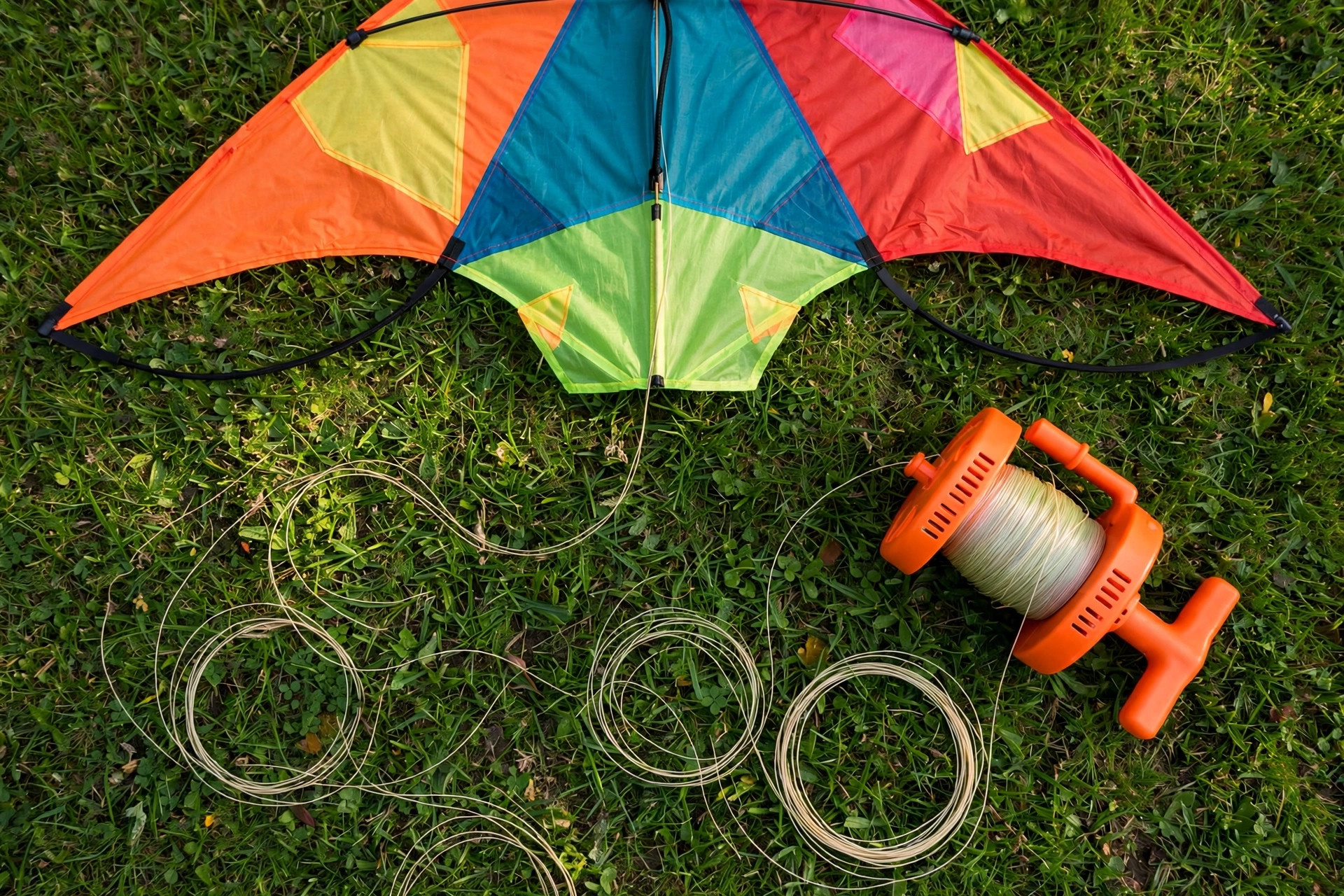
- Set your line out neatly in loose loops, so it feeds out without snagging. Good line handling is half of solo flying. A smooth winder and tangle-free line, like those in our guide to the best kite strings, reels and accessories, save more launches than any technique.
Method 1: The Long-Line Launch
The long-line launch is the most reliable solo kite launch, and the first method beginners should learn. Instead of running, you use distance: the kite starts far downwind, and the long line lets it climb into steadier air as you walk back.
Step by Step
- Stand with your back to the wind, holding your winder.
- Walk downwind, letting out 50 to 100 feet of line, and lay the kite at the end of it, nose pointing up.
- Prop the kite so it catches a little wind, against a small mound of grass, a bag, or its own tail.
- Walk back upwind, keeping the line just tight enough to stay off the ground.
- Face the kite, step backwards slowly, and pull the line in gently with short tugs.
- As the kite lifts, keep walking back and let out more line in stages. Let it climb, settle, then climb again.
Why It Works
A long line gives the kite time and height: air near the ground swirls, but air 30 or 40 feet up is smoother. In very light wind this is often the only method that works, so use the full 100 feet and small, steady pulls instead of big yanks.
Method 2: The Back-to-Wind Self Launch
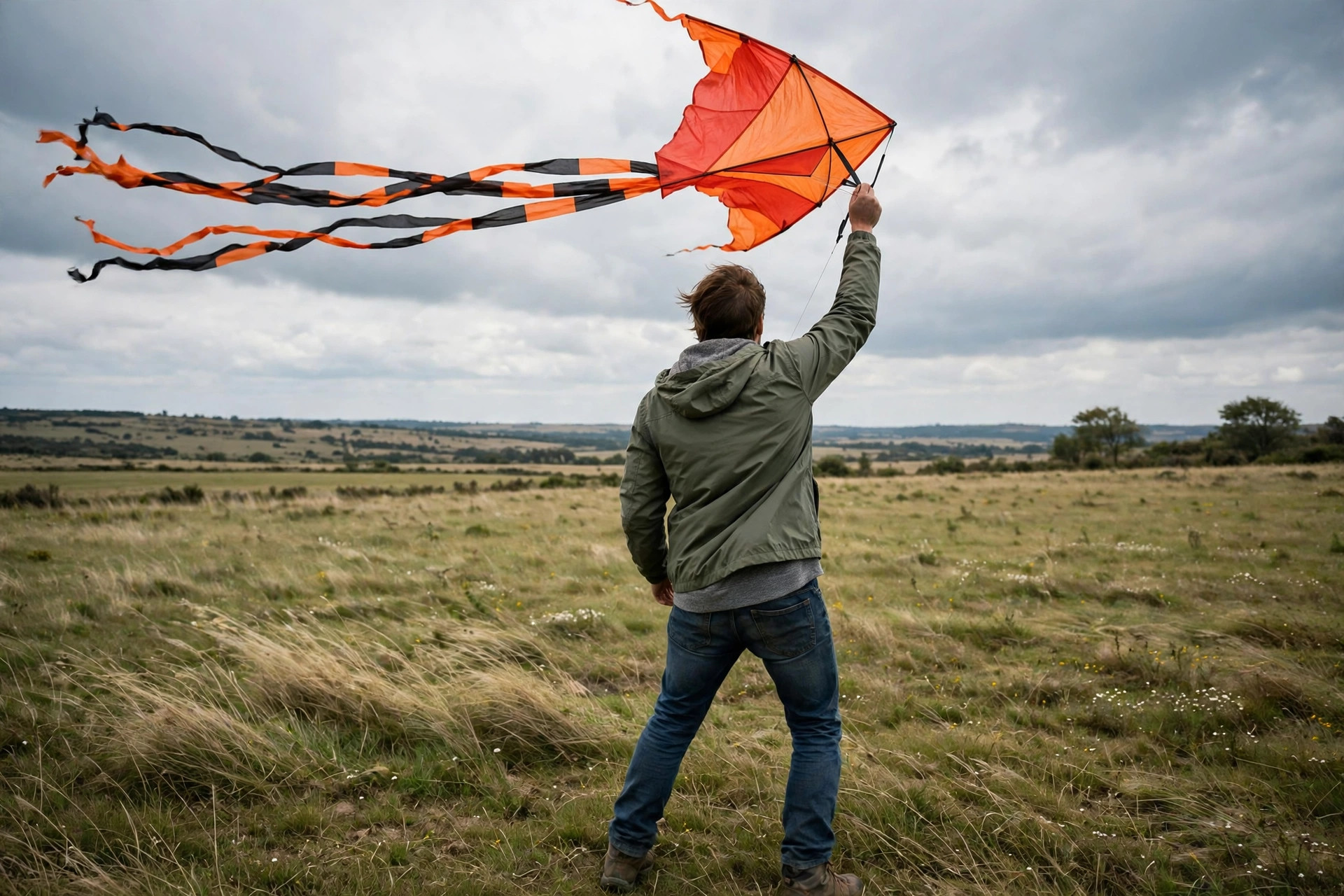
In moderate, steady wind, roughly 10 mph or more, you may not need a long line at all. The self launch kite method keeps the kite close and uses the wind to lift it.
Step by Step
- Stand with your back to the wind, winder in one hand.
- Hold the kite above shoulder height in the other hand, nose up, wind pressing against its front.
- Let the wind fill the kite until you feel it pulling to rise.
- Release it with a gentle push upward as you step backwards and ease out a little line.
- Take two or three steps back, with short pulls if it dips, and let out line gradually as it climbs.
Common Mistakes With the Self Launch
The biggest mistake is throwing the kite. A thrown kite tumbles, because it leaves your hand spinning instead of flying. Release it, do not launch it like a ball. The second mistake is letting out line too fast, which makes the kite fall backwards out of the wind. Keep tension on the line, and feed line out only while the kite is climbing. This method suits deltas and diamonds best. It is harder with a parafoil, which needs airflow to hold its shape, so use the long-line method for parafoils in light wind.
Method 3: The Beach and Sand Anchor Launch
Sand changes the problem: a kite laid flat on a beach slides around, and there is no grass to prop it against. The sand anchor launch uses the beach itself as your helper.
Step by Step
- Scoop a shallow mound in the sand, downwind of your flying spot.
- Lay the kite against it, nose-up, with a small pile of sand on its bottom tip to hold it and the wind catching its face.
- Walk back upwind, laying out 50 to 75 feet of line, as in the long-line launch.
- Pull steadily. The kite pops free, climbs, and shakes the sand off as it rises.
- On firm ground, use your kite bag or a backpack behind the kite as the prop instead.
Troubleshooting: Why Your Solo Launch Keeps Failing
The Kite Spins and Dives to One Side
Spinning usually means uneven drag. Check that the tail is centered and long enough, and both sides of the bridle are even. Add more tail first: extra tail fixes most spinning.
The Kite Will Not Lift at All
Check the wind first, not the kite. If tossed grass falls straight down, there is not enough wind today. If wind exists at head height but not ground level, use a longer line layout.
The Line Tangles, or the Kite Crashes When You Stop Walking
Lay line out straight or in big, loose loops, and walk the same path back, because stepping over your line creates most tangles. If the kite crashes when you stop walking, you were supplying the wind by walking, which is normal in light air. Let out more line so the kite reaches steadier air higher up.
Which Solo Method Should You Use?
In light wind, or with a parafoil, choose the long-line launch. In moderate, steady wind, choose the back-to-wind self launch. At the beach, choose the sand anchor launch. For an easy solo kite, look for light weight, a stable delta shape, and a tail in the box: our best kites for beginners picks include several.
Frequently Asked Questions
How do you fly a kite by yourself?
Use the long-line launch. Lay out 50 to 100 feet of line, prop the kite nose-up downwind, walk back, and pull the line in gently while stepping backwards. The kite climbs into steadier air as you let out line in stages.
How much wind do you need to launch a kite alone?
Steady wind of about 8 to 18 mph makes solo launching easiest. In 5 to 8 mph, a light delta and a full long-line layout can still work, but expect several tries. In gusty or very light wind, a steadier day is the real fix.
Can you launch a kite with no wind at all?
Not in a way that stays up. A kite needs moving air to generate lift, so with zero wind it glides down as soon as you stop moving. Specialty zero-wind kites exist, but standard outdoor kites need at least a light breeze.
Why does my kite keep crashing right after I launch it?
Most early crashes come from messy air near the ground, a spinning kite that needs more tail, or line let out too fast during the climb. Keep tension on the line, add tail, and let the kite gain height in stages instead of feeding out all your line at once.
What is the easiest kite to launch solo?
A mid-size delta with a tail is the easiest choice. Deltas are stable, lift in light wind, and forgive small mistakes. Diamonds also work in moderate wind. Large parafoils are hardest to launch alone in light air, because they need airflow to take shape.
Final Thoughts
Learning how to launch a kite alone removes the biggest barrier to flying more often. Start with the long-line launch, add the self launch on a steady day, and use the sand anchor method at the beach. Soon it feels routine.

7 Best Prism Kites for All Experience Levels

Kite Storage and Care: Bridle Knots, Tangles and Line Winders Solved
