
Kite Storage and Care: Bridle Knots, Tangles and Line Winders Solved7 min read
Most kites do not die in the air. They die in the closet, the garage, or the trunk of the car, slowly tangling, fading, and mildewing between flights. Learning how to store a kite properly takes about ten minutes at the end of a flying day, and it is the difference between a kite that launches in seconds next spring and a bird’s nest you give up on by June.
Good kite storage comes down to four habits: wind the line without twists, protect the bridle, store the sail dry and out of the sun, and keep the spars straight. If your current kite is already beyond saving, our guide to the best kites for beginners is a good place to start fresh.
Our top picks, compared:
How to Store a Kite So It Flies Like New Next Season
Start with the golden rule: a kite should go into storage in the exact condition you would want to launch it. Dry sail, untangled line, bridle lines lying flat, spars unstressed. Anything you skip now gets worse in storage, not better: damp becomes mildew, a loose loop becomes a knot, and a bent spar stored under weight stays bent.
Wind Your Line Without Twists: Figure-Eight Winding
Winding in simple circles around a winder twists the line once per loop, and those twists bloom into tangles later. Figure-eight winding cancels the twist out: wind the line in a figure eight around the two posts or horns of your winder, crossing in the middle each time. Three habits make winding foolproof:
- Wind with light, even tension.
- Secure the end: tuck the last few inches through a loop or under the final wraps.
- Wind at the field, not at home.
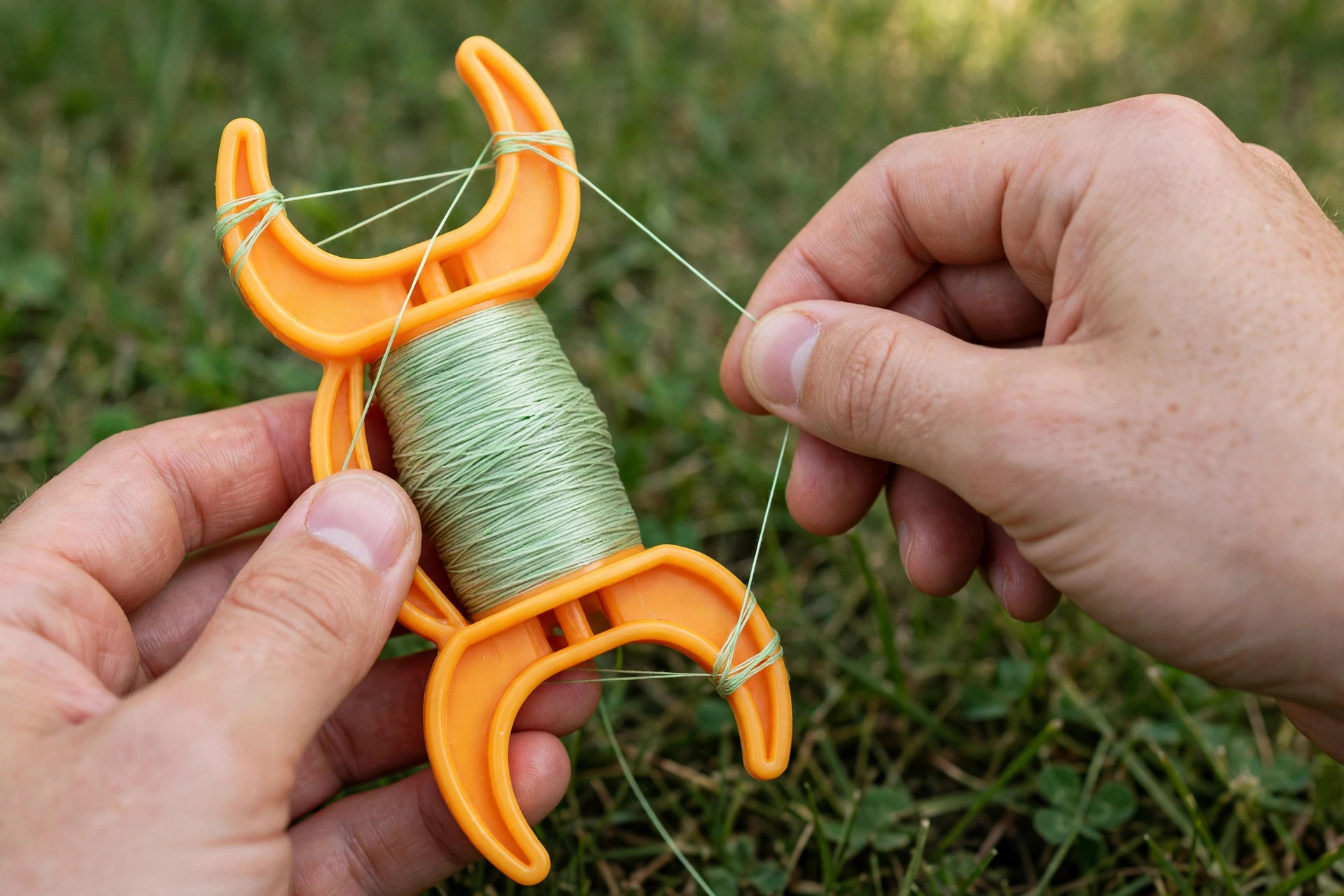
Protect the Bridle: Larks Head Knots, Sleeves and One Big Rule
The one big rule: do not detach the bridle. Bridles are tuned at their knots, and taking them apart destroys that tuning. Instead, keep the bridle attached and calm: leave the flying lines connected with their larks head knots where your setup allows it, or clip the line ends together so nothing can wander. When you bag the kite, lay the bridle flat along the sail instead of balling it up.
Store the Sail Dry, Loose and Out of the Sun
Dry first, always: shake off sand and grass, then let the sail air-dry fully before it goes in the bag; a kite packed damp can grow mildew in a few warm weeks.
Loose, not crushed: fold or roll the sail along its existing creases rather than stuffing it into the smallest possible ball.
Dark and cool: sunlight through a garage window fades colors and degrades ripstop over a single summer, and a hot car trunk is worse.

Spar Storage: Keep Rods Straight and Together
Carbon and fiberglass spars hate being stored under tension or weight. Take the frame apart the way the maker intended, and store the rods loose inside the kite bag’s sleeve or a separate tube, never left assembled under tension for months. Keep every spar with its own kite: rods that look identical often differ by a few millimeters, and a spar borrowed from another kite can split a fitting.
How to Detangle Kite Line: The Bird’s Nest, Step by Step
- Work on a flat, clean surface with room to spread out.
- Find the two ends and anchor them apart; most tangles are a few loops threaded through each other, not true knots.
- Loosen, never pull: teasing a loop open works, yanking a strand tight sets the knot.
- Work from the outside in, freeing one loop at a time and laying freed line in a neat pile.
- Untangle from the kite end last, checking the bridle separately.
When the line is free, wind it figure-eight style before it goes anywhere near the bag.
Kite Line Winders and Bags That Actually Help
A basic kite line winder is the cheapest upgrade in the hobby. Hoop winders suit single-line kites, handled winders with horns suit figure-eight winding, and stunt flyers often use a separate winder for each line so pairs stay matched. For bags, the kite’s own sleeve bag is fine for most flyers; if you own several kites, a long soft bag that keeps them upright beats a bin where they crush each other. Several sets in our best kites for beginners roundup include a winder and bag, which keeps the whole system together.
End-of-Season Storage Checklist
- Fly it or shake it out, and inspect the sail for tears and the spars for cracks.
- Clean off sand and salt with a soft brush; rinse salt spray with fresh water.
- Dry the sail completely, indoors if needed.
- Check bridle knots and sleeves, and repair small tears now rather than in spring.
- Wind the line figure-eight style and secure the ends.
- Bag the kite loosely, spars in their sleeve, and store it cool, dark, and dry.
A kite stored this way launches the way our how to fly a kite guide describes: walk out, unwind, and go. And before you blame a stored kite for a bad day, check the forecast against our kite wind chart.
| Problem | Usual Cause | Fix |
|---|---|---|
| Tangled line | Winding in circles, loose ends loose in the bag | Figure-eight winding, secure the ends, untangle loop by loop |
| Bridle knots | Bridle left loose to rub and loop around fittings | Keep the bridle attached, laid flat, lines clipped together |
| Faded sail | Storage in sunlight or a hot car trunk | Bag the kite and store it in a cool, dark place |
| Bent spar | Spars stored assembled under tension or under weight | Store rods loose, straight, and in the kite bag sleeve |
| Mildew | Sail packed away damp | Dry the sail fully before storage and air the bag if it smells |
Frequently Asked Questions
Should I take the bridle off my kite for storage?
No. Bridles are tuned at the factory knots, and removing them destroys that tuning. Keep the bridle attached, lay it flat along the sail, and clip the line ends together so nothing can loop around a fitting.
What is the best way to wind kite line so it does not tangle?
Wind in a figure eight around your winder’s posts or horns. Each half of the eight twists the line one way and the other half cancels it, so the line comes off flat. Keep the tension light and even, and always secure the loose end before bagging the winder.
Can I store my kite in the garage or car?
A garage shelf away from windows is usually fine, but a car trunk is not. Trunks bake in summer sun, and heat plus ultraviolet light fade and weaken ripstop fabric fast. A cool, dark closet indoors is the best storage spot.
How do I get mildew off a kite sail?
Brush off what you can outdoors, then sponge the sail with a mild soap solution, rinse, and dry it completely in open air. Work gently, because scrubbing damages the fabric coating. Prevention is far easier: most mildew comes from ignoring the dry-before-storage rule.
How long can a kite stay in storage without damage?
Indefinitely, if it goes away clean, dry, untangled, and unstressed, and lives somewhere cool and dark. Check stored kites once a year for mildew smell, brittle line, and cracked spars.
Final Thoughts
None of this takes long. Wind the line in figure eights, leave the bridle alone, dry the sail, and give the spars a rest. That is how to store a kite so that next season starts with a launch instead of an apology, and it is the cheapest performance upgrade in kite flying.

Why Does My Kite Keep Crashing? 8 Fixes for Spinning, Diving and Stalling

Kite Flying With Kids by Age: What Works at 3, 5 and 8 Years Old
