
Kite Flying With Kids by Age: What Works at 3, 5 and 8 Years Old7 min read
Kite flying with kids fails most often for one simple reason: the child was handed the wrong job. A 3-year-old given a full-size delta in gusty wind will be bored or overwhelmed in five minutes, while an 8-year-old stuck holding a tail will wander off. Match the kite, the line, and the job to the age, and the same afternoon feels completely different.
This guide breaks it into three stages: what a 3-year-old can actually do, what changes at 5, and what an 8-year-old can own outright, plus safety by age and realistic session lengths.
Start with the right gear: our roundup of the best kites for kids and toddlers covers the sleds, deltas, and diamonds mentioned below.
Our top picks, compared:
Kite Flying With Kids: The Age-by-Age Chart
The kite gets bigger, the line gets longer, and the adult’s hands get less involved with each stage.
| Age | Child’s Role | Best Kite Type | Line Length |
|---|---|---|---|
| 3 | Watches, feels the pull, holds the winder with an adult’s hand over theirs | Small sled kite or pocket parafoil | Short: 30 to 50 feet of line out |
| 5 | Holds the kite for launches, steers with guidance, winds line in | Simple delta or diamond with a tail | 50 to 75 feet of line out |
| 8 | Sets up, launches solo, reads the wind, lands on purpose | Larger delta, small parafoil, trainer stunt kite | 75 to 150 feet of line out |
| 10+ | Full setup, bridle checks, teaches younger kids | Stunt kite or parafoil sized to the child | Full line, 150 to 300 feet |
Read the chart as a rough guide, not a rulebook. Step every child down one level on a gusty day.
Age 3: Watching, Holding and Tiny Sled Kites
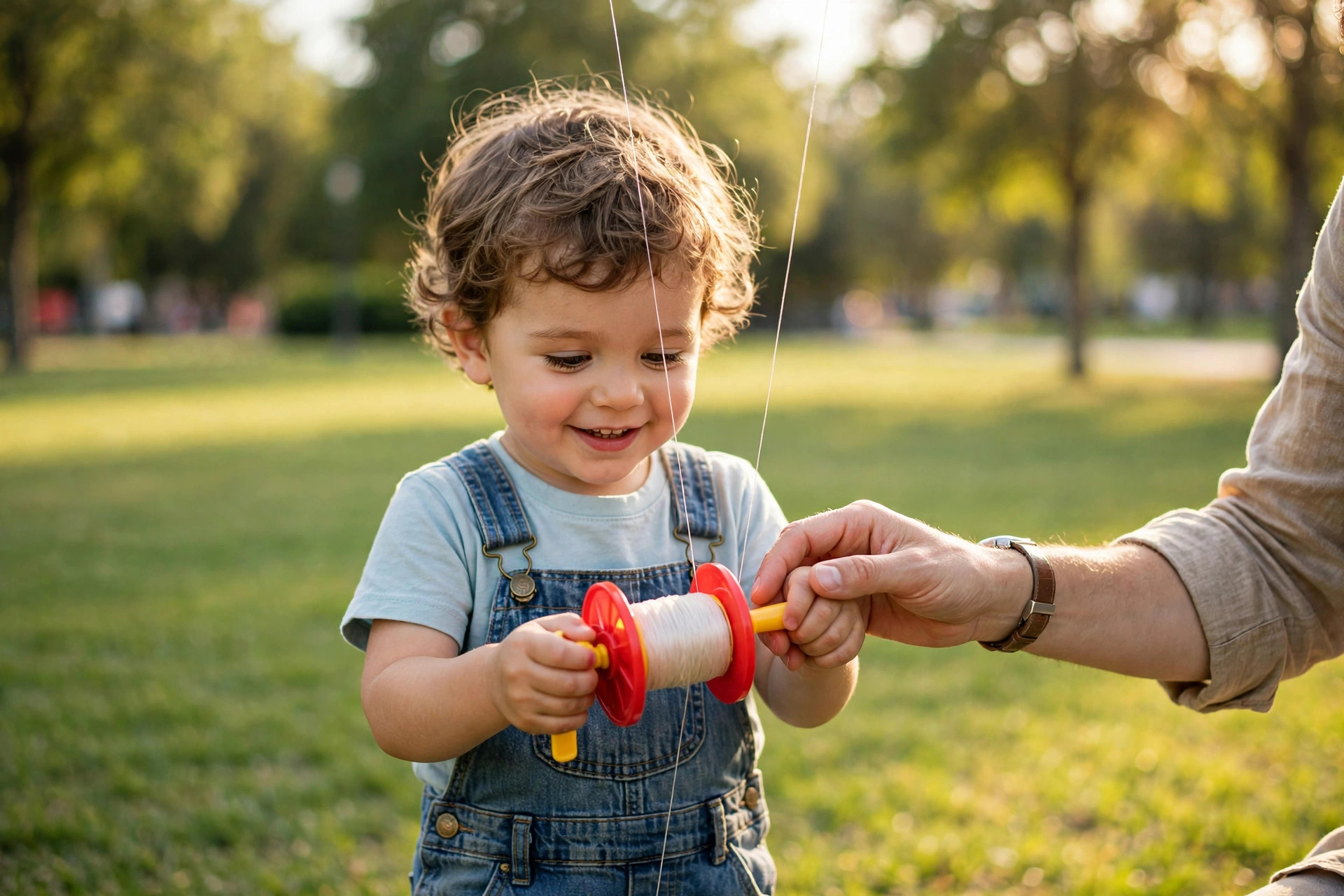
At 3, kite flying is a shared activity, not a solo one. Your child watches the kite, feels the pull of the line, and holds the winder with your hand over theirs. Choose a tiny sled kite or a small pocket parafoil: sleds have no rigid spars, launch in light wind, and forgive crashes.
Keep the line short and hold the winder yourself, or clip it to your belt; let your 3-year-old hold the line below your hand so they feel the tugs. Sessions at this age run 10 to 20 minutes of kite time inside a longer park visit.
Age 5: First Launches With a Helper
Five is the launch age. A 5-year-old can hold a kite up for a helper, walk into launch position, and steer a gentle kite with an adult standing by. Simple deltas are the classic choice. Teach the two-person launch: the helper holds the kite, the child walks back 30 or 40 feet holding the winder, and on a signal the helper lets go while the child walks backward, not runs. Running is the hardest habit to break at this age. For a refresher on the grown-up side, our guide on how to fly a kite walks through the full launch.
Give your 5-year-old real jobs: carrying the kite, holding it for the launch, calling out wind changes, and winding line in.
Age 8: Solo Launches and Reading the Wind
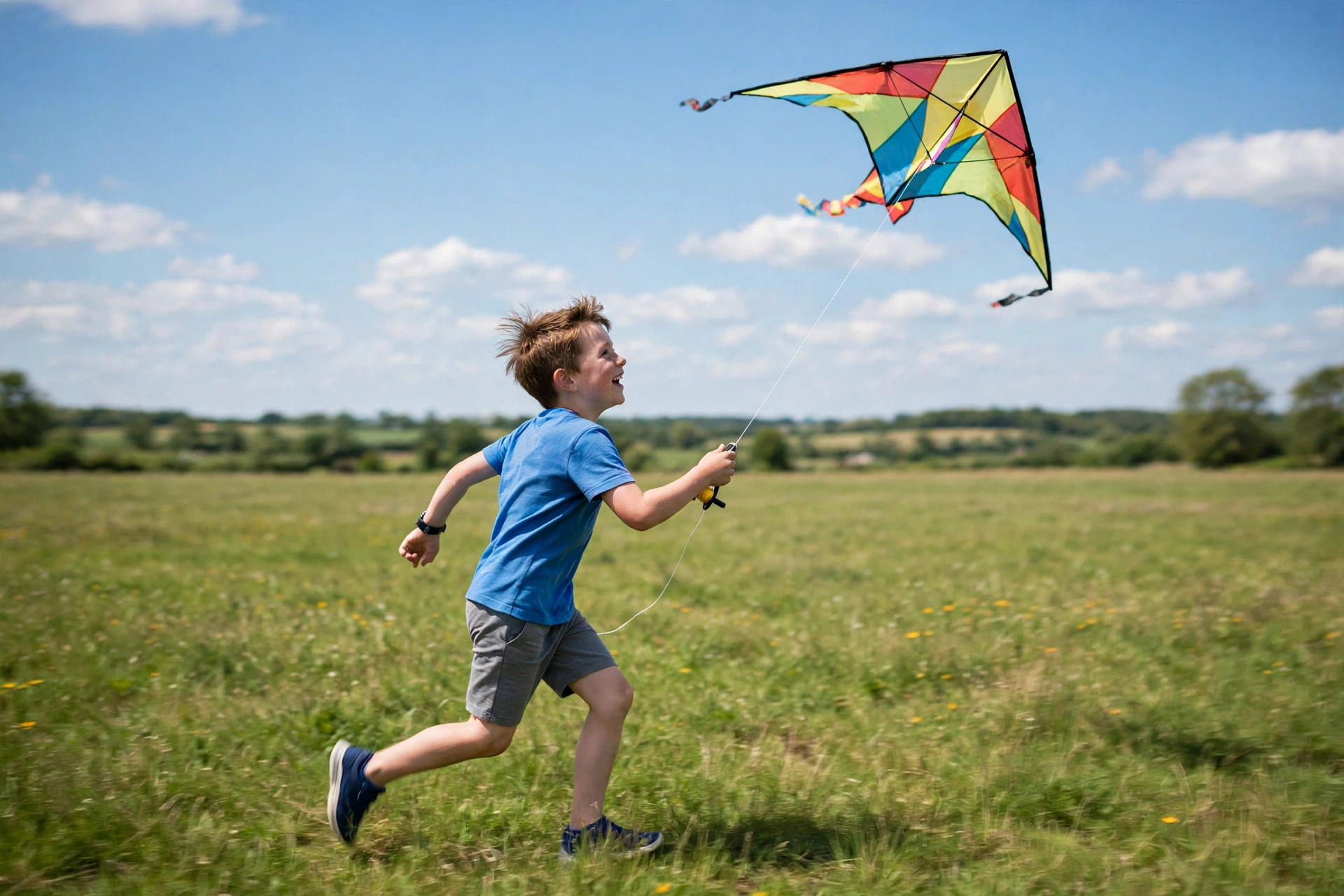
By 8, most kids can run the whole single-line show: check the wind, set up, launch alone, manage the line, and land on purpose. Teach wind reading as a skill: watch flags and treetops, feel gusts, and pick the launch moment. Our kite wind chart matches kite types to wind speeds and makes a great cheat sheet.
Kites for 8 year olds can include larger deltas, small parafoils, and, for patient kids, a small trainer stunt kite. If your child is asking for a step up, the best kites for kids and toddlers roundup also covers the bigger kids’ models.
Safety Rules That Change With Age
The non-negotiables never change: never fly near power lines, roads, or airports, never fly in a thunderstorm, and leave any kite that lands on a power line exactly where it is.
- Age 3: an adult holds the winder at all times; watch for line near necks and fingers.
- Age 5: the child can hold the winder in steady wind, but an adult stays within arm’s reach and takes over in gusts.
- Age 8: the child flies solo in open space, wears gloves if the kite pulls hard, and learns to bring the kite down when the wind builds.
One rule applies at all ages: line under tension can cut skin, so never wrap line around a hand or arm.
Session Length and Frustration Management
Plan shorter than you hope. A great 25-minute kite session beats a forced hour that ends in tears. Frustration usually comes from three fixable causes: the wind is wrong, the kite is wrong for the age, or the child has no job. If the wind dies, switch to a running game with the kite as a prop, or pack up and promise a rematch. Ending early on a good note protects the next trip.
Jobs Kids Can Own on Every Kite Day
- Wind watcher: reports gusts, lulls, and flag direction.
- Launch holder: holds the kite for the two-person launch (age 5 and up).
- Tail manager: untangles and attaches the tail.
- Line counter: counts line out in chunks and announces the total.
- Landing captain: walks the kite down hand over hand at the end (age 8 and up).
- Pack-up chief: winds line evenly and checks the kite for damage.
Rotate the jobs between siblings so the older child is not always the pilot.
Frequently Asked Questions
What age can a child fly a kite by themselves?
Most children can fly a simple single-line kite solo around age 8, in steady moderate wind and open space. Younger children can hold the line and steer with an adult close by.
What is the best kite for a 3 year old?
A small sled kite or pocket parafoil. These kites have no rigid spars, launch in light wind, pack tiny, and survive being dropped and dragged. Keep the line short and your own hand on the winder.
How long should a kite flying session with kids last?
Plan on 15 to 30 minutes of actual flying for young children, inside a longer park visit. Three-year-olds may be done in 10 minutes; eight-year-olds in good wind may fly for an hour. End while it is still fun.
What wind is best for kite flying with kids?
Steady 8 to 15 mph wind is the sweet spot: the kite launches easily and stays up without pulling hard. Below 5 mph most kites will not stay up, and above 18 mph beginner kites pull too hard and crash fast.
How do I keep kite flying from ending in tears?
Most meltdowns trace back to wrong wind, a kite that does not match the child’s age, or a child with nothing to do. Pick a steady-wind day, give every child a real job, and quit while it is still fun.
Final Thoughts
Kite flying with kids is really three different activities wearing the same name. At 3 it is watching and holding on together, at 5 it is launching with help, and at 8 it becomes a real solo skill. Match the kite, the line, and the job to the child in front of you, keep sessions short, and you will get the only result that matters: a kid who asks when you are going again.

How to Launch a Kite Solo Without a Helper

How to Fly a Kite in 6 Steps
