How to Repair a Torn Kite and Broken Spars at Home7 min read
A crashed kite does not have to be a dead kite. Torn sails, split seams, and snapped spars look serious on the ground, but most can be fixed on a kitchen table in under an hour. Learning how to repair a kite saves a favorite flier from the trash and teaches you how your kite is built. Nearly every repair uses the same handful of supplies: ripstop tape, a needle and thread, spare line, and a replacement spar or two.
One honest note: if the kite was very cheap and the damage list is long, a fresh start can make more sense; our guide to the best kites for beginners shows what a replacement would get you. But try the repair first.
Our top picks, compared:
How to Repair a Kite: Start With a Full Inspection
Lay the kite flat, fully assembled, and look it over in good light. Check:
- Sail: tears, pinholes, stretched seams.
- Frame: flex each spar gently; one that feels soft or crunchy is cracked inside.
- Fittings: center T, end caps, ferrules for cracks.
- Bridle: follow every line from sail to tow point for fraying.
Work in order: sail first, frame second, bridle last.
Common Kite Damage and the Fix for Each
| Damage | Repair Method | Materials Needed |
|---|---|---|
| Small sail tear (under 2 inches) | Ripstop tape patch on both sides | Ripstop tape, scissors, rubbing alcohol |
| Long or L-shaped tear | Sew the tear first, then tape over the stitching | Ripstop tape, needle, bonded polyester thread |
| Split seam | Re-sew the seam, then tape over the stitching | Sewing machine or needle, bonded polyester thread |
| Broken fiberglass spar | Replace with the same diameter and length | Replacement spar, fine hacksaw, ferrule |
| Broken carbon spar | Replace the section; never splint carbon | Replacement carbon tube, ferrule, epoxy |
| Frayed or snapped bridle line | Replace the full line and re-tie the knots | Braided Dacron line, marker, lighter |
| Cracked fitting or ferrule | Swap in a matching fitting | Replacement fitting, pliers |
Fix a Torn Kite Sail With Ripstop Tape
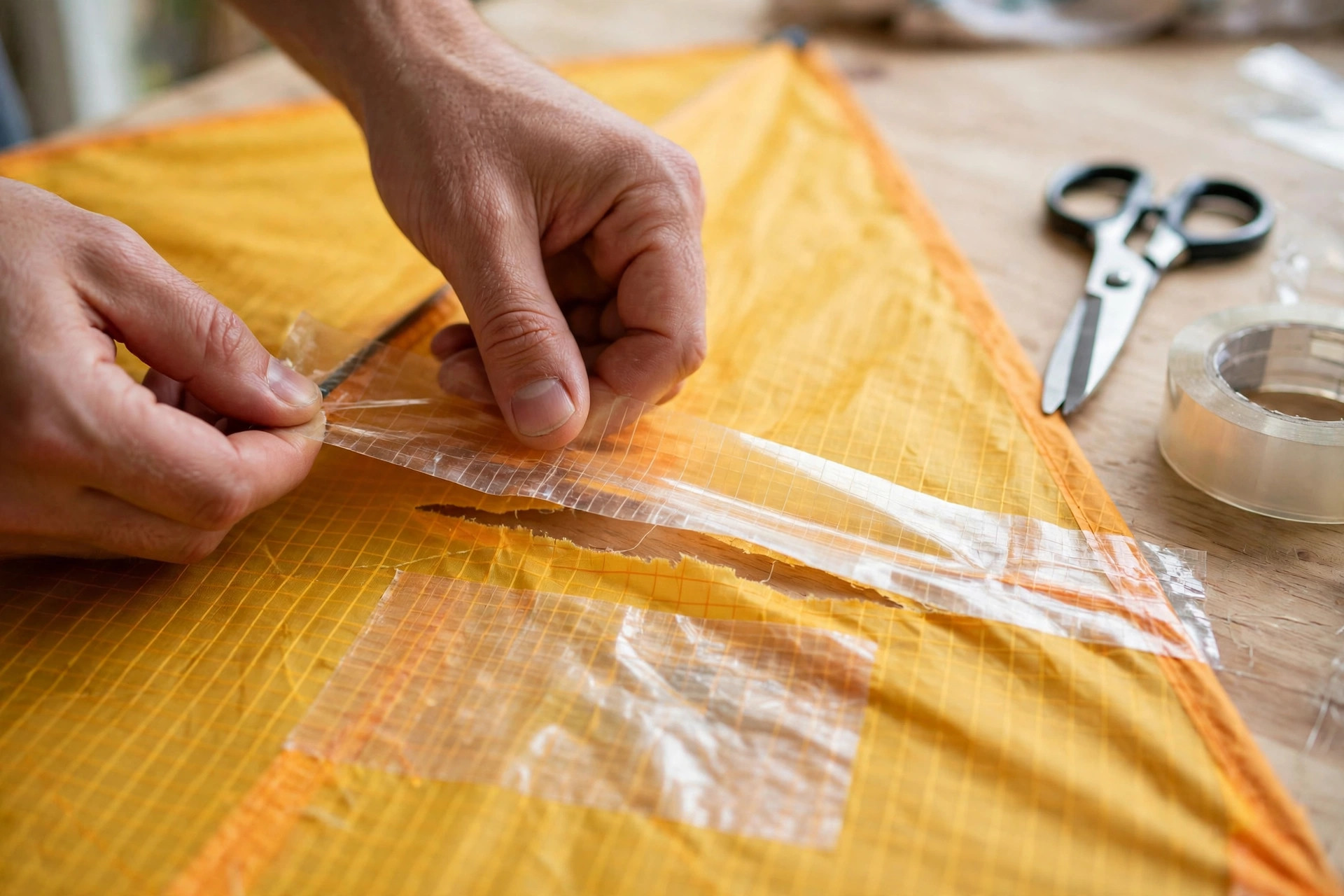
- Clean around the tear with a cloth dampened with rubbing alcohol, and let it dry fully.
- Lay the sail flat and push the torn edges together so the ripstop pattern lines up.
- Cut tape at least an inch longer than the tear in every direction, and round the corners.
- Apply the tape on one side, pressing from the center outward.
- Flip the kite and patch the other side the same way.
For a long or L-shaped tear, sew the tear first with a zigzag stitch, then tape over the stitching on both sides.
Repairing a Split Seam
Re-sew the seam with bonded polyester thread, which resists sun and water far better than cotton. Match the original stitch line and backstitch at both ends. A machine zigzag is fastest, but a hand running stitch works. Then run ripstop tape over the stitching on high-stress seams near the spine.
Replace a Broken Kite Spar in Five Steps
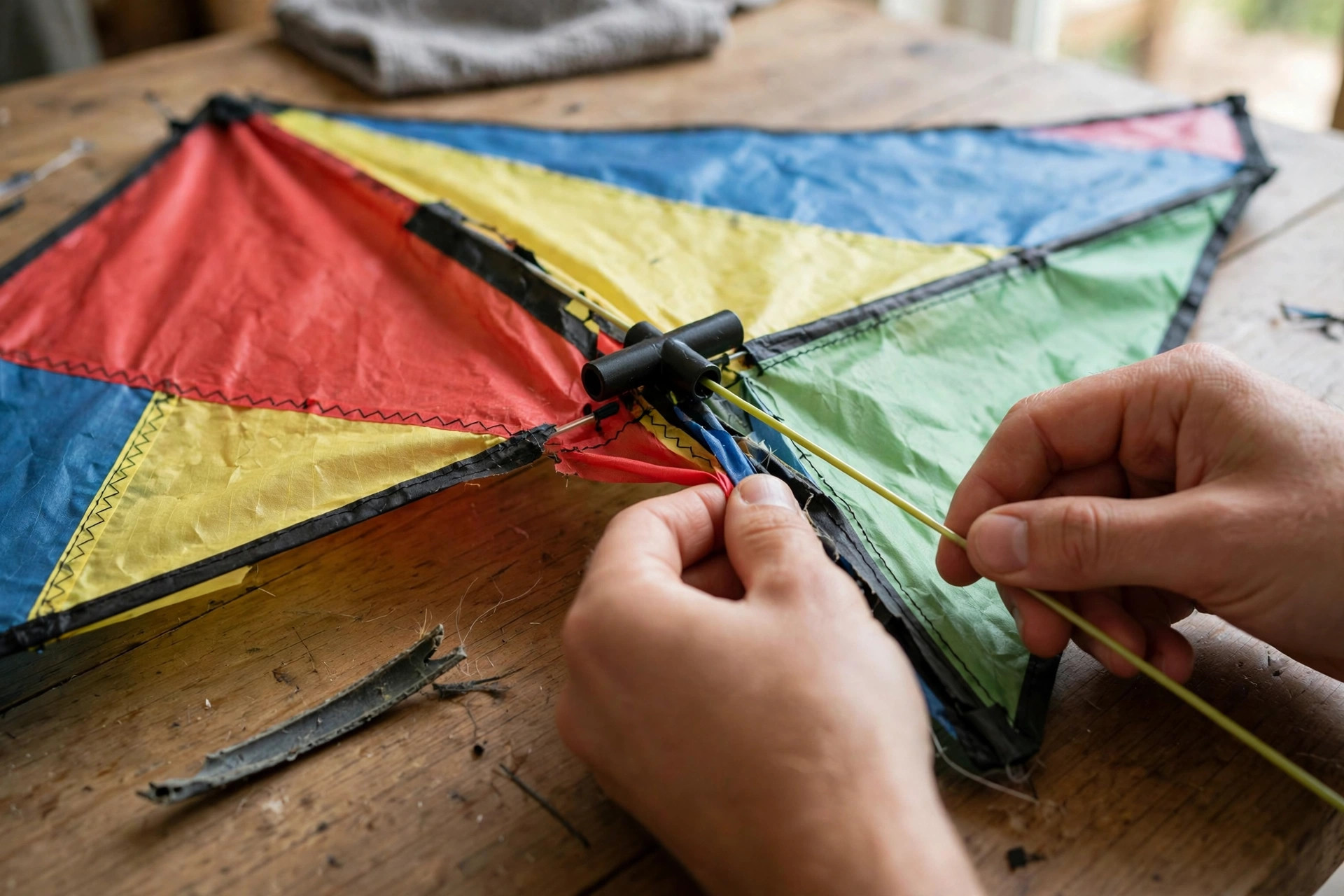
- Remove the broken spar and keep every piece, including fittings and end caps.
- Measure the full length of the original, including any part hidden inside a ferrule.
- Measure the diameter with calipers; spar sizes are given in millimeters, and close is not close enough.
- Buy the same material: fiberglass for most beginner kites, carbon for light, stiff performance frames.
- Cut the new spar to length with a fine hacksaw, sand the cut end smooth, and refit the ferrules and end caps.
Spine vs Spreader: Know Which Spar You Broke
The spine runs nose to tail down the center; the spreader runs wing to wing across the back, usually in two halves joined by a ferrule. Spine breaks come from nose-first crashes; spreader breaks come from a wing digging in. The two are rarely the same length, so identify yours before ordering.
A Word About Ferrules
A ferrule is the short tube that joins two spar sections. If one is cracked, replace it too, even if the spar looks fine. Never splint a broken carbon spar: carbon fails suddenly, and a splinted section will snap again under load.
Kite Bridle Repair: New Line and Honest Knots
Use braided Dacron line of the same weight as the original. Measure the old line knot to knot before cutting anything, and mark the new line at exactly the same length. Tie the same knots the kite came with, usually a lark’s head at the frame and an overhand or figure-eight stopper at the tow point. After re-tying, hold the kite by the tow point and check that both sides hang level. Small bridle changes make big flight changes, so adjust in tiny steps.
When a Repair Is Not Worth It
Replace rather than repair when two or more spars are broken and the sail is torn in several places, when the fabric is sun-rotted and tears like paper, or when fittings are cracked in several spots at once. Keep the old kite for spare parts and pick a replacement from our roundup of the best kites for beginners.
The Kite Repair Kit to Keep in Your Bag
- Ripstop tape in a neutral color
- A short length of spare bridle line and a spare flying line
- One spare spar in your kite’s most common size
- Spare end caps, a ferrule, and a spare tow ring
- A small multi-tool and a lighter for sealing cut line ends
At home, add a needle and bonded polyester thread, a fine hacksaw, and calipers.
Frequently Asked Questions
Can you repair a kite with regular household tape?
No. Packing tape and duct tape are too heavy, too stiff, and peel off sailcloth quickly, often mid-flight. Ripstop tape is made for nylon and polyester sails, flexes with the fabric, and weighs almost nothing.
How do you fix a large tear in a kite sail?
Sew first, then tape. Stitch the edges together with a zigzag stitch and bonded polyester thread, then apply ripstop tape patches on both sides over the stitching. That layered repair is close to the original sail strength.
Can a broken carbon spar be glued back together?
No, not reliably. Carbon tubes fail suddenly, and a glued or splinted joint creates a stiff spot that snaps again under load. Replace the broken section with the same diameter carbon tube and a sound ferrule.
What line should I use to replace a bridle line?
Use braided Dacron line in the same weight rating as the original bridle. Measure the old line knot to knot and copy its length exactly, because bridle geometry sets the kite’s angle to the wind. Avoid stretchy nylon line.
Is it worth repairing a cheap beginner kite?
Often, yes. A tape patch or a single replacement spar costs very little and takes minutes. It stops making sense when several spars, fittings, and the sail all need work at once; then put the money toward a sturdier replacement.
Final Thoughts
Most kite damage is a torn sail, a split seam, a broken spar, or a tired bridle, and every one has a fix you can do at home. After any repair, re-check the basics in our guide on how to fly a kite, then relaunch gently in moderate wind. Our guide on how to launch a kite solo has the long-line method that gives a repaired kite the softest first flight back.

Guide to Fighter Kites and Kite Fighting

The Colorful History of Kites