How to Hang and Store a Crokinole Board Safely9 min read
A crokinole board is roughly 30 inches of finished wood, and it warps if you treat it casually. Where the board lives between games matters almost as much as how you play on it. Learning how to hang a crokinole board properly, or store it flat when a wall is not an option, is the difference between a board that stays true for decades and one that cups within a few seasons.
The board has two enemies in storage: moisture and uneven pressure. Damp air swells the wood, dry heat shrinks it, and leaning a board at an angle loads one edge for months at a time. Every storage method below is judged against those two enemies, plus a third practical concern, keeping the playing surface scratch-free.
Good boards are built with storage in mind. Many have reinforced frames, solid backs, and even factory-fitted hanging hardware. If you are still choosing a board, our roundup of the best crokinole boards notes which constructions hold up best over years of use.
Crokinole Board Storage Options at a Glance
Here are the four realistic ways to keep a board, with the honest trade-off of each. Most owners end up using two: one for everyday storage and one for travel.
| Storage Option | Best For | Watch Out For |
|---|---|---|
| Wall mount by the frame | Everyday storage in a game room; keeps the board flat and doubles as decor | Needs a stud or proper anchors; never hang by the playing surface or a peg |
| Flat on a shelf or under a bed | Long-term storage and boards played rarely | Nothing heavy on top; dust and grit settle on the surface if it is uncovered |
| Standing on edge in a closet | Tight spaces where flat storage is impossible | Must rest evenly on the frame edge, not leaned at an angle against a damp wall |
| In a padded carry bag | Transport to game nights and cottages, and dust-free closet storage | A bag protects against scratches, not humidity; store the bag itself somewhere dry |
The pattern underneath the table: flat and vertical are both safe, because the board’s weight is spread evenly. Angled and damp are what cause damage.
How to Hang a Crokinole Board on the Wall
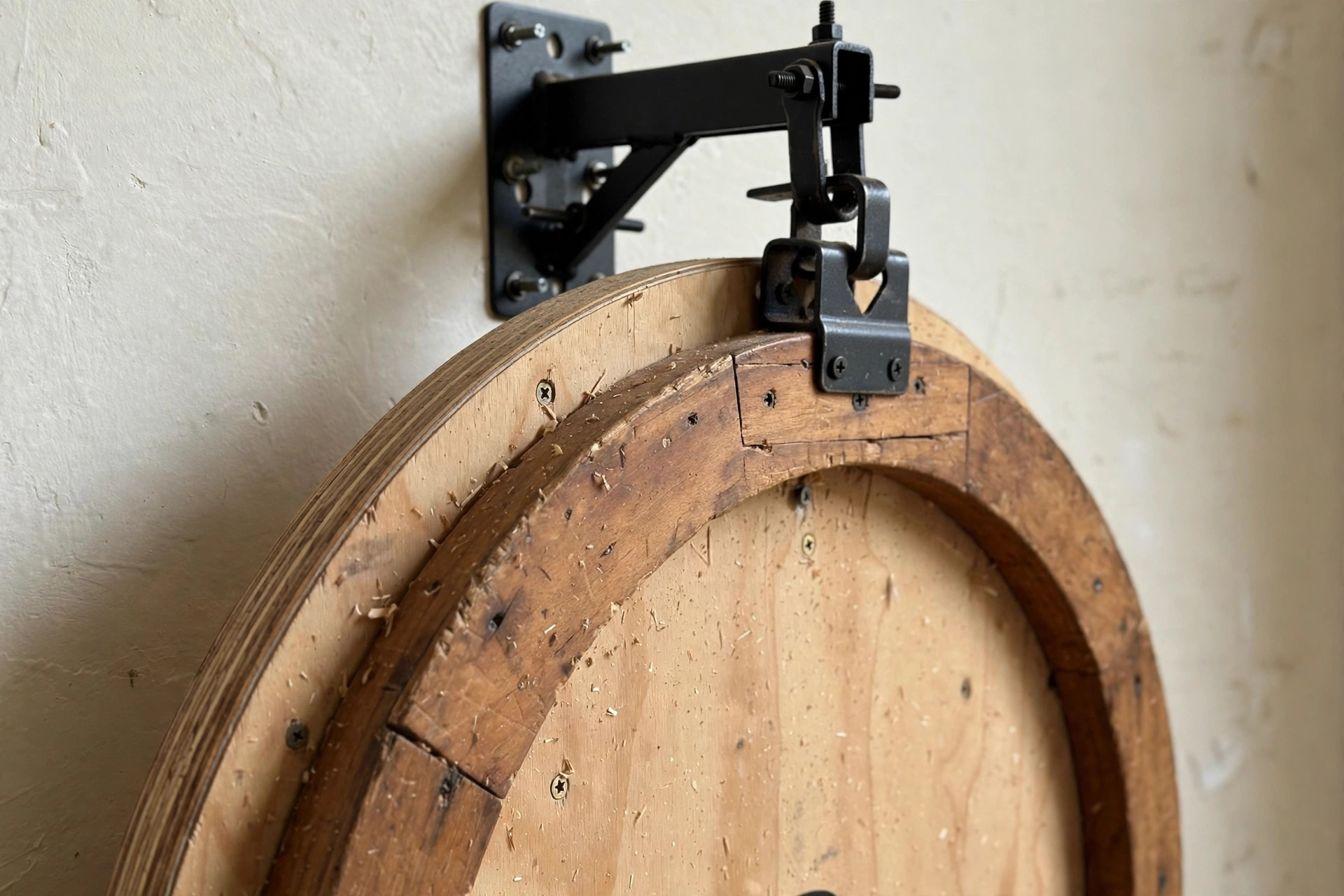
The safest way to hang a crokinole board is by its frame, on hardware rated well above the board’s weight. A typical board weighs 10 to 15 pounds, so the mounting points matter more than raw strength. Start with the board itself. Many boards have a hanging slot, D-rings, or a reinforced back panel fitted by the maker. Use those points if they exist; they are placed so the frame, not the thin playing surface, carries the load. If your board has no hardware, a crokinole board wall mount or a pair of sturdy picture hangers fixed to the frame works the same way.
Find a stud if you can. A screw into a stud is the strongest simple fixing, and one centred stud is enough for most mounts. On plaster or drywall without a stud, use wall anchors rated for at least twice the board’s weight, two of them, so the board cannot swing or tilt.
Two rules protect the board while it hangs. First, the playing surface should face the wall or sit a finger’s width off it, never pressed flat against damp plaster. Second, hang it on an interior wall away from radiators, fireplaces, and direct sun, because heat on one face warps a hanging board as surely as a stored one.
How to Store a Crokinole Board Flat
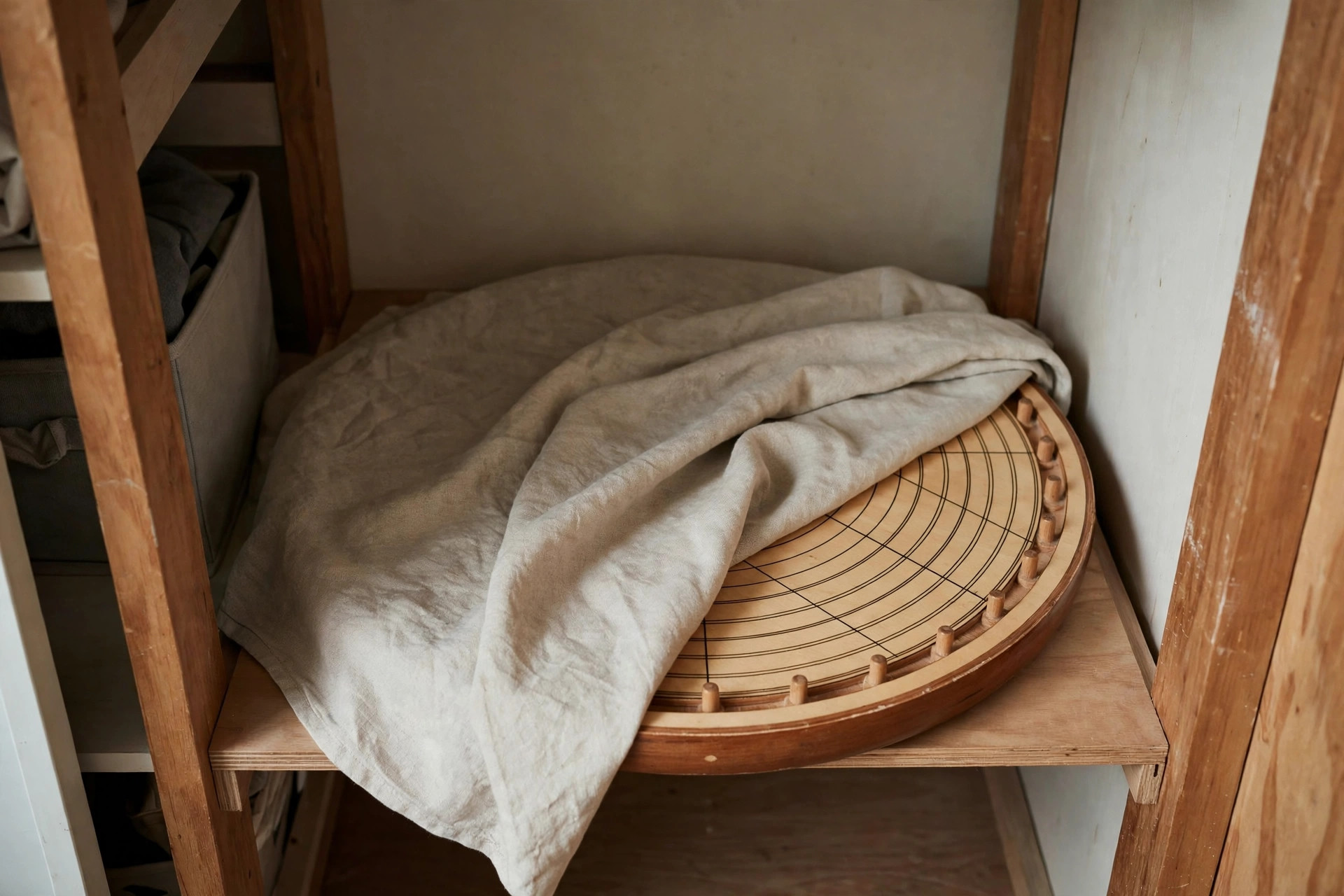
If you would rather not hang a crokinole board, flat storage is the other fully safe option. A wide shelf, the top of a wardrobe, or the space under a bed all work, provided the surface underneath is level and the board rests on its frame or back, not on its pegs. Slide the board in playing-surface-up or face-down on a soft cloth, whichever keeps weight off the pegs and centre hole. If anything will share the shelf, cover the board first: a cotton sheet or the bag it shipped in keeps dust and grit off the finish. Grit is the quiet problem here: the first disc of the next game grinds it across the surface.
Never stack heavy boxes on a stored board, and never store it under a pile of other games. Steady, uneven weight over months is exactly how a flat board develops a twist. If under-bed space is your only option, a low, rigid storage box that fits the board protects it from both dust and accidental kicks.
Standing a Board on Edge in a Closet
Closet storage on edge is the compromise most owners actually use, and it is fine when done properly. The board should stand fully upright, resting evenly along its frame edge, ideally in a padded bag or with a cloth between the board and the floor. What ruins boards is the lean. A board propped at an angle against a wall has its weight concentrated on one point of the frame, day after day, and exterior closet walls are often the dampest in the house. Stand it straight, keep it off exterior walls where you can, and leave a small gap so air circulates around both faces. Check an edge-stored board every month or two: run a palm across the surface and sight along it for cupping. Moving it somewhere flatter and drier early is far easier than correcting a set warp.
Using a Padded Carry Bag for Storage and Travel
A padded crokinole board carry bag earns its keep twice: it protects the board in transit, and it makes any of the storage methods above cleaner, guarding the frame edges against knocks and keeping dust off the playing surface. Choose a bag that fits your board’s diameter snugly, with enough padding to matter and a handle or strap rated for the weight. A loose bag lets the board shift and bang its edges; a tight one is awkward to load and can strain the zip. Remember what a bag cannot do. It offers no protection against humidity, so a bagged board in a damp garage is still a board in a damp garage. Store the bag somewhere dry and temperate, and if the board will sit for a whole season, leave the zip partly open so moist air is not trapped against the wood.
Storage Conditions That Protect Any Board
Whichever method you choose, the room matters as much as the position. Ordinary indoor humidity, roughly 40 to 55 percent, is what the wood wants. Damp basements and garages swell it; the dry blast near a furnace vent or fireplace shrinks and can crack it; direct sun heats one face and cups the board. Storage also pairs with basic upkeep. A board put away clean and waxed comes back faster than one stored dirty, and our guide to crokinole board maintenance covers the waxing, ditch cleaning, and peg checks worth doing before a long break. Store the discs with the board, in their own pouch, so the set stays together. If a board moves between two homes, a summer cottage and a heated winter house, give it a few days to settle in each place before judging how it plays.
Storage Mistakes That Warp Boards
Leaning it in a corner: the classic mistake. Months of angled pressure against a wall twists the frame and cups the surface.
Hanging it by a peg or the ditch: hardware belongs on the frame or back panel; hanging from the playing area stresses exactly the wood that must stay flat.
Storing it in the garage: garages swing between damp and hot across a year, and both extremes attack the board. A garage-kept board rarely stays true.
Stacking weight on a flat board: boxes and other games stored on top load the surface unevenly. Flat storage only works when nothing presses down on the board.
Frequently Asked Questions
Can you hang a crokinole board on the wall?
Yes, and it is one of the safest ways to store one. Hang a crokinole board by its frame or maker-fitted hanging hardware, into a stud or anchors rated for twice its weight. Keep it on an interior wall away from heat and direct sun, with the surface just off the wall so air can circulate.
Is it better to store a crokinole board flat or on edge?
Both are safe when done properly. Flat storage on a level surface spreads the weight most evenly, which makes it the best choice for long breaks. Standing on edge works well in closets, provided the board stands fully upright on its frame edge and is never left leaning at an angle.
Will storing a crokinole board in the garage damage it?
It is one of the riskiest places for a board. Garages cycle between damp cold and dry heat, and that swing swells and shrinks the wood until the surface cups or the finish lifts. Store the board indoors in a room with stable, moderate humidity instead.
How do I protect a crokinole board when travelling with it?
Use a padded carry bag that fits the board’s diameter snugly, and keep the discs in a separate pouch so they cannot rattle against the finish. Lay the bagged board flat in the vehicle rather than wedging it upright between luggage, and bring it indoors at each end of the trip.
What humidity is safe for crokinole board storage?
Aim for ordinary room conditions, roughly 40 to 55 percent relative humidity, and stable temperature. Avoid damp basement walls, spots beside radiators or furnace vents, and windows with direct sun. Consistency matters more than the exact number: slow, small changes are far kinder to the wood than daily swings.
Final Thoughts
Safe storage is simple: hang a crokinole board by its frame, or keep it flat and unloaded, or stand it truly upright, and always in a dry, temperate room. Do that and the board you bought stays flat, fast, and ready for years. The boards built to reward that care, with solid frames and proper hanging points, are the ones in our guide to the best crokinole boards.

The Baltic Bircher Crokinole Board Review

Crokinole Hammer Shot Strategy: Playing Last in the Round