Crokinole Hammer Shot Strategy: Playing Last in the Round8 min read
Ask experienced players which shot decides the most rounds, and most will give the same answer: the last one. The crokinole hammer is the final shot of a round, and it carries a built-in advantage no other shot has. Whatever you do with it, nobody gets to answer.
The hammer gets its name from curling, where the last stone of an end is called the hammer. In crokinole the idea is identical. You shoot with full information, knowing exactly what the board holds and exactly what you need.
This guide breaks the hammer down by situation, so you know when to attack, when to draw, and when to protect what you have. The plays assume tournament dimensions, which the boards in our roundup of the best crokinole boards all follow.
Crokinole Hammer Situations at a Glance
Five situations cover most hammer shots you will ever face. Find yours on the table, then read the matching section below for the detail.
| Hammer Situation | Best Play | Why |
|---|---|---|
| Opponent disc alone in the 15 | Take it out, and try to leave your shooter in the 15 | Removes their 15 and replaces it with yours, a swing no reply can undo |
| Your disc in the 15, opponent disc parked behind it | Play the combination: clip their disc into yours to nudge yours toward the 20 hole | Your disc already scores; the hammer should upgrade it or clear the nearby threat |
| Empty centre and you are ahead on points | Play safe: park a disc in the 10 ring or the edge of the 15 | With the last shot and a lead, a low-risk scoring disc beats a missed 20 attempt |
| Tied round, late in the game | Go for the 20 or the full takeout, whichever the board gives you | A tied round scores zero for both sides, so the hammer must create the difference |
| Opponent disc hanging on the 20 hole | Avoid blasting it; draw for your own 20 or park in the 15 | A hard hit can drop their disc in for a 20 against you |
Why the Crokinole Hammer Is Worth Real Points
Crokinole rounds are scored by difference: only the higher total counts, and only the gap between the two totals. That scoring system is what makes the crokinole hammer so powerful. A single last shot can remove an opponent’s 15 and replace it with your own, swinging the round by far more than the disc’s face value.
The hammer also removes risk. Every other shot in the round is played under threat: shoot well, and your opponent may undo it with the very next disc. The hammer faces no reply. A takeout stays taken out, and a drawn 20 stays sunk.
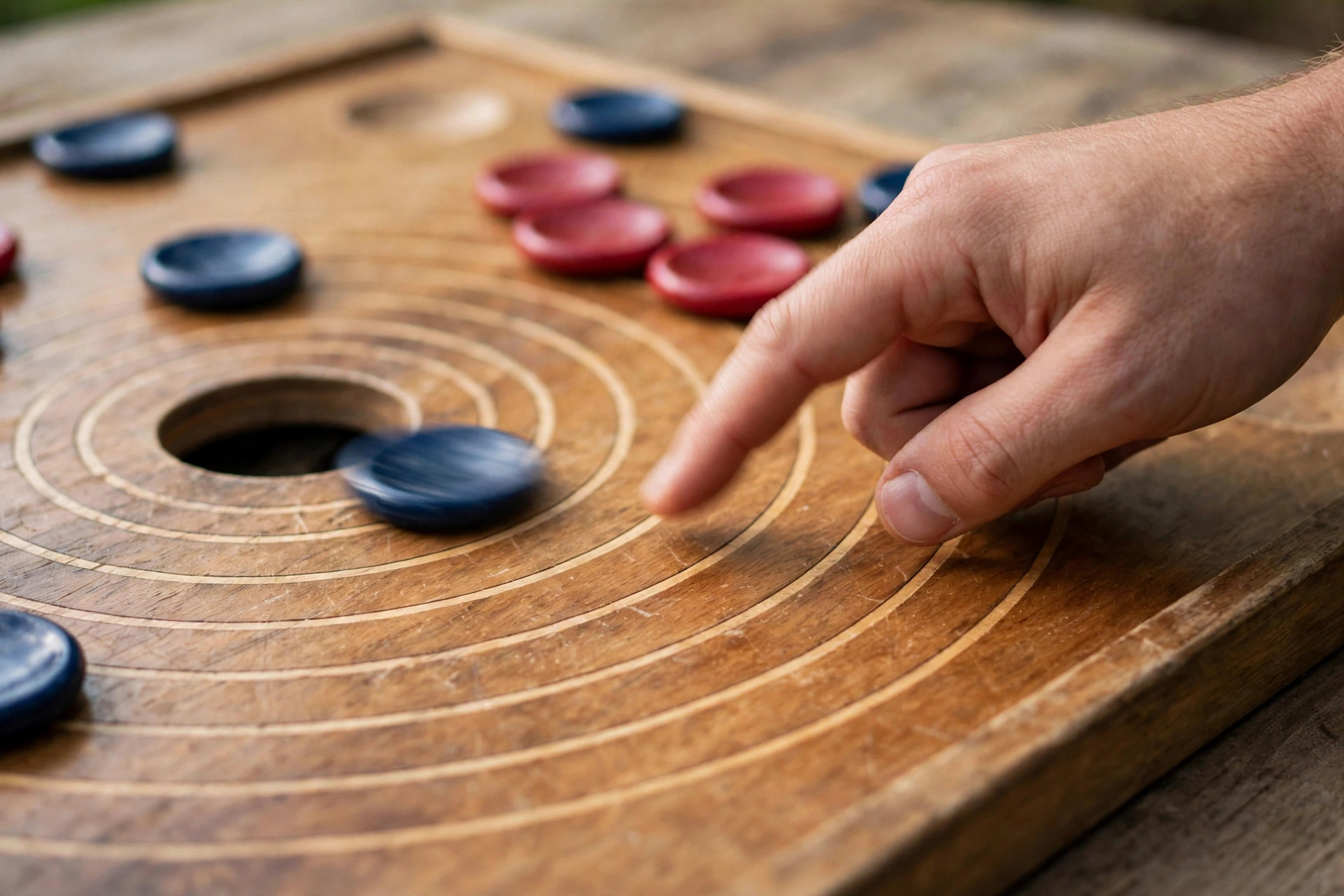
That is why strong players plan backwards from the hammer. If you hold it, your earlier shots can be patient, setting up a board you like. If your opponent holds it, your job is to leave a board with nothing easy to attack.
The Takeout: Removing an Opponent’s Disc
The classic hammer play is the crokinole takeout: strike your opponent’s best disc and send it to the ditch while your own disc stays in scoring position. Aim through the centre of their disc, with enough pace that yours does not follow it off the scoring area.
The perfect takeout is really two plays in one. Their disc leaves the board, and your shooter settles into the 15 circle it just vacated. Players call that follow-in the difference between a good hammer and a great one.
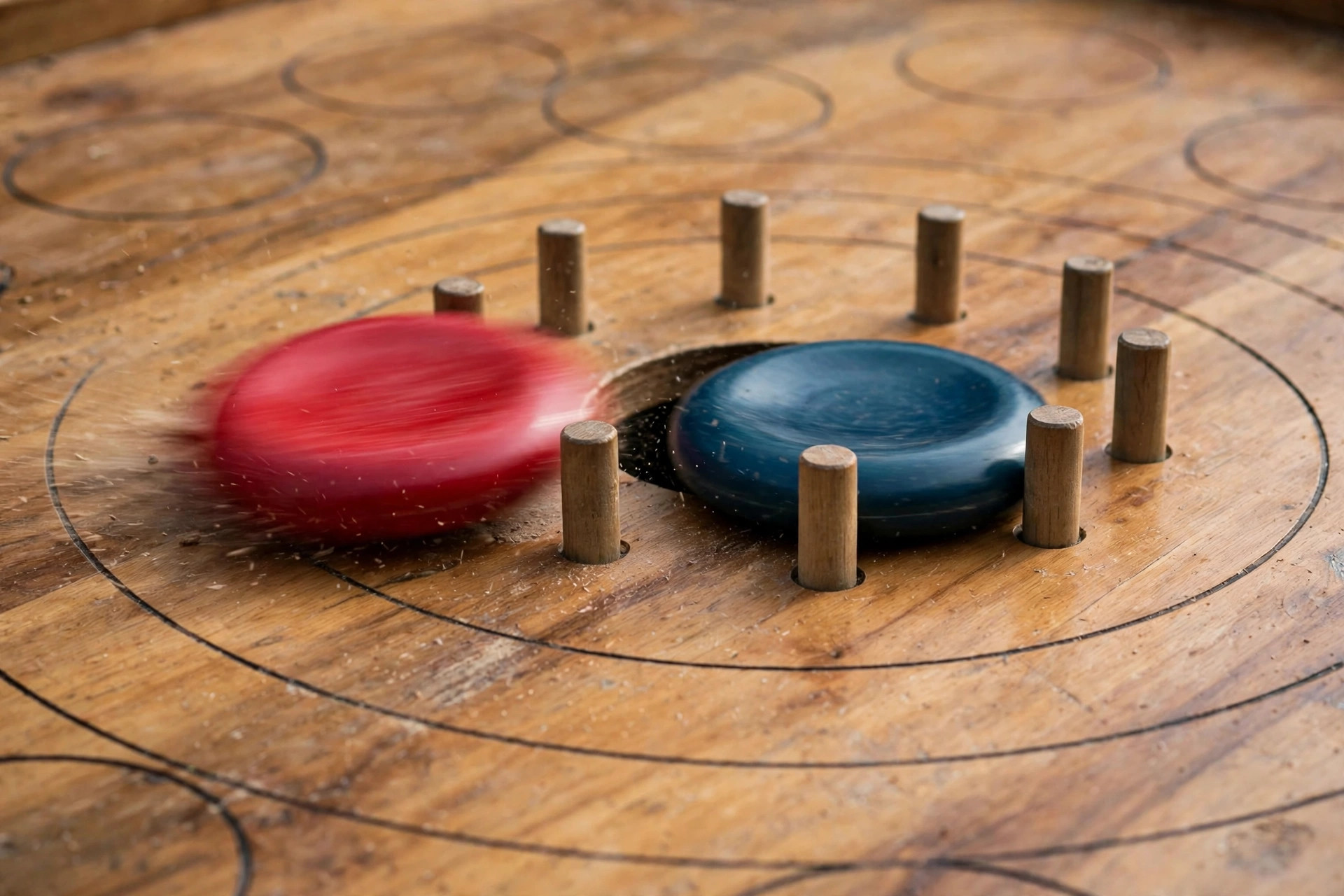
Choose your target by value, not convenience. An opponent’s disc in the 15 is usually worth removing even at a tricky angle, because it also denies the points it would have scored. A disc sitting in the 5 ring can usually be left alone.
Drawing for the 20 With Nobody Left to Answer
When the centre is open, the hammer becomes a free attempt at the biggest score in the game. A sunk 20 is worth more than any zone disc, and with no shots remaining against you, there is little downside to trying when the board is otherwise empty or tied.
One rule shapes this play. Under standard rules, when no opponent discs are on the board, your shot has to finish inside the 15 circle or it is removed. A draw for the 20 satisfies that rule automatically, which is another reason the open-board hammer should almost always be aimed at the hole.
Play the draw softer than a takeout. The disc only needs to arrive; extra pace just risks a bounce off the back pegs and out of the circle.
The Combination Shot: Using Discs Already on the Board
Some hammers are won indirectly. A combination shot uses a disc already on the board as a tool: you strike one disc so that it knocks another into better position, or caroms your shooter toward the centre.
The most useful version starts with your own disc in the 15 and an opponent’s disc parked behind it. Clip their disc into yours and your disc nudges toward the 20 hole while theirs scatters.
If the angles are wrong for that, simply take their disc out and leave yours where it is. For the rulings that govern discs left touching lines after plays like this, see our guide to crokinole scoring disputes. Combinations fail more often than simple plays, so save them for when the simple play is not available, or when the round genuinely needs the extra points.
Playing It Safe: When the Hammer Should Protect a Lead
The hammer is not always an attacking weapon. If your discs already lead the round and the centre is empty, the correct last shot is often a quiet one: park a disc in the 10 ring or the edge of the 15, add a few points, and end the round.
The mistake to avoid is the heroic 20 attempt you do not need. Miss it badly and your disc can end in the ditch, adding nothing. Worse, a wild shot can knock your own scoring discs out of position. With a lead and the last shot, boring is correct.
The same logic applies across a match. If you are ahead late, use the crokinole hammer to close rounds out rather than to build highlight plays. Protecting a lead is a skill, and the hammer is its best tool.
The Tied-Round Hammer: You Must Create the Difference
A tied round scores zero for both players, which makes the tied-round hammer the most aggressive shot in crokinole. A safe park changes nothing; you would finish level and score nothing anyway. So attack. Go for the 20 if the centre is open, or take out your opponent’s best disc if one is sitting in the 15. Either play creates the difference the round needs.
The only true failure is a shot so cautious it leaves the tie exactly as it found it. This is also where the hanging-disc situation appears. If an opponent’s disc hangs on the lip of the 20 hole, resist blasting it: a hard hit can drop it in for their 20. Draw your own disc into the 15 or aim your own 20 on a clean line instead. And if you practise these shots at home, the tournament-spec models in our guide to the best crokinole boards keep the hole and peg dimensions honest.
Frequently Asked Questions
What is the hammer in crokinole?
The crokinole hammer is the last shot of a round. Players alternate shooting discs, and whoever shoots the final disc holds the hammer. The name comes from curling, where the last stone is also called the hammer. It is the strongest shot in the round because no opponent can reply to it.
Why is the crokinole hammer such an advantage?
Because crokinole rounds are scored by the difference between totals, one last shot can remove an opponent’s points and add your own at the same time. A takeout that leaves your disc in the 15 can swing a round by 30 points, and nothing can be done about it afterwards.
Should I always play a takeout with the hammer?
No. A takeout is right when an opponent’s disc is worth removing, especially in the 15 circle. But if the centre is open, drawing for a 20 scores more, and if you already lead the round, a quiet scoring disc that protects the lead is often the smartest hammer of all.
What happens if the board is empty when I shoot the hammer?
Under standard rules, an unopposed shot must finish inside the 15 circle, or the disc is removed. That makes the open-board hammer simple: aim for the 20. A sunk disc satisfies the rule and scores the maximum, while a disc that stops in the 15 still scores well.
Who gets the crokinole hammer in the next round?
In most casual and league play, the hammer simply alternates: whoever shot last in one round shoots first in the next, so the advantage passes back and forth evenly. Some groups instead give the hammer to the player who did not score in the previous round. Agree on one method before you start.
Final Thoughts
The crokinole hammer rewards the player who reads the board before touching a disc. Take out what hurts you, draw when the centre is open, protect a lead when the round is already yours, and attack when a tie pays nothing. Play the last shot on purpose, and rounds will start ending your way.

How to Hang and Store a Crokinole Board Safely

Best Crokinole Board Recommendations and Buying Guide