
How to Maintain a Crokinole Board: Waxing, Pegs and Humidity8 min read
A good crokinole board is a precision surface. Discs are meant to glide the full width of the playing area on a light flick, kiss off the pegs, and drop into a hole barely wider than the disc itself. Crokinole board maintenance is what keeps that true: a waxed surface, clean ditch, sound pegs, and storage that respects the wood.
None of it is hard or expensive. The whole routine takes a few short sessions a year, and every task on the list is simpler than fixing the problem it prevents.
A board that is neglected, by contrast, plays slow, warps, and loses the fast, even slide that makes the game what it is. Quality boards reward the effort most, because their finished playing surfaces are built to be waxed and kept fast. If you are comparing boards before buying, our roundup of the best crokinole boards covers the finishes and constructions that hold up best over years of play.
Crokinole Board Maintenance Schedule at a Glance
Here is the entire routine on one schedule. Most of it is occasional; only the wipe-down is a habit.
| Task | How Often | What You Need |
|---|---|---|
| Waxing the surface | Every few months, or when discs stop gliding freely | Paste wax, two soft cotton cloths, one for applying and one for buffing |
| Cleaning the ditch | A quick wipe after dusty sessions; a proper clean every few months | Soft cloth or soft brush, vacuum with a brush attachment for the gutter |
| Checking pegs | Every few months, and whenever a rebound feels dead or odd | Eyes and fingers for cracks, a screwdriver if your pegs are screw-mounted |
| Humidity and storage check | With the seasons, and whenever the board moves rooms | A dry indoor spot away from heat vents and damp walls, a wall mount or flat surface |
The pattern underneath the table: wax and cleaning manage friction, peg checks protect the centre of the board where games are decided, and the humidity check protects the board itself.
How to Wax a Crokinole Board Surface
Learning how to wax a crokinole board is the core crokinole board maintenance skill, because surface speed is the game.
Start with a clean board: wipe the playing surface with a dry, soft cloth to lift dust and old wax residue. Any grit left behind gets ground in by the next step.
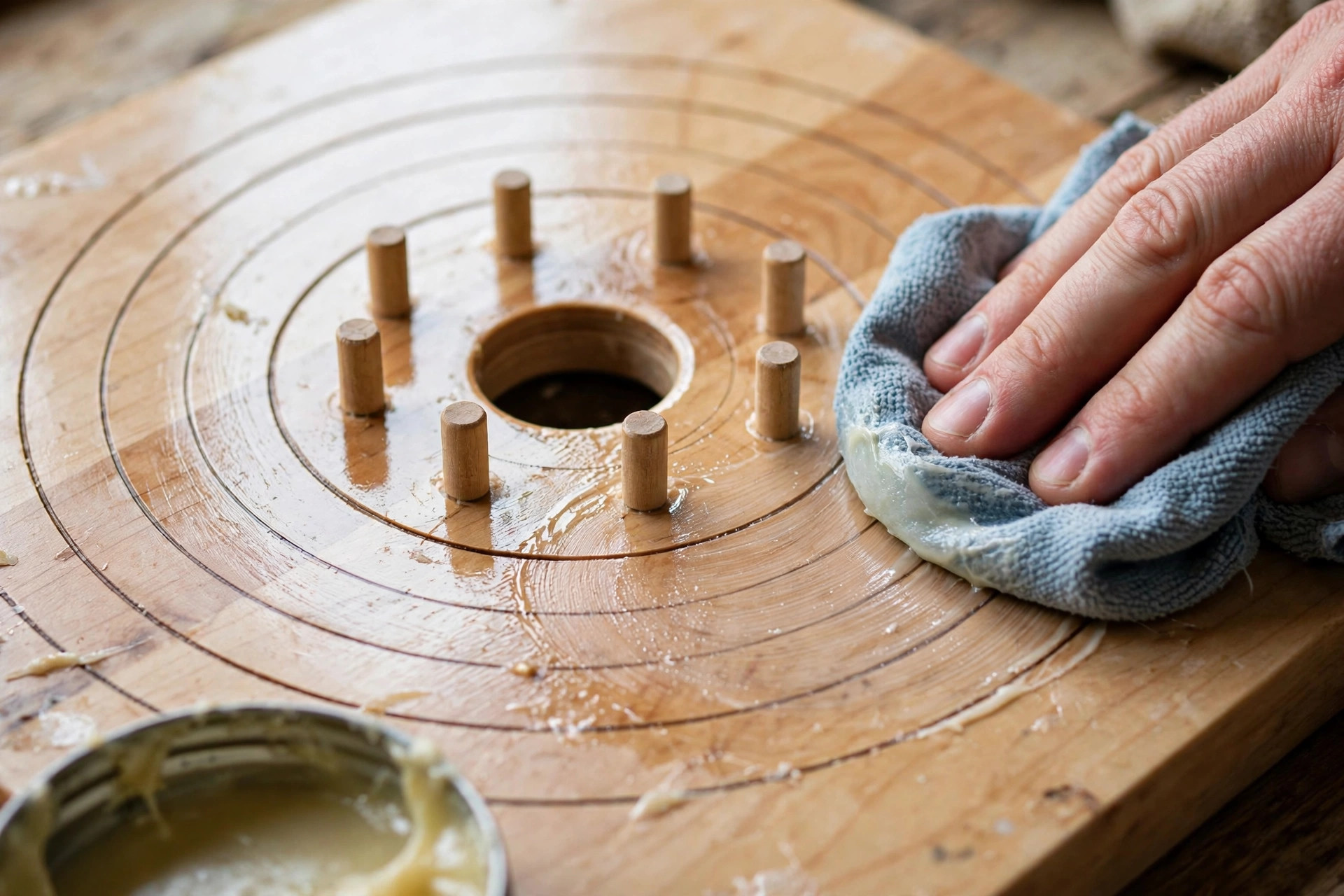
Apply a thin coat of paste wax with a cotton cloth, working in small circles across the whole playing surface. Thin is the operative word.
Let the wax haze over for a few minutes, then buff it off thoroughly with a clean cloth until the surface shines and feels slick and completely dry to the palm.
Wax only the playing surface, never the ditch. Discs that land in the ditch are out of the round, and a waxed ditch lets them skate around instead of settling.
If the board still plays slow after a proper clean and wax, the finish itself may be worn or contaminated, which is a bigger job than maintenance covers.
Crokinole Board Cleaning: The Ditch and Frame
Crokinole board cleaning is mostly about the ditch, the recessed gutter that rings the playing surface. The ditch collects everything: dust, wax flakes, chalk from hands, and the grit that discs carry in from the surface. Left alone, that grit migrates back onto the playing area and scratches the finish with every shot.
Wipe the ditch out with a soft cloth after dusty sessions, and give it a proper clean every few months. A soft brush or a vacuum with a brush attachment lifts debris from the gutter without scouring it.
Keep liquids away: a barely damp cloth is the most moisture a board should ever meet, and it should be dried straight away.
Wipe the frame and the underside at the same time. Dust on the underside is harmless, but the check reminds you to look at the whole board, including the feet or hanging hardware, before small problems become visible ones.
Checking Crokinole Board Pegs and Bumpers
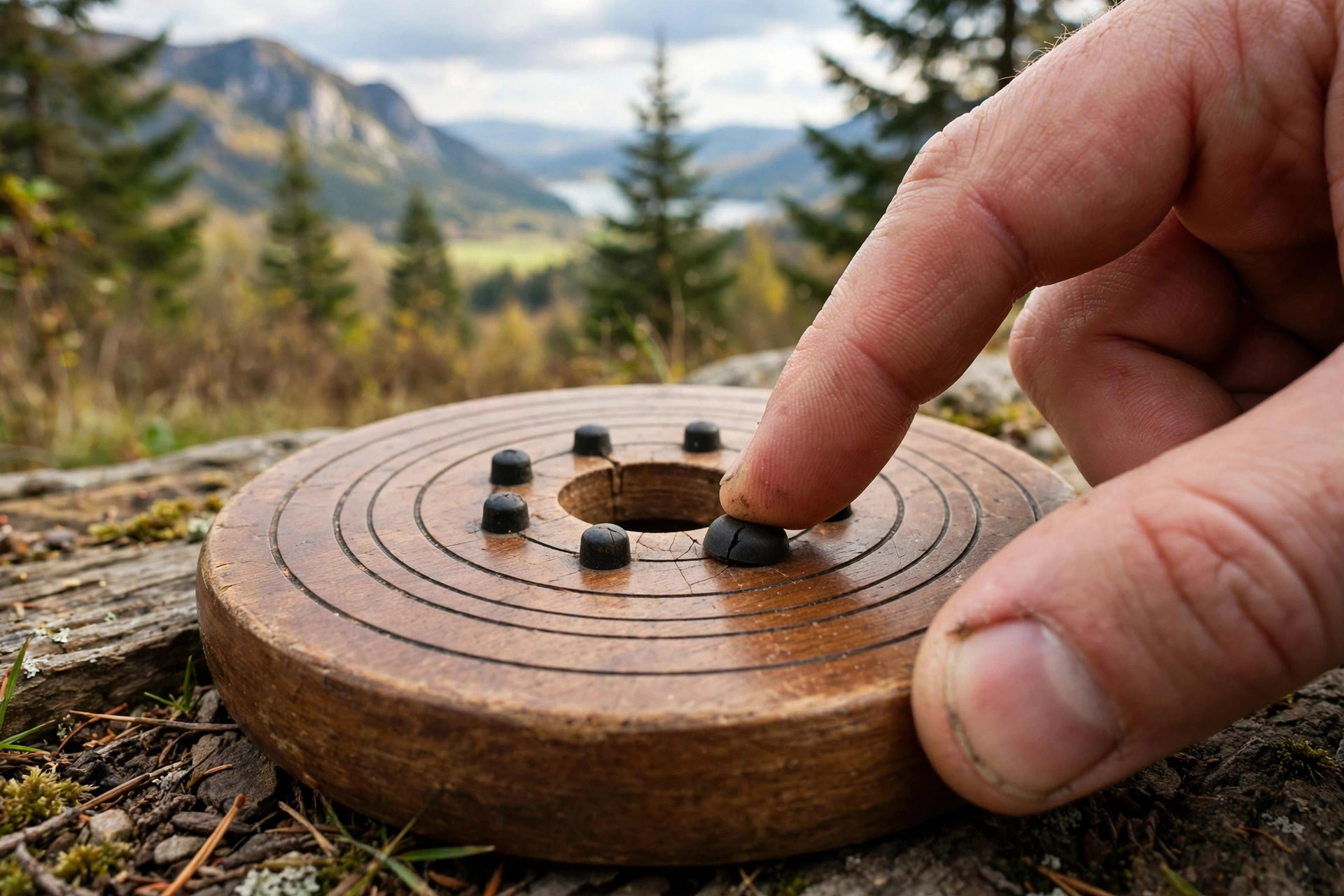
The eight crokinole board pegs around the centre hole are the board’s rebound surface, and games turn on how they play. Most pegs are metal posts covered with rubber tubing or sleeves, and that rubber is the wear part: it hardens, cracks, and splits with age and use.
Run a finger around each peg every few months. The rubber should feel firm and springy, with no cracks, flat spots, or looseness at the base. A dead peg kills rebounds on one side of the hole and quietly changes every centre shot, so a split sleeve is worth replacing as soon as you find it. Replacement rubber is a standard, inexpensive part.
Also check that each peg sits upright and tight. Pegs that screw in can work loose, and a leaning peg changes the angles around the 20 hole. Tighten gently by hand or with a screwdriver, taking care not to force the mounting in the wood.
Crokinole Board Storage and Humidity Control
Wood moves with moisture, and a crokinole board is a wide, flat piece of it. Crokinole board storage has one goal: keep the board in stable, moderate conditions so the surface stays flat.
A room kept at ordinary indoor humidity, roughly 40 to 55 percent, is what the board wants.
Keep it away from the extremes. Damp basements and garages swell the wood and can lift a finish; the dry blast near a furnace vent, radiator, or fireplace shrinks and can crack it. Direct sun through a window heats one face unevenly, which is how boards cup.
Store the board flat on a level surface, or hung on a wall mount by its frame, both of which good boards are designed for. Reviews of well-built boards, like our Baltic Bircher crokinole board review, show the solid frames and backs that make wall hanging safe.
Never lean a board at an angle in a corner for months: uneven pressure plus a damp wall is the classic warping recipe.
Seasonal swings matter too. A board that moves between a humid summer cottage and a heated winter house needs a few days to settle in each place before you judge its speed, and a board stored over winter deserves a fresh coat of wax before its first game back.
Mistakes That Slow a Board Down
Skipping the buff. Wax that is applied but not fully buffed off stays tacky, grabs discs, and collects dust. The buff is the step that makes wax work.
Waxing the ditch. The ditch is supposed to stop discs, not speed them. Keep wax on the playing surface only.
Ignoring the pegs. Cracked rubber and loose pegs change rebounds long before they look broken. Check them on the same session as waxing.
Storing it wherever it fits. A damp garage or a spot beside a heat vent will undo every other good habit on this list within a season or two.
Frequently Asked Questions
How often should I wax my crokinole board?
Wax it when the slide tells you to: when discs stop gliding freely and the surface feels grabby rather than slick. For most home players that is every few months. Apply paste wax thinly, let it haze, and buff it completely off. A properly waxed board feels fast and dry, never tacky.
What wax should I use on a crokinole board?
Use a paste wax, the type sold for furniture and floors, applied in a thin coat and buffed hard. Avoid spray polishes with silicone and anything that leaves a wet or oily film, since residue grabs discs and attracts dust. Keep the wax on the playing surface and out of the ditch.
How do I know if my crokinole pegs need replacing?
Check the rubber sleeves around the pegs with a fingertip. If the rubber is cracked, split, hardened, or loose, or if rebounds off one peg feel noticeably deader than the others, replace the sleeve. Also tighten any peg that leans or wobbles, since a loose peg changes the angles around the centre hole.
Where is the best place to store a crokinole board?
Indoors, in a room with stable, moderate humidity, stored flat on a level surface or hung on a wall mount. Keep it away from damp basement walls, garages, direct sunlight, and heat sources like radiators and furnace vents. Those extremes are what warp and crack boards over time.
Can a warped crokinole board be fixed?
A slight cup sometimes eases if the board rests flat in stable humidity for an extended period, but a seriously warped board rarely returns to a true, even slide. Warping is effectively permanent, which is why storage conditions are the most important part of crokinole board maintenance.
Final Thoughts
Crokinole board maintenance is four small habits: wax the surface and buff it dry, keep the ditch clean, check the pegs, and store the board where the humidity is stable. Do those on a loose schedule and the fast, true slide you bought the board for stays with it for years. The boards worth keeping are the ones in our guide to the best crokinole boards, and a few minutes of care is all they ask in return.

The Baltic Bircher Crokinole Board Review

2-Player vs 4-Player Crokinole Strategy Explained
