Running Form Cues That Actually Help (and Cues to Ignore)9 min read
A running friend watches you for ten seconds and offers a fix: land on your forefoot. A video online insists the exact opposite. Running form cues are everywhere, and they are not created equal. The best ones change a single thing you can feel. The worst ones hand you a new injury while trying to fix a problem you may not have.
This guide sorts the most common cues into two piles: which ones are worth using, what each one actually changes in your stride, and which to ignore or handle with care.
One principle runs through everything below: change one thing at a time, and only on easy runs. Your form at a relaxed pace is the foundation. Rebuild that first, and the faster running takes care of itself.
Our top picks, compared:
Running Form Cues at a Glance
Here is the short version: a verdict on six of the cues you will hear most often, with the reasoning in one line each. The sections below explain the nuance.
| Cue | Verdict | Why |
|---|---|---|
| Run tall | Help | An upright, stacked posture opens your breathing and stops the energy leak of slouching |
| Quick, light steps | Help | A slightly higher cadence shortens your stride and reduces braking with each step |
| Relax your shoulders | Help | Dropped shoulders and loose hands cut wasted tension in your neck, jaw and arms |
| Land under your hips | Help | Foot strike under your center of mass means less braking and less load per step |
| Strike with your forefoot | Ignore | Forcing a forefoot strike shifts heavy load onto your calves and Achilles and injures many runners |
| Lean from the ankles | Help, with care | A slight whole-body lean uses gravity well, but overdoing it turns into bending at the waist |
The Cues That Actually Help
Run Tall
Imagine a string pulling the top of your head gently toward the sky. That image alone fixes most slouching. Good running posture means your head, shoulders, hips and ankles stay roughly stacked, so each step lands under a stable frame instead of a collapsing one. Check yourself mid-run: are you staring at your shoes? Lift your gaze to the horizon and the rest of your posture usually follows. This is the simplest of all running form tips, and it pays off on every run, at every pace.

Quick, Light Steps
If one cue does the most work, it is this one. Thinking “quick and light” raises your cadence slightly, which shortens your stride, which pulls your foot strike back under your body. Three improvements from one thought. You do not need to count steps to use it. Just picture running quietly, as if the ground were thin ice. Our guide to running cadence drills turns that idea into short sessions if you want to train it directly. A watch that reports cadence after each run also helps, and our Garmin heart rate monitor review covers the models that track it well.
Relax Your Shoulders
Tension creeps upward as runs get harder. Shoulders rise toward ears, fists clench, jaws lock. All of it burns energy that your legs could be using. Every mile or so, drop your shoulders deliberately, shake your hands out, and unclench your jaw. Hold your hands as if carrying a potato chip you do not want to crush.
Land Under Your Hips
Overstriding, reaching your foot out in front of your body, is the most common form flaw in recreational runners. Each reaching step acts like a brake and sends extra force up your shin and knee. You cannot watch your own feet while running, so use the quick-steps cue above and let it pull your landing back. Your stride gets quieter, and your pace often feels easier at the same effort.
Lean From the Ankles, Slightly
A small forward lean of the whole body, hinging at the ankles rather than bending at the waist, lets gravity help you move forward. Think of standing tall and tipping forward until you have to step to catch yourself. That angle is your running lean. Keep it slight. Most runners need far less lean than they imagine, and bending at the waist instead folds your posture and closes down your breathing. If in doubt, run tall first and add lean last.
The Cues to Ignore, or Handle With Care
Strike With Your Forefoot
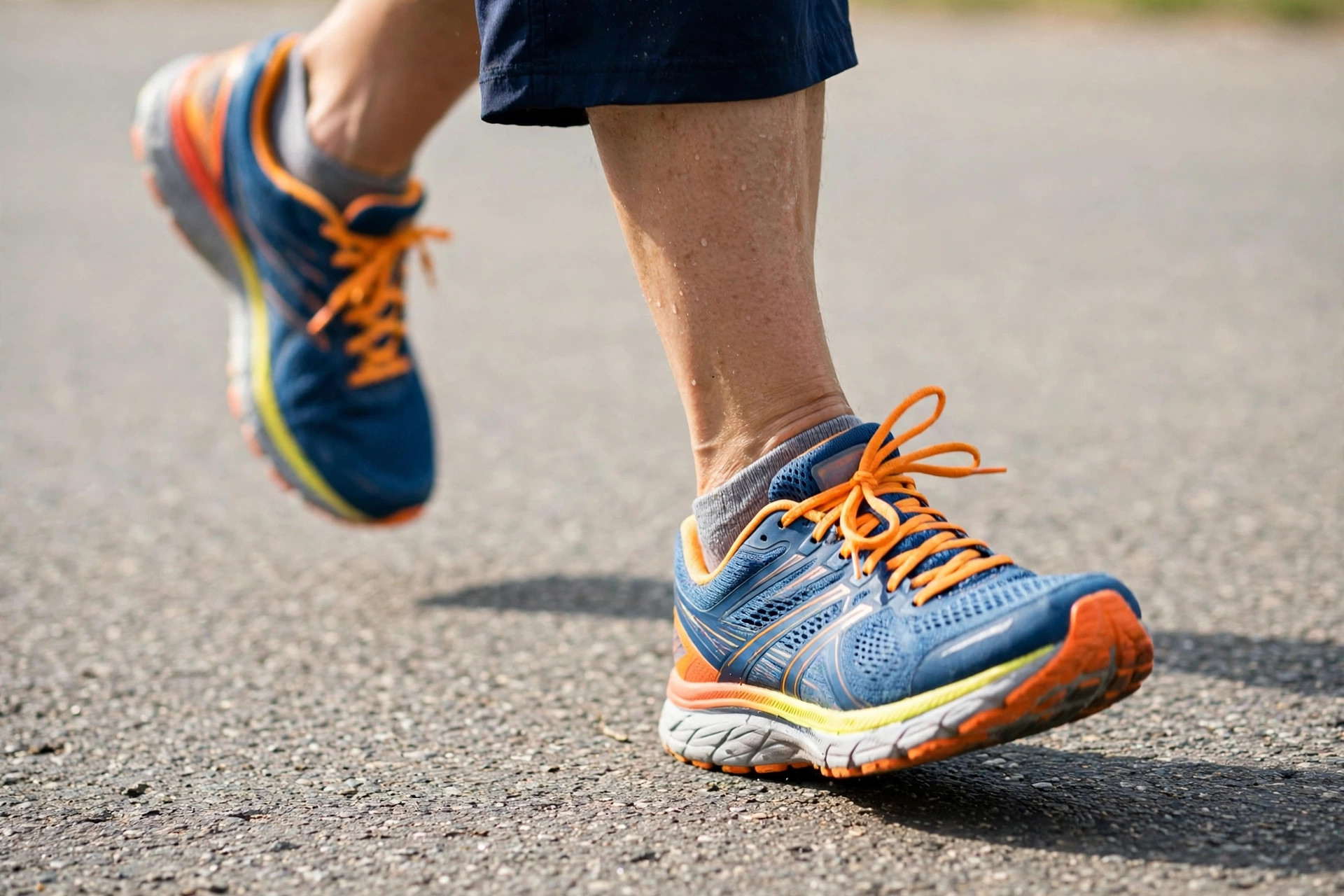
This is the most over-prescribed cue in running. Yes, many fast runners land toward the front of the foot at race pace. No, forcing that pattern at your easy pace does not make you faster. The research and coaching consensus on foot strike running is clear: your strike pattern is mostly an outcome of speed and stride, not a switch you flip. Forcing a forefoot strike loads your calves and Achilles tendon far beyond what they are trained for. Calf strains and Achilles problems are the predictable result. Let your foot land where it lands, fix your cadence and posture, and your strike will take care of itself.
Heel Striking Is Always Bad
The mirror image of the cue above, and just as misleading. Plenty of healthy, fast runners heel strike. What matters is where your foot lands relative to your body, not which part touches first. Chasing a strike pattern to avoid a heel strike usually just creates overstriding in a new disguise. Ignore the label and fix the landing position instead.
Take Longer Strides to Go Faster
Speed comes from stride length times stride rate, so longer strides sound logical. In practice, recreational runners who reach for length just overstride harder, brake more, and get slower and sorer. Real stride length grows on its own as you get fitter and stronger. Chasing it directly is a reliable way to pick up a hamstring or shin problem.
Pump Your Arms Hard
Your arms balance your legs; they do not power the run. Deliberately pumping them hard wastes energy and often twists your torso side to side, leaking more energy still. Keep the arm swing compact, hands moving roughly from hip to chest height, elbows bent, and let it happen. If your shoulders are relaxed, your arms are almost certainly fine.
How to Test a Cue on Your Next Run
Treat running form cues like experiments, not orders. Pick one cue, use it for a few short stretches of an easy run, and compare how the run feels with and without it. A cue that helps should make the same pace feel smoother or quieter within a few minutes. Data helps if you have it. Many watches report cadence, ground contact time, and vertical oscillation, and a good cue usually moves at least one of those numbers in the right direction. Our Garmin heart rate monitor review looks at which models report running dynamics and how reliable those metrics are. Film yourself once, too. A ten-second phone video from the side tells you more about your posture and landing position than a month of guessing. Compare it against the cues above, not against elite runners at race pace.
How to Improve Running Form Without Rebuilding Your Stride
If you came here wondering how to improve running form overall, the honest answer is: less than you think, more gradually than you want. Most runners need one or two small nudges, not a teardown. Work on one cue for two to three weeks of easy runs before adding another. Keep the total dose small: a few minutes of focus per run, scattered through it, beats an entire run spent holding a forced position. And keep doing the unglamorous work, easy mileage and a little strength training, because fitness improves form more reliably than any cue.
Frequently Asked Questions
What is the fastest way to improve running form?
Start with posture and cadence. Run tall, then think quick and light for a few minutes at a time on easy runs. Those two cues fix the most common problems, overstriding and slouching, without forcing any joint into a new position. Give each cue two to three weeks before judging it.
Should I try to stop heel striking?
Probably not. Heel striking is normal for many healthy runners, especially at easy paces. What matters is that your foot lands under your body rather than reaching out in front of you. Fix your cadence and landing position, and your strike pattern becomes a non-issue for most runners.
Do running form cues work for beginners?
Yes, as long as they stay simple. Beginners often benefit most from run tall and relax your shoulders, because new runners tend to tense up and slouch as they tire. Skip the advanced cues about strike patterns until you have a base of easy mileage and the basics feel automatic.
How many form cues should I work on at once?
One. Your attention is limited while running, and stacking cues usually means doing all of them badly. Pick the cue that addresses your most obvious issue, use it in short bursts during easy runs, and only add a second cue once the first feels natural without thinking about it.
Can better form prevent running injuries?
It can reduce some risks, especially the braking forces that come with overstriding, but it is not a guarantee. Training load, recovery, and strength matter at least as much. Treat form work as one part of staying healthy, and see a professional if pain persists or changes how you run.
Final Thoughts
The best running form cues are boring: run tall, step quick and light, relax, land under yourself. The flashy ones, forced forefoot strikes and giant strides, mostly sell confidence and deliver injuries. Pick one quiet cue, test it on easy runs, and let your stride improve the slow, durable way.

Marathon Long Run Fueling for First-Timers: A Simple Timeline

How to Choose Running Gloves, Hats and Layers by Temperature