Beginner 10K Mistakes: Pacing, Fueling and Race-Day Errors8 min read
Your first 10K rarely falls apart because of fitness. It falls apart because of beginner 10K mistakes that have nothing to do with training: bolting from the start line, eating the wrong breakfast, or racing in shoes you bought yesterday. Every one of these errors is easy to avoid once you know it exists.
This guide covers the five mistakes that cost new runners the most time and comfort, why each one hurts, and the simple fix for it. None of them requires more talent or more training. They just require a small plan and a little restraint.
Pacing is the biggest one, and the easiest to spot in your own data: the heart rate and split graphs discussed in our Garmin heart rate monitor review show exactly what an overeager first mile looks like.
Our top picks, compared:
The 5 Beginner 10K Mistakes at a Glance
Most beginner 10K mistakes happen before the race is half over, and most are decided the day before. Here is the whole list, with the fix for each.
| Mistake | Why It Hurts | The Fix |
|---|---|---|
| Starting too fast | You burn matches early and fade hard in the last two miles | Start 10 to 15 seconds per mile slower than goal pace |
| Trying something new on race day | New shoes, food or gear can cause blisters, chafing or stomach trouble | Race only in gear and food you have already tested in training |
| Skipping fuel | Low energy and stomach issues make the second half miserable | Eat a familiar carb-based meal 2 to 3 hours before the start |
| Dressing for the start line temperature | You overheat once you warm up and waste energy shedding layers | Dress as if it were 10 to 15 degrees warmer than the start |
| Racing with no plan | Pacing, fueling and gear decisions get made on impulse mid-race | Write a simple plan for pace, fuel and clothing the night before |
Mistake 1: Starting Too Fast
The start of a 10K feels easy. The crowd surges, the music is loud, and everyone around you is running faster than they should, so you go with them. Mile one feels effortless, and by mile four your legs are heavy and the rest of the race becomes damage control.
This is the most common of all beginner 10K mistakes because adrenaline hides the cost. A first mile run 20 to 30 seconds too fast feels fine in the moment. You pay for it later, with interest, when your energy drops and your form falls apart. The fix is deliberate boredom: if you are not holding yourself back a little in the opening minutes, you are going too fast.

A 10K Pacing Strategy That Works
A simple 10K pacing strategy for a first race has three parts. Run the first two miles slightly slower than your goal pace. Settle into goal pace through the middle miles, when the field thins out. Then, if anything is left, push from the final mile marker and finish strong.
Even pacing feels wrong to beginners because effort rises as the race goes on. That is normal: a race that feels easy early and terrible late was paced backwards.
Mistake 2: Trying Something New on Race Day
Race day is the worst possible time to experiment. New shoes cause blisters, a new breakfast sits badly, and the free energy gel at the expo upsets a stomach that has never met it. Even new socks can turn a good race into a long one.
The rule experienced runners repeat is simple: nothing new on race day. Not food, not gear, not shoes, not even the drink on the course. Your longest training runs are the dress rehearsal: eat the same breakfast, wear the same shoes and socks, and test any gel or drink you plan to use. If you have never tested it, leave it alone, no matter how good the expo deal looks.
Mistake 3: Skipping Fuel Before and During the Race
A 10K is short enough that many beginners assume fuel does not matter. Then they skip breakfast because of nerves, start on an empty stomach, and wonder why the last two miles feel like running through mud.
A morning race after an overnight fast begins with stored energy already partly drained. The opposite error exists too: a huge, unfamiliar breakfast eaten twenty minutes before the start causes cramps or worse. Fueling a 10K is about timing and familiarity, not quantity.
What to Eat Before a 10K
Keep it boring. Eat a familiar, carb-based meal two to three hours before the start: oatmeal, toast with jam, a bagel, or whatever you normally eat before long training runs. Keep fat, fiber and protein modest, since all three slow digestion. Sip water steadily rather than chugging at the start line.
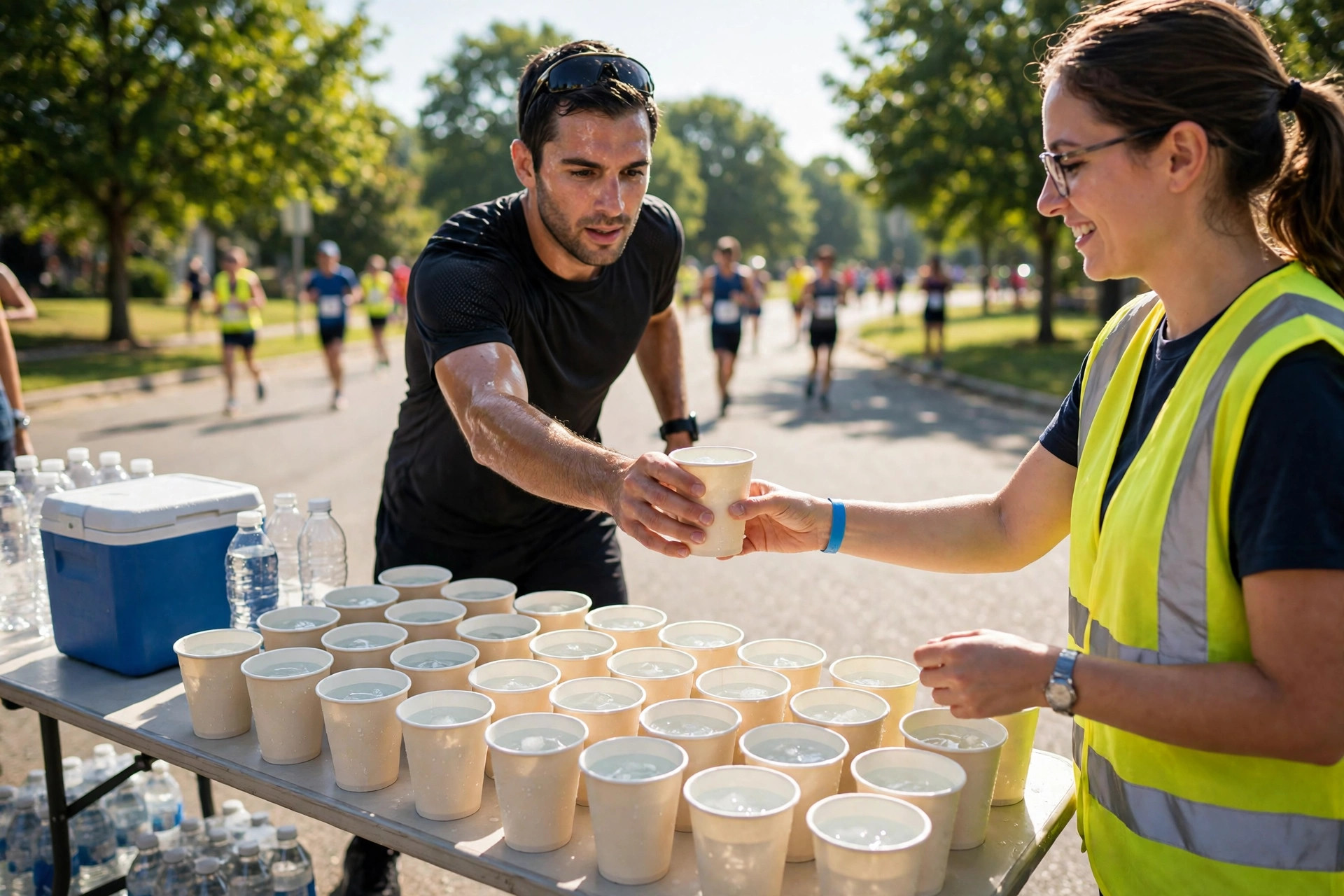
During the race, most beginners need little or nothing at an easy to moderate effort. If you expect to be out longer than about 75 minutes, one small gel or a few sips of sports drink at halfway is plenty. Take water in small sips, and pinch the cup to make a spout so you can drink while moving.
Mistake 4: Dressing for the Start Line Temperature
You dress for a race while standing still in the cold, shivering in a corral. Then you run for ten minutes, warm up completely, and spend the rest of the race overheating in a jacket you end up tying around your waist.
The standard fix is to dress as if it were 10 to 15 degrees warmer than the actual temperature. You should feel slightly chilly standing at the start. Within the first mile, you will feel perfect. For the wait, wear disposable layers: an old sweatshirt or a trash bag with head and arm holes keeps you warm in the corral and can be dropped at the start. If the forecast is borderline, choose the lighter option. You can run well while briefly cold; overheating slows you down all race.
Mistake 5: Racing With No Plan
The final mistake ties the other four together. Beginners often arrive with a finish time in mind but no actual plan: no target pace for the early miles, no fuel decision, no clothing choice made in advance. Without a plan, every decision gets made mid-race, under fatigue, and usually badly. A plan does not need to be complicated: one page, written the night before, covering pace, fuel, clothing and logistics, removes almost all of it.
Your Race-Day Plan: Putting the Fixes Together
Here is how the fixes combine into a simple plan. If race day is still a few weeks away, our Couch to 10K tips cover the training progression that gets you to the start line ready.
Decide your first-mile pace in advance and protect it. The easiest tool is effort: your watch’s heart rate reading, as covered in our Garmin heart rate monitor review, gives you a ceiling for the early miles when GPS pace jumps around in a crowd. If your heart rate spikes in mile one, slow down, whatever the pace says.
10K Race Day Tips for the Final 24 Hours
Lay out your clothing, shoes, bib and breakfast food the night before. Check the forecast once more, eat a normal dinner, and set two alarms. On race morning, eat your tested breakfast two to three hours before the start, arrive early, and warm up with five to ten minutes of easy jogging. Then line up slightly behind where you think you belong: starting one row back costs two seconds and saves your whole race.
Frequently Asked Questions
What is the most common mistake beginners make in a 10K?
Starting too fast. It tops the list of beginner 10K mistakes because adrenaline and the crowd make an unsustainable pace feel easy for the first mile. The cost arrives in the last two miles. Starting 10 to 15 seconds per mile slower than goal pace fixes it.
How fast should I run my first 10K?
Run your first 10K at a pace you can hold while speaking in short sentences for the first half. Among the most useful first 10K tips is to forget the clock early: settle into a rhythm that feels controlled, then let the final mile be your fastest if you still feel strong.
What should I eat before a 10K race?
Eat a familiar, carb-based meal two to three hours before the start, such as oatmeal, toast, or a bagel with jam. Keep fat and fiber low to make digestion easy, and sip water steadily. The key is familiarity: race morning is not the time to test a new breakfast.
Should I drink water during a 10K?
For most runners, a few small sips at one or two aid stations is enough for a 10K. Drink to thirst rather than forcing large amounts. On hot days, take water at every station and consider a sports drink for the sodium.
How early should I arrive for a 10K race?
Arrive 45 to 60 minutes before the start. That leaves time to park, pick up or check your bib, use the bathroom, warm up briefly, and find your place in the start corral without rushing. Arriving stressed raises your heart rate before the race even begins.
Final Thoughts
None of these beginner 10K mistakes is about talent. They are about decisions, all of which can be made correctly the night before the race. Start controlled, eat what you have tested, dress lighter than feels right, and write the plan down. Do that, and your first 10K becomes the race your training prepared you for.

8 Cold Weather Running Gear Essentials
Heart Rate Zones Explained With a Real Training Week Example