How to Choose Running Gloves, Hats and Layers by Temperature8 min read
Every runner knows the doorway dilemma. It is 38 degrees, you are standing in shorts and a jacket you are already doubting, and the forecast is no help at all. Knowing what to wear running by temperature removes the guesswork, because the wrong layers can turn a good run miserable within two miles. Dress too warmly and you overheat, sweat through your layers, and then get chilled by your own damp clothing. Dress too lightly and your hands go numb and the run becomes a countdown to the door. This guide gives you a simple chart for every temperature range, then explains the layering logic behind it, so you can adjust for wind, rain and pace instead of following the numbers blindly.
Our top picks, compared:
What to Wear Running by Temperature: The Chart
Start here. This chart assumes a steady run in dry conditions with light wind; the sections after it explain how to adjust.
| Temperature (°F) | Legs | Torso | Hands/Head |
|---|---|---|---|
| 50-60 | Shorts or capris | Short sleeves, or a light long sleeve | Usually nothing; light headband optional |
| 40-50 | Full tights or capris | Long-sleeve base layer, vest optional | Light gloves, headband over ears |
| 30-40 | Insulated tights | Base layer plus mid layer or light jacket | Midweight gloves, hat or warm headband |
| 20-30 | Thermal tights | Base layer, fleece mid layer, wind shell | Warm gloves or mittens, insulated hat, buff |
| Below 20 | Heavyweight tights plus wind pants | Base layer, insulated mid layer, windproof shell | Mittens over liner gloves, balaclava or hat plus buff |
Treat the chart as a starting point, not a law. When runners ask what to wear running by temperature, the honest answer always includes pace: a hard workout generates far more heat than an easy run, so dress one row lighter for speed work and one row warmer for a slow recovery run.
The Base Rule: Dress for Mile Two
The single most useful rule in cold weather dressing is to dress as if it were 10 to 20 degrees warmer than the thermometer says. You should feel slightly chilly at first; by mile two, your body heat catches up. Overdressing is the more common mistake. Extra layers trap sweat, and wet fabric pulls heat away fast once you slow down or turn into the wind. You can see it in your data, too: heart rate climbs when you overheat, even at an easy pace, as the heart rate drift examples in our Garmin heart rate monitor review show. If you finish most runs tying a jacket around your waist, you are starting with one layer too many.
How to Layer for Running: Base, Mid and Shell
Once the temperature drops below about 40, one shirt stops being enough, and layering takes over. Learning how to layer for running means giving each layer one job.
The base layer sits against your skin and moves sweat away from it. Choose merino wool or a synthetic technical fabric. Its job is moisture management, not warmth, so it should fit close without being tight.
The mid layer traps warm air. A fleece or light insulated top works here, and it only becomes necessary below about 30 degrees, or at warmer temperatures for very easy runs.
The shell blocks wind and rain. A light windbreaker is the most versatile piece most runners own, because wind is what makes a 35-degree day feel like 25.
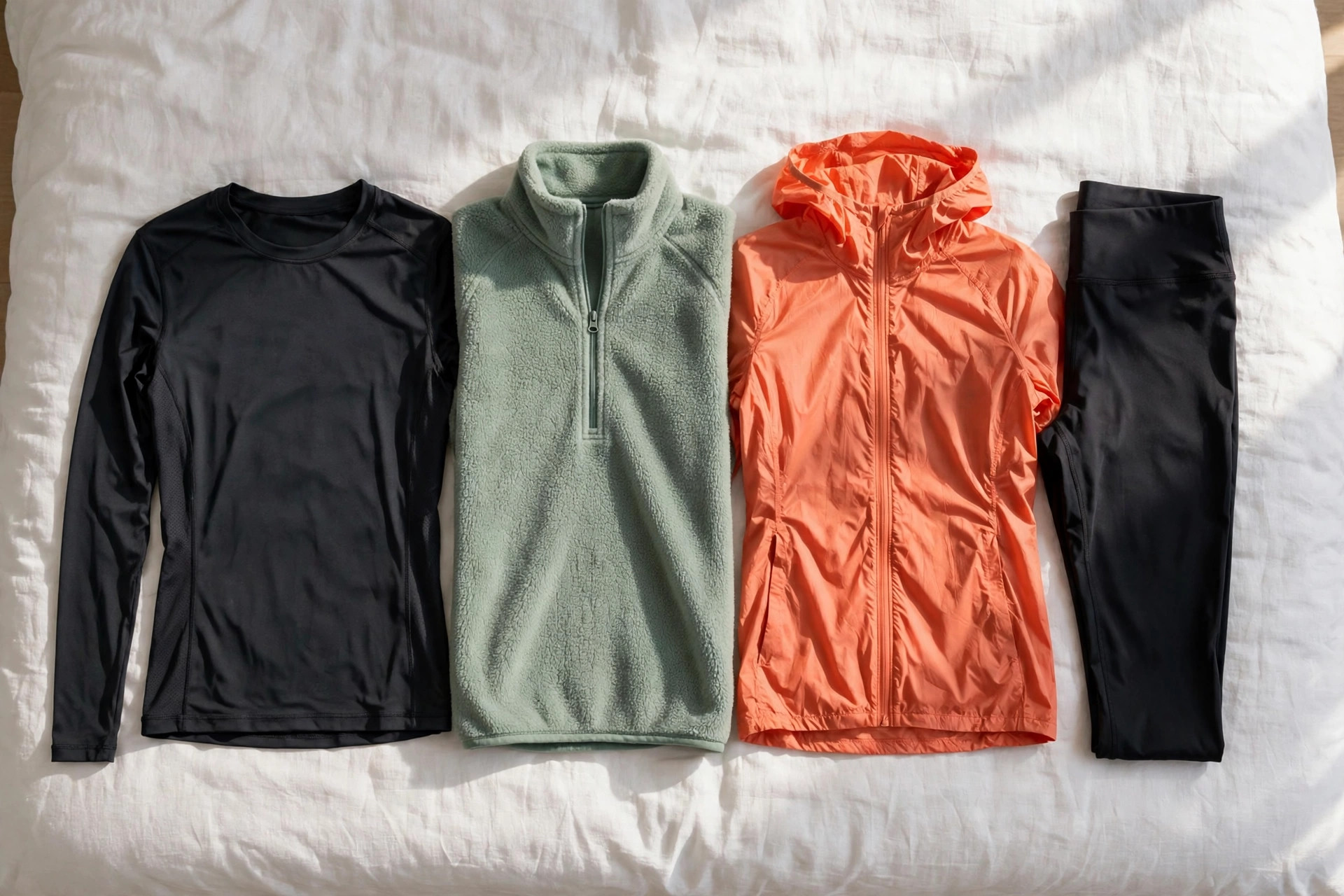
The system is modular. Drop the mid layer on a calm day, keep only the shell when a cold rain starts, and you can handle almost any forecast with three pieces.
Hands and Head: Gloves, Hats and Buffs
When you work out what to wear running by temperature, your core mostly takes care of itself: running generates plenty of heat. Your hands and head do not, which is why they need attention out of proportion to their size. Cold hands are the most common complaint in winter running, and the easiest to solve once you match the glove to the temperature.
Running Gloves for Cold Weather
Lightweight liner gloves cover most runners from about 40 to 50 degrees. They are thin, cheap, and easy to stuff into a pocket when your hands warm up by the second mile. Between 30 and 40 degrees, step up to a midweight glove with some insulation and a wind-resistant back. Below 30, many runners do better in mittens: fingers share warmth inside one compartment, which keeps them warmer than gloves. Below 20, layer liner gloves inside mittens, so you can shed the mitten briefly without exposing bare skin. The best running gloves for cold weather also grip a phone or water bottle and survive being stuffed into pockets and washed weekly. Windproof panels on the back of the hand matter more than thick palm padding.
Picking a Running Hat for Winter
Heads lose heat mainly through exposed skin, so coverage matters more than thickness. A headband that covers your ears is enough for most runs between 35 and 50 degrees, and it avoids the overheating a full hat can cause on a hard workout. Below freezing, switch to a full hat in a wicking fabric. A running hat for winter should cover the ears completely, fit snugly enough to stay put in wind, and pull sweat away instead of holding it. Below about 20 degrees, add a buff you can pull over your nose and cheeks, or a balaclava on the coldest, windiest days.

Fabrics That Help and Fabrics That Hurt
Knowing what to wear running by temperature only works if the fabrics are right. The one rule worth memorizing: no cotton. Cotton absorbs sweat and holds it against your skin, where it turns cold and heavy. A cotton hoodie on a winter run reliably leaves you colder at the finish than the start. Synthetic fabrics like polyester and nylon wick sweat and dry quickly, and they cost less. Merino wool wicks nearly as well, resists odor over multiple runs, and keeps some warmth when damp, which makes it a favorite for base layers and socks. Feet deserve the same logic: wool or synthetic running socks prevent the blisters wet cotton guarantees.
Wind, Rain and Dark: Small Adjustments
Running in Cold Weather Tips for Wind and Rain
Wind changes everything the chart assumes. A strong headwind can make 35 degrees feel like the mid-20s, so add the shell layer in wind, and plan routes that take the headwind out and the tailwind home. These running in cold weather tips matter most on exposed routes with nothing to break the wind. A water-resistant shell over a wool base layer handles most cold rain; fully waterproof jackets trap sweat and often leave you just as wet from the inside. In cold rain, keeping your core warm matters more than staying perfectly dry. Darkness is the third adjustment, about being seen rather than staying warm: add reflective details or a light vest over whatever layers the temperature requires. Your effort also changes how this feels: as our heart rate training guide explains, heart rate responds differently in the cold, so judge the run by effort rather than summer pace targets.
Frequently Asked Questions
What should I wear running in 40-degree weather?
At 40 degrees, wear full tights, a long-sleeve base layer, light gloves and a headband over your ears. Add a vest or light shell if it is windy. You should feel cool for the first few minutes and comfortable by mile two. Faster workouts need one layer less; easy runs may want the vest.
Is it better to be overdressed or underdressed for a run?
Slightly underdressed is better. You warm up quickly once you start moving, while an extra layer becomes dead weight you tie around your waist. Overdressing also soaks your layers with sweat, which chills you later. The exception is a long, slow run in deep cold, where one spare layer is cheap insurance.
Do I need running gloves in 50-degree weather?
Most runners do not. At 50 degrees, hands usually warm up within the first mile. If your hands run cold, or the run starts before sunrise, a thin liner glove is plenty and easy to pocket later. Gloves become standard gear below about 45 degrees.
What is the best fabric for running layers?
Merino wool and synthetic fabrics like polyester are the best choices, because both move sweat away from your skin and keep you comfortable as you warm up. Wool adds odor resistance and warmth when damp. Avoid cotton entirely: it absorbs moisture, stays wet, and pulls heat from your body in cold weather.
How do I keep my hands warm when running in winter?
Layer them like the rest of you. Wear liner gloves under mittens in serious cold, since mittens let your fingers share warmth. Keep your core warm, because your body restricts blood flow to your hands when your core temperature drops. Swinging your arms and flexing your fists also helps circulation.
Final Thoughts
Deciding what to wear running by temperature gets easy once you stop dressing for the doorway and start dressing for mile two. Use the chart as your baseline, adjust one row for wind, rain and workout intensity, and protect your hands and head when the temperature falls. One last habit makes every future decision easier: after each run, note the temperature and what you wore in your training log. A watch app works well for this, and the logs discussed in our Garmin heart rate monitor review make it simple to look back at which outfit matched which weather. Within a few weeks, the doorway dilemma disappears.

Running Cadence Drills: Raise Your Turnover Without Forcing It

Heart Rate Zones Explained With a Real Training Week Example