
Best Kites for Windy Days: Flying in 15 to 25 MPH Without a Crash7 min read
The best kites for windy days are smaller kites with strong frames, flown on line one weight heavier than your calm-day setup. Strong wind is mostly an equipment problem, not a skill problem. Wind pressure rises with the square of wind speed, so a kite at 20 mph pulls roughly four times as hard as the same kite at 10 mph. Beginner kites are built for the 10 mph number, which is why they fold, dive, and snap line on the first fresh day of spring. Fix the line and the frame, shrink the sail, and 15 to 25 mph becomes flyable. The best kites for beginners are the right starting point for calm days; this guide covers what changes when the wind doubles.
Our top picks, compared:
Match the Kite and Line to the Wind
| Wind | Kite choice | Line (braided dacron) | Notes |
|---|---|---|---|
| 12 to 15 mph | Standard delta or parafoil | 50 lb | Upper end of the beginner range; expect real pull |
| 15 to 20 mph | Smaller delta, mid-size parafoil, vented sport kite | 80 lb | Step the line up one weight from your calm-day setup |
| 20 to 25 mph | Small or vented kite with a strong frame | 80 to 100 lb | Experienced flyers, open space, gloves with larger kites |
| Over 25 mph | Pack up | n/a | Gusts, not averages, are what break gear |
Line Strength Is the First Fix
More windy-day flights end with a snapped line than with a broken kite. Line is rated for a steady pull, and gusts load it in spikes. A setup that feels comfortable at a steady 15 mph can see double that load for a few seconds at a time.
Our guide to choosing kite line sets out the full chart. The steps that matter here: a standard four to five foot delta flies on 50 lb braided dacron in moderate wind, and the same kite wants 80 lb once the wind reaches the high teens. A kite you fly on 30 lb at 8 mph may need 50 lb at 18 mph. Stepping up one weight costs a little altitude, because heavier line sags more, and buys a large margin against the gust that would otherwise end the day.
Check the line you already own before you fly. Dacron that has gone fuzzy, flat, or discolored has lost strength, and strong wind finds the weak spot. Retire doubtful line to light-wind duty.
Smaller Kites and Vented Kites
Sail area is pull. Halving the size of the kite roughly halves the force on the line, the frame, and your arms, which is why experienced flyers own a small kite for fresh days instead of fighting a big one. A three foot delta that feels like a toy at 10 mph is a well-matched kite at 20 mph.
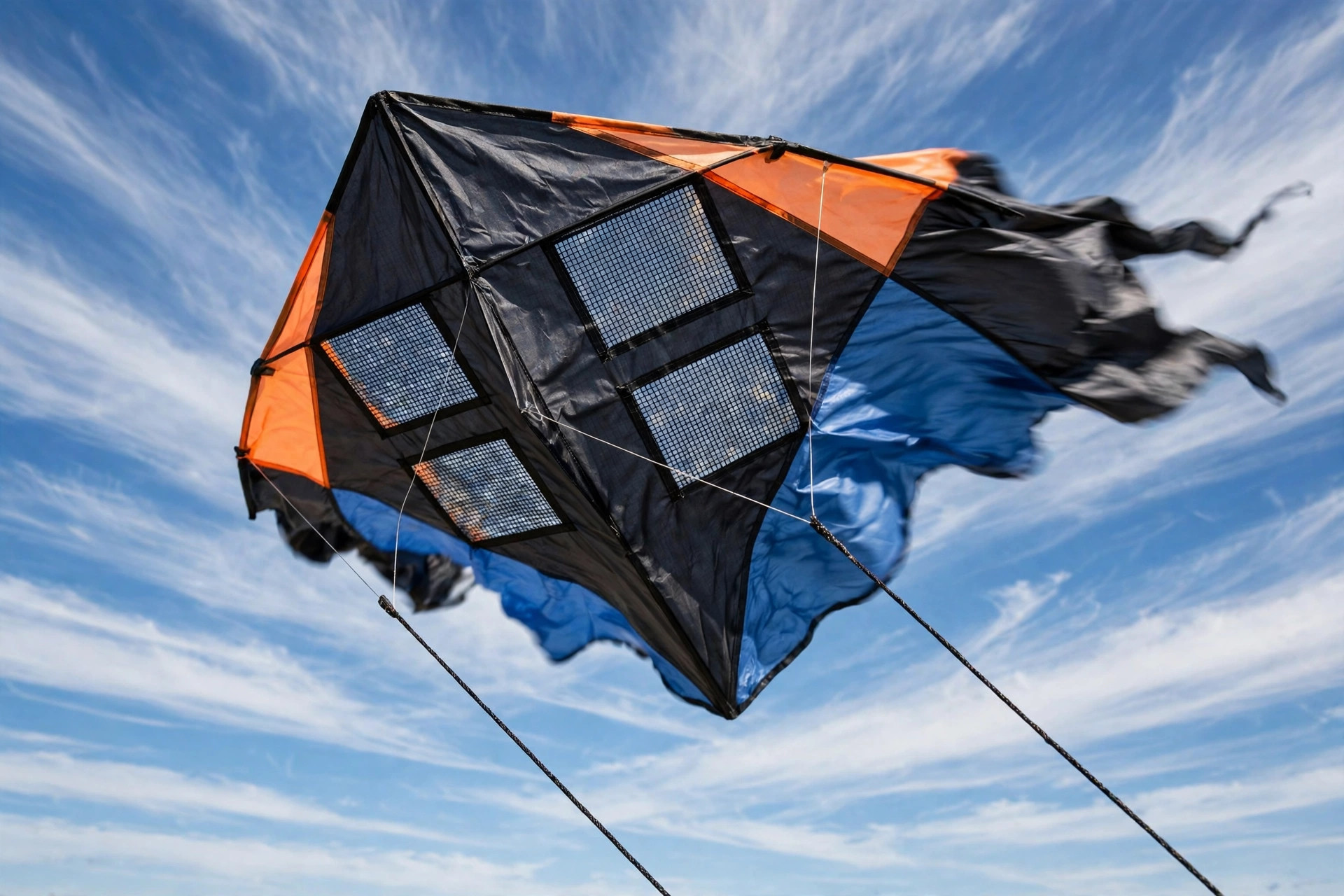
Vented sport kites take the same idea further. Mesh panels in the sail spill air as pressure builds, so a gust that would fold a solid sail or drag the flyer forward mostly passes through. Venting is standard on dual-line kites built for high wind, and it is the single most useful feature if you regularly fly above 18 mph. The trade-off is a higher minimum wind: a vented kite that shrugs off 22 mph will not stay up at 7 mph.
Frames That Survive Fresh Wind
Wind bends spars, and a spar that flexes too far either snaps or pops out of its fittings, after which the kite folds and dives. For windy days, look for carbon or wrapped fiberglass spars, reinforced nose and spine fittings, and a sail cut from ripstop nylon rather than plastic or thin polyester.
The kites to leave at home are the toy-grade diamonds and character kites sold for calm park days. Their dowel-thin spars and single-stick frames are honest equipment at 8 mph and a liability at 20. If a kite’s packaging promises a wide wind range starting near zero, treat the top of that range with suspicion; most honest ranges top out in the high teens for beginner kites.
When a Dual-Line Kite Earns Its Keep
A single-line kite in strong wind flies where the wind puts it. A dual-line kite gives the flyer steering and, more importantly, an exit. Flying the kite to the edge of the wind window cuts its pull sharply, so a gust becomes something you sidestep rather than wrestle. That control is also crash prevention: most strong-wind crashes are dives the flyer could not correct, the pattern covered in our guide to why a kite keeps crashing.
Dual-line flying in 15 to 25 mph is not a first-month skill. Build time on the kite in moderate wind first, learn the window, and step up only when your landings are deliberate. When you shop, the wind ranges in our roundup of the best kites for beginners mark which beginner sport kites tolerate the upper teens; fully vented models sit a step above those.
Flying Technique When the Wind Is Up
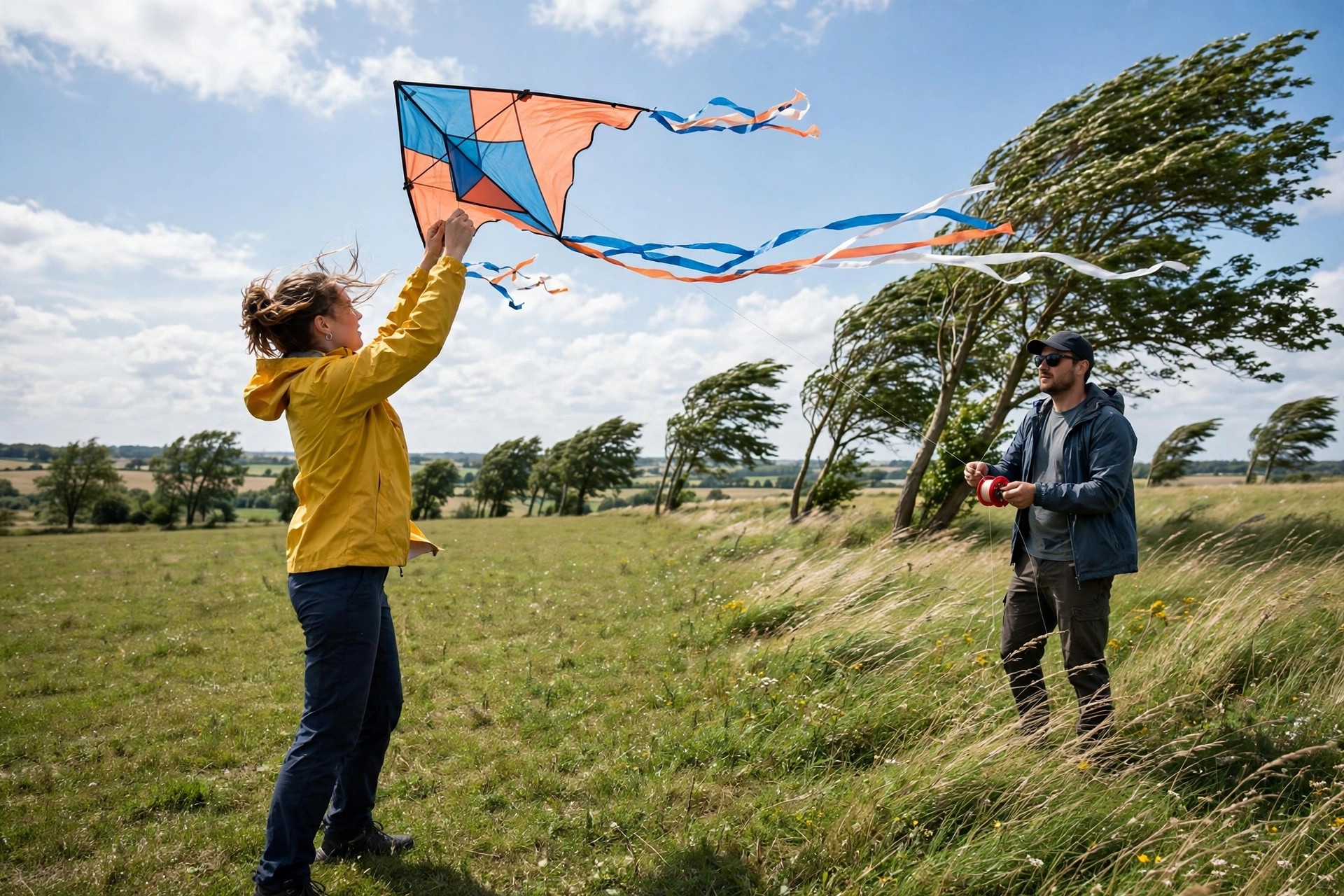
Launch from the edge of the wind window rather than the center, where pull peaks, and let the kite climb in stages instead of racing to full height. Keep it moving. A kite parked at the top of the window in gusty air gets hit by every change in the wind; a kite in gentle motion sheds gusts as it turns.
Use a longer launch and a helper if you have one, because the first thirty feet, where wind is turbulent near the ground, are where strong-wind launches fail. Wear gloves if the kite is large enough to need 100 lb line; line under that much tension cuts skin. Never wrap line around a hand or wrist to get a better grip, and keep spectators out from directly under the kite.
The Ceiling: When to Pack Up
Every flyer needs a number, and 25 mph sustained is a sensible one for recreational kites. Past that, the gear on this page is at its limit, turbulence does more steering than the flyer does, and a mistake carries real force behind it. Gusts matter more than the average: a 20 mph wind gusting to 30 is a 30 mph problem in the seconds that count.
Two hard stops apply at any wind speed. Never fly near a thunderstorm, and never fly where a runaway kite could reach power lines, roads, or water; the American Kitefliers Association’s safety guidelines are blunt on both points. Our kite wind chart gives the full wind scale with the feel of each range on your face and in the trees, which is the fastest way to judge conditions before you rig up.
Frequently Asked Questions
Does adding a tail help a kite in strong wind?
It helps stability, not strength. A tail adds drag that slows a twitchy kite and holds its nose into the wind, which can settle a small delta that loops in gusts. It does nothing for an overloaded frame or an undersized line, and a long tail in strong wind adds its own pull. Treat a tail as a tuning aid, not a wind rating upgrade.
Should I fly a bigger kite in strong wind to slow it down?
No, the opposite. A bigger sail catches more wind and pulls harder, and strong wind already supplies all the lift a kite needs. The correct move is a smaller kite, a vented kite, or heavier line on the kite you have. Bigger kites are for light wind, where the problem is staying up at all.
What should I do if my line snaps in strong wind?
Let the kite go and watch where it lands rather than chasing it. A kite on a broken line usually flutters down within a few hundred feet. Retrieve it only where it is safe to walk; never follow one toward a road, water, or power lines, and never grab at a loose line under tension. Wind in the broken end and dispose of it so it does not tangle wildlife or other flyers.

The Colorful History of Kites

9 Best Kite Strings, Reels & Accessories
