Kite Tails Explained: When a Kite Needs One and When It Hurts7 min read
A kite tail does one job: it adds drag at the back of the kite, and that drag holds the rear downwind so the nose keeps pointing into the wind. Diamond kites in gusty air usually fly better with one. Most delta kites fly worse, because their shape is already stable and the tail is pure extra drag and weight. So the honest answer to whether your kite needs a tail depends on its shape and on the wind, not on how the kite looked in the product photo. Many of the beginner kites in our guide to the best kites for beginners include a tail in the box, which is exactly why this question comes up so often.
Our top picks, compared:
What a Tail Actually Does
Picture the kite as a balance point with wind pushing on the sail. If the rear of the kite is free to swing, gusts push it sideways, the kite darts, and each dart can turn into a dive. A tail hangs behind the kite and the wind pulls on every inch of it, so the drag acts like a hand holding the back end in line. The longer and draggier the tail, the stronger that steadying effect.
The same drag that steadies the kite also works against it. A tail adds weight the kite has to lift and drag the wind has to overcome, so a kite carrying a heavy tail climbs at a lower angle and needs more wind to launch. Stability and performance trade against each other, and the right amount of tail is the smallest amount that stops the darting. General flying guidance from organizations such as the American Kitefliers Association makes the same basic point: adjust the kite to the wind you have, rather than forcing one setup onto every day.
Kites That Usually Benefit From a Tail
Flat and bowed kites are the classic tail candidates. A diamond kite has a narrow shape and a single spine, and in gusty or shifting wind it tends to dart side to side and loop. A tail calms that down noticeably, which is why diamonds have shipped with tails for generations. The comparison of the best kite shapes for beginners shows how much the starting shape matters before any tail enters the picture.
Eddy and bowed kites sit in the middle. A slight bow adds stability on its own, so these kites may need a tail only on rough days. Simple flat kites made from kits, and homemade kites built by kids, also benefit, because their frames and bridles are rarely precise enough to fly steady without help.
| Kite shape | Tail needed? | Why |
|---|---|---|
| Diamond | Usually yes | Narrow, flat shape darts in gusts without rear drag |
| Bowed or eddy | Sometimes, on gusty days | The bow adds some stability, rough air can still overwhelm it |
| Delta | Usually no | Wide wing and keel keep it steady by design |
| Box kite | No | The structure itself provides stability |
| Foil or parafoil | No | Ram-air cells hold the shape, a tail only adds drag |
Kites That Usually Fly Worse With a Tail
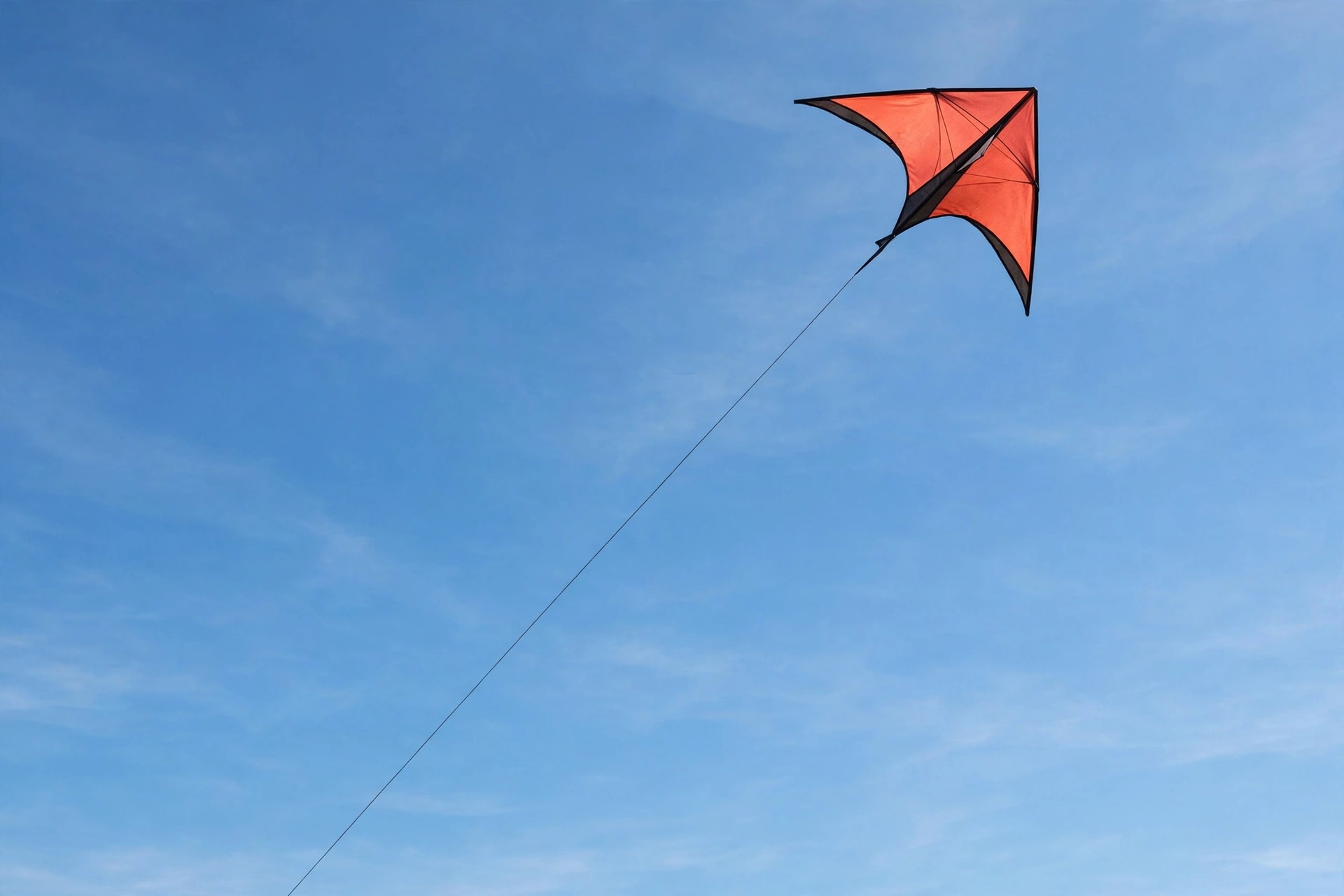
The delta is the big one. A delta’s wide wing and keel act as built-in stabilizers, and the shape was designed to fly without a tail. Clip a long ribbon tail to a delta and you mostly add drag at exactly the wrong place. The kite climbs lower, responds sluggishly, and in light wind may refuse to launch at all because the tail’s weight eats the small lift margin the kite has.
Box kites and foil kites are similar cases. Their stability comes from structure and internal air pressure rather than from anything trailing behind, so a tail contributes nothing except drag. If a delta, box, or foil kite is flying badly, the tail is almost never the answer, and the sections below cover what to check instead.
How Long Should a Kite Tail Be?
There is no exact formula, because the right length depends on the kite’s size, its shape, and the wind on the day. These starting points cover most single-line kites:
- For a diamond kite in moderate wind, start with a tail roughly one to two times the kite’s height.
- In gusty wind, extend toward three times the kite’s height before trying anything else.
- Add length in sections. Fly for a minute, land, add a section, and fly again. Stop when the darting stops.
- If the kite will not climb or feels sluggish, the tail is now too long or too heavy. Shorten it before blaming the kite.
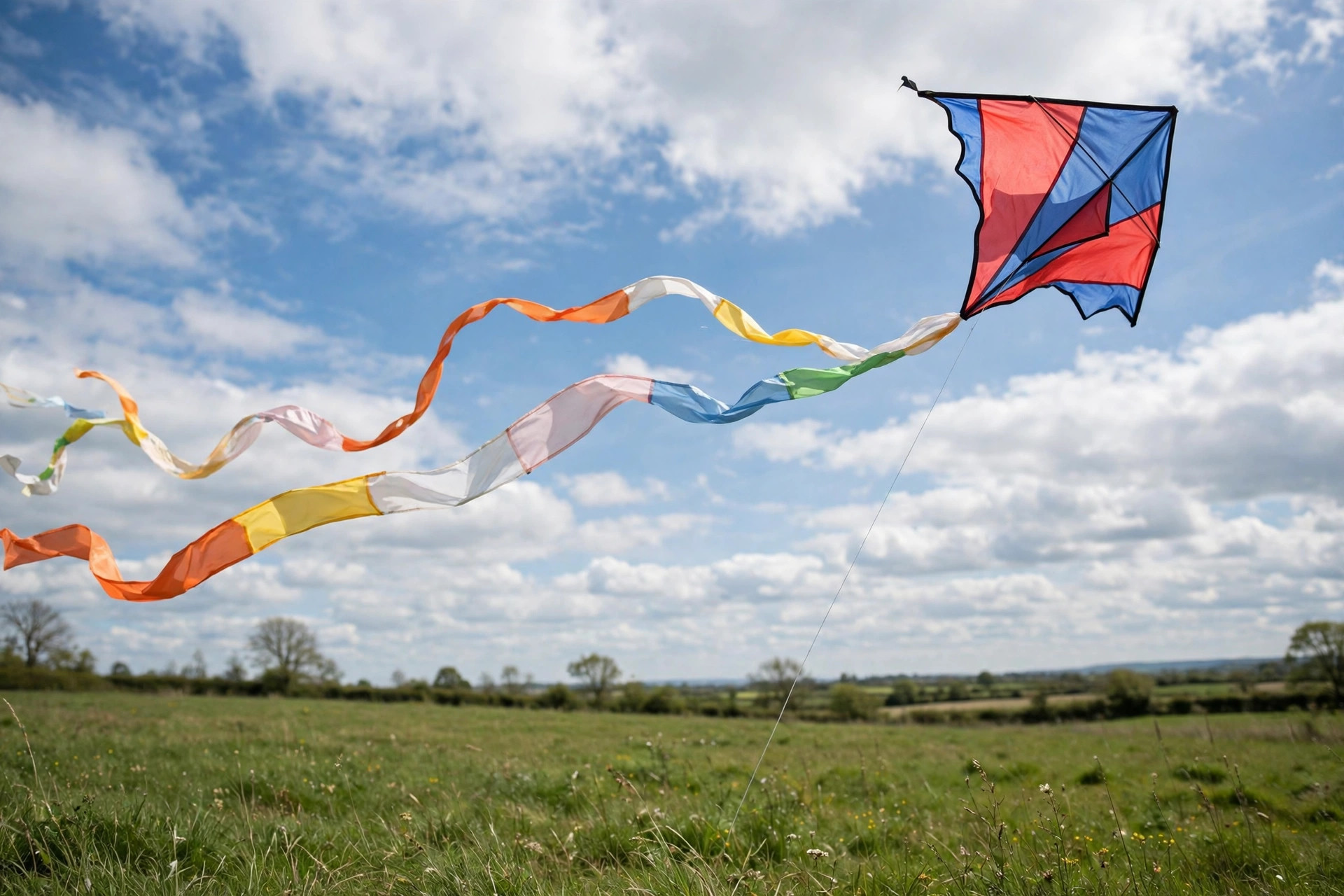
Ribbon and tube tails create drag smoothly and are easy to extend with a simple knot or clip. Fuzzy or looped tails create more drag per foot, so you need less length. Whatever the style, a tail that works on a calm morning may be far too short for a gusty afternoon, which is why adjustable length matters more than any single number. If you are shopping for a kite that handles this gracefully out of the box, the picks in our guide to the best kites for beginners lean toward stable shapes that need little or no tail adjustment.
When a Tail Is the Wrong Fix
A tail steadies a kite that is unstable. It does nothing for a kite that is set up wrong, and adding one can hide the real problem for weeks. The clearest warning sign is direction. A kite short on stability darts both ways, randomly, mostly when gusts hit. A kite with a bridle problem misbehaves in one consistent direction: it pulls hard to the left every flight, loops the same way, or dives the moment it catches wind.
Consistent one-direction behavior points at the bridle, an uneven frame, or a towing point set too far forward or back. Work through the checks in our guide to why a kite keeps crashing before reaching for a longer tail. Wind choice matters too. A kite flown in the turbulent air behind trees or buildings will dart no matter what hangs off the back of it, and the fix there is a better field, not more ribbon.
Tails for Looks Are Fine, With One Rule
Plenty of tails exist purely for decoration, and there is nothing wrong with that. Streamers and spinning tails look good, kids love them, and on a stable delta a light decorative tail costs little performance. The one rule is to keep decoration light and balanced. A heavy tail on a small kite eats its light-wind range, and a tail clipped to one side of the frame can pull the kite out of trim.
If the kite flies well and the tail is there because someone likes watching it, leave it alone. Just know which job your tail is doing, so that when the kite misbehaves you can tell whether the tail is part of the problem or part of the cure.
Frequently Asked Questions
Can a kite tail be too long?
Yes. Past the point where the darting stops, extra tail only adds weight and drag. The symptoms are a kite that climbs at a sad, low angle, needs noticeably more wind to launch, and feels sluggish turning into gusts. Shorten the tail in sections until the stability just holds.
Does a tail help a kite fly in light wind?
It does the opposite. Light wind gives a kite very little lift to spare, and a tail spends that lift on weight and drag. On calm days, remove the tail from kites that allow it, or fly a shape that needs no tail at all. Tails earn their place as the wind picks up and turns gusty.
Will a tail stop my kite from spinning?
Only if the spinning comes from gust-driven instability, where the kite darts randomly in both directions. If the kite spins or loops the same direction every time, that is a bridle or frame problem, and no tail will correct it. Fix the setup first, then judge whether the kite still needs a tail.

Our Recommendations for the Best Stunt Kites that Will Blow You Away

Best Delta Kites for Kids and Beginners