
How to Choose Kite Line: Weight, Length and Material Explained6 min read
Kite line is the cheapest part of your setup, and the part most likely to ruin your day. Line that is too light snaps in the first real gust; line that is too heavy drags a small kite out of light wind. Learning how to choose kite line takes about five minutes, and it prevents both failures. Three decisions matter: the breaking strength in pounds, the length on the winder, and the material.
If you would rather skip ahead to proven gear, our roundup of the best kite strings, reels and accessories covers the spools and winders we recommend first.
Our top picks, compared:
How to Choose Kite Line by Strength: The Pound Ratings
Line strength is printed as a breaking weight: 20 lb, 30 lb, 50 lb, 80 lb, 100 lb and up. Match that number to the pull your kite generates, which comes from kite size and wind speed.
20 lb line belongs on tiny kites under about three feet across, in light wind.
30 lb line is the classic match for small deltas and tailed diamonds.
50 lb line is the all-rounder, right for standard four and five foot deltas.
80 lb line suits large deltas, mid-size parafoils and stronger days.
100 lb line and above is for big parafoils, large box kites and strong wind.
Most makers print a recommended line weight on the packaging, so start there. Wind multiplies pull, as our kite wind chart shows. When in doubt, go one step heavier rather than lighter.
Kite Line Strength Chart: Match the Line to the Kite
This kite line strength chart covers the combinations most families actually own. Treat it as a starting point, then adjust one step up for strong wind.
| Kite Type and Size | Recommended Line Strength | Typical Length |
|---|---|---|
| Small kids delta (under 40 inches) | 20 to 30 lb | 100 to 200 ft |
| Diamond kite with tail | 30 lb | 150 to 300 ft |
| Standard delta (4 to 5 ft) | 50 lb | 200 to 300 ft |
| Large delta (6 ft and up) | 80 to 100 lb | 300 to 500 ft |
| Parafoil (sled and ram-air) | 50 to 100 lb, by size | 200 to 300 ft |
| Stunt kite (dual line, per line) | 50 to 90 lb Spectra | 75 to 120 ft |
| Box kite | 50 to 80 lb | 200 to 300 ft |
Stunt kites break the pattern: two thinner lines share the load, and control matters more than raw strength.
How Long Should Kite Line Be?
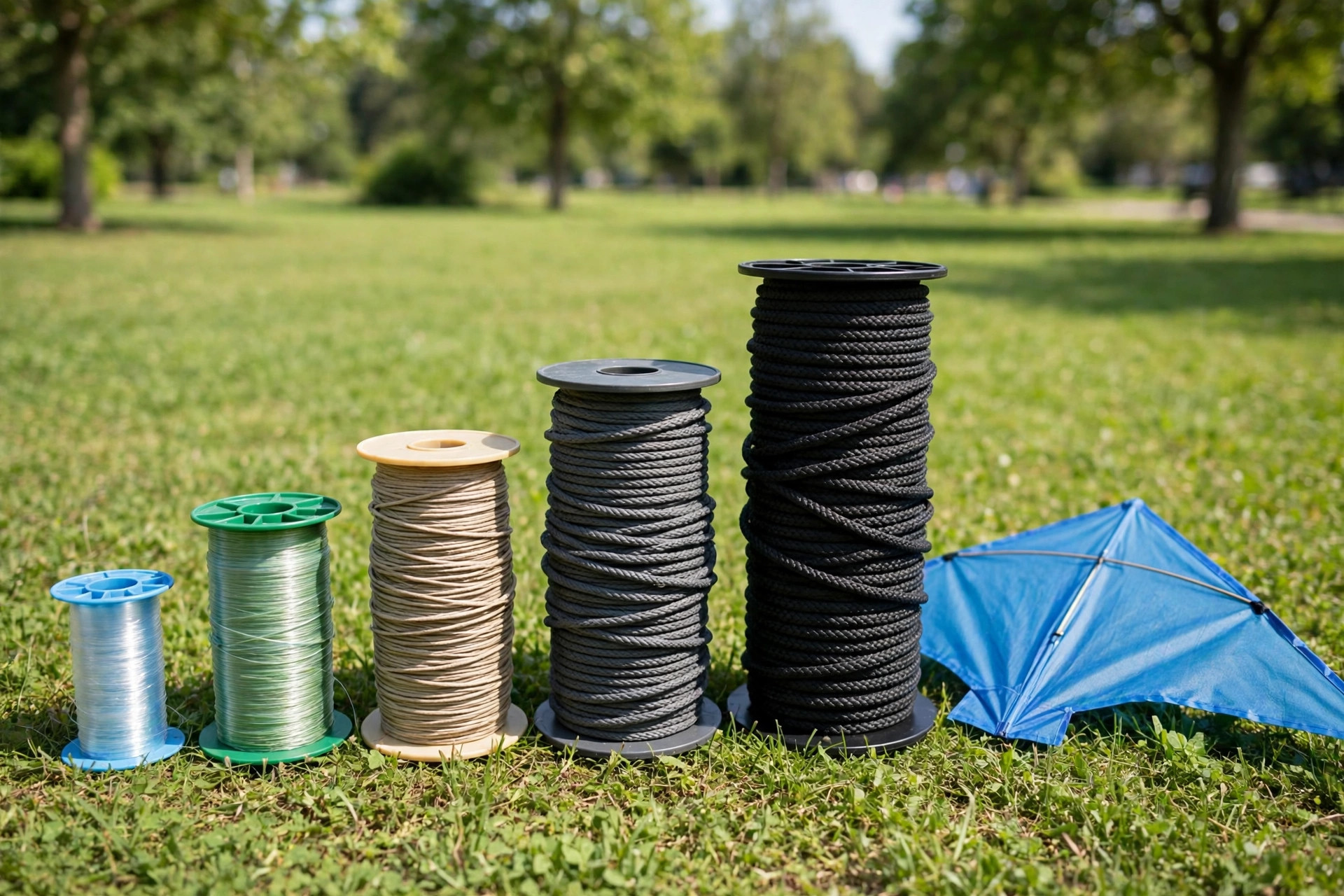
Most spools are sold at 100, 200, 300 and 500 feet, and the honest answer is 200 to 300 feet for most people: enough to climb above the turbulent air near trees and buildings. Short line, 75 to 150 feet, suits stunt kites and small fields. Long line, 400 to 500 feet, gets a big delta into smooth air but adds weight and drag. Kites must stay well clear of airports and manned aircraft, and many parks set their own height rules. If you are still working on launch technique, our step-by-step guide on how to fly a kite covers the long-line launch.
Kite Line Materials: Dacron, Spectra, Nylon and Cotton
Dacron (braided polyester) is the standard single-line material: low stretch, holds knots well, shrugs off abrasion, and costs little.
Spectra and Dyneema are far stronger for their diameter and stretch almost not at all, which is why stunt kite sets use them; the trade-offs are price and slippery knots, so stunt lines use sleeved loops.
Nylon is the stretchy one and mostly appears in cheap toy sets.
Cotton is the traditional fighter kite material, low stretch but weak when wet.
A little stretch forgives gusts on a single-line kite, while near-zero stretch makes a stunt kite feel precise.
Single-Line vs Dual-Line: Different Jobs, Different Line
Single-line flying asks one thing: hold the kite safely, so dacron in the right weight is nearly always the answer.
Dual-line stunt flying asks much more: the two lines must be exactly the same length and barely stretch, which is why stunt sets are sold as matched pairs of Spectra line on straps, usually 50 to 90 lb per line. Never replace one side with random spool line; replace the pair together.
Winders, Reels and Handles
For single-line kites, a simple halo or spool winder handles 100 to 300 feet of dacron well; wind line on in a figure-eight pattern to add far less twist. Reels earn their keep with long or heavy line. Stunt kites use hand straps.
Our guide to the best kite strings, reels and accessories compares the common winder styles. Whatever you use, wind line in under light tension and store it dry.
When to Replace Kite Line
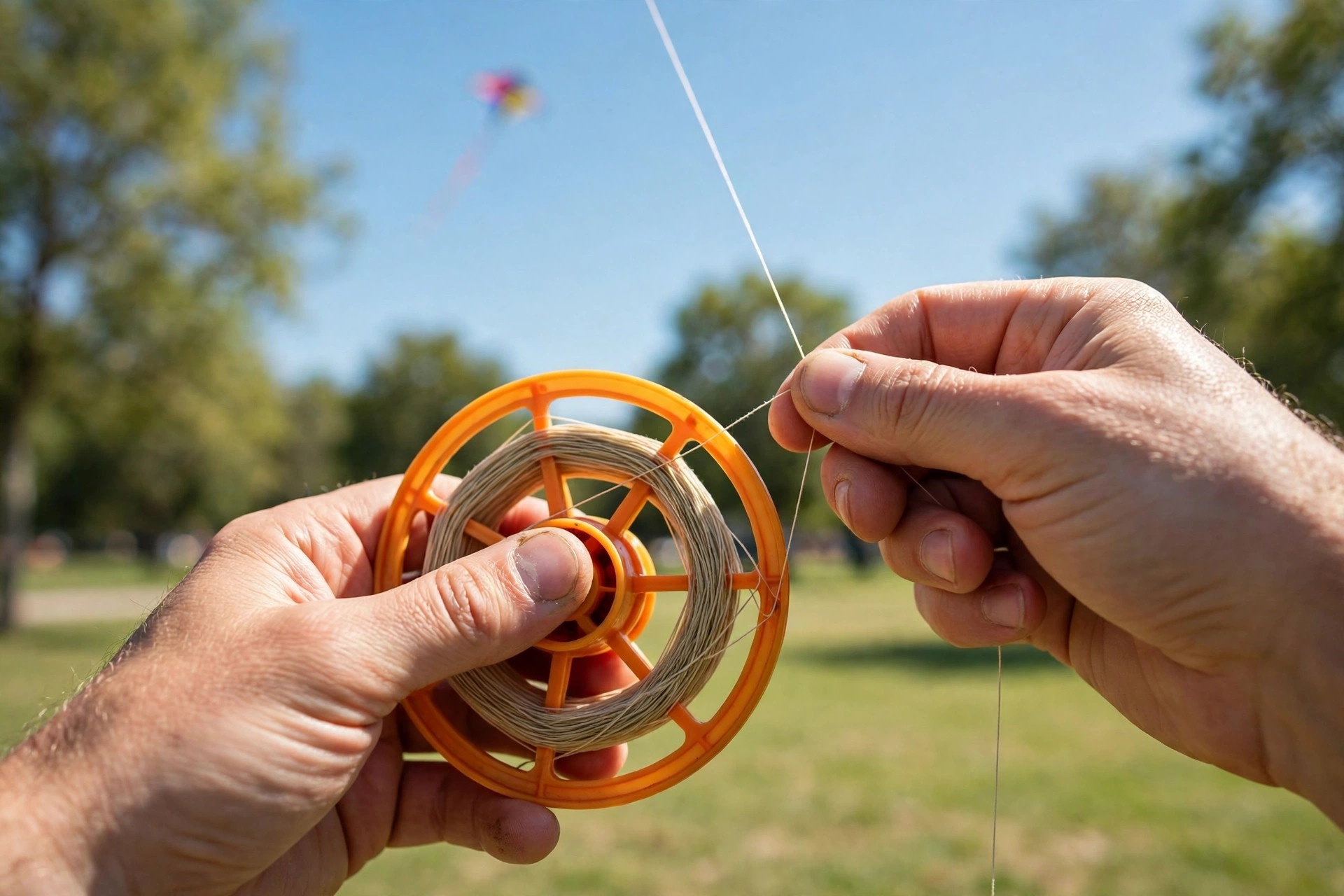
Run the line through your fingers before each session and replace it, or cut back to clean line, when you find:
- Fraying or fuzz
- Nicks and flat spots
- A knot that slipped or cinched mid-line
- Discoloration and stiffness
- A previous snap
How to choose kite line matters most on the day the wind beats the forecast: fresh line in the right weight turns that day into a great session instead of a long walk to fetch a kite from a tree.
Frequently Asked Questions
What weight kite line do I need for a standard delta kite?
A standard four to five foot delta flies well on 50 lb braided dacron line. Drop to 30 lb for a small or light-wind delta, and step up to 80 lb for a large delta or a strong day. If the maker prints a recommendation on the packaging, follow it first.
How long should kite line be for a beginner?
Start with 200 to 300 feet. That length climbs above most tree-level turbulence, gives the kite room to recover from mistakes, and still winds in quickly when the wind drops.
Is Dacron or Spectra better for kite line?
For single-line kites, dacron is better for most people: affordable, durable, knot-friendly and low stretch. Spectra wins for stunt kites, where its thinner diameter and near-zero stretch give instant control. It costs more and its knots slip, so stunt sets use sleeved loops.
Can kite line be too strong for a kite?
Yes. Oversized line is heavy, and its weight and drag can hold a small kite down in light wind. Very strong line also removes the weak link: in a dangerous gust, line that cannot break can drag the flyer into trouble.
How often should you replace kite line?
Inspect line before every flight and replace it at the first sign of fraying, nicks or stiffness. A well-kept dacron spool lasts several seasons. Storing line dry and out of sunlight doubles its life.
Final Thoughts
How to choose kite line comes down to three matches: strength to kite size and wind, length to your field, and material to how you fly. Dacron at the chart weight above, on a decent winder, covers nearly every family kite. Save the Spectra for the stunt kite, keep an eye out for fraying, and the line will do its one job: stay out of your way while the kite does the flying.

Best Kites for 5 to 8 Year Olds: Big Enough to Fly Solo, Forgiving Enough to Crash

Best Kites for the Beach: What Handles Sand, Salt and Sea Breezes
