
Best Kites for the Beach: What Handles Sand, Salt and Sea Breezes8 min read
The best kites for the beach are frameless parafoils and sturdy mid-size deltas. A steady onshore breeze is the easiest wind there is: smooth, reliable, and strong enough to lift almost anything. The kite itself rarely decides whether you fly. The beach does. Sand works into every knot and fitting, salt spray coats line and spars, and the open sand you want is usually shared with swimmers. The picks below favor kites with nothing to snap and nothing to rust, sized for the 8 to 18 mph breeze most beaches deliver on a summer afternoon. If this is a first kite for a child, start with our guide to the best kites for beginners and then match the shape to the notes here.
Our top picks, compared:
Why Beach Wind Is Easy and Beach Conditions Are Not
Inland wind arrives in gusts because it tumbles over trees, houses, and hills. Wind coming off the water has crossed miles of flat surface, so it arrives steady. That steadiness forgives a lot: a kite that porpoises and dives in a park often flies hands-off at the beach.
The trade is the environment. Dry sand is abrasive and gets into bridle knots, line winders, and the pockets where spars meet. Salt spray leaves a film that stiffens line and corrodes cheap metal fittings over a season. And the firm, flat sand near the water, which is the best launch strip, is also where everyone walks. Choosing a beach kite means choosing for those three problems first and for raw flying performance second.
Kite Types for the Beach, Compared
| Kite type | Sand and salt tolerance | Sweet-spot wind | Near other people | Best beach use |
|---|---|---|---|---|
| Frameless parafoil | Excellent: no spars, sand shakes out | 8 to 20 mph | Good: soft body, no rigid parts | Travel, kids, worry-free flying |
| Delta | Very good: rinse the spar fittings | 6 to 18 mph | Good with a short tail or none | Family all-rounder |
| Diamond | Fair: spar joints collect sand | 5 to 15 mph | Fair: long tails drift into walkers | Light-wind days on open sand |
| Box and cellular | Fair: many joints to rinse | 10 to 22 mph | Poor: heavy, rigid frame | Strong steady breeze, empty beach |
| Dual-line sport kite | Good: rinse lines and fittings | 8 to 22 mph | Poor: fast, needs a wide area | Experienced flyers with space |
Frameless Parafoils: The Low-Maintenance Pick
A parafoil has no sticks at all. Air fills a series of fabric cells through openings in the leading edge, and the kite holds its shape from internal pressure. Crash it into wet sand and nothing breaks. Shake it out, and nearly all the sand falls free because there are no pockets or joints to trap it.
Parafoils also pack down to the size of a paperback, which matters more than it sounds. A beach kite that lives in the car or the beach bag gets flown. A kite that needs its own trip back to the house gets left behind. Small and mid-size parafoils fly on the same 30 to 50 lb line as a beginner delta, and most come with line and a winder included.
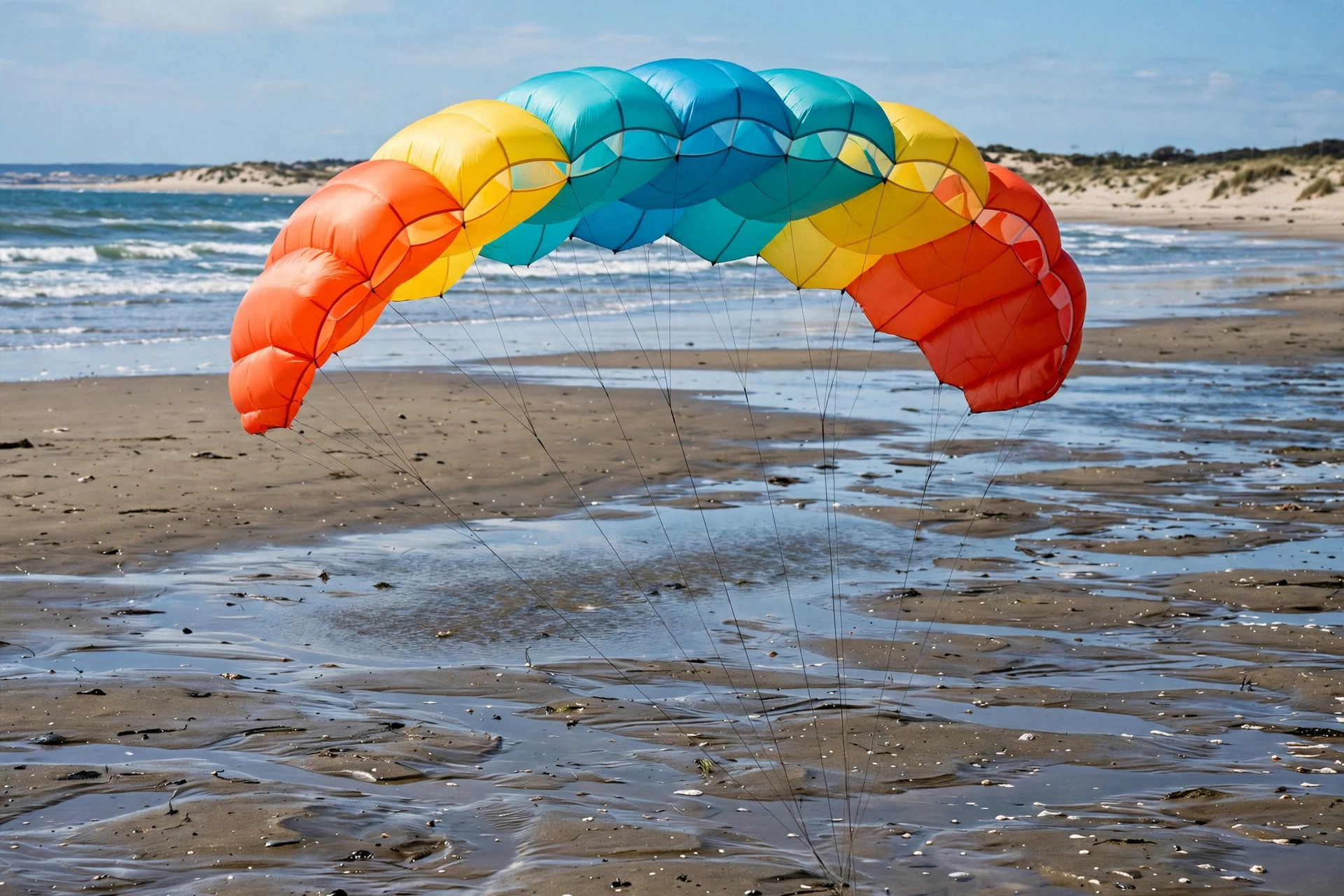
Two limits to know. A parafoil needs a few mph more wind to inflate and climb than a framed kite of the same size, so it is a poor pick for a 5 mph morning. And a large parafoil in a fresh breeze pulls hard with no frame to flex and absorb gusts. For family beach flying, stay with small and mid sizes.
Sturdy Deltas: The Family All-Rounder
The delta is the shape most families end up with, and beach flying is where it earns that. A standard four to five foot delta launches in a light sea breeze, flies at a high angle that keeps it over the water or the open sand rather than over the crowd behind you, and tolerates the small steering mistakes kids make while learning.
Easy-fly deltas are also the proven sellers on this site. The clearest example is the Mint’s Colorful Life Rainbow Delta Kite, a large rainbow delta that our readers buy at a higher rate than any other kite we list. We have not tested it on a beach ourselves, so treat it as a researched recommendation rather than a test result, but its formula is the right one to copy whatever brand you choose: a big, simple delta sail, a frame with some flex, and line included in the box.
Look for fiberglass or composite spars rather than thin wooden dowels, which swell and split after a few salt-water soakings. A delta with sewn spar pockets instead of plastic fittings has fewer parts for sand to jam.
Tails, Crowds, and Line Safety
A long flowing tail looks right over the water, and on an empty beach it is harmless. On a shared beach it is the part of your setup most likely to cause a problem. Tails drift sideways in gusts, wrap around umbrellas, and tempt small children to grab at them. Fly with a short tail or none at all when the beach is busy, and save the long ribbons for empty morning sand.
Set up downwind of the swimming area, never over it, and keep your flying line out of the walking lane along the water. The American Kitefliers Association’s safety guidelines make the same point in stronger terms: the flyer is responsible for everything the kite and line touch. Our own kite safety rules cover the full list, including the two that matter most at the beach: never leave a kite unattended on its anchor, and never fly in an offshore wind that is blowing out to sea. If a kite goes down in the surf on an offshore day, let it go. No kite is worth swimming after into a current.
Reading the Beach Wind
A typical sea breeze builds through the day: light and variable mid-morning, a dependable 8 to 15 mph by early afternoon, and sometimes 18 mph or more by late afternoon as the land heats up. That pattern means the forgiving beginner window is usually late morning, and the strongest pull arrives when the beach is most crowded.
Our kite wind chart maps wind speed to kite type and line weight across the full range. The short version for the beach: under 6 mph, most kites sit in the bag; 8 to 18 mph, everything on this page flies; over 20 mph, switch to a smaller kite and heavier line or wait for the breeze to ease.
Rinsing Salt and Storing a Beach Kite
Salt and sand do their damage after the flying, in the bag. A kite put away damp with salt spray will mildew, and line stored sandy grinds against itself every time it is wound and unwound.
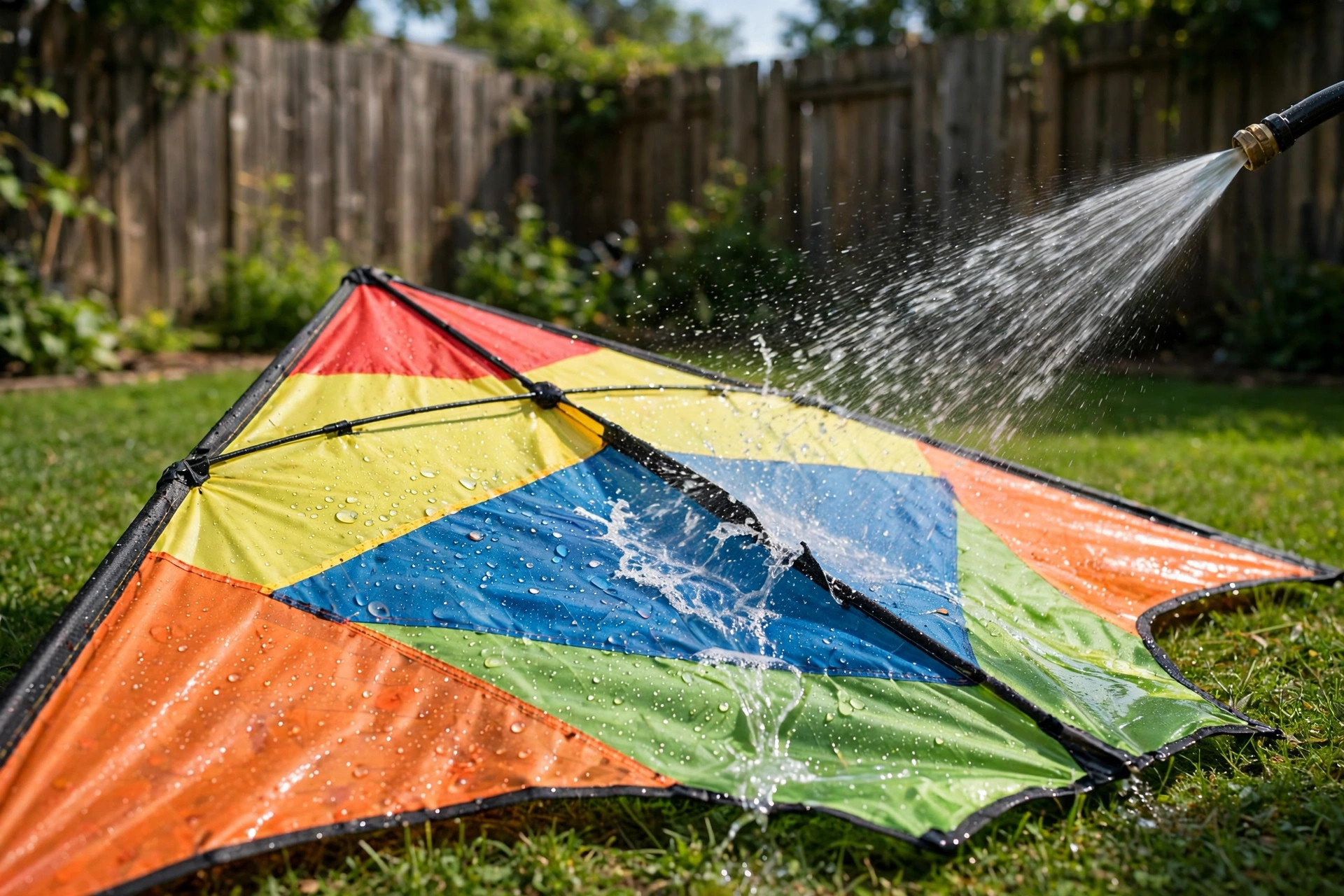
The routine takes five minutes. Shake the kite out over the sand before you leave. At home, rinse the sail and line with fresh water, a hose on a gentle setting or a dunk in a tub, and let everything dry fully in shade before it goes back in the bag. Check bridle knots for trapped sand while the kite dries, and wipe metal fittings on framed kites. Kites stored this way last seasons; kites stored damp rarely last one.
If you are still deciding on a first purchase, our roundup of the best kites for beginners ranks the current beginner picks with line and winder included, and every one of them handles beach conditions in the wind range above.
Frequently Asked Questions
Are stunt kites a good choice for the beach?
They can be, on the right beach. A dual-line sport kite is fast, flies in a wide arc, and needs a clear area roughly twice the line length in every direction. On a wide, quiet beach that is easy to find. On a crowded family beach it is not, and a framed delta or parafoil is the better neighbor. Save the sport kite for mornings and shoulder seasons.
What size kite is best for the beach?
For most families, a delta in the four to five foot range or a mid-size parafoil around two to three feet wide. Both fly in the normal sea breeze without pulling a child off balance, and both are big enough to see at the end of 200 feet of line. Bigger kites are for adults who want the pull, not for better flying.
Do I need to rinse my kite after every beach day?
After every day it gets wet or lands in salt spray, yes. A kite that stayed dry and flew from clean sand can go straight back in the bag after a shake. The rinse matters most for the line and the fittings, where salt keeps working between trips.
Best Kites for Windy Days: Flying in 15 to 25 MPH Without a Crash

Kite Safety Rules for Beaches, Parks and Power Lines
