Kite Safety Rules for Beaches, Parks and Power Lines7 min read
Kite flying is one of the safest outdoor hobbies there is, right up until it is not. Almost every kite accident traces back to ignoring a short list of kite safety rules: power lines, storms, crowds, and line under tension. None of these rules will shrink your fun; they come down to choosing the right spot, watching the weather, and respecting what a line under load can do. Age and size matter too: the best kites for kids and toddlers are small, soft, and slow, which removes half the risks before you leave home.
Our top picks, compared:
The Kite Safety Rules at a Glance
Every row is a rule that exists because someone learned it the hard way.
| Hazard | The Rule | Why It Matters |
|---|---|---|
| Power lines nearby | Never fly near overhead lines, and never retrieve a kite from a line or a tree beside one | Wet line and carbon spars can conduct electricity |
| Storm clouds building | Land the kite and pack up before you hear thunder | Lightning can strike well ahead of the rain |
| Crowds below | Keep the kite and its line well away from people | A diving kite and a taut line can injure bystanders |
| Roads and airports | Fly far from traffic and check local rules near airports | A crashed kite distracts drivers, and kites are restricted near flight paths |
| Busy swimming beach | Set up away from swimmers, walkers, and fishing lines | People move unpredictably and lines cross easily |
| Strong pull on the line | Wear gloves and keep moving line off bare skin | Line under tension burns and cuts like a saw |
| Wet line or a wet kite | Do not fly until everything is dry | Water makes line conductive and heavy |
| Kids flying | An adult launches, lands, and holds the winder in gusts | A gust can pull a small child off balance |
Power Lines: The Rule With No Exceptions
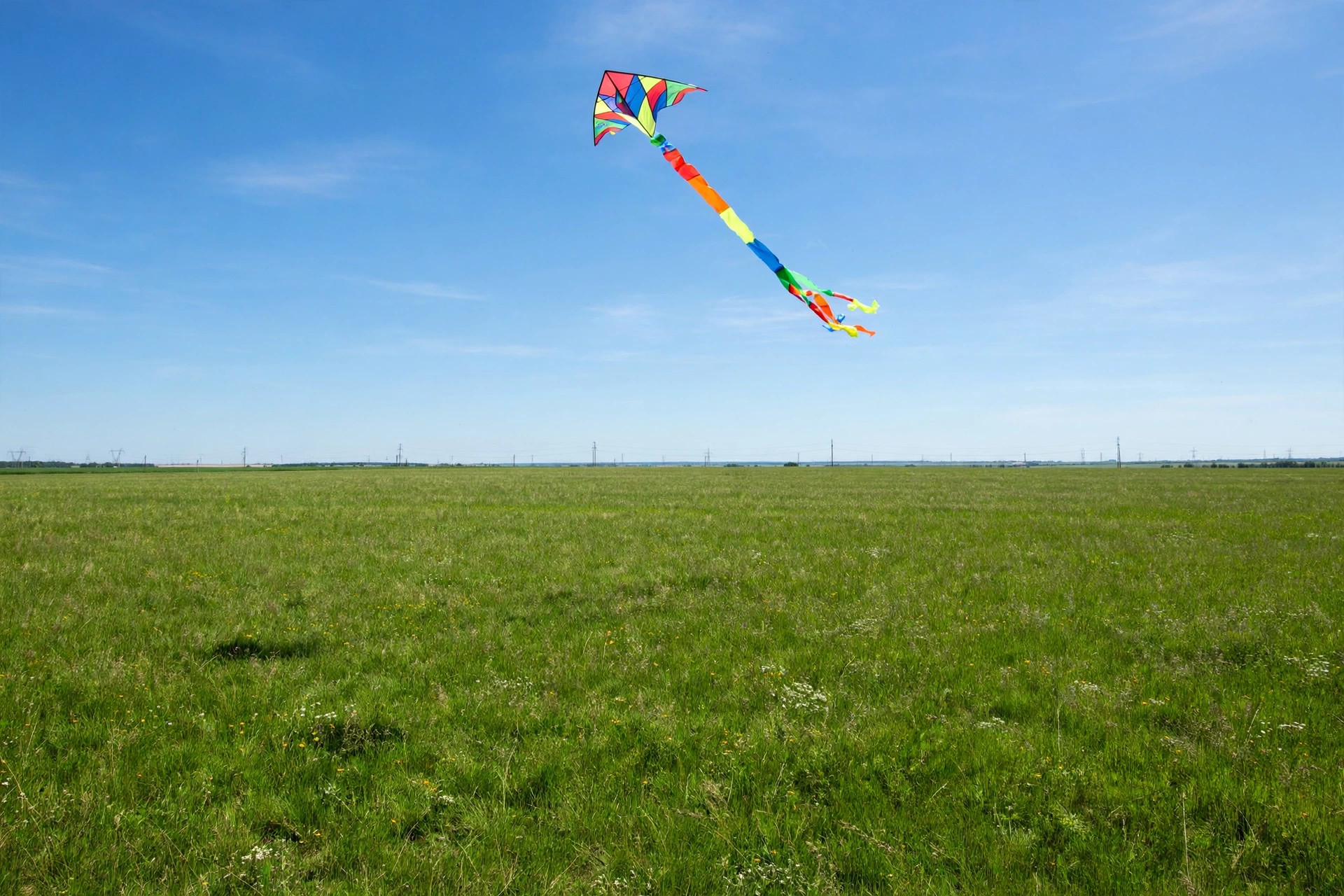
Never fly where your kite or line could reach an overhead line, remembering that a kite on a long line can drift much farther sideways than it looks from the ground. If lines cross your field, choose a different field.
If Your Kite Lands on a Line, Leave It
A kite in a power line is lost. Do not pull the line, do not climb the tree or pole, and do not poke at it with a stick. Let go of the line if it is touching anything electrical, move people away, and call the utility company’s non-emergency line. No kite is worth more than the person holding the string.
Carbon Spars and Wet Line Conduct Electricity
Many modern spars are carbon fiber, which conducts electricity, unlike wooden dowels and fiberglass. Wet line conducts too. Treat every spar as if it were metal and you will make the right decisions automatically.
Storms and Lightning: Land the Kite Early
A kite in a building storm is a lightning rod with a string connecting it to your hand. If you hear thunder or see dark storm clouds stacking up, land the kite and pack up; do not wait for the first raindrops. Gusts arrive before storms do, and our kite wind chart shows the wind speeds where packing up is the right call even on a sunny day.
Crowds, Roads, and Airports: Give the Kite Room
Keep at least the length of your line in open space downwind, because that is where a crashing kite lands, and never fly over people’s heads. A line dropping across a crowd is a real hazard, and a diving kite with rigid spars can injure. Stay well away from roads, and check local rules near airports, since many places restrict kite flying within a few miles of one.
Beach Kite Safety Rules
Beaches offer the best wind and the trickiest crowds. Set up at the edge of the busy area and keep your line over empty sand. Fishing lines are the hidden hazard: a kite line that crosses a fishing line can cut it or be cut by it, so give piers and surf casters a wide berth. Wet sand and salt water mean your line and kite get damp, which brings back the dry-line rule.
Line Burns, Gloves, and the Dry Line Rule
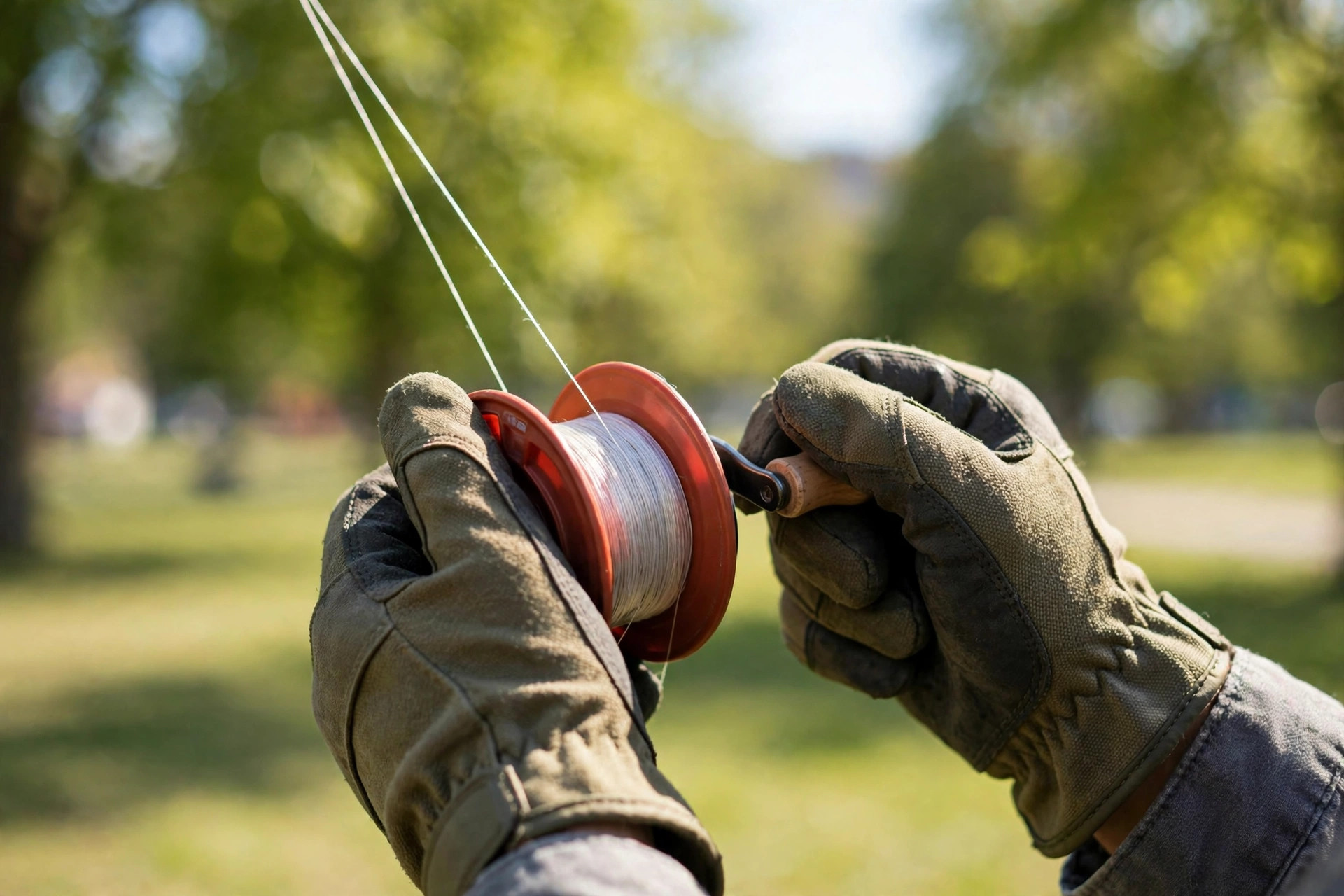
Line under tension that slides through your hand burns and cuts skin fast, especially thin line on a strong-pulling kite. Never wrap line around your hand, wrist, or fingers. Wear gloves whenever you fly a kite big enough to pull hard, and let the winder, not your palm, take the friction. Keep line dry for a second reason: wet line is heavier, sags more, and tangles.
Kite Safety Rules for Kids: Supervision That Works
An adult should launch and land the kite, because those are the moments it dives, drags, and pulls hardest. Once the kite is high and steady, hand the winder over and stay close enough to take it back when a gust arrives. Start small: the best kites for kids and toddlers are soft and slow enough that a crash is a giggle, not a scare. Teach the power line rule as the first rule: if a kite goes toward lines or a tree near them, the answer is always to let go and tell an adult.
Frequently Asked Questions
Is kite flying dangerous?
For most people, no. Kite flying is a low-risk hobby when you follow basic kite safety rules: stay away from power lines, land before storms, keep clear of crowds, and protect your hands from line under tension. Nearly all serious incidents involve power lines or lightning, both easy to avoid.
What should I do if my kite lands on a power line?
Leave it there. Do not pull the line, climb anything, or try to knock it down, and keep other people away from the line. Call the utility company’s non-emergency number and let their crew handle it.
How far should a kite be from other people?
Keep at least the length of your flying line in open space downwind of your kite, since that is where it lands if it crashes. Never fly directly over people, and give extra room at beaches and parks where children and dogs move unpredictably.
Can you fly a kite in the rain?
No. Rain means a wet line, and wet line can conduct electricity. Rain also arrives with gusty, unstable wind and often lightning nearby. Wait for dry weather, and let the kite and line dry fully before the next flight.
At what age can a child fly a kite alone?
There is no single age; it depends on the kite’s pull and the child’s size and judgment. Most kids can hold a small, steady kite around age five or six with an adult beside them. Flying fully alone, including launching and landing, suits older kids who know the power line rule.
Final Thoughts
The whole of kite safety fits on an index card: no power lines, no storms, no crowds, gloves on, line dry, adults on launch and landing duty. Follow those kite safety rules and the hobby stays what it should be. Once the spot is safe, technique is the fun part, and our guide on how to fly a kite covers launches, steering, and landings.

Best Kites for the Beach: What Handles Sand, Salt and Sea Breezes

Kite Festivals in the US: A Family Guide to the Big Weekends