Leave No Trace for Families: 7 Rules Kids Can Actually Follow7 min read
Leave No Trace works for kids when each rule is short enough to say out loud on the trail. The official framework has seven principles, written for adults, and most of them translate cleanly into one plain sentence a five-year-old can repeat back. Teach two rules on your first hikes, add one more each trip, and let your child be the one who spots problems. That works better than a lecture at the trailhead. Before you go, run through a family hiking checklist so the trash bag, water, and spare layers are already handled.
The 7 Leave No Trace Principles, Translated for Kids
The seven principles below are the official set from the Leave No Trace organization, which maintains the full guidance for each one. The kid version is the wording to use on the trail. The parent prompt is what you say in the moment, because children follow questions better than instructions.
| Official Principle | Kid Version | Parent Prompt |
|---|---|---|
| Plan Ahead and Prepare | Know the plan before we go | “What do we need to check before we start?” |
| Travel and Camp on Durable Surfaces | Stay on the trail and on hard ground | “Are your feet on the path or on the plants?” |
| Dispose of Waste Properly | Everything we bring comes back with us | “Is that ours? Then it goes in the bag.” |
| Leave What You Find | Look, photograph, leave it there | “Can we take a picture of it instead?” |
| Minimize Campfire Impacts | Small fires only where fires belong | “Is this a place where fires are allowed?” |
| Respect Wildlife | Watch animals from far away, never feed them | “Are we close enough to change what it is doing?” |
| Be Considerate of Others | Share the trail and keep voices low | “Who else is using this trail today?” |
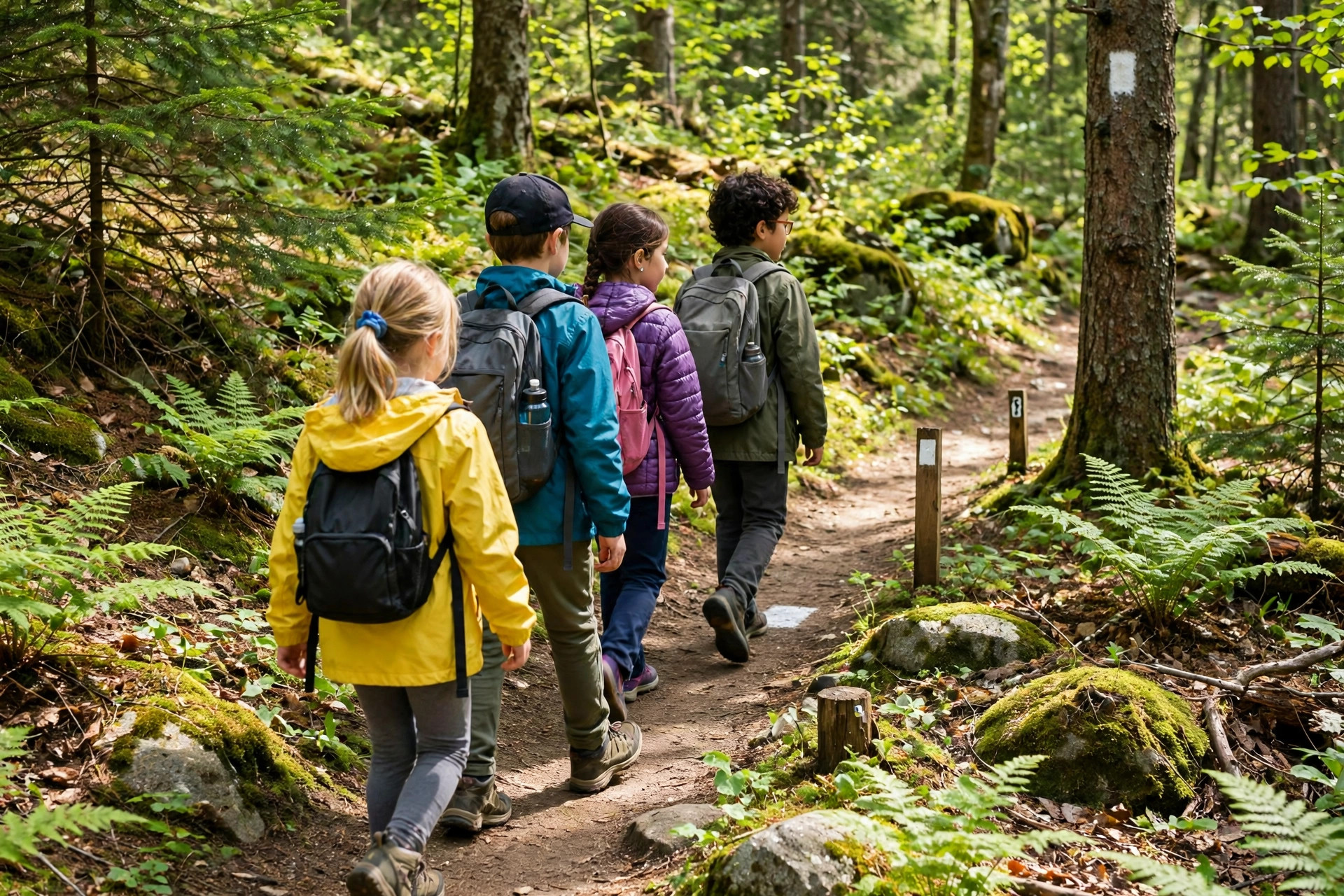
The 7 Principles, One at a Time
1. Plan Ahead and Prepare
For adults this principle covers maps, weather, permits, and knowing the rules of the area. For kids it is simpler: look at the trail map together, check the weather, and name one thing that could change the plan. A child who helped choose the turnaround point accepts it with far less argument. Packing is part of this principle too, and the extra food, water, and layers overlap with the 10 essentials for a family day hike.
2. Travel and Camp on Durable Surfaces
Durable surfaces are established trails, rock, gravel, and dry grass. The kid problem is the shortcut: cutting a switchback or wandering through a meadow feels harmless and does real damage to plants and soil. In muddy stretches, walk through the middle of the trail rather than around the puddle, because a whole season of hikers skirting mud widens the path into the vegetation. At rest stops, sit on rock or bare ground instead of trampling a soft patch.
3. Dispose of Waste Properly
The rule is pack it in, pack it out, and it covers more than wrappers. Orange peels, apple cores, and sunflower seed shells are trash on the trail even though they are natural at home, because they break down slowly and attract animals. Give your child a small bag of their own and make them responsible for it. Bathroom waste needs a plan on longer hikes: use trailhead toilets whenever they exist, and if you must go on the trail, move well away from water and bury human waste in a hole 6 to 8 inches deep where local rules allow it.
4. Leave What You Find
Rocks, pinecones, feathers, and wildflowers stay where they are. The practical test is scale: one child taking one pinecone is nothing, but a popular trail sees thousands of children a year. Offer the trade that usually works, which is a photo or a sketch in place of the object. Cultural sites and old structures get the same rule with no exceptions. Look, do not touch, and never let kids climb on ruins or historic walls.
5. Minimize Campfire Impacts
Many family hikes involve no fire at all, and that is the lowest-impact option. Where fires are allowed, use the established fire ring, keep the fire small, and burn only small sticks found on the ground. Everything should burn down to ash, then be doused with water and stirred until cool to the touch. Teach kids that a fire ring someone else built in the wrong place is not an invitation, and that moving rocks to build a new ring is exactly what this principle asks you not to do.
6. Respect Wildlife
Watching is fine, approaching is not. If an animal changes its behavior because of you, stops feeding, moves away, or watches you instead of its surroundings, you are too close. Never feed wildlife, including the bold squirrels and ducks that beg at picnic areas, because human food harms them and teaches them to approach the next family. Store snacks sealed in your pack, which matters more on overnight trips but is a good habit on any hike. Our guide to hiking with kids covers safe wildlife distances and what to do when animals appear on the trail ahead.
7. Be Considerate of Others
Yield to other hikers where the trail is narrow, step aside for horses and let them pass, and keep music inside headphones rather than on a speaker. Voices carry outdoors, so a simple volume check solves most complaints. This principle also covers the hikers who come after you: a clean rest spot and a clear trail are part of the rule, not extras.
How to Teach the Rules Without Lecturing
Turn the rules into jobs. A child assigned as the group’s “trash captain” will police wrappers, including yours, with more energy than any ranger talk. The job needs a bag, a pair of cheap gloves or a grabber for anything sharp, and hand washing or sanitizer afterward. Picking up litter other people left is optional, but many kids treat it as a contest and ask for a count at the end.
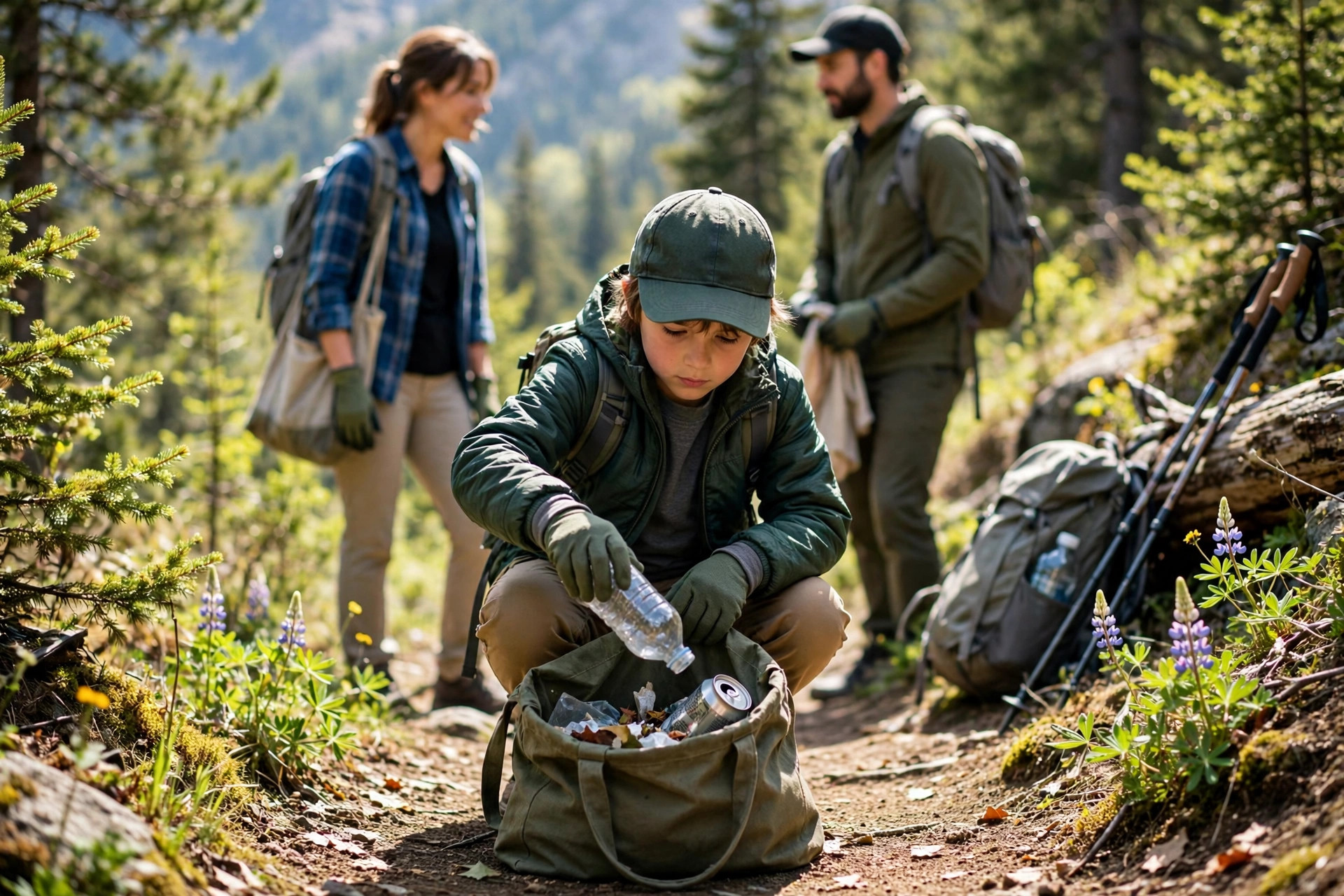
Spot-the-mistake games work for the other principles. Ask your child to find three things wrong in a scene you describe, or to catch you breaking a rule on purpose: step off the trail toward a flower and wait to be corrected. Kids remember the rule they enforced far longer than the rule they were told.
Scale the expectations by age. A four-year-old can manage two rules, stay on the trail and carry out what they carry in. By seven or eight, most kids can hold all seven with reminders. Teenagers can read the official principles themselves and take charge of the fire and waste rules on camping trips.
Before Your Next Hike
Add three small things to your pack: a trash bag, a spare bag for anything wet or dirty, and hand sanitizer. The full hiking checklist for families has the rest of the standard kit. Then pick the two rules your child will own on this trip, say them once at the car, and let the prompts in the table do the rest of the teaching.
Frequently Asked Questions
At what age can kids start learning Leave No Trace?
Most children can handle the first two rules, staying on the trail and packing out trash, by age four or five. Add one principle per trip rather than teaching all seven at once. By eight, many kids can name the full set and remind adults, which is usually when the habits start to stick.
Should kids pick up litter other people left behind?
It is a good habit with two conditions. Use gloves or a grabber for anything sharp, dirty, or unidentifiable, and wash or sanitize hands afterward. Never let children pick up glass, cans with sharp edges, or anything from a fire ring. When in doubt, an adult handles it or it stays.
Do Leave No Trace rules apply in city parks and on school grounds?
Yes, and they are a useful place to practice. Staying on paths, packing out snack wrappers, and leaving flowers and rocks in place work the same way in a neighborhood park. Kids who learn the habits on familiar ground need less reminding on a national park trail.

9 Hiking Essentials to Add to Your Hiking Checklist
How to Plan a First Family Hike: Distance and Elevation by Age