Jump Rope for Runners: A Simple Cross-Training Plan That Fits Marathon Training7 min read
Jump rope for runners works because it trains qualities distance running uses up: springy calves and ankles, quick ground contact, and a rhythm that holds when you are tired. A rope costs little, fits in a gym bag, and a useful session takes about ten minutes. The catch is placement. Rope work loads the calves and Achilles in a way that can quietly wreck a workout if it lands on the wrong day. This plan shows where two or three short sessions fit inside a marathon week, how to progress them over a month, and the surface and injury rules that keep the experiment from costing you running days. If the rope itself is new to you, start with our guide to the basic jump rope styles and techniques before adding any of the work below.
Why Jump Rope Suits Runners
Running is a series of single-leg hops, and the limiting factor late in a marathon is often how well the lower leg keeps recoiling after thousands of contacts. Jumping rope rehearses exactly that: short, quick contacts with the ground, driven by the calf and ankle rather than by big knee and hip movement. Done at a relaxed rhythm, it also encourages the quicker turnover most distance runners are chasing, because a slow, loopy swing punishes you with trips. The cadence connection is direct enough that runners who drill it on the roads, as in our running cadence drills, usually find the rope rhythm familiar within a session or two. The other appeal is arithmetic. Ten minutes of rope work delivers a concentrated calf and foot stimulus that would take far longer to get from most gym exercises, and it needs no travel, no membership, and no setup. For marathon runners whose weeks are already full, a cross-training tool that survives busy schedules is worth more than a theoretically better one that gets skipped.
Where It Fits in a Marathon Week
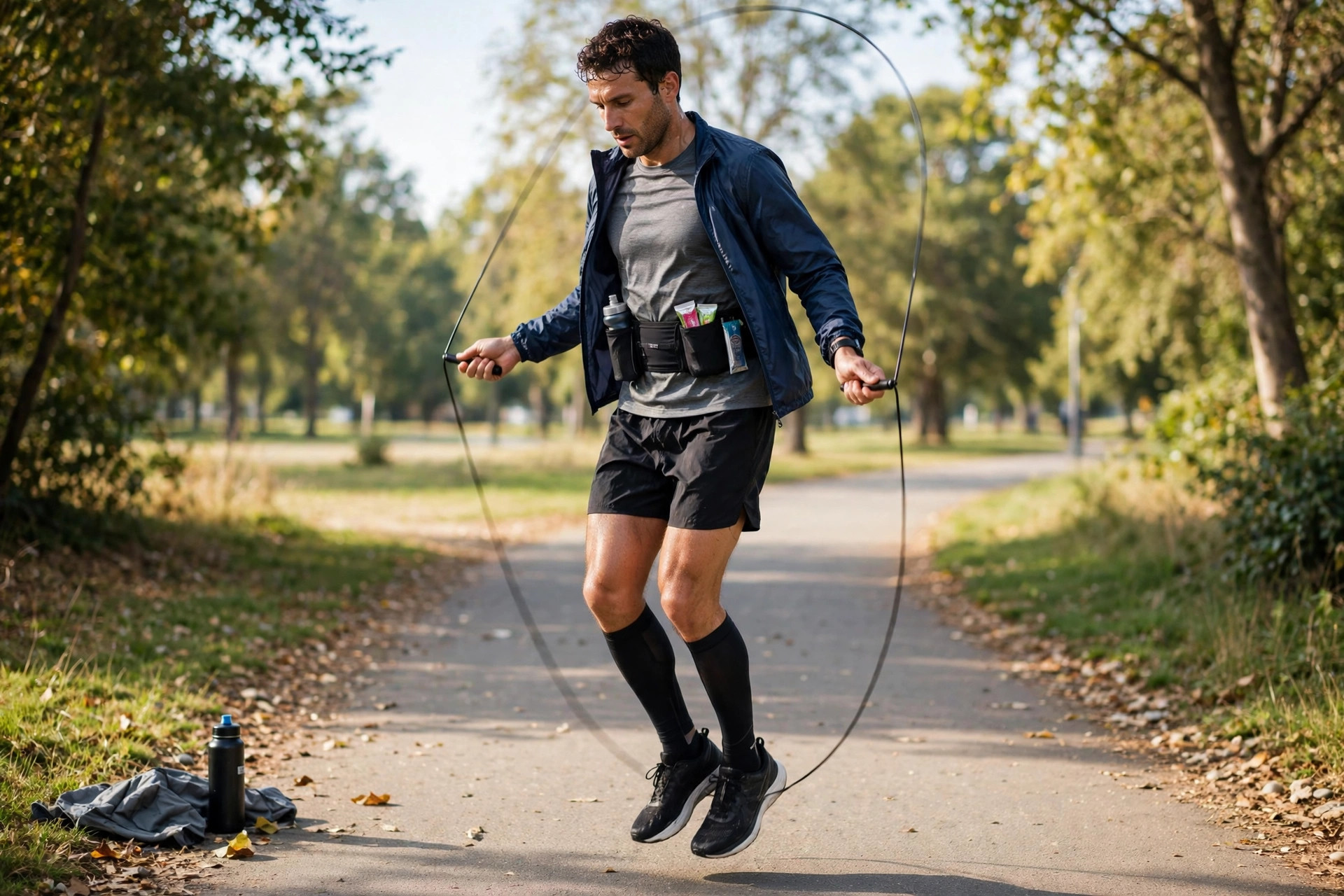
Treat rope sessions as a small load on easy days, not as a workout of their own. The two reliable slots are after an easy run, when the legs are warm and the day’s main work is done, or on a dedicated cross-training or rest day, kept short enough that it does not create its own fatigue. Two or three sessions a week is plenty. More than that adds calf load faster than the tissue adapts, with no extra benefit for a runner whose primary sport is still running. Keep rope work away from the days that decide your training week. Do not jump the day before a long run, because pre-fatigued calves change your gait in the final miles when form matters most. Do not jump the day before or the morning of an interval or tempo session either. Marathon training already concentrates stress on the long run and one or two workouts, and the Road Runners Club of America coaching guidance makes the same general point about new cross-training: add it on the easy side of the week so the hard days stay hard and the easy days stay genuinely easy.
A Simple Weekly Plan
Start with intervals, not continuous jumping. Short bouts with full rest keep your form clean and let the calves adapt gradually. The basic bounce, two-footed with a small hop, is the only skill the first month requires. Our breakdown of jump rope styles explains the basic bounce and the alternate-foot step if you want variety in week three or four.
| Week | Sessions per week | Format per session | Total rope time |
|---|---|---|---|
| Week 1 | 2 | 6 rounds of 30 seconds jumping, 60 seconds rest | 3 minutes |
| Week 2 | 2 | 8 rounds of 30 seconds jumping, 45 seconds rest | 4 minutes |
| Week 3 | 3 | 6 rounds of 45 seconds jumping, 45 seconds rest | About 5 minutes |
| Week 4 | 3 | 5 rounds of 1 minute jumping, 30 seconds rest, or 8 continuous easy minutes | 5 to 8 minutes |
Hold each week until it feels controlled rather than merely survivable. If your calves are still noticeably sore two days after a session, repeat the week instead of advancing. After week four, most runners do best holding a steady dose of two or three eight-to-ten-minute sessions rather than chasing longer ones. The goal is a durable supplement to running, not a second sport competing with it.
Surface and Footwear Cautions
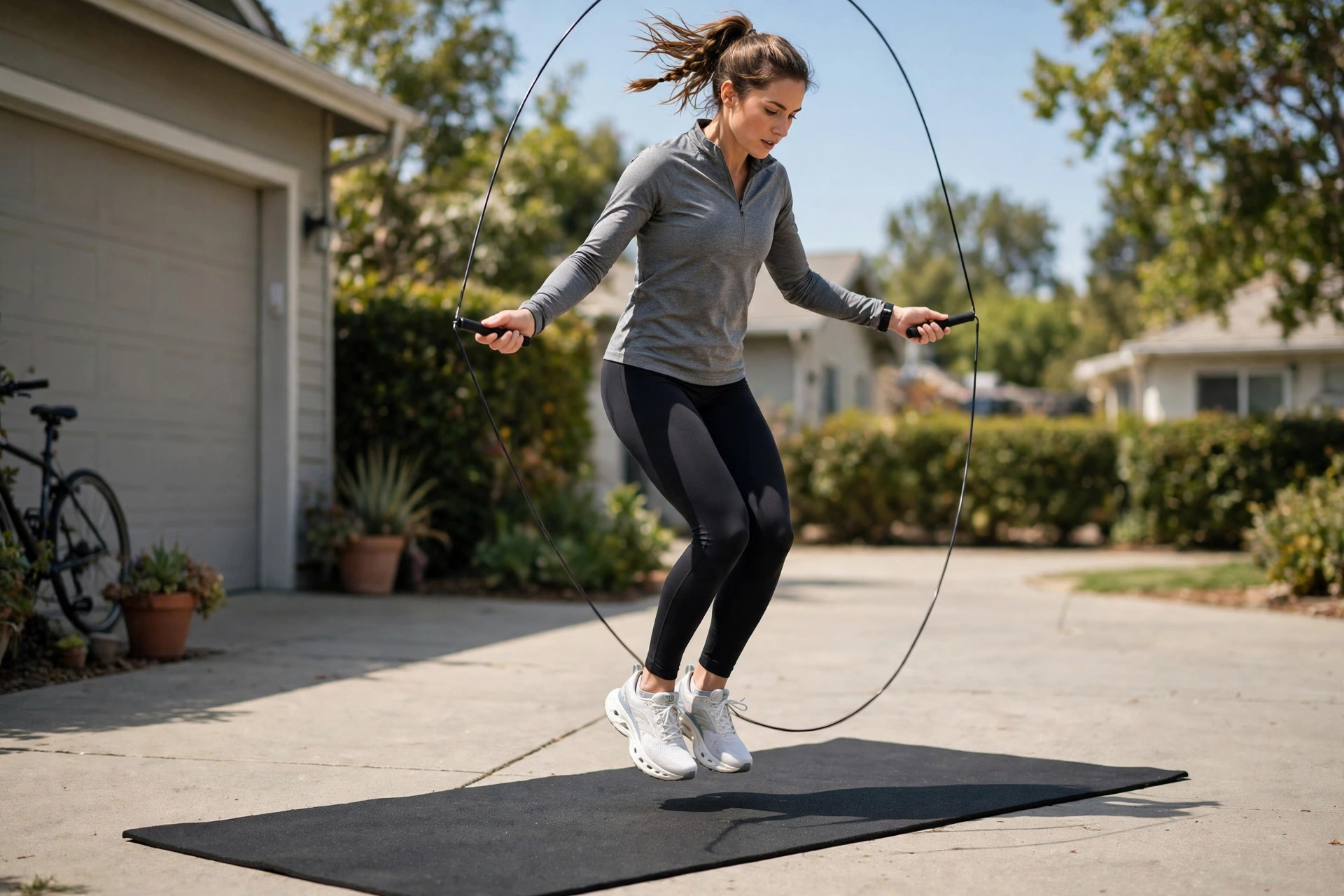
Surface choice matters more than rope choice. Jump on a surface with some give: a wood gym floor, a rubber mat, a synthetic track, or smooth asphalt. Concrete is workable for short sessions but is the least forgiving option, and it is a poor place to learn. Avoid thick carpet and grass, which catch the rope and change its timing, and avoid cracked or uneven pavement where a landing can roll an ankle. Wear the cushioned trainers you run easy miles in, not racing flats and not bare feet. Rope jumping puts repeated load through the forefoot, and some shoe under it spreads that load while you are building tolerance. Check rope length before your first session: stand on the center of the rope and the handles should reach roughly to your armpits. Our guide to jumping rope for beginners covers sizing and first-session setup in more detail.
Injury Cautions: Build Gradually
The calf and Achilles absorb nearly all of the load in rope jumping, and they adapt more slowly than fitness does. The most common mistake runners make is starting with fifteen continuous minutes because ten minutes of running feels trivial. It is a different stress, applied hundreds of times to the same small tissues. Begin with the week one dose even if it feels easy, and increase total jumping time by a minute or two per week at most. Skip rope work entirely while you are managing Achilles tenderness, calf strains, or shin pain, because jumping loads precisely those structures. Stop a session if you feel sharp pain, a sudden pop, or form falling apart into heavy, flat landings. Land quietly on the forefoot with soft knees, and keep jumps low, an inch or two off the ground. Height is not the training effect. The American College of Sports Medicine general guidance on adding new exercise modes makes the broader point: new activities should be introduced at low volume and progressed gradually, which is exactly how a runner should treat the rope.
Frequently Asked Questions
Can jump rope replace strides or running drills?
No. Strides and drills train running-specific mechanics at running speeds, and they stay in the program. Rope work is a supplement that builds lower-leg strength and rhythm cheaply and quickly. Think of it as replacing some generic gym work, not any part of your actual running training.
What type of rope should a runner buy?
A simple PVC rope or a lightly beaded rope is the right starting point. Both swing at a forgiving speed and give enough feedback to learn timing. Avoid heavy weighted ropes and very fast cable speed ropes at first, since both punish mistakes and add load before your calves have adapted to the basic version.
Is jump rope a good idea during taper week?
Keep it minimal or drop it. A short, easy session early in taper week is harmless for an experienced jumper, but taper exists to shed fatigue, not to maintain every supplement. If there is any calf tightness at all, skip the rope and protect the race.
During peak weeks, cut back to one or two short sessions or pause the rope entirely. It is a support tool for the base and build phases, and it has done its job if you arrive at race week with stronger calves and no missed runs.

Best Jump Rope Styles: Which Jump Rope to Buy

Jump Rope 101: Jumping Rope for Beginners