Jump Rope Footwork for Beginners: Boxer Step, High Knees and Side Swings7 min read
Jump rope footwork starts with one unglamorous skill: a small, quiet bounce that barely leaves the ground. Get that right and the boxer step, high knees, and side swings all build on it without much trouble. Skip it and every new step feels like starting over. This guide teaches the basic bounce first, then adds one move at a time, with a four week practice plan and the timing mistakes that trip people up most.
Start With the Basic Bounce
Every footwork pattern is a variation on the basic bounce, so it earns the most practice time. Stand tall with your feet together, elbows tucked near your ribs, and the rope behind your heels.
- Jump just high enough for the rope to pass under your shoes, about 1 inch off the ground.
- Land on the balls of your feet and let your knees and ankles absorb the landing softly.
- Turn the rope with your wrists, not your arms. Your hands stay roughly at hip height, just in front of your body, and make small circles.
- Keep a steady rhythm. One jump per rope turn, no double bounce in between.
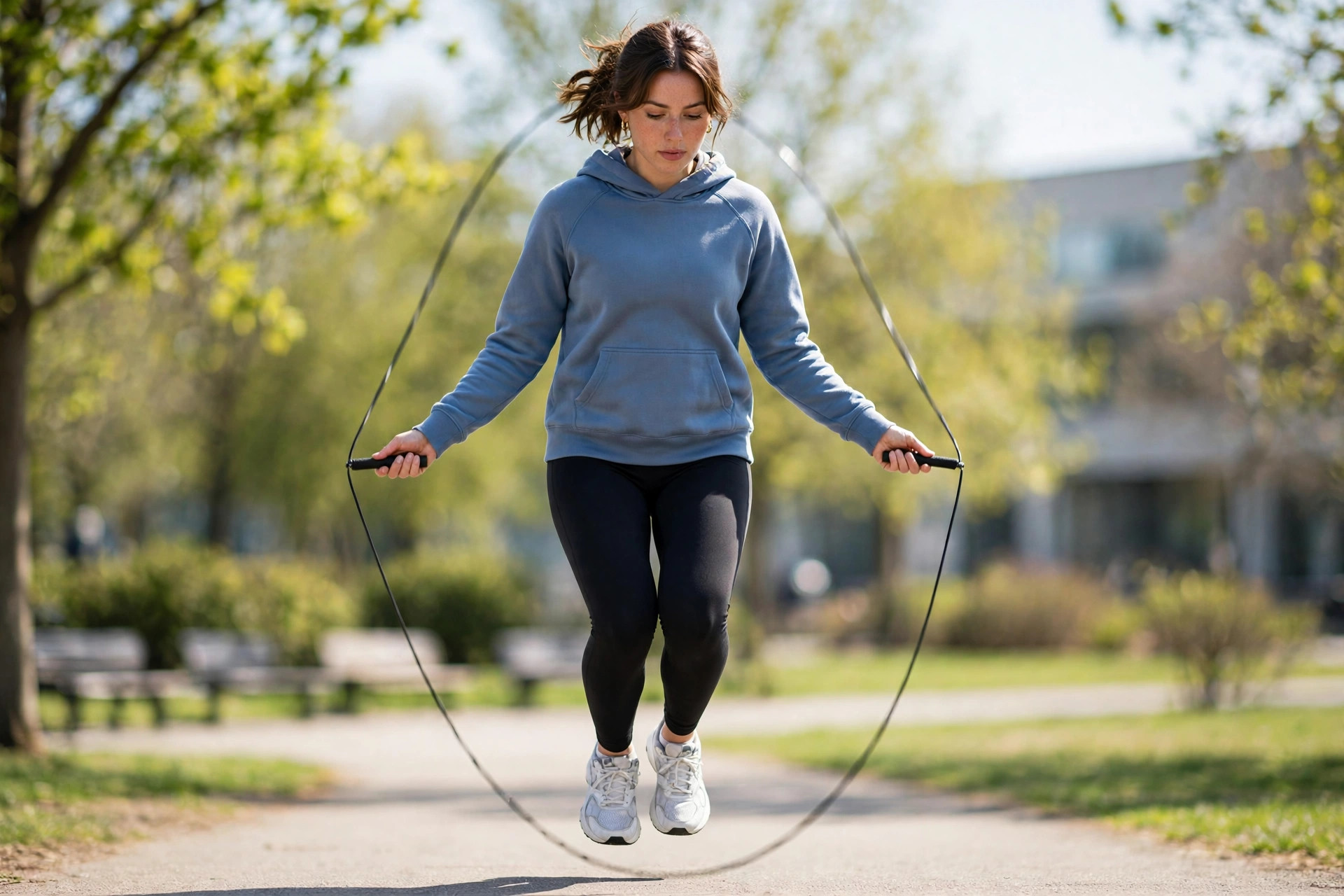
A useful test: you should be able to hold a conversation in short sentences while bouncing. If you are gasping after 20 seconds, you are probably jumping too high. Stay low and let the rope set the pace. Before adding any footwork, build to 60 seconds of unbroken basic bounce. If you have not jumped before, our jumping rope for beginners guide covers rope setup and session length in more detail.
The Boxer Step: Shift Your Weight Side to Side
The boxer step is the first footwork move to learn. Instead of landing on both feet at once, you shift your weight from foot to foot, tapping the ground lightly with the unweighted foot, almost like jogging in place under the rope. Start without the rope. Shift your weight left and right in a slow rhythm, letting the free foot tap rather than stomp. Then add the rope at a slow bounce speed and keep the same gentle shift. Your feet barely leave the ground: the weighted foot takes each landing while the other touches down just enough to keep time.
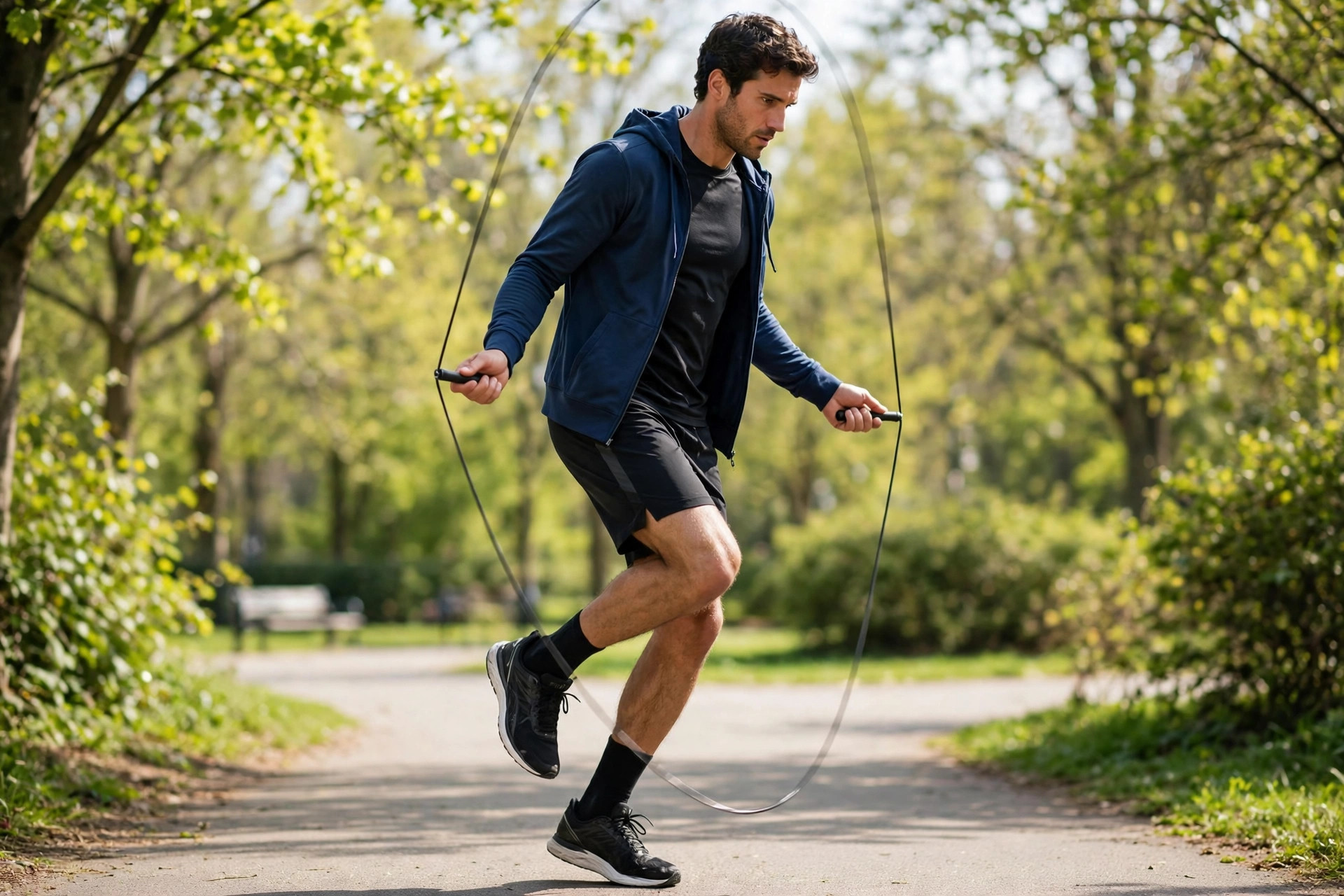
Why learn it first? It spreads the work across both legs, so your calves last longer, and it gives you a way to recover mid-session without stopping. When your rhythm wobbles during a basic bounce set, ten seconds of boxer step often settles it again. It is also the base position most other steps return to, which is why it appears in nearly every list of jump rope styles worth learning.
High Knees: Add Them as Intervals, Not a Default
High knees means driving one knee up toward hip height on each turn, alternating legs, while the rope keeps its normal speed. It is genuinely hard work, which is exactly why beginners should ration it. Add high knees only after your basic bounce and boxer step feel steady. Use them in short intervals: 10 to 20 seconds of high knees inside a longer easy set, then back to the boxer step to recover. Two or three of those intervals per session is plenty at first.
Two form points matter. First, the rope does not speed up just because your legs do. Keep your wrist rhythm the same and let your knees rise to meet the timing. Second, stay on the balls of your feet and keep your torso tall. Leaning back or kicking your heels up behind you turns the move into a stumble. If your timing falls apart within seconds, the interval is too long, so shorten it.
Side Swings: The Rest Move That Keeps You Going
A side swing moves the rope to one side of your body instead of under your feet. Bring both handles together on one side, swing the rope beside you for one or two turns, then open your hands back up and resume jumping. Your feet keep bouncing in place the whole time, in a light boxer step or basic bounce.
Side swings have three practical uses:
- A planned rest. Your legs keep moving but stop jumping, so your breathing settles without a full stop.
- Untangling your rhythm. When a set starts to fall apart, a side swing buys two seconds to reset before the next jump.
- Transitions. Many tricks and step changes start or end with a side swing, so it becomes more valuable the more footwork you learn.
Learn it in this order: swing on the right side only, return to jumping, then the left side only. Alternate sides once both feel comfortable. The common error is swinging too wide, which pulls your hands out of position. Keep the handles close together and the swing compact, roughly beside your hip. The side swing is one of several moves catalogued in our overview of common jump rope styles, and beginners tend to underrate it. The International Jump Rope Union and USA Jump Rope both publish technique material if you want to see where the progression leads.
A Four Week Practice Progression
Jump two or three times a week. Each session below assumes a few minutes of easy bouncing to warm up first.
| Week | Main focus | Session outline | Aim for |
|---|---|---|---|
| 1 | Basic bounce | 6 rounds of 30 seconds jumping, 30 seconds rest | Relaxed rhythm, jumps about 1 inch high |
| 2 | Boxer step | 4 rounds of 1 minute alternating basic bounce and boxer step | Smooth weight shift without speeding up |
| 3 | Side swings | 5 rounds of 1 minute, adding one side swing every 15 seconds | Return to jumping without stopping your feet |
| 4 | High knees intervals | 4 rounds of 90 seconds with 10 to 20 seconds of high knees per round | High knees that keep the same rope rhythm |
Progress when the current week feels controlled, not when the calendar says so. Repeating week 2 is normal, and better than reaching high knees with a shaky boxer step.
Timing Mistakes That Cause Most Trips
Jumping too high. The rope needs an inch of clearance. Extra height gives the rope time to slow down and drift, and it is the main reason beginners trip on the third or fourth turn, not the first.
Turning with the arms. Big arm circles move your hands out of position and change the rope’s shape mid-turn. If your shoulders are working harder than your wrists, reset with slower, smaller turns.
Watching your feet. Looking down drops your head, rounds your back, and usually pulls your hands forward. Pick a spot on the wall at eye level instead.
Doubling the bounce. Two small hops per rope turn feels easier for a day, then blocks every faster move, because high knees and quick boxer steps need one landing per turn. If you catch yourself doing it, slow the rope down until one jump per turn sticks.
Adding moves too soon. A new step layered on an unsteady bounce produces trips that look like a footwork problem but are really a rhythm problem. Go back one step in the progression and rebuild.
Frequently Asked Questions
How long does it take to learn the boxer step?
Most beginners get a rough boxer step within two or three sessions once their basic bounce is steady, and it usually feels natural within two weeks of regular practice. The weight shift itself is simple. The slower part is keeping your wrist rhythm unchanged while your feet do something new.
Should I practice footwork without a rope first?
For the boxer step, yes, a minute of weight shifting without the rope helps you feel the pattern before adding timing pressure. For high knees and side swings, go straight to the rope but slow everything down. Side swings in particular are about handle position, which you cannot rehearse without handles in your hands.
Why do I keep catching the rope on my feet during high knees?
Usually the rope slows down. Many people unconsciously pause their wrists while concentrating on their knees, so the rope arrives late and low. Fix it by shortening the interval, counting your turns out loud to lock the rhythm, and keeping your hands in position instead of pulling them wider as you tire.

Jump Rope 101: Jumping Rope for Beginners

Best Jump Rope Styles: Which Jump Rope to Buy