How to Size a Jump Rope Correctly by Height7 min read
The quick answer on jump rope size: stand on the middle of the rope and pull the handles up. For a beginner, the tops of the handles should reach your armpits. A 5’6″ jumper usually lands on a 9 ft rope, while someone 6’2″ needs a 10 ft rope. Start there, then fine tune. A rope that is slightly too long is easy to learn on. A rope that is too short trips you on nearly every turn.
Jump Rope Size Chart by Height
Use your height to pick a starting length, then confirm it with the standing test below. The lengths include the handles, which is how most manufacturers list rope size. A few brands list the cable only, so check the product page before ordering and compare like with like.
| Your height | Rope length (including handles) |
|---|---|
| 4’0″ to 4’9″ | 7 ft |
| 4’10” to 5’3″ | 8 ft |
| 5’4″ to 5’11” | 9 ft |
| 6’0″ to 6’6″ | 10 ft |
| Over 6’6″ | 11 ft |
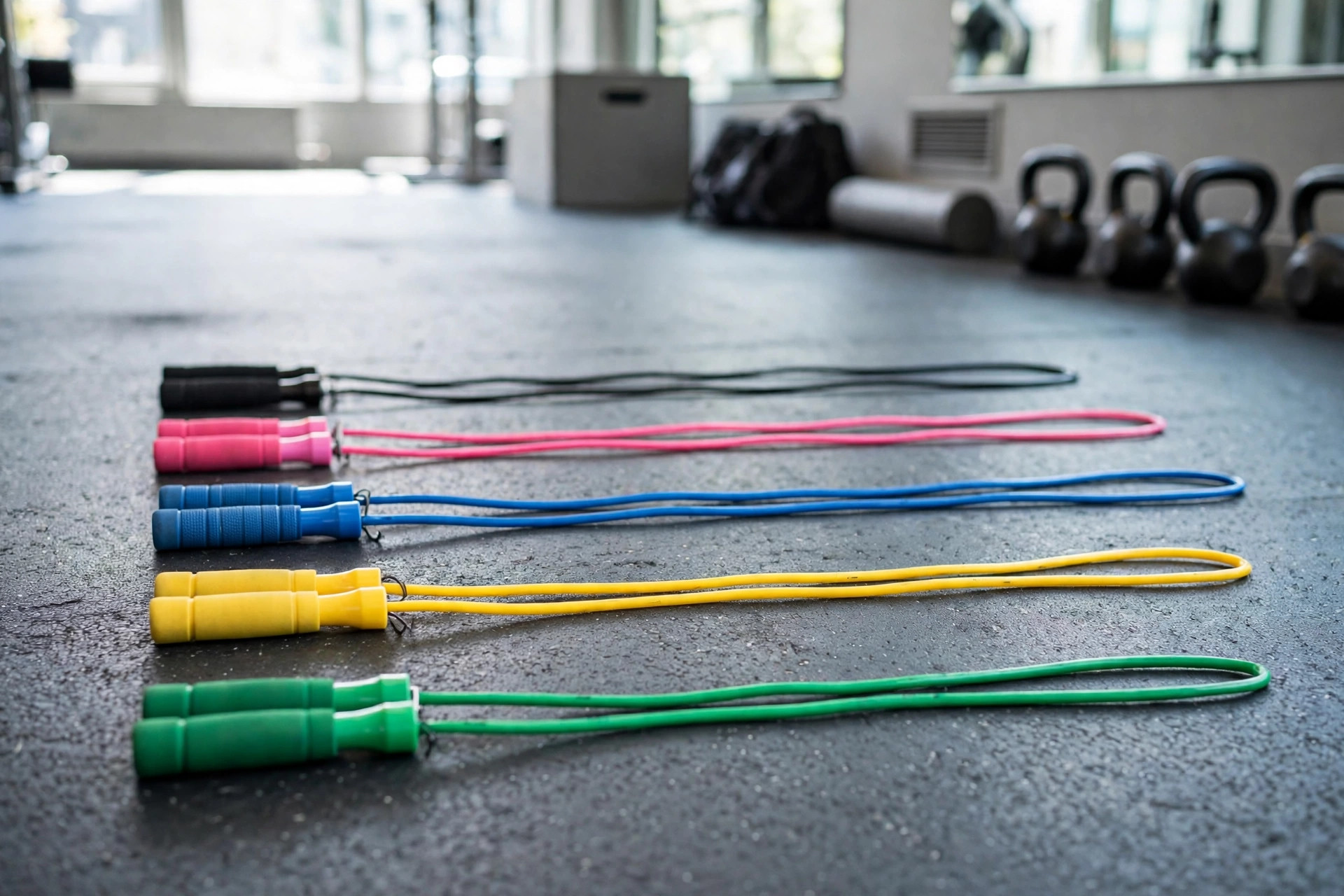
Two situations bend the chart. Kids grow fast, so buy the size that fits now and expect to re-adjust it within a year or two. Tall jumpers with long arms sometimes do fine one size down. The chart gives you the starting point. The test below gives you the answer.
Still deciding what kind of rope to buy? The overview of different jump rope styles explains how beaded, PVC, and cable ropes differ.
The Armpit Test: Check Any Rope in Ten Seconds
Charts assume average proportions. The armpit test measures your actual body against your actual rope, which is why coaches and gym classes rely on it.
- Stand with both feet together on the exact middle of the rope.
- Pull the handles straight up so the rope is taut on both sides.
- Look at where the tops of the handles reach.
For a beginner, the handle tops should reach your armpits. That gives enough clearance for the rope to pass under your feet with a small margin for sloppy timing. As your form improves and your jumps get lower, the handles can sit lower, around the top of your chest. Experienced jumpers often size down an inch or two of effective length because their bounce is only an inch off the ground.
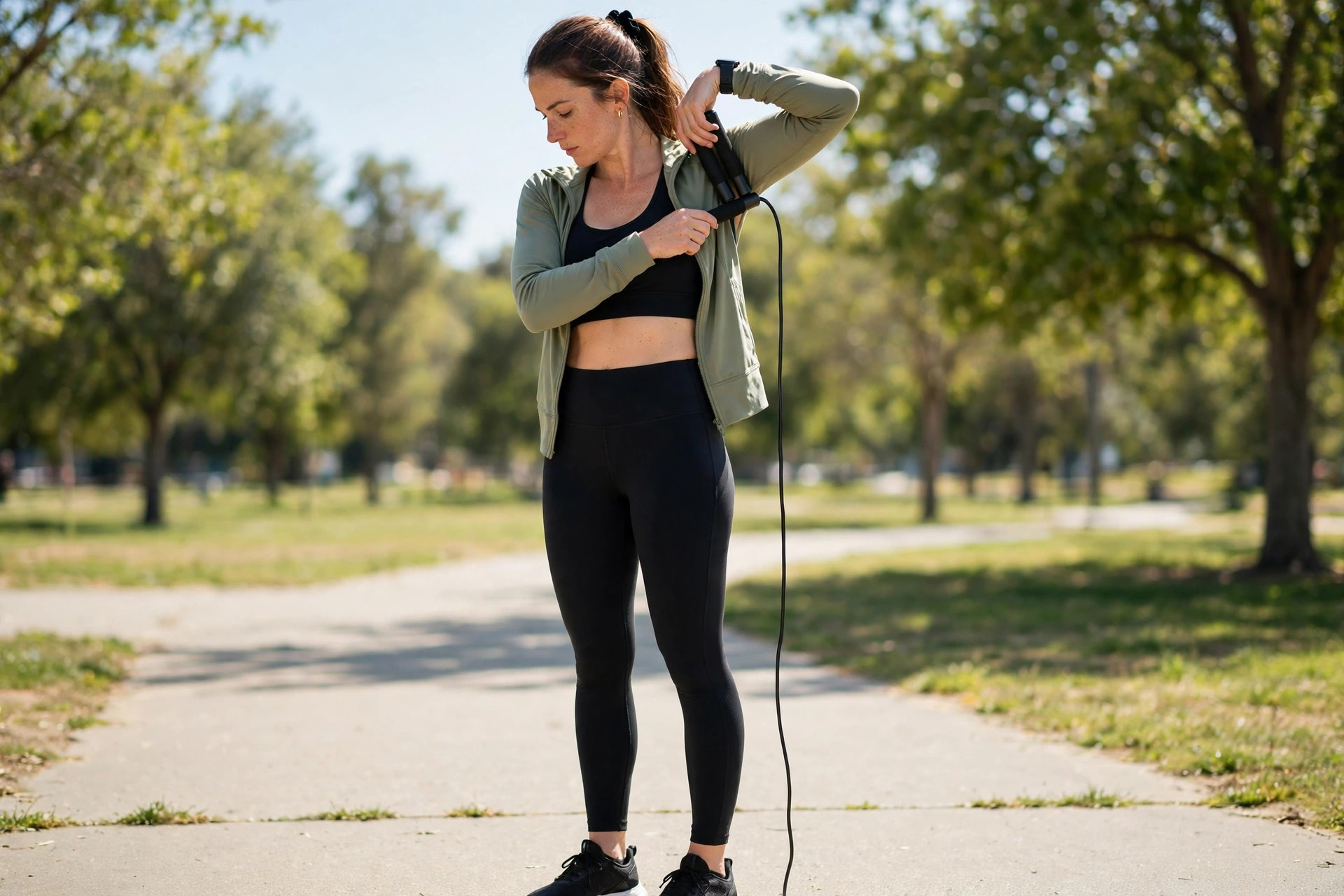
If the handles stop at your ribs, the rope is too short. If they reach your shoulders or ears, it is too long, although a long rope is the easier problem to fix.
Why Beginners Should Err on the Longer Side
A short rope punishes every small mistake. It clips your toes when your jump is a fraction late, and it forces you to lift your knees higher and swing your arms wider to compensate. Most beginners who think they are bad at jumping rope are actually using a rope two or three inches too short.
A longer rope is more forgiving. The loop it makes is bigger, so it clears your feet even when your timing drifts. The trade-off is speed: extra length drags on the ground and slows the rope down. That is a problem for month three, not week one. Learn the rhythm first, then shorten.
There is also a practical point. You can shorten almost any rope. You cannot lengthen one. Buying the longer of two sizes keeps your options open.
How to Shorten a Rope That Is Too Long
How you adjust depends on the rope type:
- Adjustable cable and PVC ropes: Most have a screw or clip at the handle. Loosen it, slide the cable through, and trim the excess, or leave the extra cable inside a longer handle if the design allows.
- Beaded ropes: Remove beads from one or both ends to shorten, and keep the spare beads. You can add them back as a child grows.
- Rope tied in a knot: A temporary fix. A knot above each handle shortens the effective length and lets you test a size before cutting anything. Knots change the balance slightly, so treat this as a trial only.
Test each adjustment with 30 seconds of steady jumping, and shorten in small steps, about an inch at a time. Overshooting is easy, and it gives you the toe-catching rope you were trying to avoid.
Rope Length Changes With the Kind of Jumping You Do
The right length for relaxed fitness jumping is not the right length for speed work. Once you have a base length from the chart, adjust for your main use.
General fitness and learning
Stick with the chart length, handles at the armpits. If you are following a beginner routine like the one in our guide to jumping rope for beginners, stay at this length until you can jump for a full minute without a trip.
Speed jumping
Competitive speed jumpers cut their ropes shorter, with handles ending around the lower ribs. A shorter rope turns over faster and spends less time on the floor. The margin for error shrinks with it, so this only works once your bounce is low and consistent.
Double unders
Double unders sit in between. Most people use their fitness length or shorten by an inch or two. Too long and the rope drags during the second pass. Too short and it catches your toes at the top of the jump. Make small changes and test with sets of five doubles rather than guessing from a chart.
Tricks and freestyle
Freestyle jumpers often go longer, because crosses, wraps, and releases need slack to work with. If you plan to learn tricks, the longer end of the chart range is the better buy. The breakdown of freestyle and other jump rope styles shows which rope types pair with trick jumping.
Manufacturers publish their own sizing guidance. Crossrope lists sizes by height for its weighted ropes, and the ranges line up closely with the chart here. USA Jump Rope, the national governing body, publishes technique resources for sport jumpers.
Signs Your Rope Is the Wrong Size
- The rope hits your toes or the front of your shoes on most turns: too short, or your hands have drifted forward.
- The rope slaps the ground well in front of your feet and bounces up: too long.
- You have to hold your hands wide and high to keep it turning: usually too short.
- The rope catches the back of your head: too short, or your hands are too far behind your hips.
- Your forearms burn within a minute: often a long rope being muscled around, or handles held too wide.
Check hand position before you blame the rope. Hands just in front of your hips, close to your body. Moving them changes the effective length by several inches without touching the rope itself.
Frequently Asked Questions
Can I cut an adjustable rope to size, or should I leave the extra length?
Try the knot test first, or clamp the cable at the new length without trimming for a few sessions. Once you have jumped at that length for a week and it feels right, trim the excess. Cable cutters give the cleanest result on wire ropes. Leaving a small spare inch costs nothing and covers a sizing mistake.
What jump rope size should a child use?
Use the same armpit test. For most children between 4’0″ and 4’9″, that works out to a 7 ft rope, and beaded ropes suit kids best because they hold their shape and are easy to shorten by removing beads. Resist buying a size up for growth. An oversized rope tangles, drags, and teaches sloppy form.
Does handle length count in the size on the chart?
On most product listings, yes. The stated length usually runs from handle tip to handle tip, which is why a 9 ft rope from one brand can feel slightly different from another if the handles differ. When a brand lists cable length only, add roughly 8 to 12 inches for the pair of handles to compare it with this chart.

Jump Rope 101: Jumping Rope for Beginners

Best Jump Rope Styles: Which Jump Rope to Buy