2-Player vs 4-Player Crokinole Strategy Explained8 min read
Same board, same discs, same scoring, yet 4-player crokinole is a genuinely different game from the two-player version. Partners change who shoots, what a good shot looks like, and how much one mistake costs. Groups that switch formats without adjusting their strategy usually play one of them badly.
In singles, every disc and every decision belongs to you. In doubles, partners sit opposite each other and take turns shooting for their side, which means half the discs that decide your score leave someone else’s fingers.
This guide compares the two formats side by side and explains where the strategy really changes.
One practical note before the strategy: doubles needs a board four players can sit around and reach comfortably. The full-size options in our roundup of the best crokinole boards give every seat a fair view of the centre and a true surface to shoot on.
2-Player vs 4-Player Crokinole at a Glance
Here is the whole comparison on one table. The sections below dig into the rows that change how you should actually play.
| Factor | 2-Player | 4-Player (Doubles) |
|---|---|---|
| Shooting order | You and your opponent alternate every shot | Partners sit opposite and alternate shots for their side, so turns rotate through all four players |
| Discs per player in a round | You shoot every disc for your side | You shoot half of your side’s discs; your partner shoots the other half |
| The hammer (last shot) | One player holds it and plays it with full information | It belongs to a side, and whichever partner’s turn falls last plays it |
| Takeout priorities | Removing an opponent’s disc is usually worth the trade | A takeout that also wrecks your partner’s setup can cost more than it gains |
| Setting up a partner | No partner to set up; every shot is for yourself | Guards, backstops, and leaving discs in useful spots are core skills |
| Scoring swings | Points build or fall one shot at a time, mostly under your control | Two shooters per side means bigger runs and bigger collapses within a round |
| The 20 hole | You take every attempt yourself and learn your own touch | Attempts split between partners, and a hanging 20 can be finished by either of you |
2-Player Crokinole: A Duel You Control Completely
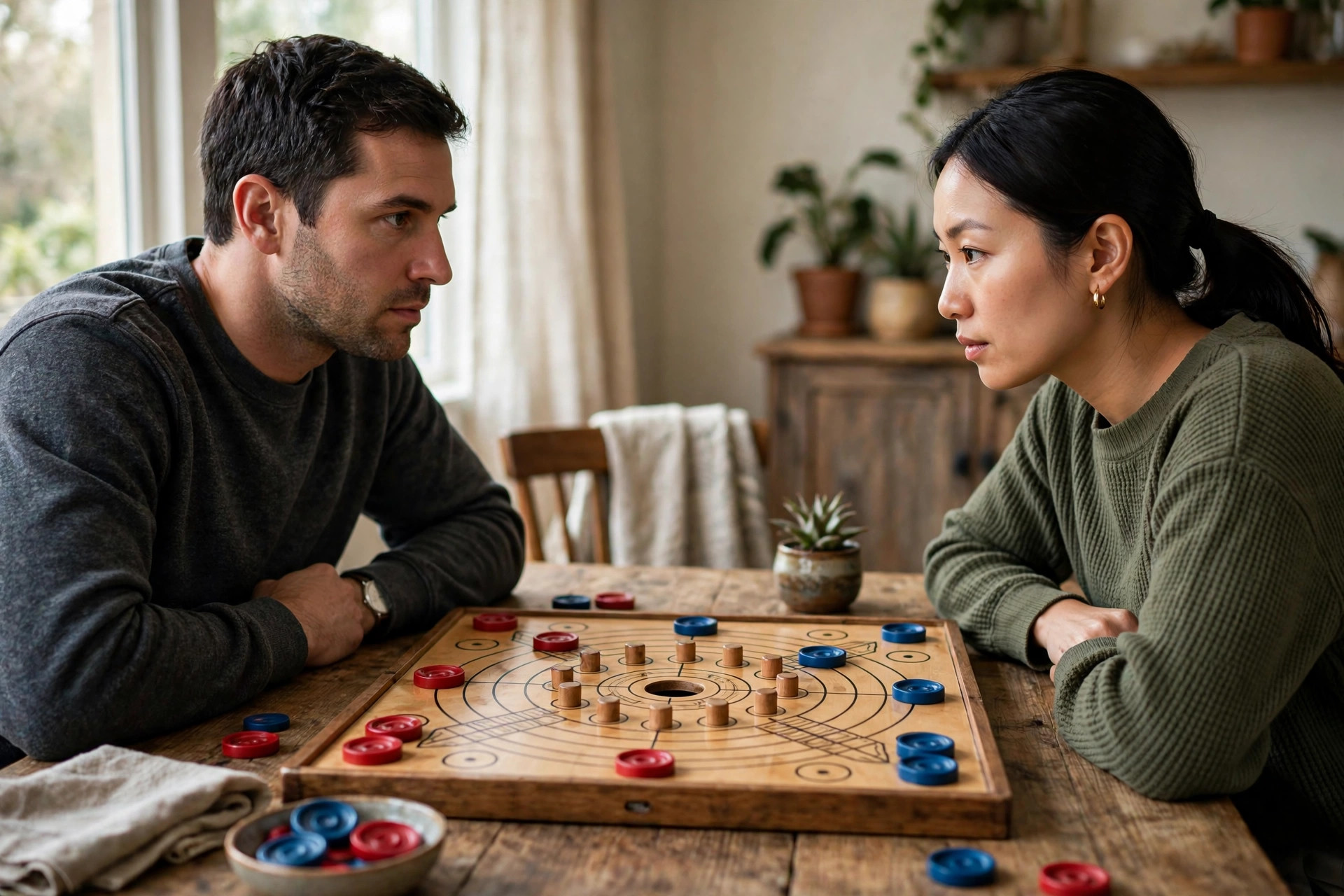
Singles crokinole is a rhythm game. You shoot every disc for your side, so you learn the board’s speed with your own hand and correct your own mistakes on the very next shot.
Crokinole singles strategy is mostly shot selection and nerve: when to attack the 20, when to take out, and when to park a safe 15. The takeout maths is simple, too. If an opponent’s disc is the best disc on the board, removing it is almost always right, because the only discs your shot can damage are theirs and yours. There is no partner’s setup to wreck.
The flip side is that every error is yours. A loose shot that leaves the centre open cannot be rescued by anyone else, and the hammer, when you hold it, is a solo decision made under full pressure.
4-Player Crokinole: How Doubles Changes the Game
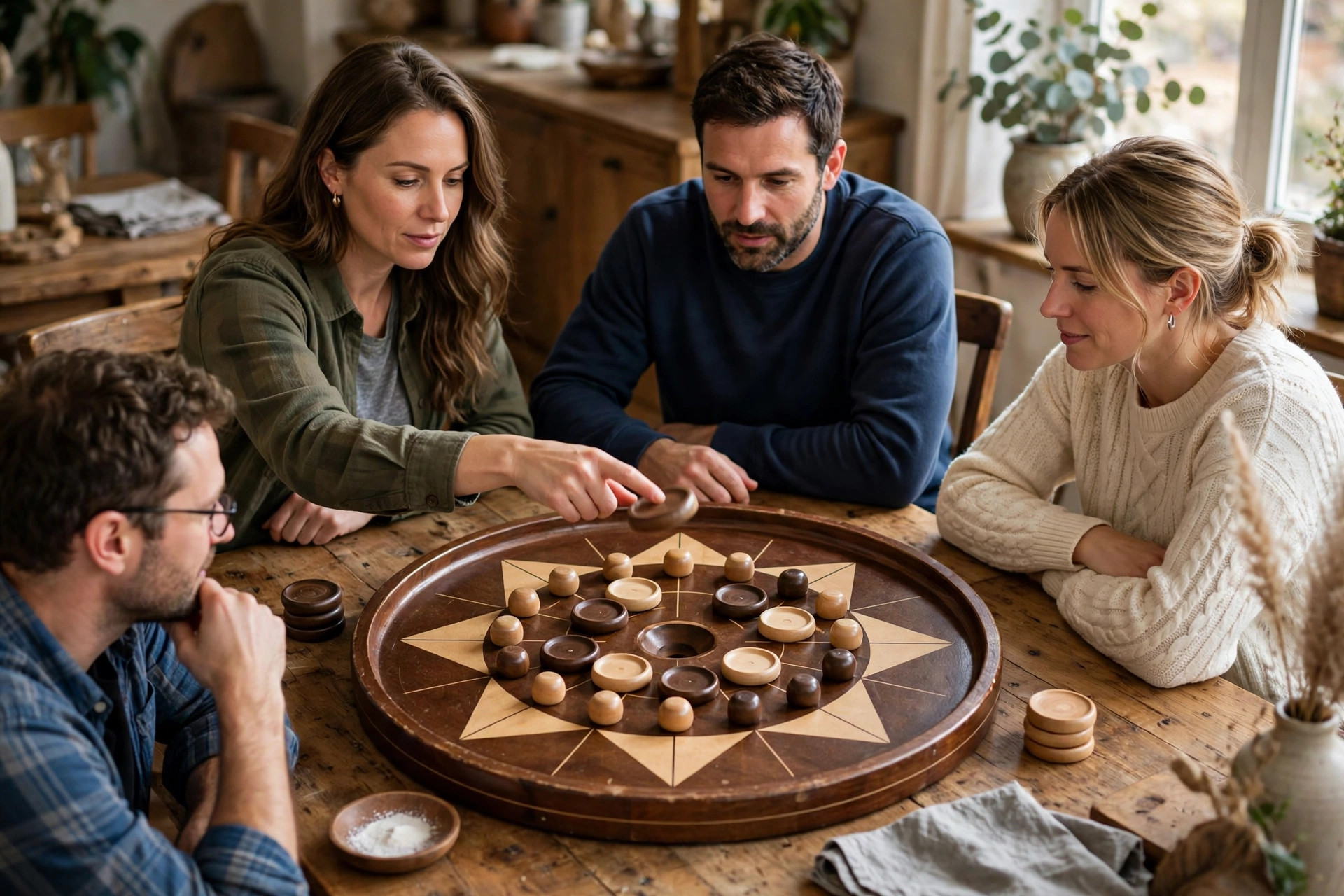
In 4-player crokinole, partners sit opposite each other and alternate shots for their side, so the shooting order rotates through all four players. You shoot half your side’s discs. The other half, including some of the most important shots of the round, belong to your partner.
That split changes the meaning of a good shot. In doubles, a shot that scores nothing can still be excellent if it guards your partner’s disc, blocks a lane, or leaves a friendly backstop behind the 15 circle. Crokinole partner play rewards players who think one turn ahead, about a board state they will not personally shoot at.
It also changes the conversation. Agree with your partner before the match on basics like who plays aggressively and who plays safe when a round is close. Mid-round, the best partners keep it short: a word about the score, then let the shooter shoot.
The Hammer in Singles vs Doubles
The crokinole hammer, the last shot of a round, is powerful in both formats because it is played with complete information. In singles, the player holding it simply picks the shot the score demands. In doubles, the hammer belongs to a side, not a person. Whichever partner’s turn falls last takes it, and that might not be your side’s best shooter. Smart doubles teams play the second-to-last shot to leave the hammer a simple job: a short takeout or an open lane to the 15, not a miracle through traffic. Defending against the hammer changes too. Against a singles player, you read one shooter’s habits. Against a doubles side, the final two shots come from different hands, so leave the board awkward for both of them.
Takeouts, Guards, and Setting Up Your Partner
Takeout priorities flip between formats. In singles, a takeout is a clean trade. In doubles, a hard takeout that also scatters your partner’s discs can turn a won round into a lost one, so crokinole doubles strategy starts with checking what your own side has near the target before you shoot. Guards are the signature doubles shot. A disc parked just in front of your partner’s 15 makes the opponent’s takeout risky, because driving into the scoring disc now means hitting through a screen. A disc left behind the centre works as a backstop that can catch your partner’s next shot and hold it in the scoring rings. The golden rule is simple: never make your partner’s next shot harder. If a low-risk shot keeps your side’s position intact, it beats a spectacular attempt that leaves a mess.
Scoring Swings and the Battle for the 20
Crokinole’s difference scoring makes both formats swingy, but doubles swings harder. Two shooters per side means a side can stack several scoring discs quickly, and can just as quickly lose them to two good takeouts. Rounds that look settled with four discs left rarely are. The 20 hole plays differently as well. In singles, you take every attempt and develop a feel for the shot. In doubles, attempts split between partners, and a disc hanging on the lip can be finished by whichever of you shoots next, which makes leaving hangers for your partner a real tactic rather than an accident. Tight rounds also produce the arguments. If your group wants the standard answers on hanging discs, line calls, and tied rounds, our guide to crokinole scoring disputes settles the five disputes that come up most.
Which Format Should Your Group Play?
Play singles when you want a pure duel: skill development, fair handicapping, and quiet, focused games. Nobody can hide in singles, which is exactly why serious players practise in it. Play doubles for social nights and mixed groups. Pairing a strong player with a newer one balances teams, keeps everyone shooting every other turn, and turns mistakes into table talk instead of silence. Four-player games also fill an evening better, since nobody sits out. Either way, the board has to suit the format. A full-size board with a true, fast surface keeps shots honest for two or four players alike, and our guide to the best crokinole boards covers the sizes and finishes worth choosing.
Frequently Asked Questions
How many discs does each player shoot in 4-player crokinole?
Each side shoots the same set of discs it would use in a singles game, but the two partners split them and alternate shots. So in 4-player crokinole you personally shoot half your side’s discs, while your partner shoots the other half from the seat opposite you.
Do partners sit next to each other in crokinole doubles?
No. Partners sit opposite each other, so each side shoots from both ends of the board and the turn order rotates through all four players. Sitting opposite also means you watch your partner’s shots from the same angle they will watch yours, which helps you read the board together.
What is the biggest strategy difference between 2-player and 4-player crokinole?
Control versus setup. In singles you shoot every disc, so strategy is shot selection and execution. In doubles you shoot only half your side’s discs, so guards, backstops, and leaving your partner a friendly board become just as important as scoring with your own shots.
Who takes the hammer shot in doubles crokinole?
The side that shoots last holds the hammer, and whichever partner’s turn falls last takes the shot. Good doubles teams plan for this: the second-to-last shot should leave the hammer a simple task, like an open lane to the 15 circle or a short, clean takeout.
Is 4-player crokinole better for beginners?
Often, yes. A beginner in doubles shoots under less pressure, learns by watching a partner’s shots from the opposite seat, and stays involved in a social game. Singles teaches touch and shot-making faster, though, because every disc and every mistake belongs to the learner alone.
Final Thoughts
Neither format is the real crokinole; they are two games sharing a board. Singles rewards control and nerve, while 4-player crokinole rewards awareness, guards, and trust in a partner. Learn which game you are playing before the first disc, and your strategy will finally match the format.

How to Choose the Right Size Crokinole Discs for your Board

Crokinole Opening Shots: Where to Aim Your First Disc