
Airmail, Slide, Block and Push: The 4 Cornhole Shots Explained8 min read
Every bag you throw in cornhole is one of the four cornhole shots, whether you know their names or not. Beginners tend to throw one shot, usually a hopeful lob at the hole, and hope the board sorts it out.
Better players pick the right shot on purpose: slide, block, push, and airmail. Each one solves a different problem on the board. This guide explains all four cornhole shots, when each one works, how to throw it, and how hard it is to learn, plus how the slick and sticky sides of your bags change every shot, and a simple progression for practicing them in order.
Our top picks, compared:
The 4 Cornhole Shots at a Glance
The slide shot is your default: land the bag on the open board and let it glide up to the hole. The block shot parks a bag in front of the hole to guard it. The push shot drives your bag, and usually one already on the board, forward toward or into the hole. The airmail flies over everything and drops straight into the hole. Learn them in that order. If you need a board setup that rewards all four, our guide to the best cornhole boards covers the regulation options.
The Slide Shot: Your Default Shot
When to Throw the Cornhole Slide Shot
Throw the slide whenever the path to the hole is open: your first bag of a round, any time the board in front of the hole is clear. It should be the majority of your throws.
How to Throw It
Aim for a landing spot on the lower third of the board, roughly a foot or two in front of the hole, with a flat, low trajectory. Land the bag on its slick side so it keeps gliding. A good slide lands short and finishes at or in the hole.
Difficulty and Risk
Difficulty: low to moderate, the first shot to learn. Risk: low; a missed slide usually still leaves a bag in scoring position.
The Block Shot: Guarding the Hole
When to Throw the Cornhole Block Shot
Throw a block to protect a lead, when your opponent has been sliding bags in freely, or when you already have a bag counting and want to make their next throw harder.
How to Throw It
Use the sticky side down and a slightly higher, softer throw. Aim to stop the bag a few inches in front of the hole, centered on the line your opponent would slide along.
Difficulty and Risk
Difficulty: moderate; stopping a bag on command is harder than sliding one. Risk: moderate; a good block can be pushed in by your opponent, so a block is strongest late in a round.
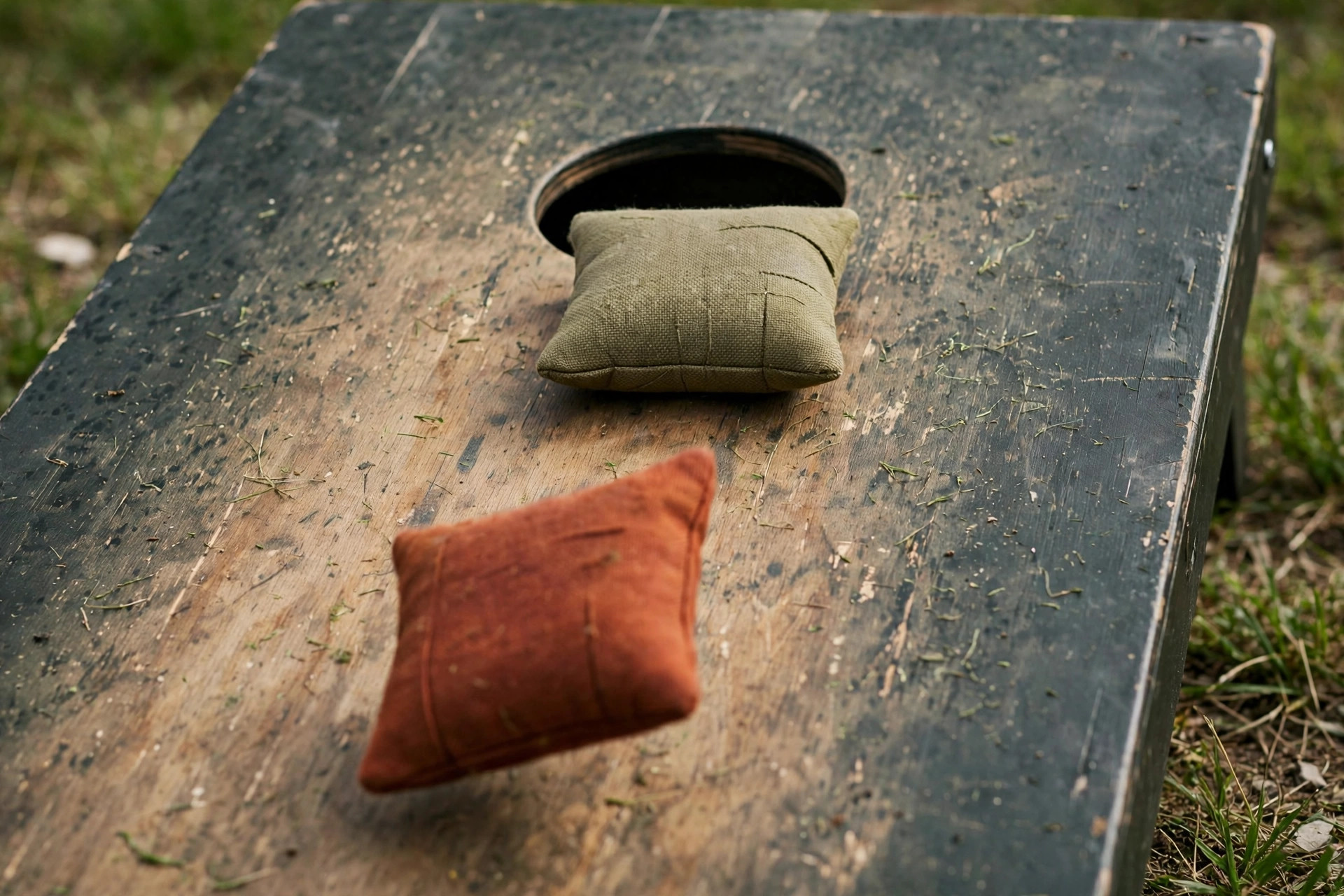
The Push Shot: Moving Bags Forward
When to Throw the Cornhole Push Shot
Throw the push when your own bag sits just short of the hole, when a pile of bags sits in front of the hole, or when driving stacked bags forward helps you.
How to Throw It
Throw a firmer, flatter slide aimed directly at the bag or pile you want to move, slick side down. Your bag strikes the target bag and pushes it forward, ideally into the hole, while yours follows.
Difficulty and Risk
Difficulty: moderate. Risk: moderate to high; push the wrong pile and you can shove an opponent’s bag into the hole, so check whose bags are where before you commit.
The Airmail: Over Everything
When to Throw an Airmail Cornhole Shot
Throw airmail when the hole is blocked by bags you cannot push through, when an opponent’s block guards the front of the hole, or when you need points late and a slide has no path.
How to Throw It
Throw higher and softer than feels natural, with the bag floating down onto the hole from above. Aim to drop the bag directly into the hole or just behind its front edge so it tips in. Flat spin helps the bag stay on line.
Difficulty and Risk
Difficulty: high, the hardest of the cornhole shots to make consistent. Risk: high; a missed airmail often flies off the back or lands dead, scoring nothing.
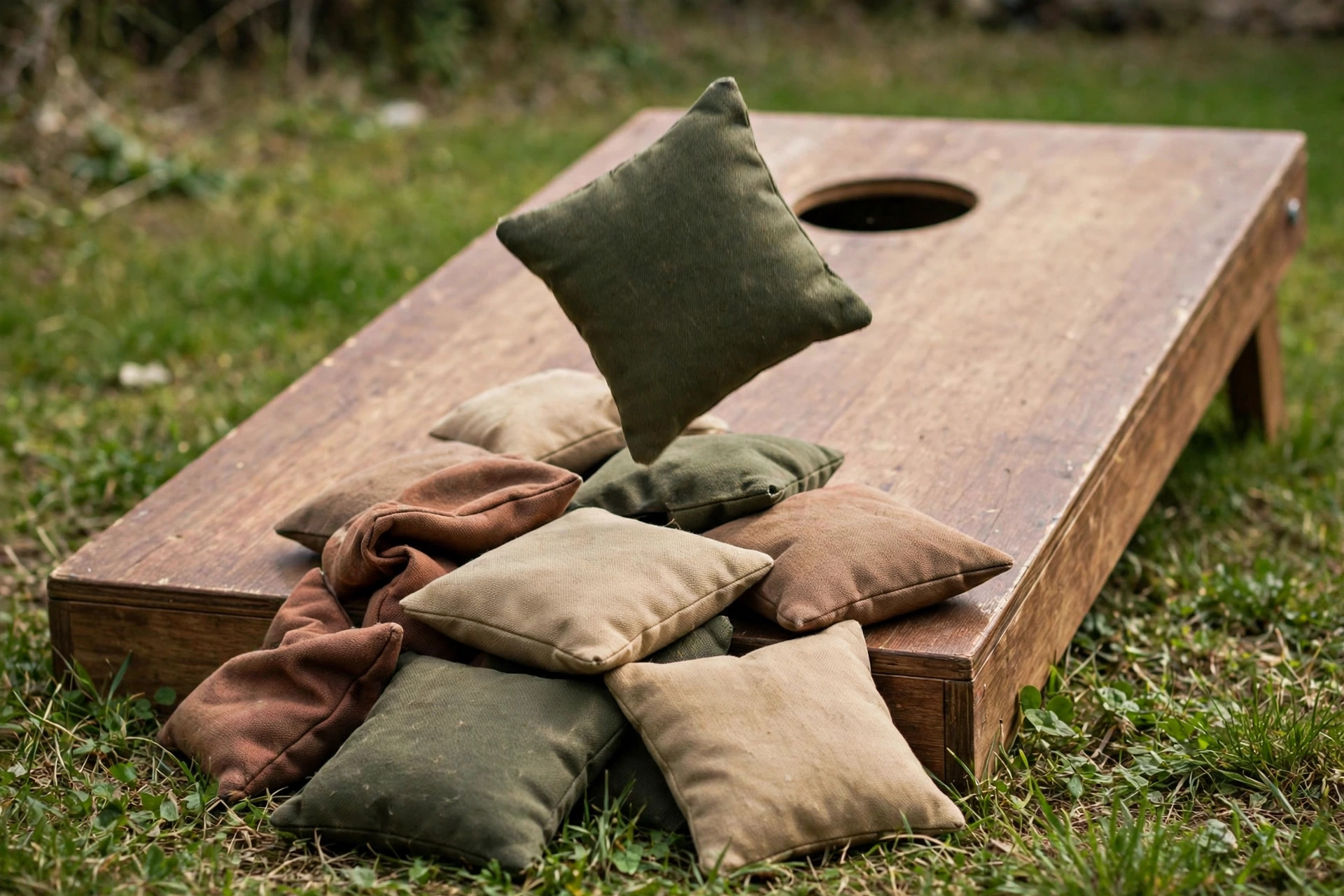
Shot Selection: Match the Shot to the Situation
Choosing between cornhole shots is mostly pattern recognition.
| Situation on the board | Best shot | Why |
|---|---|---|
| Open board, nothing between you and the hole | Slide | Highest percentage play, leaves a scoring bag even on a miss |
| Opponent’s bag blocks the front of the hole | Airmail | Goes over the block instead of into it |
| Your bag sits just short of the hole | Push | Drives your bag in with one firm throw |
| You are ahead late in the round | Block | Guards the hole and forces your opponent to take risks |
| Bags are piled in front of the hole | Push or airmail | Push the pile if it favors you, fly it if it does not |
When in doubt, slide. It is never the flashy answer, but it keeps bags on the board and points coming.
How Slick and Sticky Bag Sides Change Every Shot
Most modern bags have two faces: a slick side that glides and a sticky side that grips. The slide and push want the slick side down; the block wants the sticky side down; airmail cares least, but a sticky-side landing can save a slightly long airmail by grabbing instead of skidding off the back. Bags do not always play to their labels: heat, humidity, and dusty boards change them. Our guide to fixing cornhole bags that are too slick or too sticky explains why and how to fix it.
A Simple Practice Progression for Cornhole Shots
- Slide first: 20 bags at an open board, slick side down, until most finish within a few inches of the hole.
- Add the block: practice stopping your bag in a marked zone just in front of the hole, sticky side down.
- Add the push: set one of your bags a foot short of the hole and practice driving it in.
- Add the airmail: put a block bag in front of the hole and throw over it, counting makes.
- Mix them: have a partner call a situation, then throw the shot it calls for. Ten minutes per session is plenty.
And if your board is warped or off-spec, start with a regulation set from our best cornhole boards roundup.
If kids are joining the practice, see our guide to cornhole distance for kids by age for age-appropriate throwing lines.
Frequently Asked Questions
What are the four basic cornhole shots?
The four cornhole shots are the slide, the block, the push, and the airmail. The slide glides a bag up the open board, the block parks a bag in front of the hole as a guard, the push drives bags already on the board forward, and the airmail flies over everything into the hole.
What is airmail in cornhole?
Airmail in cornhole is a high shot that flies over the bags on the board and drops directly into the hole without sliding. Players use airmail when the front of the hole is blocked and a slide has no path. It is the hardest shot to repeat, so most players save it for crowded boards.
Which cornhole shot should a beginner learn first?
Learn the slide shot first. It works on any open board, scores even when it misses slightly, and the same flat, controlled throw becomes the base for your push shot later. Add the block next, then the push, and practice airmail last.
What is the difference between a push shot and a slide shot?
A slide shot targets open board and lets your bag glide to the hole on its own. A cornhole push shot targets a bag already on the board, driving it forward into the hole while your bag follows. The throws look similar; the aim point and intent are different.
How do you practice cornhole shots by yourself?
Set up one board and work through the shots in order: 20 slides at an open board, then blocks to a marked spot, then pushes at a bag placed short of the hole, then airmail over a block bag. Count your makes for each shot.
Final Thoughts
Four shots, four jobs. Slide when it is open, block when you are protecting, push when bags are waiting short, and fly the airmail when the board gives you no other way in. Name the shot before you throw it, and your decisions, and your scores, will get better fast.
Cornhole Scoring Apps and Scorekeeping Without an App
Cornhole Board Angle and Height: Regulation Specs Explained Simply
