
Cornhole Board Angle and Height: Regulation Specs Explained Simply7 min read
Two boards can both measure 2 feet by 4 feet and still play completely differently, even when both claim the same cornhole board dimensions. The difference is the slope. Regulation cornhole board dimensions cover more than the size of the playing surface: they also set the height of the front and back edges, which creates the angle every bag slides on. Get those heights wrong and bags either rocket off the back or die halfway up the board.
This guide lays out the official specs in plain terms, shows you how to check your own boards with a tape measure and a phone, and explains how to fix a board that sits too steep or too flat.
Shopping first? Our guide to the best cornhole boards compares sets built to these regulation numbers.
Our top picks, compared:
Cornhole Board Dimensions: The Regulation Specs at a Glance
The regulation cornhole board specs are simpler than most people expect. Here are the cornhole board dimensions that actually matter:
| Spec | Regulation measurement |
|---|---|
| Board size | 2 feet wide by 4 feet long |
| Playing surface | Smooth plywood, at least 1/2 inch thick on quality boards |
| Hole diameter | 6 inches |
| Hole position | Centered side to side, center of the hole 9 inches from the top edge |
| Front edge height | 2.5 to 4 inches off the ground |
| Back edge height | 12 inches off the ground |
| Resulting board angle | Roughly 11 to 12 degrees |
Everything else, frame style, leg design, paint and finish, is up to the maker. If your boards match the table, they play regulation. If you are shopping and want a set built to these numbers out of the box, our guide to the best cornhole boards compares the main options.
Cornhole Board Height, Front and Back
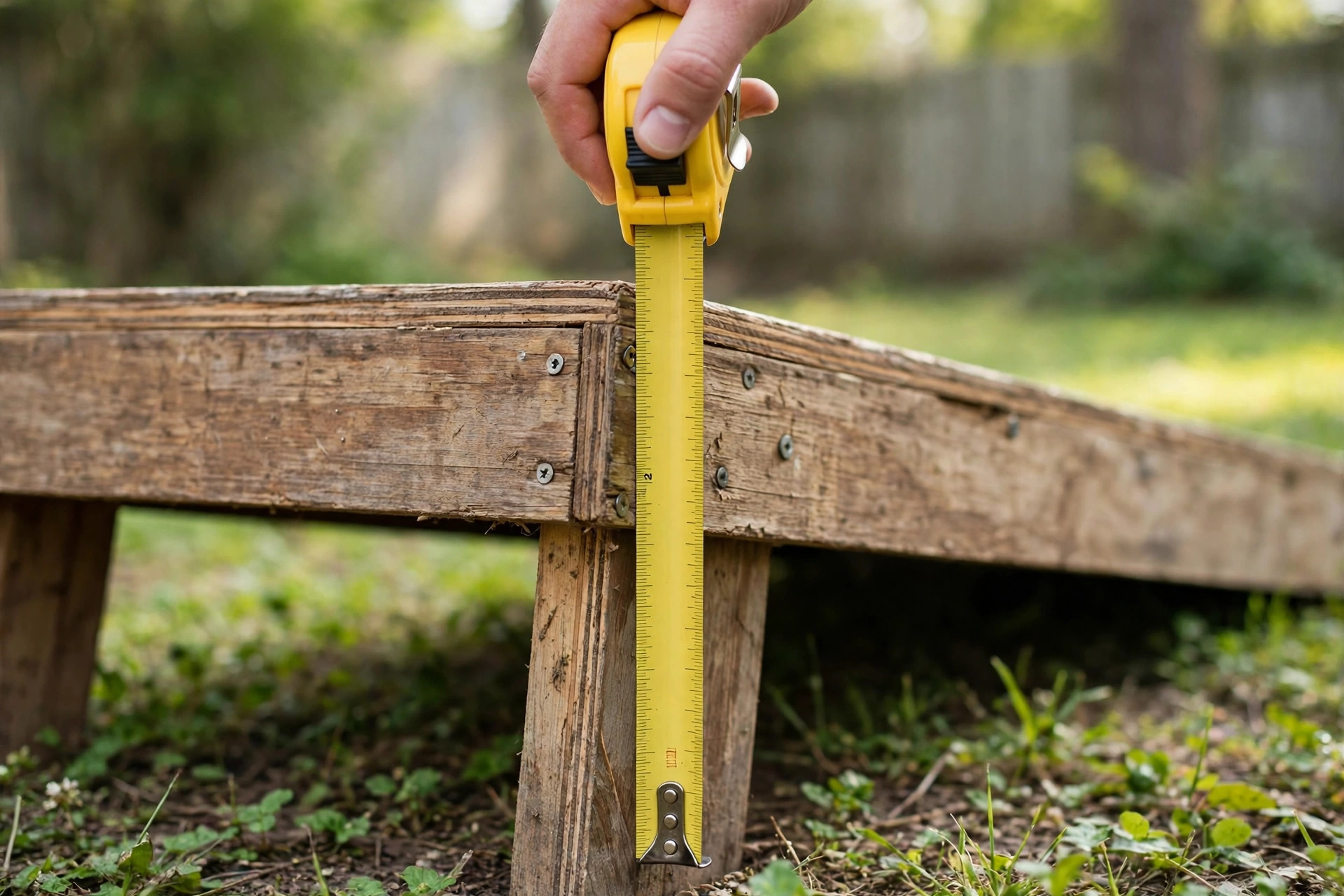
The back edge sits 12 inches off the ground: a hard number in the rulebooks, not a range. The front edge has freedom: anywhere from 2.5 to 4 inches is legal, and most well-built boards land near 3 inches. That gap, roughly 9 inches of rise over the 4-foot length, produces the playing angle. A board can have a perfect surface and still play badly if one leg is cut long or the ground is uneven, so check heights every time you move the boards.
Why the Board Angle Matters for Bag Slide
On a regulation angle, a bag that lands flat in the lower half slides uphill, slows, and stops near the hole if the throw was right. That predictable slide is the foundation of the game: the slide shot, the push shot, and most blocking strategy assume it. Make the board steeper and bags slide back down or need so much pace they fly off the back. Make it flatter and bags check up and stop dead. The angle also decides how much a bag’s slick and sticky sides matter: on the correct slope both sides give you real options; on the wrong slope, no bag choice fixes it.
Where the Cornhole Board Angle Comes From
Nobody sets a cornhole board angle with a protractor; it falls out of the heights. Back edge 12 inches, front edge about 3 inches: 9 inches of rise across 48 inches of board works out to roughly 11 degrees. A board built to the 2.5-inch front minimum sits a touch steeper, which is why the angle is quoted as about 11 to 12 degrees. The practical lesson: if both heights are right, the angle is right by definition.
How to Check Your Boards With a Tape and a Phone
Measure the Front and Back Heights
Set the board up as you would for a game. Measure from the ground to the top of the playing surface at the back edge, then the front: 12 inches at the back, 2.5 to 4 at the front. Measure both back corners too; if one reads higher, the board is twisted or the ground is uneven, and bags will drift toward the low side.
Check the Hole Size and Position
The hole should measure 6 inches across, and from the top edge down to the center of the hole should be 9 inches. A hole drilled too low makes the top of the board play short.
Read the Angle With a Phone Level
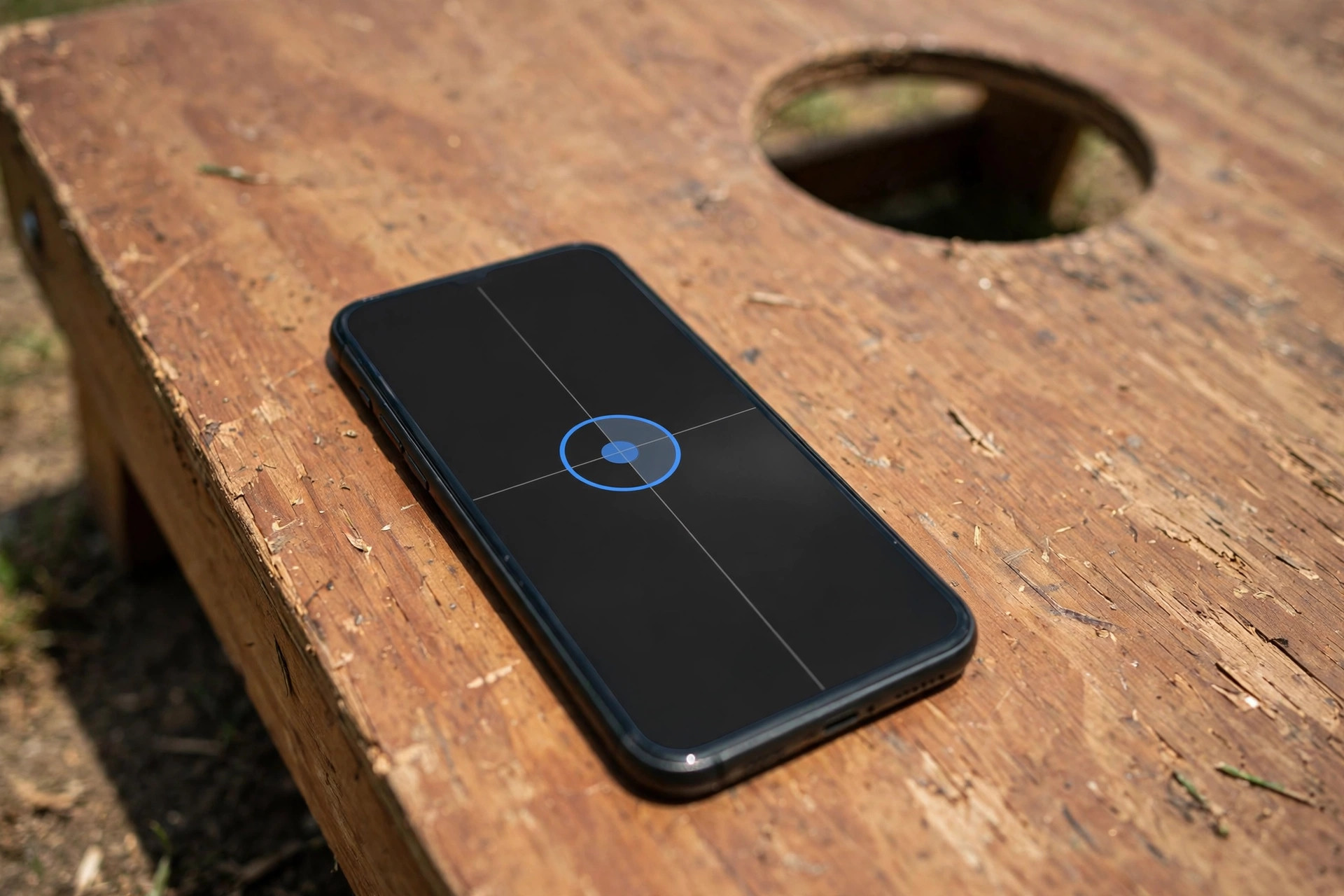
Open the level app on your phone, lay it flat along the center of the board, and read the tilt. Around 11 degrees confirms your height measurements; a reading far from that tells you a height is off.
Fixing a Board That Is Too Steep
A board plays too steep when the back is over 12 inches or the front has sunk below 2.5 inches. Start with the ground: move the board, or put flat pavers under the front feet. If the rear legs are too long, trim a little at a time and re-measure, or shim the front feet up with thin wood strips. On folding-leg boards, check both legs are fully opened and locked.
Fixing a Board That Is Too Flat
Raise the back first: longer rear legs, leg extenders, or solid blocks under the back feet, keeping both corners level. If the front is too high because the board sits on an uphill slope, turn the setup around or level the ground. Recheck the angle with your phone: aim for the same 11 degree neighborhood.
Backyard and Kids Boards: Deviations That Are Fine
Smaller 2 by 3 foot tailgate boards are fine for casual play, as long as both boards match each other. For children, keep the board angle friendly and shorten the throwing distance instead of flattening the board. Our guide to cornhole distance for kids by age gives the distances that pair with each age group. The one rule that holds at every level: both boards in a game should match: same size, same heights, same angle.
When the Specs Check Out but Bags Still Play Wrong
Sometimes the tape says the board is perfect and bags still grab, skid, or stop short. At that point the problem is usually the bags: humidity, dust, and worn fabric change how slick or sticky a bag plays. Our guide to fixing cornhole bags that are too slick or too sticky walks through the causes and fixes. Check the bags before cutting legs off a board that measured correctly.
Frequently Asked Questions
What are the regulation cornhole board dimensions?
Regulation cornhole board dimensions are a 2 foot by 4 foot board with a 6 inch hole whose center sits 9 inches from the top edge. The back edge stands 12 inches high and the front edge 2.5 to 4 inches, which creates the standard playing angle of about 11 degrees.
What angle should a cornhole board be set at?
About 11 to 12 degrees. You do not set the cornhole board angle directly; it results from the heights. With the back edge at 12 inches and the front edge near 3 inches, the slope works out to roughly 11 degrees.
How high is a cornhole board at the back and front?
The back of a cornhole board is 12 inches off the ground. The front edge is much lower, between 2.5 and 4 inches in the regulation cornhole board specs. That difference in height is what tilts the playing surface.
How far is the hole from the top of a cornhole board?
The center of the hole is 9 inches from the top edge of the board, and the hole itself is 6 inches in diameter. Because the hole is measured to its center, the top edge of the hole opening sits about 6 inches from the top of the board.
Can I play on boards that do not match regulation specs?
Yes, for backyard games. Smaller boards and slightly different heights play fine as long as both boards match each other. Follow regulation cornhole board dimensions if you play in a league or want your practice to transfer to official play.
Final Thoughts
Board angle and height sound like fine print, but they decide how every bag you throw behaves. Measure the back at 12 inches, keep the front between 2.5 and 4 inches, and the angle takes care of itself. Five minutes with a tape measure is the cheapest upgrade in cornhole.
Cornhole Practice Drills You Can Do Alone in 20 Minutes
Airmail, Slide, Block and Push: The 4 Cornhole Shots Explained
