Best Snacks for Hiking Kids: Fuel Without the Sugar Crash8 min read
The best hiking snacks for kids pair a carbohydrate with a protein or a fat. Carbs alone, a fruit snack pouch or a handful of crackers, burn fast and leave a small hiker hungry and miserable twenty minutes later. Add cheese, nut or seed butter, or yogurt to the same snack and the energy lasts two or three times as long. That single pairing rule, plus snacking on a schedule instead of waiting for complaints, prevents most trail meltdowns. Pack from the list below and use a family hiking checklist so food and water are settled before you leave.
Why Kids Run Out of Energy Faster Than Adults
Children store less fuel than adults. Their muscles and liver hold smaller glycogen reserves, which are the body’s stored form of carbohydrate, and they burn through those reserves quickly because they are smaller, less efficient movers. A child on a trail also stops, sprints, climbs a rock, and stops again, which uses energy in bursts. The result is predictable: a kid who ate a good breakfast can still be empty by mid-morning. Adults can push through a hungry half hour. Young children cannot, and the crash usually shows up as whining, stumbling, or a sudden refusal to walk before it shows up as the words “I’m hungry.” Treat food timing as part of the hike plan, the same as distance and turnaround time. Snack quantities and water belong on the same list as the 10 essentials for a family day hike, because running out of either one ends hikes early.
The Pairing Rule: Carbs Plus Protein or Fat
Carbohydrates refill the tank quickly. Protein and fat slow digestion down, so the energy from those carbs is released over a longer stretch instead of all at once. A snack built from both parts keeps a child steady between stops. In practice, pairing is easy:
- Apple slices with cheese, or with nut or seed butter for dipping
- Crackers with a cheese stick or a small handful of pumpkin seeds
- A tortilla rolled with nut or seed butter and a banana
- Trail mix that is mostly nuts, seeds, and dried fruit rather than mostly candy
- A yogurt pouch alongside a granola or oat bar
- Half a sandwich on the longer stops, not just at lunch
One part alone still has a place. A fast carb, a few dried apricots or a small box of raisins, is the right tool when a child is already crashing and needs something in the next ten minutes. Follow it with a paired snack at the next stop.
Snack Options Compared
Staying power below is a rough guide for an average school-age child at a normal hiking pace. Appetites vary, and a snack eaten at a full stop with water lasts longer than the same snack eaten while walking.
| Snack | Pairing | Rough Staying Power | Notes |
|---|---|---|---|
| Fruit snacks or gummy candy | Carb only | Under 30 minutes | Fast rescue fuel; expect a crash if nothing follows |
| Crackers or pretzels | Carb only | 30 to 45 minutes | Salty, which helps on hot days; pair with cheese to extend |
| Granola or oat bar | Carb, some fat | 45 to 60 minutes | Check the label; some bars are close to candy bars in sugar |
| Cheese stick with apple slices | Carb plus protein and fat | 60 to 90 minutes | Needs a cool pack on warm days after a couple of hours |
| Trail mix with nuts, seeds, dried fruit | Carb plus protein and fat | 60 to 90 minutes | Not for children under 4 in whole-nut form; see safety notes |
| Nut or seed butter tortilla roll | Carb plus protein and fat | 90 minutes or more | Travels well, no refrigeration, easy to eat half now and half later |
| Half a sandwich (cheese or nut butter) | Carb plus protein and fat | 90 minutes or more | Best used at the main stop on hikes over two hours |
Timing: Snack Before They Ask
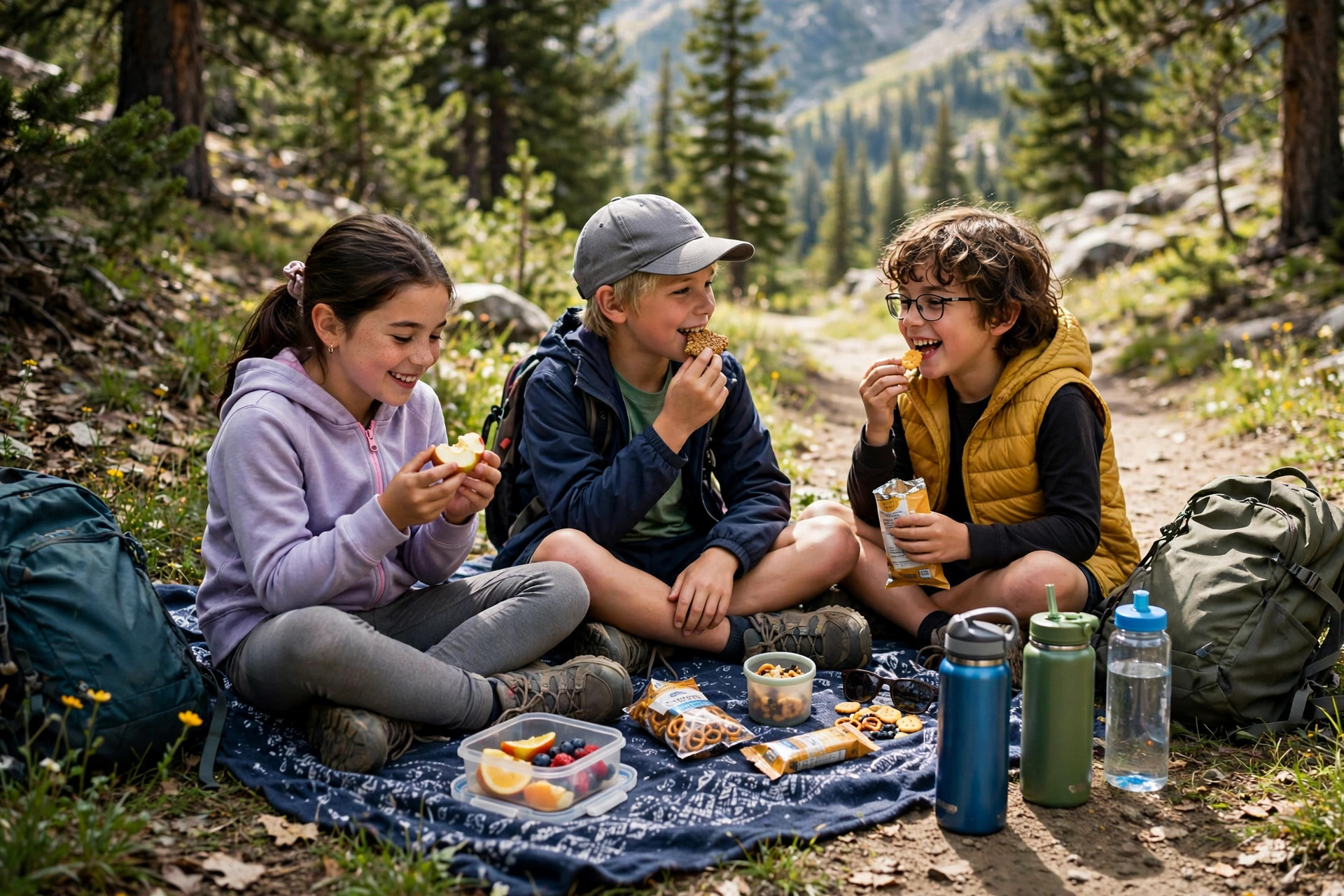
For children under about eight, plan a snack stop every 45 to 60 minutes, whether or not anyone says they are hungry. Older kids can usually stretch to 60 to 90 minutes. These stops do double duty: five minutes sitting down with food and water resets legs and mood, and it gives you a natural point to check the time against your turnaround plan. Two stops matter most. The first comes earlier than feels necessary, roughly 30 to 40 minutes in, because kids spend the start of a hike at maximum speed. The last snack of the day should happen before the final stretch back to the car, which is where energy and patience run out together. Our guide to hiking with kids covers pacing and distance by age, which pairs with this timing: shorter legs need both shorter miles and more frequent food.
Water: The Other Half of the Snack Plan
Dehydration looks a lot like a sugar crash: tired, irritable, headache, no interest in walking. Offer water at every snack stop and between stops, because young children are unreliable about asking. A reasonable starting point for school-age kids on a mild day is roughly a cup of water every 30 to 45 minutes of hiking, and more in heat. If a child has not needed a bathroom break on a long hike, they probably have not drunk enough. Plain water is the right default. Save sweetened drinks for after the hike, since a sugary drink on its own produces the same spike and crash as a sugary snack. On hot days or long hikes, a salty snack at the stop helps kids keep drinking, which is one reason pretzels and crackers earn their place in the pack.
Trail-Safe Choices: Choking Hazards and Allergies
Two safety issues change what goes in the pack. Choking hazards for young children. Children under 4 should not get whole grapes, whole cherry tomatoes, whole nuts, popcorn, or hard candy on the trail, and the risk is higher when a child is walking, talking, and laughing while eating. Cut grapes and cherry tomatoes lengthwise into quarters, chop nuts or use nut butter instead, and have young children sit down for snacks rather than eating on the move. The American Academy of Pediatrics covers these hazards in its choking prevention guidance for parents. Nut allergies in groups. Peanuts and tree nuts are among the most common food allergies in children, and a hiking group, scout troop, or cousin crew may include a child who cannot be near them. Ask before the hike, not at the trailhead. Sunflower seed butter and pumpkin seeds cover most of the same nutritional ground as nut butters and trail mix, so swapping for a mixed group costs nothing. Keep any allergen-free snacks in a separate bag so they are not handled after the trail mix.
A Simple Packing Formula
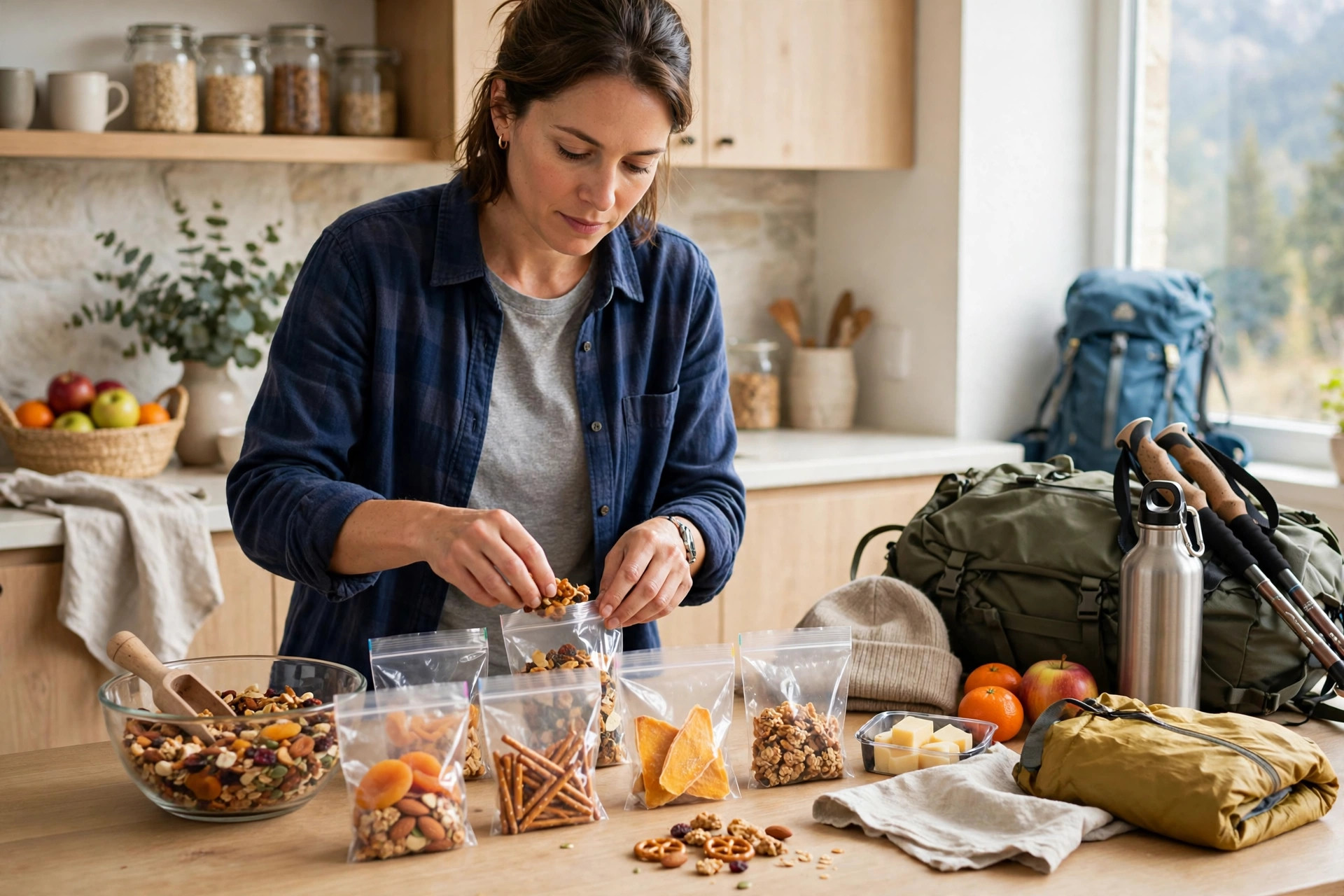
For a two-hour family hike with young kids, pack per child: two paired snacks, one fast-carb rescue snack, and more water than you expect to use. Add one extra paired snack per child for the group, because someone always drops theirs or is hungrier than planned. The full kit list lives on our hiking checklist for families, and food is the line item families most often underpack. Choose foods your child already eats at home. A trail is a bad place to introduce a new bar flavor, and a rejected snack is the same as no snack. Let kids pick between two or three options the night before; a snack they chose gets eaten with less negotiation.
Frequently Asked Questions
Are sports drinks a good idea for kids on a hike?
For most family hikes under two hours, no. Water and regular snacks replace what a child loses at this level of effort, and sports drinks add sugar without adding much else. They become reasonable on very hot days or hikes over two hours, when a child is sweating heavily and eating little.
What if my child refuses to eat on the trail?
Offer smaller amounts more often, and let the child choose between two snacks you packed. Liquid calories can bridge a gap: a smoothie pouch or a yogurt drink is often accepted when solid food is not. If refusals happen on every hike, eat a bigger meal right before starting and shorten the route.
How many snacks should I pack for a half-day hike?
Plan on a snack stop every 45 to 60 minutes for young kids, so a three-hour outing needs roughly three snacks per child plus one spare for the group. Favor paired snacks for the planned stops and keep one fast-carb option in reserve for a crash between stops.

How to Choose Kids Hiking Shoes vs Sneakers: When Boots Matter
Leave No Trace for Families: 7 Rules Kids Can Actually Follow