Crokinole Opening Shots: Where to Aim Your First Disc9 min read
The first disc of a round decides who plays offence and who plays defence. Good crokinole opening shots do one of three things: threaten the 20 hole, claim the 15 circle, or leave your opponent with no clean reply. A careless opener does the opposite, and the round is uphill from there.
There is no single perfect first shot, because the right target changes with the board. An empty board, an enemy disc parked in the 15, and a disc hanging over the 20 hole all call for different answers. This guide covers the five opening situations you will face most often, and where to aim in each one.
Your equipment matters more than you might expect. A disc only goes where you aim it on a flat, fast, true surface, and the boards in our roundup of the best crokinole boards are built to tournament dimensions, so the aim points below behave the way they should.
Crokinole Opening Shots at a Glance
Here are the five standard openings on one table. The sections below explain the thinking behind each aim point.
| Opening Situation | Aim Point | Why |
|---|---|---|
| Empty board, first shot of the round | The centre hole, played to drop or stop in the 15 circle | A 20 settles it, and a disc parked in the 15 scores while blocking the hole |
| Opponent’s disc sitting in the 15 circle | Straight at the opponent’s disc, centre mass | A clean takeout removes their points and can leave your disc in scoring position |
| Opponent’s disc hanging on the 20 hole | The exposed edge of the hanging disc, glanced toward the ditch | A glancing blow slides it away from the hole instead of tipping it in for them |
| Your partner’s disc to protect in doubles | Beside or just behind your partner’s disc, in the same scoring zone | A guard makes the opponent’s takeout harder and keeps your side’s points alive |
| Shooting last with the hammer | Whatever the score demands: the takeout, the 20, or the safe park in the 15 | The hammer is information; you already know exactly what the round needs |
The Empty Board: Your Crokinole First Shot
On an empty board, aim directly at the centre hole. The crokinole first shot has two ways to succeed: the disc drops for a 20, or it stops inside the 15 circle. Both outcomes score, and both make your opponent’s first shot harder.
The stop in the 15 matters almost as much as the 20. A disc sitting in the inner circle guards the hole, so your opponent cannot shoot a clean 20 of their own. They have to deal with your disc first, which means their opener becomes a takeout attempt instead of a scoring shot.
What you want to avoid is the half-hearted opener that dies in the 10 ring. A disc out there scores little, blocks nothing, and gives your opponent an untouched centre to aim at. Shoot the first disc firmly enough to reach the middle with a little speed to spare.
Building Around the Centre: The 15 Circle and the Crokinole 20 Hole
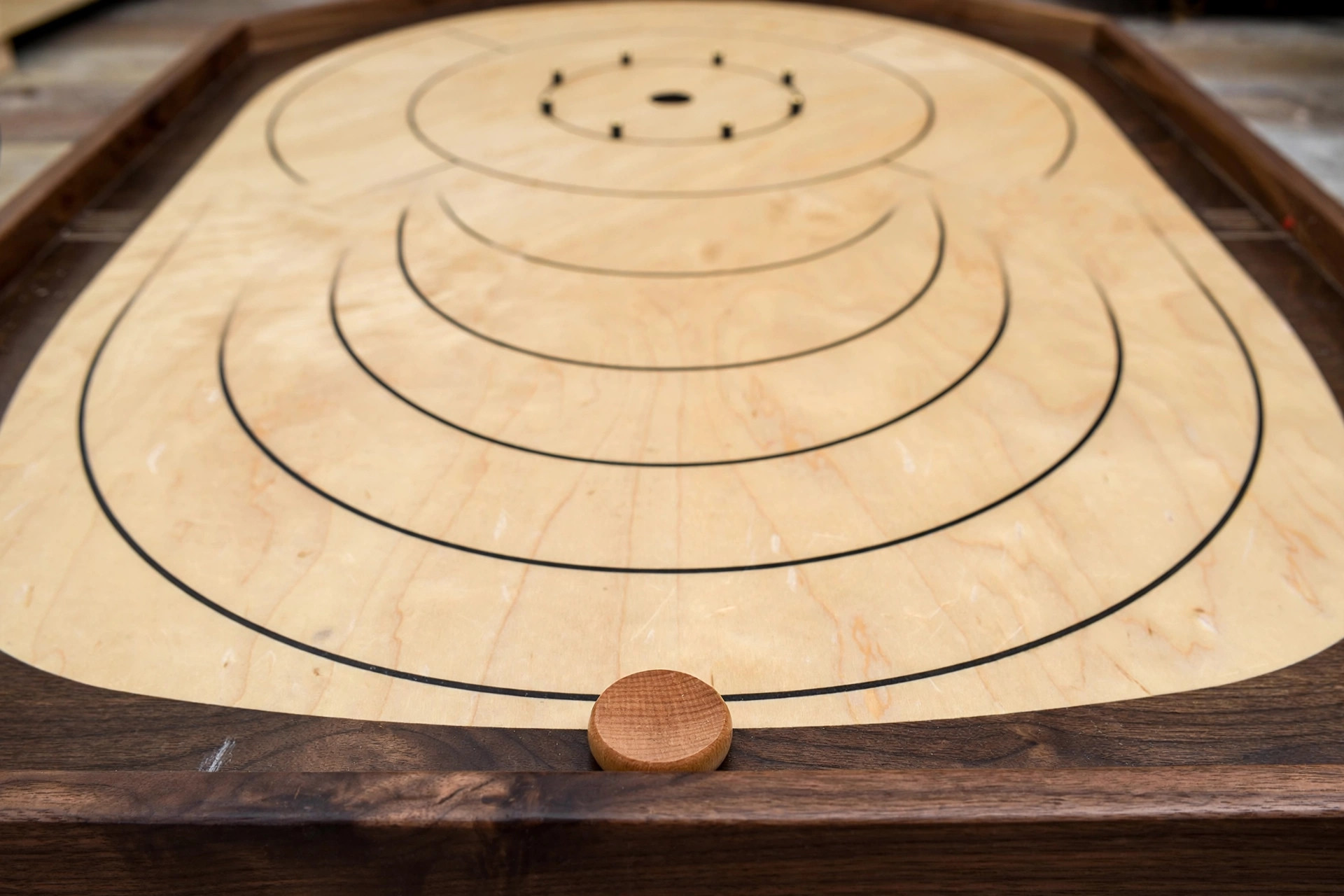
Once discs gather around the pegs, opening play becomes a geometry problem. The crokinole 20 hole is only reachable through the gaps between the eight pegs, and every disc already on the board closes some angles and opens others. Shoot toward the open side of the circle rather than forcing the crowded side. A disc that comes to rest against a peg on the open side still scores 15 and keeps that lane partly blocked. A disc forced into traffic usually bounces out to the 10 ring or worse.
Think of your early discs as a fence as well as points. Two of your discs in the 15 circle, spread across different peg gaps, force your opponent to play a precise takeout instead of a free shot at the hole. That pressure is the real product of good centre play.
Answering a Strong Opener: The Crokinole Takeout Shot
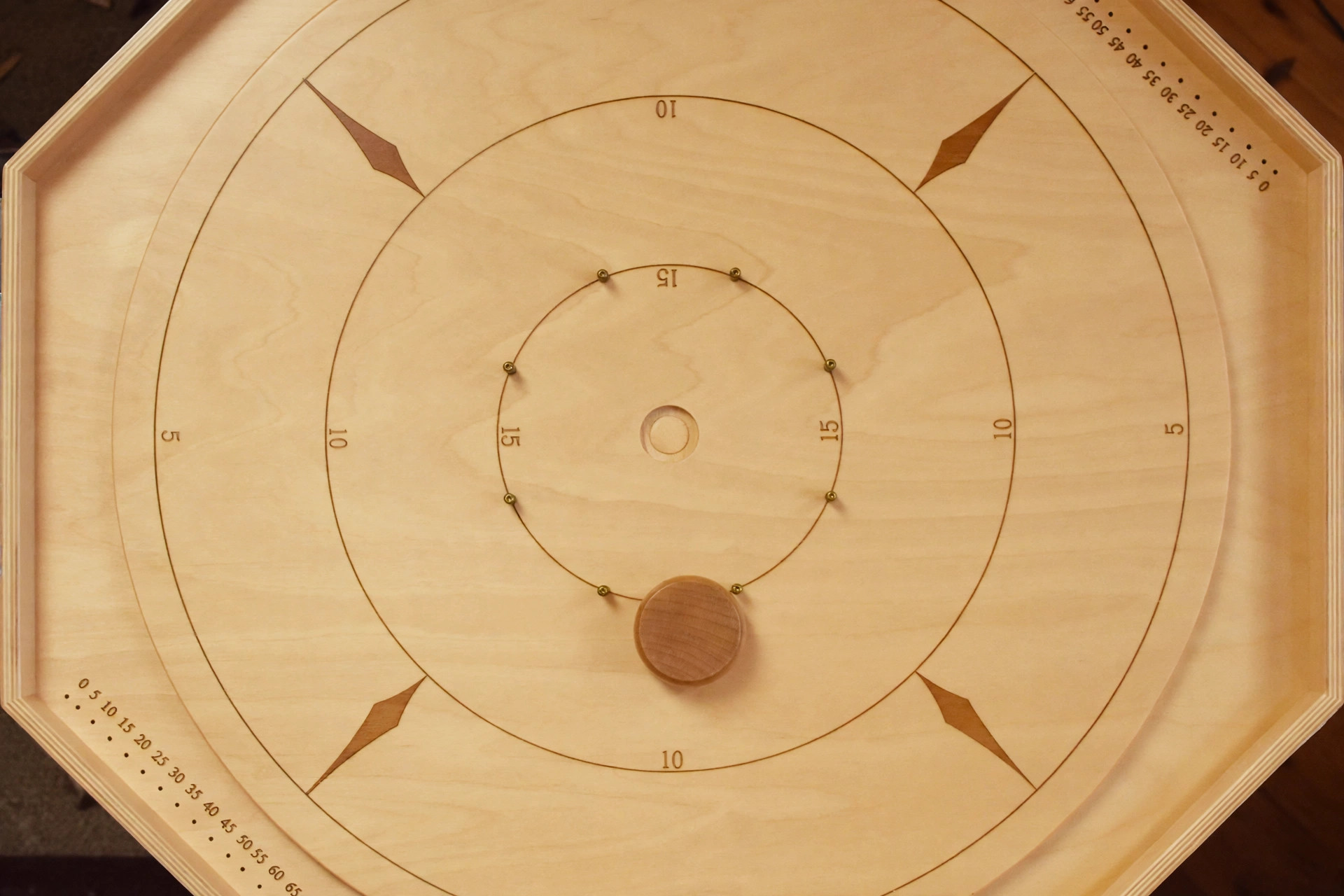
When your opponent’s first disc stops in the 15 circle, the standard answer is the crokinole takeout shot. Aim at the centre of their disc and hit it squarely. A clean takeout sends their disc into the ditch and, with the right pace, leaves yours sitting where theirs was.
Pace is the skill here. Hit too softly and their disc survives, now with your disc beside it as company. Hit too hard and your disc follows theirs off the scoring area, which is an acceptable trade early in a round but a waste once your disc could have stayed for 15.
Not every enemy disc deserves a takeout. A disc in the 10 or 5 ring is worth little, and chasing it spends your shot. Build your own threat in the 15 instead, and let them worry about yours.
The Disc Hanging on the 20: Finish It or Move It
A disc hanging partway over the centre hole is the tensest opening situation in crokinole. If it is yours, your next shot can be a gentle tap that drops it in for the 20, played just firmly enough to reach it. If it is your opponent’s, the job is to move it without dropping it in for them. Play a glancing blow off its exposed edge, aimed toward the ditch side, so the disc slides away from the hole instead of tipping into it. A square hit is the mistake: it can knock their disc straight down for a gift 20.
If you are unsure how a hanging disc is scored in the first place, our guide to crokinole scoring disputes covers the standard ruling, along with line calls and bounce-outs.
Opening Shots in Doubles: Protect Your Partner’s Disc
Doubles changes what an opening shot is for. Partners sit opposite each other and alternate shots for their side, so the disc you leave is the board your partner inherits. Crokinole opening shots in doubles are often guards rather than attacks. If your partner has a disc in the 15 circle, your best opener may be a second disc parked beside or just behind it. A guard makes the opponent’s takeout harder, because a disc driven into your scoring disc now has company, and rebounds become unpredictable.
The opposite mistake is the hero takeout that clears the whole centre. If your hard shot scatters your own side’s discs along with the target, you have done the opponents’ work for them. In doubles, shoot the shot your partner would want you to shoot.
Shooting Last: Making the Hammer Count
The crokinole hammer, the last shot of the round, is the most valuable opening of all because it is played with full information. You can count the board, do the difference maths, and pick the exact shot the round needs. That usually means resisting the glamorous 20 attempt. If a safe disc in the 15 circle wins the round on difference scoring, take the safe disc. Save the 20 try for the rounds where only a 20 changes the result.
Hammer play also rewards knowing your own board. A surface you have shot on for months behaves predictably under a firm last disc, which is one more reason the consistent finishes on the boards in our guide to the best crokinole boards matter when games get serious.
Opening Mistakes That Cost Rounds
Most lost rounds are not lost on the last shot. They are lost on a loose opener that never gets recovered. Watch for these five:
- Aiming at the hole with no plan for the miss: every opener should have a useful resting place if the 20 does not drop, and that place is the 15 circle.
- Stopping short in the 10 ring: it scores little, blocks nothing, and leaves the centre wide open for your opponent.
- Smashing every takeout: excess pace sends your own disc out with theirs and wastes the position you just won.
- Ignoring a hanging 20: a disc on the lip of the hole will decide the round one way or another, so deal with it on your terms.
- Playing singles shots in a doubles game: your partner shoots half your side’s discs, so set them up instead of grandstanding.
Frequently Asked Questions
Where should you aim your first disc in crokinole?
Aim at the centre hole. A perfect opener drops for a 20, and a good miss stops inside the 15 circle, where it scores and blocks your opponent’s path to the hole. Avoid a soft shot that dies in the 10 ring, because it scores little and defends nothing at all.
What makes good crokinole opening shots?
Good crokinole opening shots either score, block, or force a difficult reply. Dropping a 20 is ideal, but a disc parked in the 15 circle does two jobs at once: it banks points and guards the hole. The weakest openers stop in the outer rings, where they do neither job.
Should you always try for a 20 with your first shot?
Only on an empty board. If your opponent already has a disc in the 15 circle, the takeout is usually the better opener, because it removes their points instead of adding yours beside them. Match the shot to the board in front of you, not to a habit.
What is the hammer in crokinole, and why does it matter?
The hammer is the last shot of the round, and it matters because it is played with complete information. The shooter can count every disc, work out the difference, and choose the exact shot the score requires, whether that is a takeout, a 20 attempt, or a safe disc in the 15.
How do opening shots change in doubles crokinole?
In doubles, partners sit opposite and alternate shots, so your opener is also your partner’s setup. Guards that protect your partner’s scoring disc are often worth more than attacks, and hard takeouts carry extra risk because they can scatter your own side’s discs as well as the target.
Final Thoughts
Opening shots are where crokinole rounds are quietly won. Aim at the hole on an empty board, answer strength with a takeout, guard your partner in doubles, and let the hammer shot be the sensible one. Master those five crokinole opening shots and the rest of the round gets much easier to play.

Crokinole Disc Size and Wax Guide for Beginners

Crokinole Scoring Disputes Solved: Lines, Hanging Discs and 20s