Best Kite Shapes for Beginners: Delta vs Diamond vs Parafoil6 min read
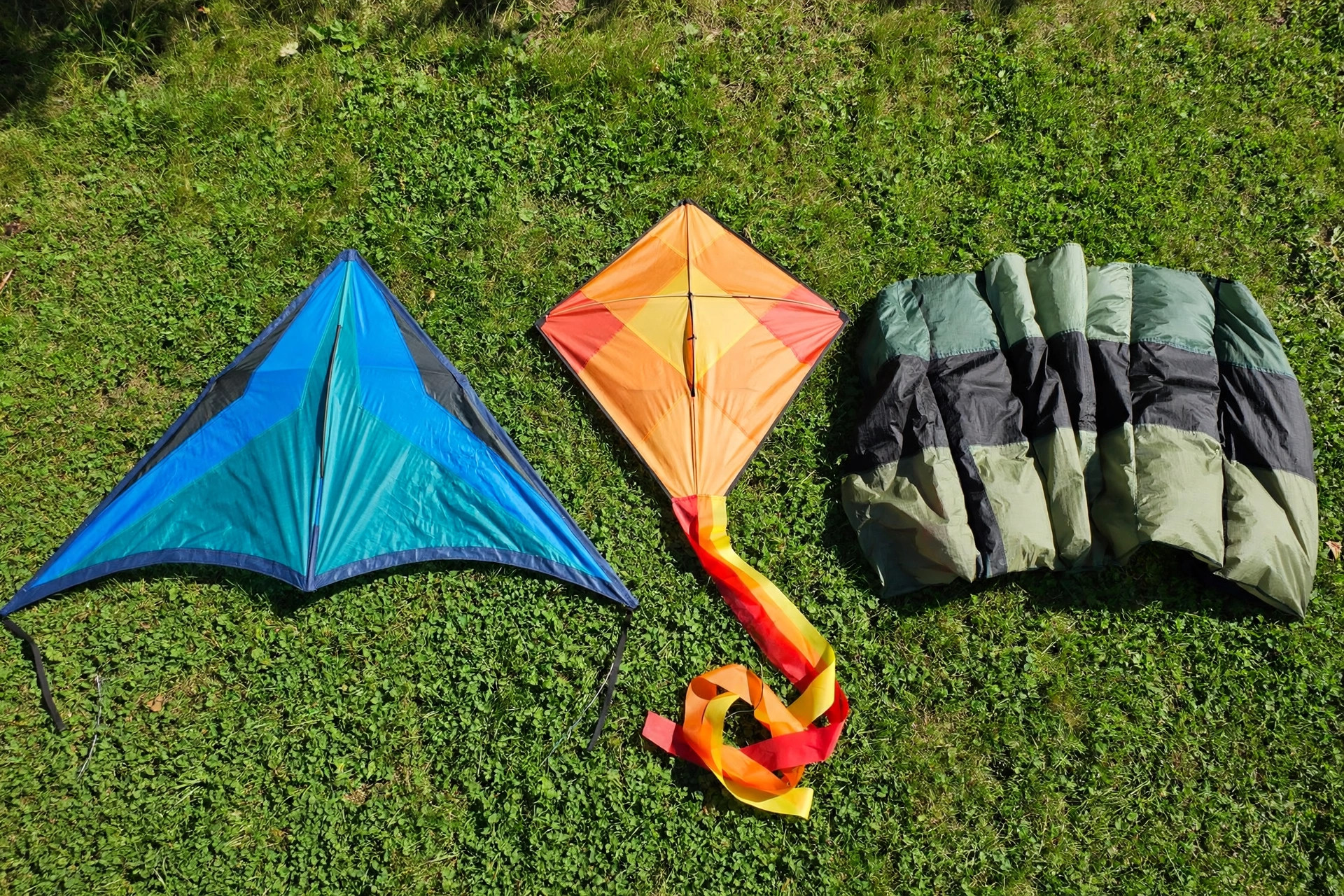
Walk into any kite shop and you will face a wall of shapes, colors and creatures. Beginners really choose between three of them. The best kite shapes for beginners are the delta, the diamond and the parafoil, and each forgives beginner mistakes in a different way: the delta corrects itself, the diamond teaches you timing, and the parafoil has nothing on it that can snap.
Shape decides how a kite behaves in gusts, how wide a wind range it tolerates, and how hard it is to launch. Our roundup of the best kites for beginners lists proven models in each shape.
Our top picks, compared:
The Best Kite Shapes for Beginners at a Glance
| Shape | Wind Range | Stability | Ease of Launch | Best For |
|---|---|---|---|---|
| Delta | 5 to 20 mph | High | Very easy | First kites, kids, gusty parks |
| Diamond | 6 to 15 mph | Medium, needs a tail | Easy | Classic flying, light to moderate days |
| Parafoil | 8 to 20 mph | High in steady wind | Moderate | Beaches, travel, nothing to snap |
| Sled | 5 to 15 mph | Medium | Very easy | Young kids, light wind |
| Box | 10 to 25 mph | High once airborne | Harder | Strong wind, second kites |
Read the table as a personality chart. The delta is the patient teacher, the diamond is the lively classic, and the parafoil is the travel-friendly soft kite. Sleds and box kites fill the edges: sleds for the youngest flyers, box kites for strong, steady days.
Delta Kites: The Beginner Default
The delta is the wide triangle over every beach and park, and it is the default recommendation for a reason. Its broad wing and keel spread the wind load evenly, so when a gust hits one side, the kite tends to wobble and settle instead of spinning. Deltas fly across the widest wind range of any beginner shape: a mid-size delta launches around 5 to 6 mph and stays manageable up to about 20 mph. If you buy one kite for a family, make it a mid-size delta.
Diamond Kites: The Classic Shape That Teaches Timing
The diamond is the kite from every storybook: a simple cross of two spars with a tail trailing behind it. Without its tail, a diamond wobbles, loops and dives; the tail is not decoration, it is the stability system. With a proper tail fitted, a diamond flies happily in about 6 to 15 mph. It feels livelier than a delta, which is the trade: in gusty inland wind, a diamond punishes slow reactions and rewards quick line handling. Choose a diamond if you like the classic look and your field has reasonably steady wind.
Parafoil Kites: No Spars, Nothing to Break
A parafoil has no frame at all: a soft wing of fabric cells that fill with air and hold their shape the way a parachute does. Uninflated, it folds down to the size of a paperback book. In steady wind, a parafoil is calm and stable, and there is nothing to snap in a crash, which is why it makes the most sense at the beach. The catch: parafoils need smooth, consistent air to stay inflated, and they pull hard for their size, so keep beginner parafoils small.
Sled and Box Kites: Two More Shapes Worth Knowing
Sled kites are the unsung heroes for young kids: a simple flexible sheet that pops open, launches in light wind with almost no technique, and collapses harmlessly when the wind drops. Box kites sit at the other end: their cellular frame needs real wind, roughly 10 mph and up, plus a firmer launch, but once airborne a box kite is strikingly steady. Treat it as a second kite, not a first purchase.
Which Shape Fits Your Flying: Kids, Beaches and Gusty Parks
For kids flying their own kite, the best kite shape for kids is a mid-size delta, with a sled a close second for the under-six crowd; our best kites for beginners roundup flags which models suit which ages. For beaches, steady ocean wind flatters every shape, and the parafoil finally gets the smooth air it wants. For inland parks with gusty, swirling wind, the delta wins clearly; whatever shape you fly, match it to the day’s wind with our kite wind chart.

Tails, Bridles and Stability: Small Tweaks That Fix a Wobbly Kite
A tail adds drag behind the kite, which points the nose into the wind and calms side-to-side wobble. Diamonds need one almost always; deltas wear tails mostly for looks, but a short tail still helps in gusty air. The bridle matters too: a kite that will not climb often needs the tow point moved a touch toward the nose, while a kite that spins or dives usually needs it moved back, plus more tail. Change one thing at a time and relaunch. These three shapes are only the start of the family tree; our guide to the types of kites walks through the rest.
Frequently Asked Questions
What is the easiest kite shape to fly for a beginner?
The delta. Its wide wing and keel make it self-correcting in gusts, it launches in light wind, and it stays up without constant line work. A sled kite is a close second, especially for young children in light, steady air.
Is a delta or diamond kite better for a child?
A delta, in almost every case. It recovers from the tugs, drops and sudden runs that children make. A diamond needs its tail fitted and quicker reactions, so it suits older kids who already have a flight or two behind them.
Are parafoil kites good for beginners?
Yes, in the right place. A small parafoil is a fine beginner kite at the beach, where steady wind keeps it inflated and there are no spars to break. In gusty inland parks it can fold and tumble in the lulls, so park flyers are better served by a delta.
What kite shape works best in gusty wind?
A delta with a short tail. The wide wing rides out gusts instead of spinning, and the tail adds just enough drag to calm the wobble. Avoid diamonds without tails and parafoils in gusty air.
Do beginner kites need a tail?
Diamond kites do; the tail is their stability system. Deltas fly fine without a tail but gain a little steadiness from a short one in gusty wind. Parafoils and sleds do not use tails at all.
Final Thoughts
The best kite shapes for beginners each win somewhere: the delta almost everywhere, the diamond on calm classic days, and the parafoil at the beach with a packed trunk. Start with a mid-size delta if you are unsure, add a tail when the wind misbehaves, and let the shape do the hard part while you learn the line.

Kite Flying With Kids by Age: What Works at 3, 5 and 8 Years Old

Buying Guide to the Best Kites for Toddlers & Kids