
Soccer Goalkeeper Basics for Kids Who Just Got Put in Goal9 min read
It happens on almost every youth team. The coach looks down the line of players, points at your child, and suddenly they are the goalkeeper, wearing gloves two sizes too big in front of a goal that looks enormous. The good news is that goalkeeper basics for kids are simple, and a first-time keeper only needs a few of them to get through a first game.
Goalkeeping at this level is not about spectacular diving saves. It is about standing in the right place, catching safely, and staying brave when the ball comes close. Teach a young keeper those three things and most shots in a kids’ game become very saveable.
The goal behind them matters as well. A keeper learning in a sagging, oversized net spends half the game untangling the ball instead of practising, so training in front of a right-sized net from our roundup of the best portable soccer nets and goals helps every session feel like the real thing.
Goalkeeper Basics for Kids at a Glance
Here is the whole job on one table. Six situations cover nearly everything a young keeper will face in a first season, and each one gets its own short section below.
| Situation | What to Do | Why |
|---|---|---|
| Ready position | Feet shoulder-width apart, knees bent, weight on the front of the feet, hands up in front | A balanced stance lets you move either way the moment the shot comes |
| Shot straight at you | Basket catch low, W hands high, fingers behind the ball | Safe hands stop rebounds that gift the other team a second chance |
| Low shot to the side | Step toward the ball, get your body behind it, hands down together | Your body becomes a wall even if your hands miss |
| Ball rolling through | Rush out, drop to one knee, smother the ball with hands and chest | A through ball collected early never becomes a one-on-one shot |
| Goal kick and distribution | Place the ball, step back, strike through the middle, or roll it out to a teammate | A calm restart keeps possession instead of handing the ball straight back |
| One-on-one, attacker running at you | Come out a few steps, stay big, arms wide, wait for the shot | Closing the angle makes the goal look smaller to the shooter |
The Ready Position: Where Every Save Starts
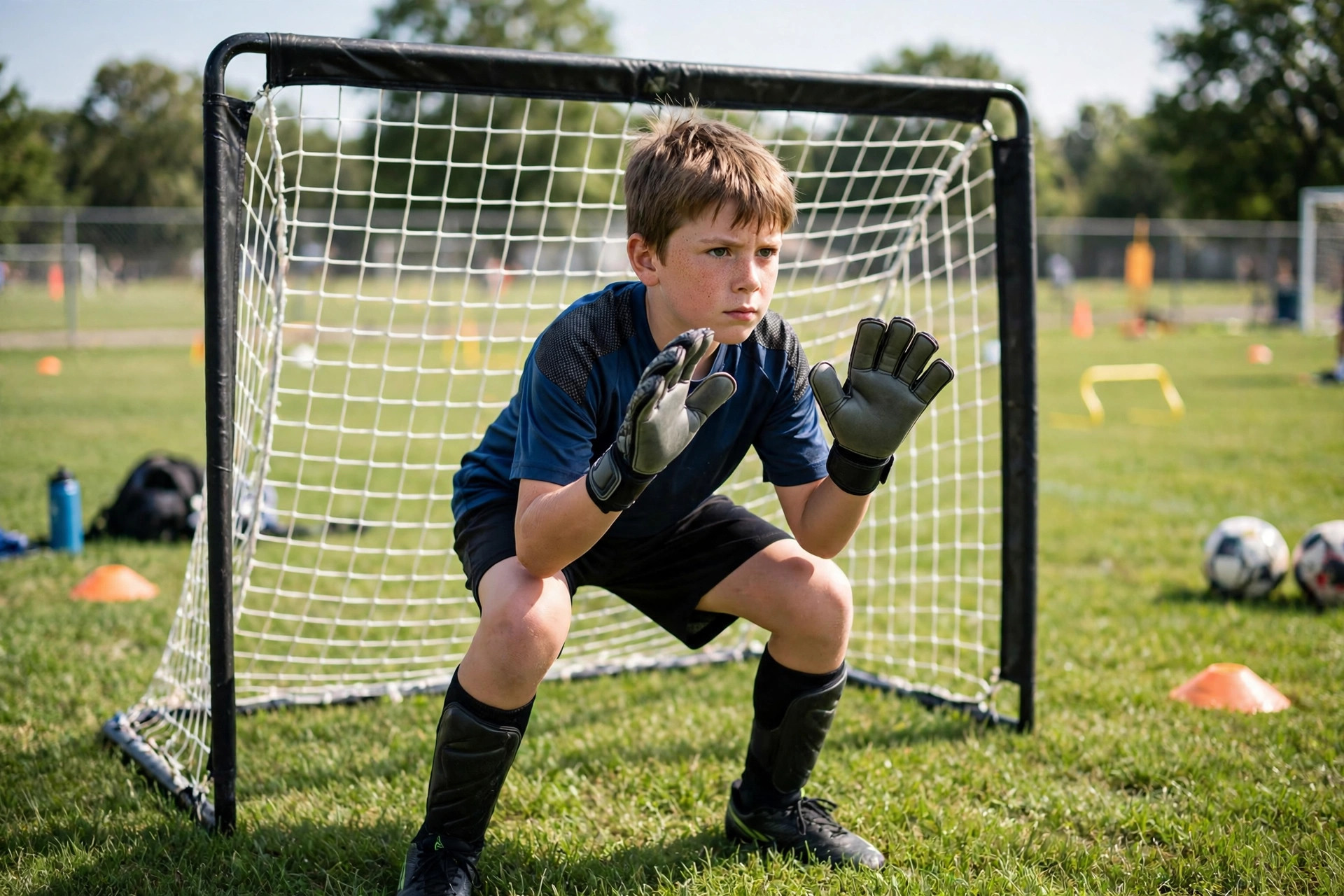
Every save begins before the shot is even taken. The ready position is a balanced stance: feet about shoulder-width apart, knees softly bent, weight on the front of the feet rather than the heels, and hands held up in front of the body around waist height, palms ready. From that stance a keeper can spring either way. A keeper standing flat-footed with straight legs cannot.
Position matters as much as posture. Teach your keeper to stand a step or two in front of the goal line, and to shuffle sideways in small steps to stay in line with the ball as it moves. When the ball is on the left, the keeper is a little left. It sounds obvious, but staying connected to the ball this way is the single biggest save-maker in youth soccer.
Catching the Ball: Safe Hands Come First
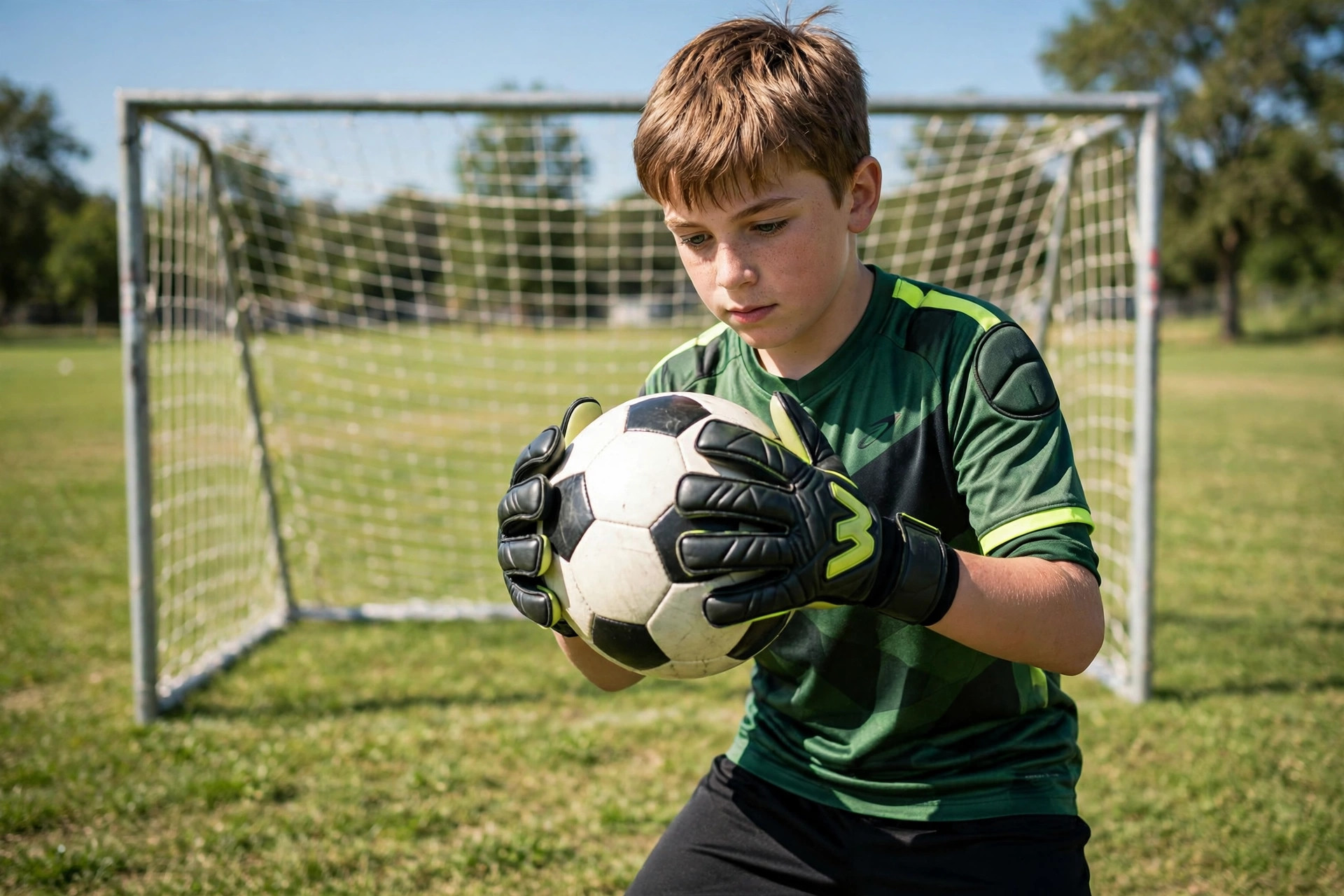
Of all the goalkeeper basics for kids, catching is the one worth practising most, because a catch ends the attack while a parry can gift the other team a tap-in. For shots at chest height or above, teach the W grip: hands behind the ball, fingers spread, thumbs nearly touching so the hands form a W shape. The ball lands in the fingers and palms, and soft hands give slightly as it arrives so it does not bounce out.
For shots below waist height, use the basket catch. The keeper bends the knees, drops the forearms under the ball with the little fingers close together, and scoops it into the chest, wrapping both arms around it. One rule covers both: watch the ball all the way into the hands. Keepers who look up early to find a teammate are the ones who fumble.
Low Shots and First Dives: Getting Down Safely
Most shots a young keeper faces arrive low, and the first job is not diving at all. It is stepping toward the ball and getting the body behind it, so the legs and chest act as a second wall if the hands miss. For a low ball close to the body, teach the knee-down barrier: as the ball arrives, the keeper drops the nearest knee to the ground behind the hands, closing the gap between the legs that balls love to sneak through.
Real diving can wait. When a keeper is ready, start with a collapse save from kneeling on soft grass: fall sideways onto the hip and side, hands meeting the ball first, never landing flat on the stomach or reaching with one hand. Keep sessions short and on soft ground, and stop when technique turns into just flopping.
Smothering a Through Ball
Sometimes the best save happens before a shot exists. When a pass is played in behind the defence and starts rolling toward the goal, the keeper who comes out early and collects it has saved a goal without facing a shot. Teach keepers to read the heavy touch or the overhit pass, call loudly for the ball, and move out to meet it while it is still far from the striker. As they arrive, they drop the nearest knee, scoop the ball with both hands and pull it into the chest, staying side-on rather than diving headfirst toward anyone’s feet. Timing is the skill: come out for balls they can genuinely reach, and stay home for the rest.
Goal Kicks and What to Do With the Ball
After a save, the keeper restarts play, and a calm restart is a real skill. For a goal kick, place the ball still, take a few steps back, and strike through the middle of the ball with the laces, aiming for a wide teammate rather than the crowded middle of the field. Many young keepers actually distribute better by hand. An underarm roll-out along the ground to a defender or midfielder in space is accurate, easy to control, and keeps possession far more often than a hopeful punt. Either way, encourage them to take their time. A keeper who pauses, looks up and picks a teammate is already playing like an older player.
One-on-Ones: Stay Big and Stay Brave
Sooner or later a striker breaks through with only the keeper to beat. This is the moment young keepers dread, and the moment good habits pay off most. The routine is simple. Come out a few steps to make the goal smaller, then stop and set in the ready position as the striker gets close. Stay on your feet as long as possible, arms wide and low, eyes on the ball rather than on the striker’s feints. Make the shooter make the first move. And when a goal goes in anyway, and it will, remind your keeper of the maths: the striker was favourite to score. Staying big and brave saves far more of these across a season than guessing early and diving at shadows.
Kids Soccer Goalie Drills to Practise in the Garden
Short practice works best when it sticks to a few goalkeeper basics for kids at a time. Start with gentle serve-and-catch: a parent rolls or tosses balls from a few yards away, mixing heights so the keeper alternates between the W grip and the basket catch. Add low serves to each side for the step-and-barrier habit. A mini goal made from disc cones turns positioning into a game. The sets in our guide to the best sports and soccer cones are ideal for marking a small goal and a shooting line, and the keeper scores a point for every save and loses one for every goal. When they are ready for a real net at home, a compact option from our best portable soccer nets and goals roundup gives them true posts and a crossbar to judge angles against, which cones alone cannot teach.
Frequently Asked Questions
What are the most important goalkeeper basics for kids to learn first?
Start with the ready position, staying in line with the ball, and two safe catches: the W grip for high balls and the basket catch for low ones. Those three habits handle most shots in youth games. Add positioning in front of the goal line and a calm goal kick, and a new keeper has a complete starter toolkit.
What first time goalkeeper tips help a nervous child enjoy it?
Keep the first games short by rotating the position, praise bravery rather than clean sheets, and practise a few gentle catches at home so the position feels familiar. Remind them that even professional keepers are beaten by good shots. Confidence grows from touches, not lectures.
How can my child learn how to be a goalie for kids’ soccer?
Watch a few minutes of a real match together and copy one thing at a time: how the keeper stands, where they stand, how they catch. Then practise that single habit in short, game-like sessions in the garden. Short, frequent practice with a parent serving gently builds technique faster than any long drill session.
What youth soccer goalkeeper tips matter most during a game?
Stay in line with the ball, get set before every shot, and communicate. A keeper who calls for the ball loudly and early stops defenders and attackers alike from hesitating. After conceding, the best habit is the quickest reset: retrieve the ball, breathe, and get ready for the restart.
Do young goalkeepers need gloves?
Gloves are optional at the youngest ages, but a basic pair helps grip in wet weather and protects fingers and palms on cold days and hard ground. Fit matters more than price: fingers should reach near the end of the glove without being cramped. Many keepers play their first season bare-handed and add gloves once they are hooked.
Final Thoughts
Being put in goal is a beginning, not a punishment. The goalkeeper basics for kids in this guide, a balanced stance, safe hands, smart positioning and a brave one-on-one routine, are enough to turn a nervous first game into a position your child might actually ask for next week. Keep practice short, keep praise specific, and let the saves build the confidence.
How to Set Up a Portable Soccer Goal Safely (Anchors Matter)
Dribbling Drills Kids Can Do Alone in a Driveway
