Soccer Cone Drills for Beginners: 8 Drills With Simple Setups9 min read
Every good practice starts the same way: a bag of cones, a ball, and a patch of grass. Soccer cone drills are the simplest training tool in the game, and for beginners they are also the most effective, because every drill gives a clear target, instant feedback, and more touches on the ball than a game ever will.
You do not need a full team or a marked field. Most drills below need fewer than ten cones and about ten minutes, and they scale from a five-year-old’s first session to an adult beginner.
Building a starter kit? Our roundup of the best sports and soccer cones covers the sets that survive being stepped on, kicked, and left out in the rain.
Our top picks, compared:
Why Soccer Cone Drills Work for Beginners
Cones turn open grass into a course with a start, a finish, and a clear job to do. That structure matters for new players, who often freeze when a drill is just “go and dribble around.” A line of cones shows them exactly where to go, and a clean run is visible progress. Repetition is the other advantage. A beginner might touch the ball a dozen times in a small-sided game, but hundreds of times in fifteen minutes of cone work. Those touches build close control, weaker-foot confidence, and a head-up habit, all without contact or defensive pressure. Progress is easy to measure, too: time a weave run this week and again next week, and watch the number fall.
What You Need Before You Start
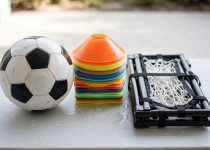
A set of 10 to 20 disc cones covers every drill in this guide. Disc cones sit low, so the ball rolls over them instead of deflecting, and stepping on one rarely turns an ankle. Keep two or three tall cones as targets. Each player needs a ball, ideally the right size for their age, plus water and flat ground. Twenty by fifteen yards is plenty for one player, and most drills shrink down to a driveway or backyard. Set cones out in advance and demonstrate each drill at walking pace first; beginners copy what they see far better than what they hear.
The 8 Drills at a Glance
Here is the whole session on one table.
| Drill | Cones Needed | What It Trains |
|---|---|---|
| Straight Line Weave | 6 | Close control dribbling at a steady pace |
| Figure Eight | 2 | Turning with the ball and using both feet |
| Cone Gates | 8 | Dribbling accuracy and head-up scanning |
| Box Turns | 4 | Sharp turns and changing direction |
| Gate Passing in Pairs | 4 | Passing accuracy and a soft first touch |
| Red Light, Green Light | 2 | Ball control, stopping, and listening |
| Shoot the Cone | 3 | Shooting accuracy at a small target |
| Dribble Relay Race | 8 | Speed dribbling under light pressure |
Dribbling Soccer Cone Drills: Drills 1 to 4
The first four drills are pure ball mastery. Run them slowly and cleanly before adding any speed.
Drill 1: Straight Line Weave
Set six cones in a line, about a yard apart. The player dribbles through, weaving in and out of every cone with small touches, then jogs back with the ball and goes again. Coaching points: use the inside and outside of both feet, keep the ball within a step, and look up between touches. Beginners who stare at the ball run into cones; that feedback is the lesson. Widen spacing to two yards for very young players, and narrow it as control improves.
Drill 2: Figure Eight
Place two cones about three yards apart. The player dribbles a continuous figure eight around both: circle one, cross the middle, circle the other. Every loop demands a change of direction and a switch of feet, which makes this the best beginner drill for turning with the ball. Use the inside of the foot on one circle and the outside on the other, then reverse direction after a minute.
Drill 3: Cone Gates
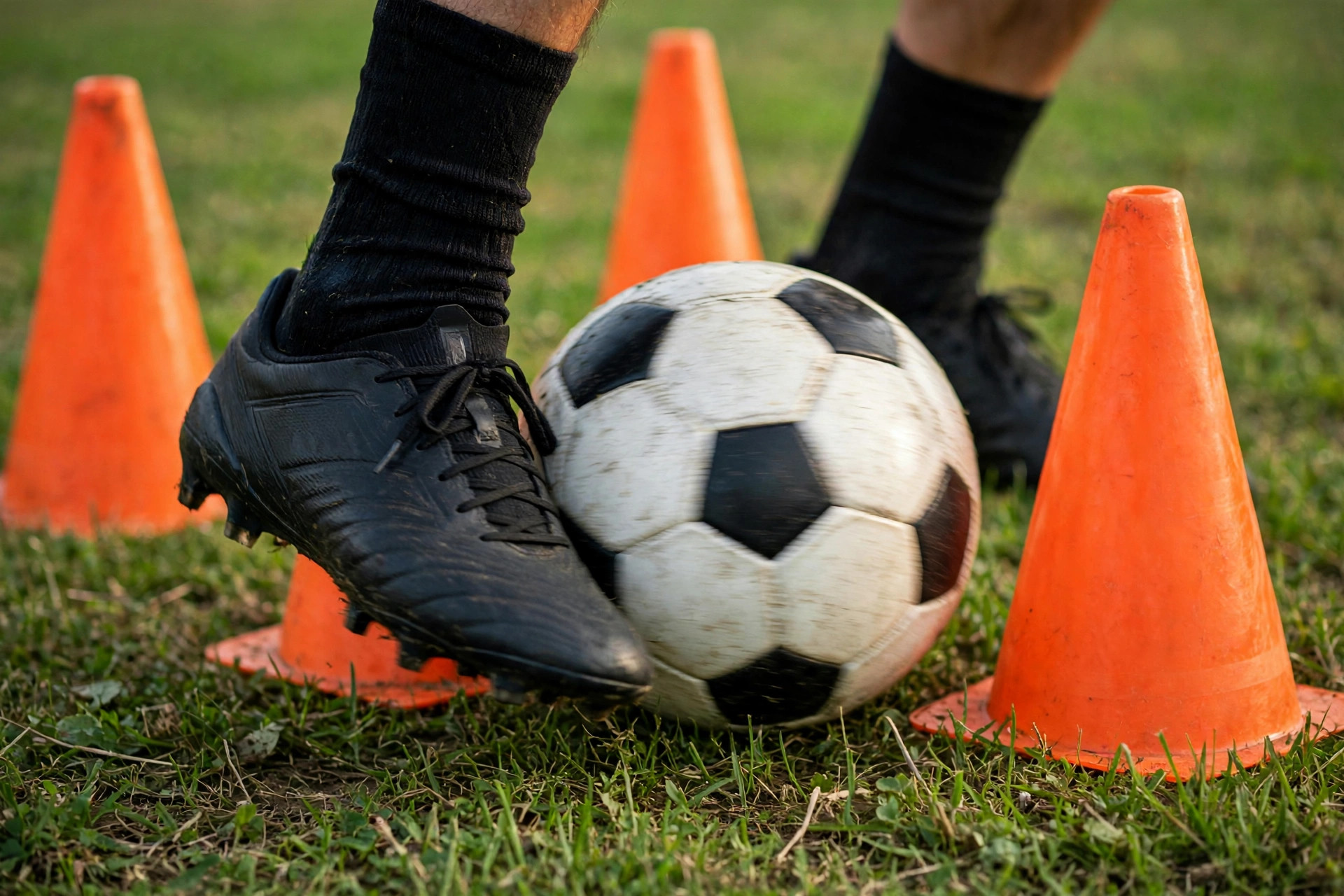
Scatter four gates around the area, each two cones about a yard apart. The player dribbles freely and scores a point for every gate they pass through under control, with no gate allowed twice in a row. Gates reward scanning, because the player must spot the next open gate while dribbling. Run it for 60 seconds, rest, and try to beat the score. With a partner, it becomes a passing game: pass through a gate to each other and move on.
Drill 4: Box Turns
Mark a square with four cones, roughly five yards per side. The player dribbles around the outside, turning sharply at every corner, then reverses direction halfway through the round. The corners are the point: a small touch to slow down, a turn with the inside or sole of the foot, and an explosive first step out. Two or three laps each way is a full workout for young legs and a good warm-up for older beginners.
Passing, Shooting and Game Drills: Drills 5 to 8
Once the ball stays close on the dribble, these four drills add partners, targets, and a little friendly pressure.
Drill 5: Gate Passing in Pairs
Set two gates, each two cones about a yard apart, facing each other ten yards apart. Partners stand behind opposite gates and pass through them, taking one or two touches. Count clean passes through the gates in a minute; narrow the gates or add distance to raise the difficulty. Nothing teaches weight of pass better: too soft and the ball dies short, too hard and the receiver cannot control it.
Drill 6: Red Light, Green Light
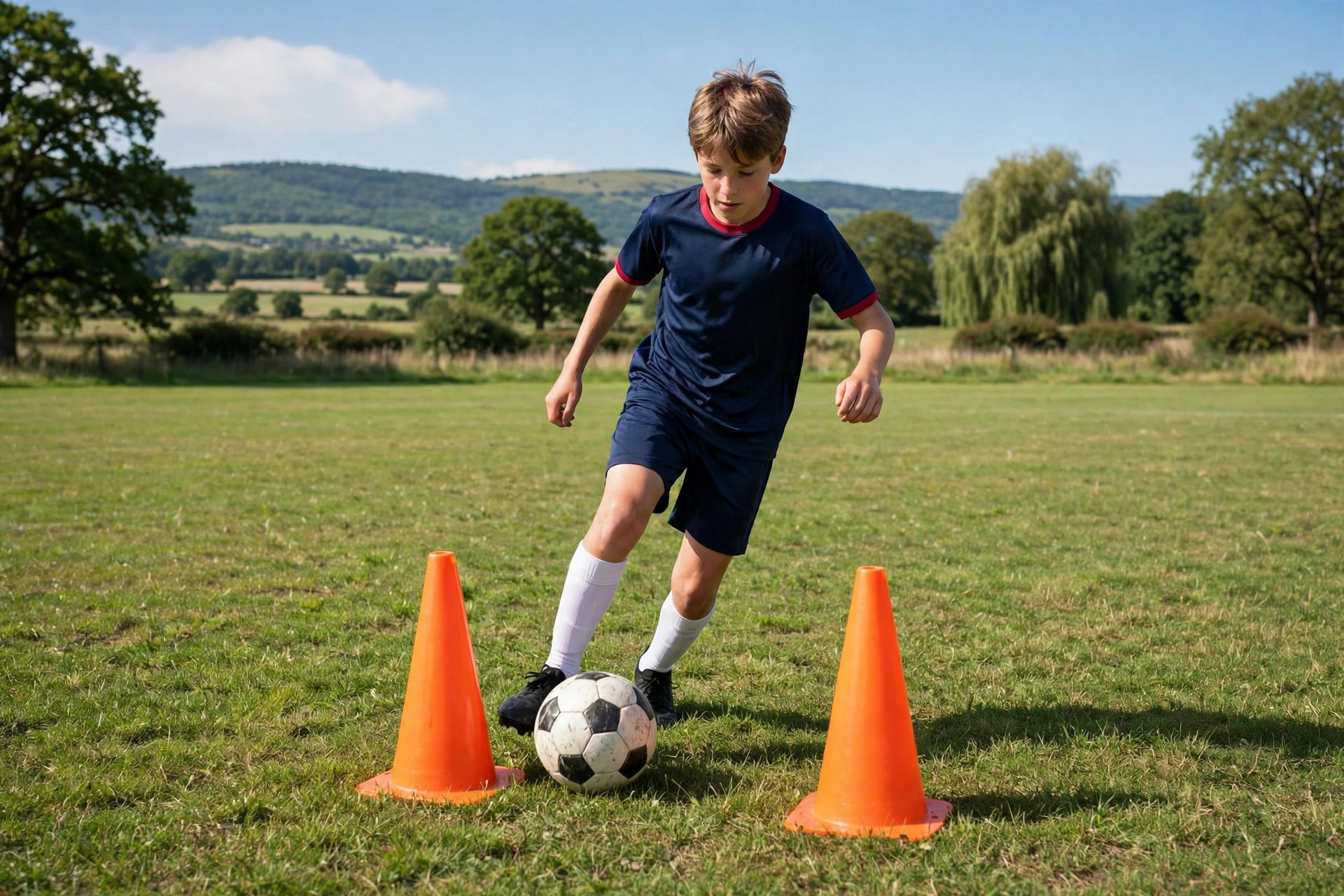
Mark start and finish lines with one cone each, about 20 yards apart. Players dribble on “green light,” freeze with a foot on the ball on “red light,” and return to the start if caught moving. It sounds like a playground game because it is one, and that is why it works. Underneath the fun, players practice stopping the ball dead, restarting quickly, and dribbling head-up, because anyone watching their feet misses the call.
Drill 7: Shoot the Cone
Stand one tall cone about ten yards in front of the player, with two cones marking a shooting line. The player dribbles up, shoots, and scores a point for knocking the cone over or hitting it cleanly. A small target teaches placement over power, the right order for beginners. If you train in a backyard, set the target just inside the post of a goal; our guide to the best portable soccer nets and goals covers the sizes for each age group. Retrieve balls as a group so nobody shoots while a player is in the way.
Drill 8: Dribble Relay Race
Split players into two teams, each with a line of four cones. The first player weaves out through the line, around the last cone and back, then tags the next teammate. Relays add the one thing solo drills cannot: an audience and a clock. Players dribble faster than alone, and the Drill 1 weave suddenly has stakes. Keep teams small so nobody waits long, and insist on control over chaos; a skipped cone means going back.
How to Put the Drills Into a Practice Session
A simple 30-minute session looks like this: five minutes of the figure eight as a warm-up, two dribbling drills for eight minutes each with water breaks, one game drill to finish, and a relay if energy is still high. Rotate the drills each week to keep sessions fresh, but keep the weave in heavy rotation. It is the foundation the other soccer cone drills build on, and the fastest way to spot improving control. End while players still want more; beginners remember the last drill longest, so finish with the game, not the grind. A spare set from our best sports and soccer cones guide is worth having, because cones always vanish into bags and garages.
Common Mistakes With Beginner Cone Drills
Spacing is the first. Cones too close together frustrate beginners into kicking and chasing; cones too far apart let them sprint in straight lines and learn nothing. About a yard apart is the sweet spot for dribbling at most ages. Speed is the second. Every drill here works at walking pace and fails at a sprint until control is automatic. Slow a player down the moment touches get big; add speed only when clean runs are routine. Finally, watch for one-footed players. Build in weaker-foot rounds, even if they are slower and messier; that mess is where the learning happens.
Frequently Asked Questions
How many cones do you need for beginner soccer cone drills?
Ten to twenty disc cones cover every drill in this guide, including relays for two small teams. Disc cones suit dribbling best because the ball rolls over them safely. Add two or three tall cones as targets for shooting drills.
What age can kids start doing cone drills?
Most children can start at four or five, as long as drills feel like games: wider spacing, short rounds, lots of praise. Structured drills like gate passing land better from about age seven, when attention and coordination catch up.
How long should a beginner cone drill session last?
Twenty to thirty minutes is plenty for young beginners, and up to forty-five for older kids and adults. Short, frequent sessions beat one long one, because control drops once legs and focus tire. Two or three sessions a week show visible improvement within a month.
Are disc cones or tall cones better for soccer drills?
Disc cones suit almost all dribbling and passing drills: they sit flat, do not deflect the ball, and are safe to step on. Tall cones work better as targets, line markers, and pretend goal posts. Most coaches carry both.
Can you do soccer cone drills on your own?
Yes, and solo practice is where cone drills shine. Six of the eight drills here need only one player, a ball, and a small patch of ground. Time your weave runs, count clean gate trips, and chase your own scores. Ten focused minutes alone beats an hour of casual kickabout.
Final Thoughts
Soccer cone drills ask for almost nothing: a handful of cones, one ball, a patch of ground. In return they give beginners the touches, turns, and confidence that make the real game fun instead of frustrating. Start with the weave and the figure eight, add a game drill to finish, and keep sessions short. The control shows up in matches sooner than you would expect.

First Soccer Practice: What Parents Should Bring and Expect

How to Choose a Soccer Ball Size by Age: Size 1 to 5 Chart