First Soccer Practice: What Parents Should Bring and Expect8 min read
The evening before a first soccer practice tends to involve a small pile of gear on the hallway floor and a child who is equal parts excited and nervous. That is completely normal. A first soccer practice is not a tryout, and nobody expects your child to know what they are doing yet. What helps most is boring preparation: the right ball, the right shoes, a full water bottle, and a parent who knows roughly what the next hour will look like. This guide covers the packing list, the flow of a typical session, and the few things coaches quietly wish every new soccer parent knew.
One low-pressure trick is a few kicks at home in the days before, so the ball and the idea of aiming at a goal already feel familiar. The small goals in our roundup of the best portable soccer nets and goals are sized for young players and fold away after a ten-minute session in the yard.
First Soccer Practice Checklist: What to Pack
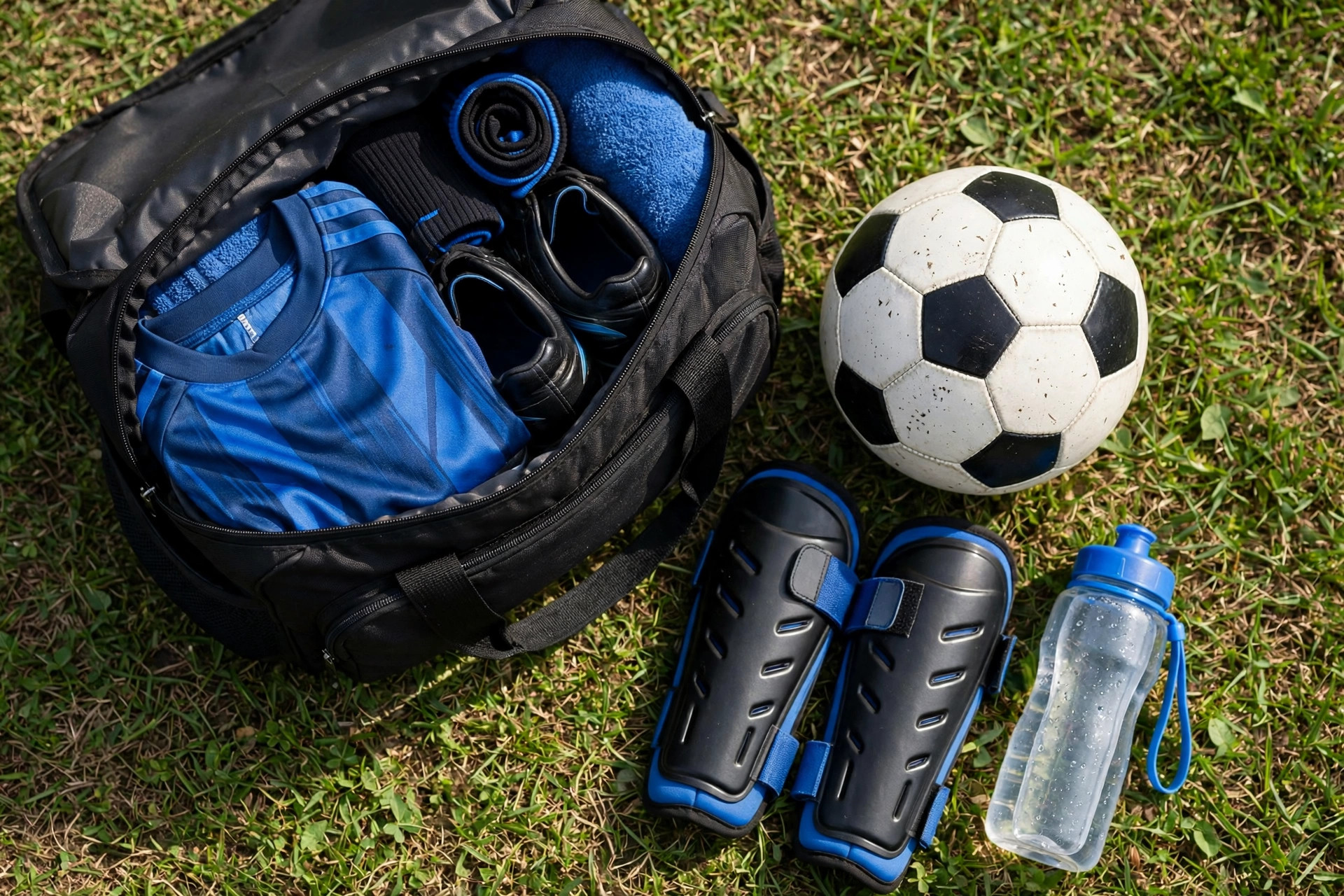
Most leagues and clubs ask for the same short list, so what to bring to soccer practice rarely changes from team to team. Here is the full soccer practice checklist on one table, including the things experienced parents have learned to leave at home.
| Bring This | Why | Skip This |
|---|---|---|
| A ball in the right size for the age group | Many coaches run one-ball-per-player drills, and the correct size builds proper technique | Team snacks, unless you have signed up for snack duty |
| Shin guards, worn under the socks | Required by most leagues, and they protect against the stray kicks that are constant at this age | Coaching from the sideline, which confuses players about who to listen to |
| A large, filled water bottle with your child’s name on it | Practices include set water breaks, and every bottle looks identical on the grass | Expensive gear, because young players outgrow boots and lose kit constantly |
| Cleats or turf shoes with a good grip | Grass gets slippery, and proper footwear stops the falls that put nervous kids off | Jewelry, watches and hard hair clips, which most leagues ban for safety |
| A light weather layer, plus sunscreen in summer | Sessions run in most weather, and a cold or sunburned child stops enjoying themselves fast | A phone or tablet for the bench, which guarantees your child watches it instead of the practice |
Pack the bag the night before and keep it by the door. The morning of the practice is the wrong time to discover the shin guards are still in the wash.
Getting the Gear Right Without Overspending
The ball is the one purchase worth getting right. Match the size to the age group: size 3 for players under 8, size 4 for ages 8 to 12, and size 5 from 13 up. A ball that is too big teaches a child to swing their whole leg at it, and coaches then spend weeks undoing the habit. Shin guards go under long soccer socks, not over them, and they should cover most of the shin without reaching the knee. Ankle guards are optional; some young players like the extra padding, others find them bulky. For footwear, standard soccer cleats are the safe choice on grass. Turf shoes or firm sneakers work on artificial turf and dry, hard fields. Either way, fit matters more than brand, and there is no reason to buy the most expensive pair in the shop for a child who will outgrow them by spring. Finally, send more water than you think is necessary and dress your child in layers they can peel off. Youth soccer practice keeps kids moving, but the standing-around parts, team talks and demonstrations, are when they get cold.
What a First Soccer Practice Actually Looks Like
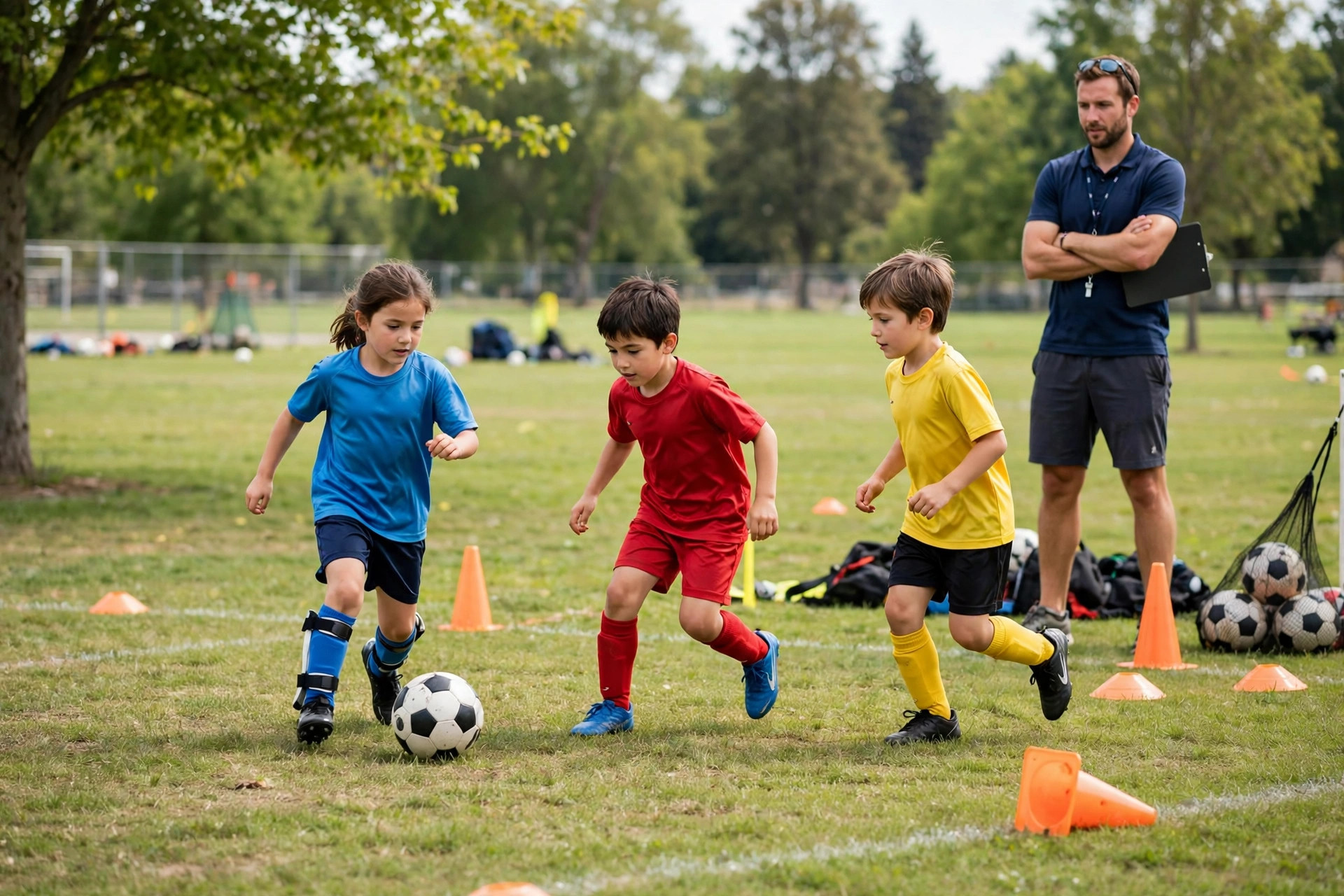
A first practice for young players usually runs 45 to 60 minutes, and almost none of it looks like a real match. Expect a loose shape like this:
- Arrival and free play: balls are out when you arrive, and kids dribble around while the coach learns names.
- A warm-up game: tag variations or follow-the-leader with a ball at their feet, designed to burn off nervous energy.
- One simple skill block: dribbling around cones or passing in pairs, demonstrated slowly and repeated a lot.
- Water breaks: every 10 to 15 minutes, whether the kids ask or not.
- A small-sided game to finish: 3v3 or 4v4 on a short field with small goals and constant encouragement.
The coach’s real goals for session one are names, smiles and touches on the ball. Positions, formations and detailed rules come weeks later, if they come at all this season.
What Coaches Want From Parents
Arrive 10 to 15 minutes early. A child who walks in while a game is already running feels behind before they have touched a ball, while an early arrival gets the free-play minutes that settle nerves fastest. Introduce yourself briefly and pass on anything the coach genuinely needs to know: asthma, a recent injury, extreme shyness, or that this is your child’s first organised sport. Then step back to the designated parent area. During the session, cheer effort rather than outcomes, and let instructions come from one voice. When a parent and a coach shout different things at the same moment, young players freeze and listen to neither. Afterward, the most useful question is “did you have fun?” rather than “did you score?” Fun is the metric that predicts whether a child is still playing in three years.
Between Practices: Ten Minutes at Home Helps
Kids who touch a ball a couple of times between practices improve visibly faster than kids who only play on practice day, and it takes almost no setup. A handful of cones turns a driveway into a simple dribbling course, and the flat disc sets in our guide to the best sports and soccer cones survive being stepped on every day. Add a target and it becomes finishing practice. The best portable soccer nets and goals include small pop-up options that suit a yard or a garage. Keep it play rather than homework: ten minutes, a score to chase, and stop while it is still fun.
If the First Practice Goes Badly
Tears, clinging to your leg, or sitting out a drill are all common at a first session, especially for four to six year olds. None of it predicts how the season will go. Avoid making any decision on day one. Mention it to the coach, who has seen it many times and usually has a quiet plan, like making your child the helper who hands out bibs. Then try two or three more sessions and watch the trend. Most children who hate practice one are asking when practice four is.
Frequently Asked Questions
What should my child wear to their first soccer practice?
Comfortable sports clothes they can run in, shin guards worn under long soccer socks, and cleats or turf shoes. If the team has issued a practice jersey or a shirt colour, wear that. Dress in layers in cool weather, and avoid jewelry, which most leagues require players to remove.
Does my child need their own ball at the first soccer practice?
Usually, yes. Most youth coaches plan drills around one ball per player and expect families to supply it. Bring the correct size for the age group: size 3 under 8, size 4 for ages 8 to 12, size 5 from 13 up. Write your child’s name on it, because twenty identical balls is chaos.
How long does a first soccer practice usually last?
For players under 8, expect 45 to 60 minutes. Ages 8 to 12 usually train for about an hour, and older youth teams may run 75 to 90 minutes. The first session of a season is often slightly shorter, because coaches spend part of it on introductions, expectations and simple games.
Can parents stay and watch the first soccer practice?
Yes, at almost every youth club parents are welcome to watch, and staying for the first session or two is sensible. Watch from the sideline or the designated parent area rather than the team bench, and let the coach run the session. Some coaches ask parents to keep a little distance as the season goes on.
What if my child cries or will not join in at their first soccer practice?
It is common and it is not a verdict on soccer. Do not force participation or apologise excessively to the coach, who has seen it before. Let your child watch from beside you, accept any low-pressure invitation the coach offers, and try again next session. Most reluctant starters join in by week two or three.
Final Thoughts
A first soccer practice goes well when the bag is packed the night before, the ball is the right size, and the adults stay calm and positive on the sideline. Your child does not need to be good at anything yet. They need touches on the ball, a coach whose name they know, and a reason to ask when the next practice is.

6 Best Sports & Soccer Cones for Your Next Game

Backyard Soccer Games for Small Spaces and Mixed Ages