How to Store Cornhole Boards So They Do Not Warp7 min read
A warped cornhole board ruins games quietly. Bags slide sideways off the crown, bounce over the dip, and nobody can work out why the same throw plays differently at each end.
Warping almost never happens during play; it happens in storage, slowly, over weeks. Knowing how to store cornhole boards the right way prevents almost all of it, and the rules are simple, cheap, and take about five minutes at the end of the season.
And if a board is already too far gone, our best cornhole boards roundup covers the replacements that resist warping best.
Our top picks, compared:
Why Cornhole Boards Warp in Storage
Plywood warps when its two faces live in different conditions: the top dries in warm air while the bottom sits against a damp floor, and the board curls toward the drier side. Three habits cause almost every case:
Moisture imbalance: a board stored face down on concrete, or with one end in a puddle zone, absorbs moisture unevenly and bends.
Heat: a shed or attic baking in summer sun dries the top fast while the underside stays cool, and repeated cycles set the bend.
Leaning: a board propped at an angle, supported at two points, sags under its own weight over a season.
How to Store Cornhole Boards: The Core Rules
Good cornhole board storage comes down to four rules:
- Store them flat or fully supported: flat on a level surface is best; upright is fine if the whole long edge rests on the floor and the board stands straight, not leaning.
- Keep them dry: indoors beats outdoors, off the floor beats on the floor.
- Keep them out of the sun and away from heat sources.
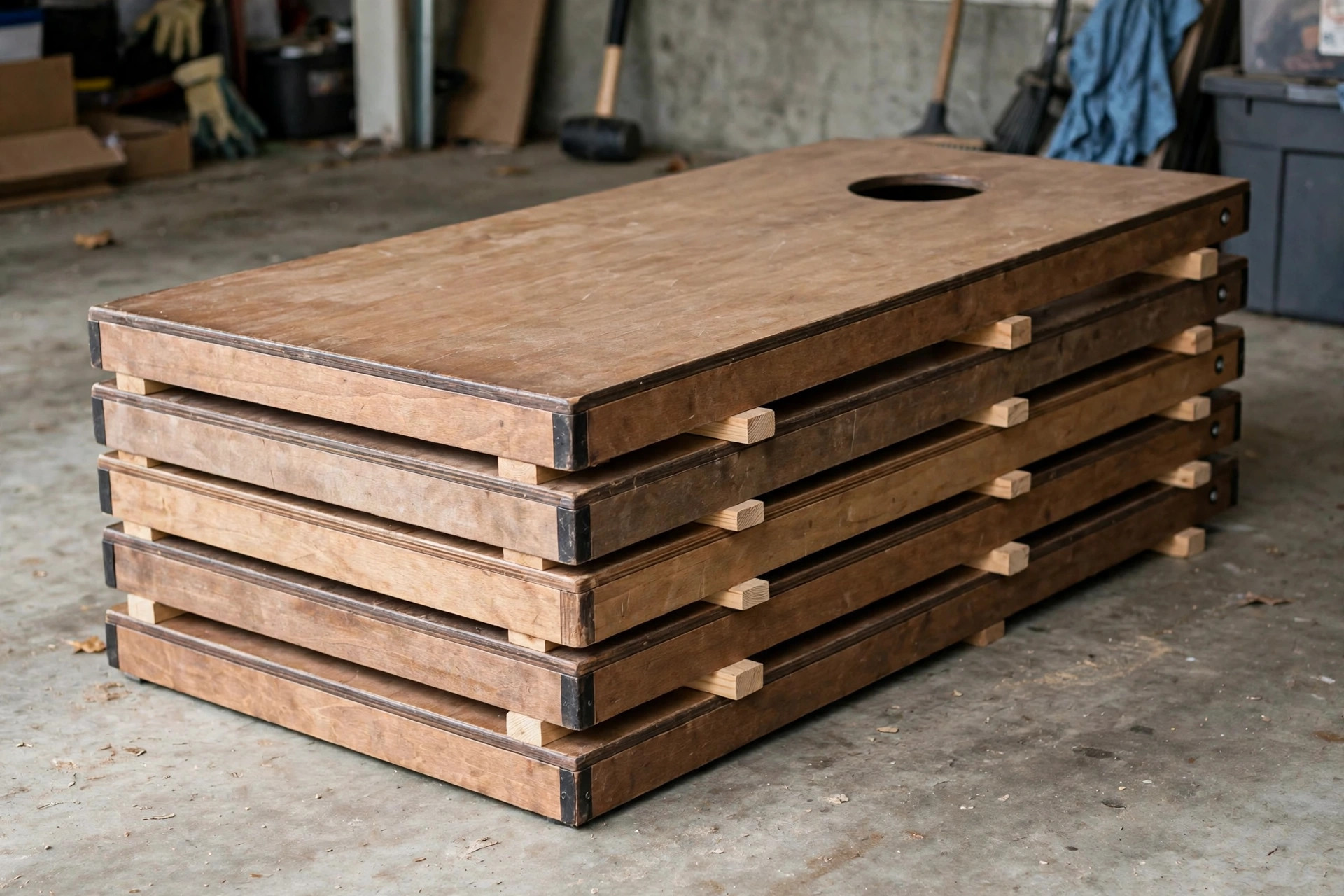
- Give both faces the same air: stack playing faces together or add thin wood strips between boards so air reaches every surface.
That fourth rule is the one most people miss: boards stored face down trap moisture against the underside.
Cornhole Board Storage by Location: Garage, Basement, or Shed
In the Garage
The most common choice, and it works well if the boards stay off the concrete: concrete sweats and wicks moisture, so raise boards on a shelf, a pallet, or two-by-four rails. Keep them away from the door if rainwater flows underneath it.
In the Basement
Temperature-friendly but can be humid. A small dehumidifier or a raised spot away from the walls solves it. Avoid storing boards directly under pipes that could drip.
In the Shed
The riskiest option because of heat swings and roof leaks. If a shed is your only choice, store boards flat on a high shelf, check after heavy rain, and bring them inside for the hottest weeks if you can.
Clean and Dry Boards Before You Store Them
- Brush off dust and debris.
- Wipe with a barely damp cloth if grimy, then dry right away.
- Let the boards air-dry fully, at least a few hours, before storage: trapped damp is worse than a dirty board.
- Check the finish: bare or peeling spots let moisture in unevenly, so touch up before storage.
While you are at it, check the playing geometry with our guide to cornhole board angle and height.
Store the Bags Separately, Every Time
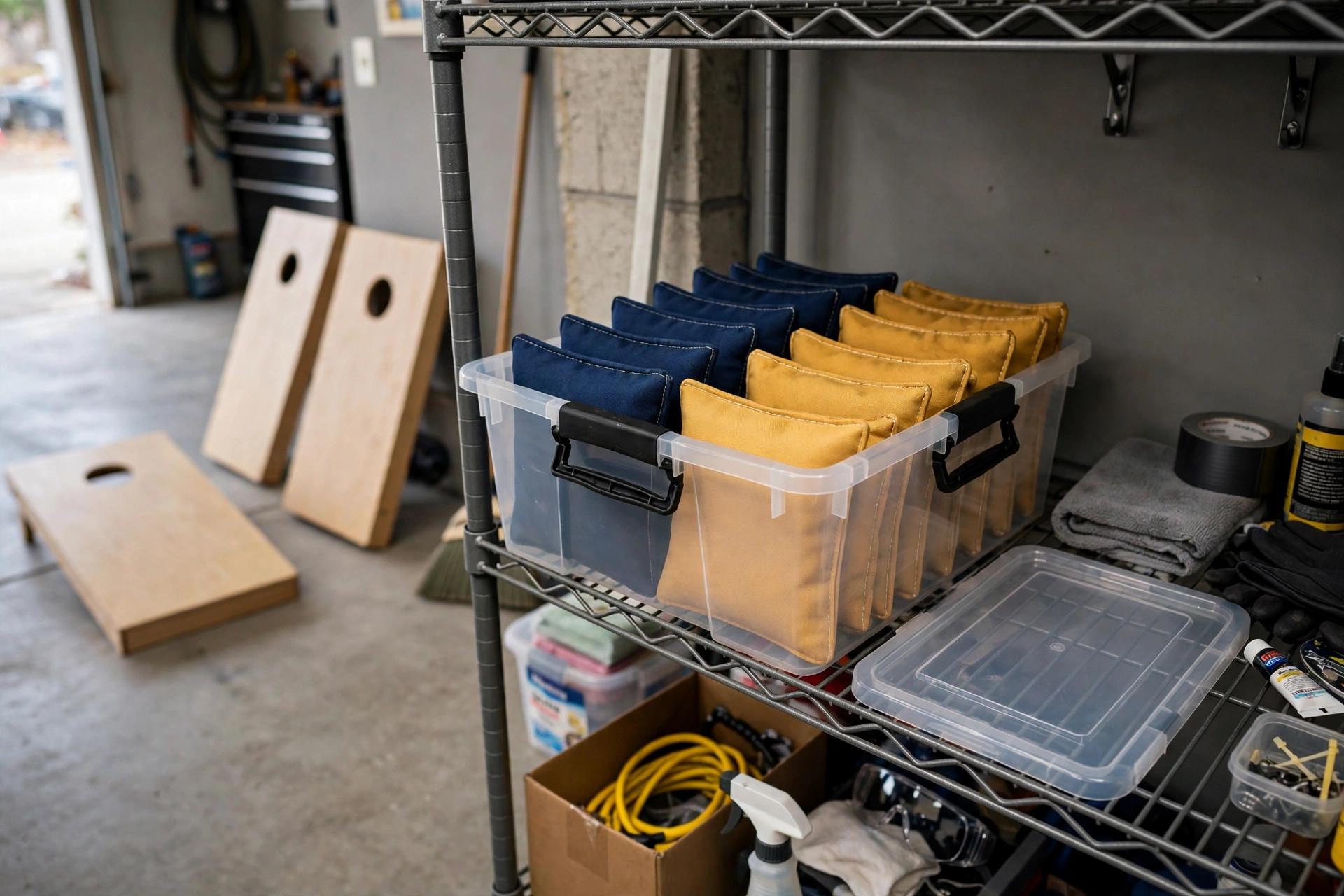
Bags do not belong stored on top of the boards. Corn-filled bags absorb moisture and can attract pests, and even resin-filled bags trap damp against the playing surface all winter.
Store bags in a breathable tote or bucket indoors, somewhere dry and room temperature. If your bags have picked up speed or grip problems from storage, our guide on how to fix cornhole bags that are too slick or too sticky walks through the fixes.
Cornhole Board Care: Storage Do’s and Don’ts
| Do | Don’t |
|---|---|
| Store flat on a level, raised surface | Lean boards against a wall all season |
| Keep boards off concrete and soil floors | Store directly on a garage or shed floor |
| Let both faces breathe with spacers or face-to-face stacking | Seal boards in plastic wrap while damp |
| Clean and fully dry boards before storage | Put boards away wet after a rainy game |
| Store bags separately in a dry tote indoors | Leave bags sitting on the playing surface |
| Check stored boards once or twice a season | Forget boards in a hot shed until spring |
Already Warped? A Warped Cornhole Board Fix That Sometimes Works
This warped cornhole board fix works best on mild, recent warping.
- Lay the board bow-side down on a flat surface in a dry room, crown facing the floor.
- Add gentle, even weight across the raised areas.
- Leave it for several days, checking daily; mild bows often relax noticeably in a week.
- Play and re-check; if it holds flat, seal the underside finish.
If the board rocks on a flat floor, the hole no longer sits true, or the frame has twisted, the honest fix is a replacement, and our roundup of the best cornhole boards explains which constructions resist warping best.
How to Keep Cornhole Boards From Warping Year After Year
Prevention is a routine, not a project. Put boards away dry every single time, keep the finish intact, and store them in the same good spot. Do that, and the boards come out flat, the games stay fair, and your only storage job is remembering where you put the bags.
Frequently Asked Questions
How should you store cornhole boards, flat or upright?
Either works if the board is fully supported. Flat on a level, raised surface is the safest option. Upright is fine when the whole long edge rests on the floor and the board stands straight. The mistake is leaning, which lets the board sag under its own weight over time.
Can you store cornhole boards in a garage?
Yes, as long as the boards stay off the concrete floor and away from damp corners. Raise them on a shelf, pallet, or rails, because concrete wicks moisture into the bottom face. Keep them away from the door if rain blows or flows underneath it.
How do you fix a cornhole board that is already warped?
For a mild, recent bow, lay the board crown-side down on a flat surface, add gentle even weight across the raised areas, and leave it for several days in a dry room. Many slight warps relax within a week. Severe twists or boards bent for years usually need replacement.
Should cornhole bags be stored with the boards?
No. Store bags separately in a breathable tote or bucket in a dry indoor spot. Bags left on the playing surface trap moisture against the finish, and corn-filled bags can draw pests.
Does sealing or painting a board prevent warping?
It helps a lot. A sound finish slows moisture moving in and out of the wood, which is what causes most warping. Seal all faces, including the underside and frame, not just the playing surface.
Final Thoughts
Warping is a storage problem with a storage solution: dry boards, even air, full support, and a spot out of the sun. Build those four habits into how you store cornhole boards and the set you own now should stay flat and fair for many seasons.

7 Best Cornhole Wraps and Decals
How to Fix Cornhole Bags That Are Too Slick or Too Sticky