Rainy Day Hiking With Kids: Gear and Mindset That Save the Trip7 min read
Rain in the forecast does not have to cancel a family hike. Light rain on a well-chosen trail is safe for kids and often quieter, cooler, and less crowded than a sunny Saturday. The catch is knowing which rain is fine and which is not. Thunder changes everything: if thunder roars, go indoors, and wait 30 minutes after the last thunder before heading back out. Beyond that one hard rule, a good rainy day hiking plan comes down to waterproof layers, a trail that drains well, and a dry change of clothes waiting in the car.
Which Rain Is Fine, and Which Rain Cancels the Hike
Most rain is a gear problem, not a safety problem. Drizzle and light showers slow nobody down once jackets are on. Steady rain is workable on the right trail with the right layers. Two conditions end the discussion. Thunder means lightning is close enough to matter, and the rule from the National Weather Service is simple: when thunder roars, go indoors. Head for a building or a hard-topped car, and wait 30 minutes after the last thunder before going back out. A downpour with strong wind is the other cancel call, because wind drives rain under hoods, chills small bodies fast, and turns easy trails into slipping practice.
| Rain scenario | What it feels like | The call |
|---|---|---|
| Drizzle or light mist | Jackets get damp over an hour | Go. Shorten the route if kids are under five |
| Steady rain, no thunder | Constant rain, puddles forming | Go, with full rain gear and a trail that drains well |
| Heavy downpour with wind | Rain sideways, trails running with water | Cancel, or cut the hike short and head back |
| Thunderstorm | Any thunder or lightning at all | Cancel. Get to a building or car and wait 30 minutes after the last thunder |
Check the forecast the morning of the hike, not the night before, and check it again at the trailhead. A 40 percent chance of showers is a very different day from a line of thunderstorms arriving at noon.
Waterproof Layers That Actually Keep Kids Dry
A waterproof jacket with a hood is the single piece of gear that decides whether a rainy hike is fun or miserable. Look for a jacket that is waterproof, not water-resistant. Water-resistant shells soak through in steady rain, usually far from the car. Run through our family hiking checklist before the trip so the rain layers live in the pack and are not rediscovered in a closet in October.
Rain pants matter more than most parents expect. Kids sit on wet logs, kneel in mud, and brush against soaked grass with every step, so their legs get wet from the ground up even when the jacket does its job.
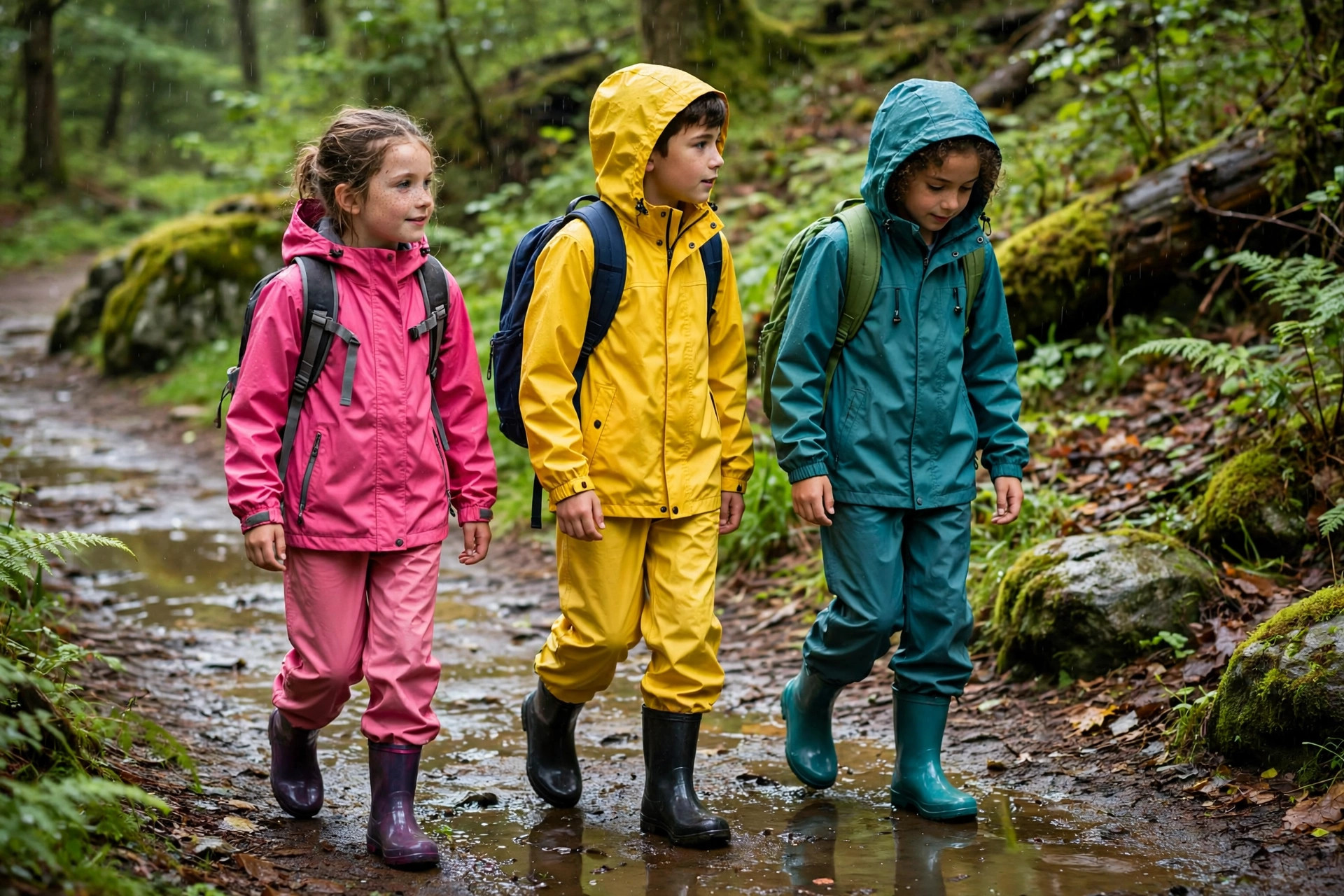
Ponchos are the budget option and they work for short, easy trails, but they flap in wind, snag on branches, and leave arms wet. For a hike longer than a mile, a jacket and pants beat a poncho.
Skip cotton entirely. Cotton soaks up water, stays cold against the skin, and dries slowly, which is why outdoor instructors warn against jeans on the trail. Synthetic or wool layers keep some warmth when damp. On feet, waterproof shoes or boots with real tread handle wet trails well, and our guide to kids hiking shoes vs sneakers breaks down when sneakers stop being enough. Whatever they wear, pack extra socks. Dry socks fix a surprising amount of misery.
Choosing a Trail That Handles Rain Well
Trail choice matters more in rain than gear does. Forested trails under a full canopy are the best rainy day option, because the tree cover cuts the rain that actually reaches you and the ground stays firmer. Ridge tops, open meadows, and exposed viewpoints give you the full weather with no shelter, and they are the worst places to be if a storm cell builds.
Avoid trails with stream crossings. A creek that is ankle-deep on a dry day can run fast and knee-deep after an hour of rain, and turning back at a flooded crossing with a disappointed five-year-old is nobody’s favorite moment. Skip slick rock slabs and smooth wooden bridges when you can, or cross them slowly and one at a time. Clay soil turns to grease in rain, while gravel and well-drained forest paths stay walkable.
On muddy stretches, walk through the mud rather than around it. Going around widens the trail and damages the plants at its edges, a point the Leave No Trace principles make for wet trails in general. Mud washes off boots. A trail widened into a braided mess takes seasons to recover.
Traction on Wet Trails
Wet surfaces are where rainy hikes actually go wrong, and it is almost never the rain itself. Wet roots, wet leaves, painted trail markings, and smooth rock are all slicker than they look. Slow down on descents, shorten your steps, and keep your weight over your feet instead of leaning back.
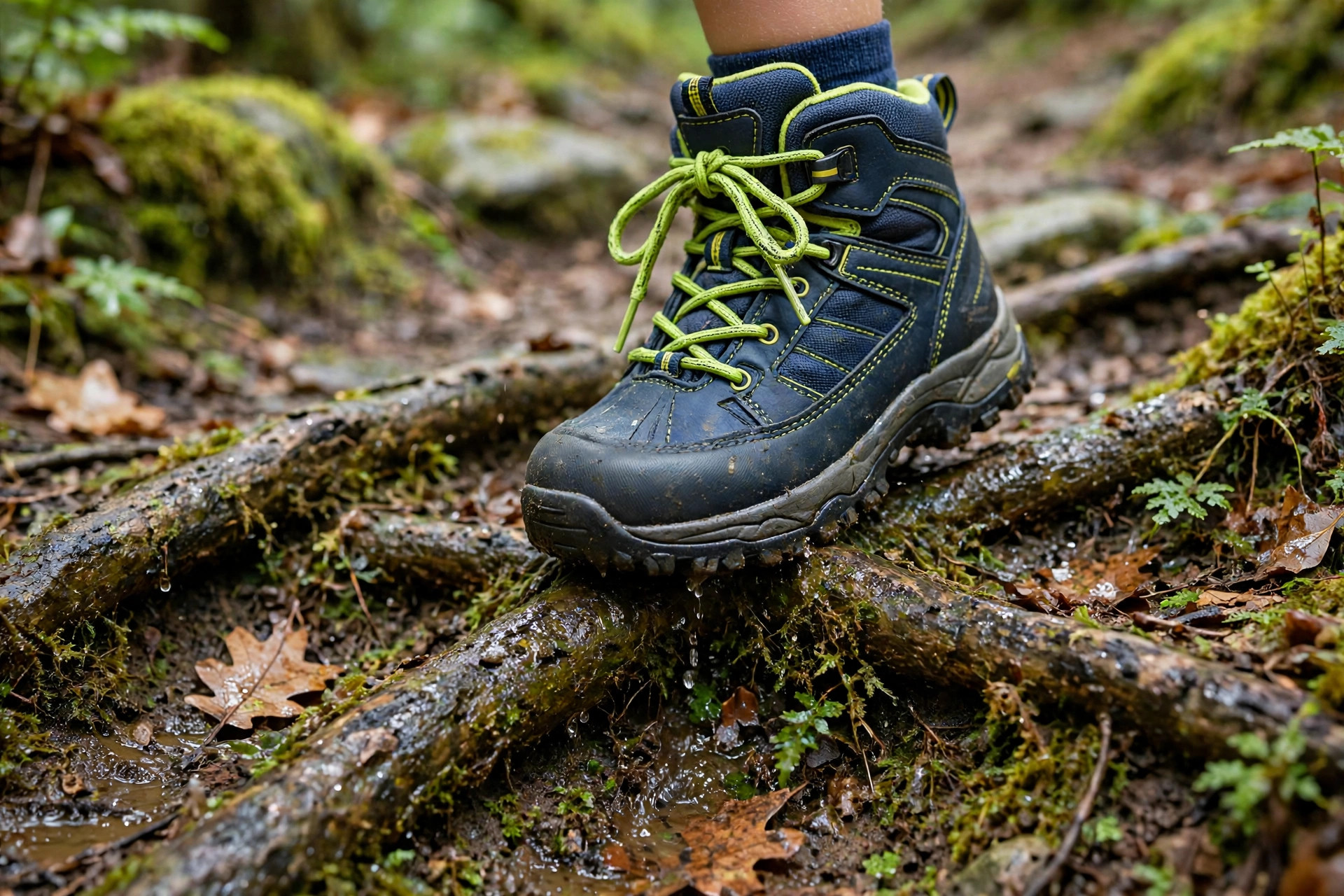
Trekking poles help more than most families expect, even on easy trails, because they give kids two extra points of contact on slippery ground. If you do not own poles, a sturdy stick found at the trailhead does the same job for a child. Teach kids to test a rock or root with one foot before trusting it with their full weight, and to step on dirt or gravel between roots rather than on the roots themselves.
Keeping Morale Up When Everyone Is Damp
Kids take their read on rain from the adults. If you treat it as a problem, it becomes one. Plan a shorter route than you would on a dry day, roughly half to two-thirds of your usual distance, and build in a turnaround point that still feels like a destination: a bridge, a big tree, a creek you can watch run high and fast from a safe bank. Snacks carry more weight on wet hikes. Bring something warm in a thermos if the day is cool, and hand out food before anyone asks, because hungry and damp combine badly. Simple games work too: count waterfalls and dripping culverts, race leaves in a stream from a bridge, or appoint a puddle inspector whose job is to rate each puddle for depth. Our guide to hiking with kids has more pacing and morale ideas that apply in any weather.
The Dry Clothes Rule
Leave a full change of clothes for every child in the car: shirt, pants, underwear, socks, and shoes, plus a towel and a plastic bag for the wet gear. This one habit changes the whole calculation. A wet hike that ends with dry clothes and a warm car is an adventure story by dinner. The same hike ending with a 40-minute drive home in soaked jeans is the last rainy hike that child agrees to for a while. The rest of our hiking checklist covers the full kit, but the car bag is the piece families forget, because it is not carried. Pack it the night before and leave it by the door with the packs.
Frequently Asked Questions
Can kids hike in rain boots?
Rain boots keep feet dry in puddles, but they are a poor choice for most trails. The soles are smooth, the fit is loose, and there is no support, so kids slip more and blister faster. Waterproof hiking shoes with lugged tread work better. Save rain boots for flat park paths and short walks on even ground.
What temperature is too cold for hiking in the rain with kids?
Wet cold is riskier than dry cold, because damp clothing pulls heat from the body faster than dry clothing does. Rain in the 40s or below calls for short hikes close to the car, with full waterproof layers and warm insulation underneath. Watch for a child who stops complaining and goes quiet: that is a warning sign to turn back.
How do I dry kids’ hiking shoes after a rainy hike?
Pull the insoles out, loosen the laces, and stuff the shoes loosely with newspaper or a dry towel to pull moisture out. Let them air-dry at room temperature, and swap the stuffing once if they were soaked. Keep them away from radiators and direct heat, which can crack leather and warp the glues that hold shoes together.
The 10 Essentials for Day Hikes, Updated for Families

How to Choose Kids Hiking Shoes vs Sneakers: When Boots Matter