How to Fix Cornhole Bags That Are Too Slick or Too Sticky8 min read
Few things change a cornhole game faster than bag speed. One set slides off the back of the board on every gentle throw. The next set lands, grabs, and stops dead, short of the hole.
Usually, the bags are not ruined. Slick cornhole bags and sticky cornhole bags can both be fixed, once you know what is causing the speed problem.
This guide covers how to diagnose your set, break it in, wash it safely, and store it so the problem does not come back.
Our top picks, compared:
First, Diagnose: Slick, Sticky, or Just the Board?
Before you fix anything, work out what you have. Throw the same easy shot ten times and watch what happens.
| What You See | Likely Cause | First Fix to Try |
|---|---|---|
| Bags slide off the back edge | Bags too slick, or the board is fast | Break-in tosses and a gentle wash |
| Bags stop as soon as they land | Bags too sticky, dirty, or damp | Clean, dry, and air the bags out |
| One side slides, one side stops | You have dual-sided bags | Flip the bag over, that is by design |
| Every set plays the same way | The board surface, not the bags | Clean the board, check for a glossy finish |
That last row matters. Many modern bags are dual-sided on purpose: a fast fabric on one side, a grippier fabric on the other. If yours are dual-sided, you may have no problem at all, just a feature to learn.
Humidity fools people too. Bags that feel sticky on a muggy evening often play normally on a dry day, so diagnose in normal conditions first.
Why New Bags Are Usually Too Slick
Most new bags arrive fast. The fabric is fresh, smooth, and unbroken, and some sets carry a light factory finish that helps them slide even more. That slickness is usually temporary. As fabric softens and picks up texture from play, bags slow down and get easier to control.
Give a new set a fair break-in period before deciding it is too fast.
If you are shopping instead, our roundup of the best cornhole bags explains speed ratings and fabric types.
How to Fix Slick Cornhole Bags
Work through these fixes in order, gentlest first. Test after each step, because overshooting turns a slick problem into a sticky one.
1. Break Them In With Real Throws
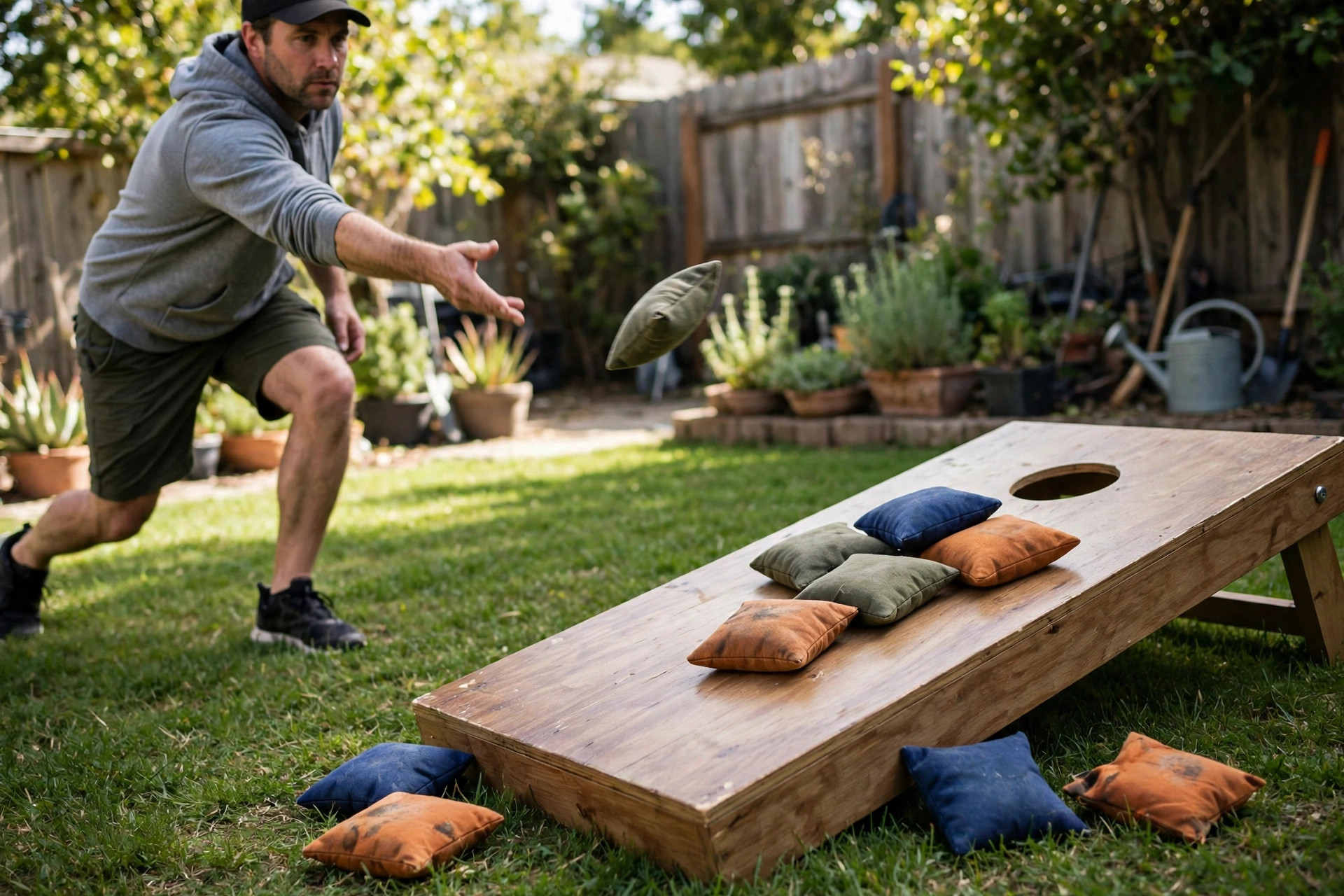
Throw each bag 50 to 100 times onto your board. Real throws soften the fabric the way game play will, and they cost nothing.
2. Wash Them Gently
A gentle wash removes factory finish and softens stiff fabric. The full method is in the washing section below. For slick bags, this is often the biggest single improvement.
3. Tumble Dry on Low
After washing, a short tumble on low heat can soften fabric further. Keep it brief, and skip it if the maker warns against heat.
4. Use the Slow Side, If You Have One
On dual-sided bags, throw with the grippier side down. It is the simplest fix in this guide, and it works instantly.
What not to do: skip sandpaper, files, and scuffing pads. They tear fabric and shorten the life of the bag. Avoid heavy chemicals for the same reason.
How to Fix Sticky Cornhole Bags
Sticky cornhole bags usually have a surface problem, not a fabric problem. Dirt, dust, spilled drinks, and moisture all add grip, and all can be cleaned off.
1. Brush and Wipe Them Down
Start dry. Brush off loose dirt, then wipe each bag with a clean, slightly damp cloth. Let the bags dry fully before you judge the result.
2. Wash Off the Buildup
If wiping is not enough, wash the set using the method below. Ground-in grime is the most common cause of sticky bags that used to play fine.
3. Dry Them Completely
Damp bags grab. Air dry the set until the fill feels dry all the way through, which takes longer than you expect. Never put a damp set back in a closed bag.
4. Play Them Back In
A few dozen throws after cleaning usually restores a normal slide. If the fabric itself is a slow, grippy material, cleaning will not change its nature. Use that set for blocking and short shots instead. Our guide to improving your cornhole technique shows how different shots use different bag speeds.
How to Break In Cornhole Bags the Right Way
Knowing how to break in cornhole bags properly saves you from most speed complaints. A sensible break-in looks like this:
- Inspect the seams and fabric before the first throw.
- Throw each bag for a few sessions, rotating bags so they wear evenly.
- Wash once, gently, if the set still feels stiff and fast.
- Dry fully, then judge the speed over a full game.
Break-in is gradual by design. Each session should change the bags a little, not a lot. A method that promises to transform a set in minutes is probably damaging the fabric.
Fill matters too. Corn fill softens and creates dust as it breaks down, changing the slide over time. Resin fill is more consistent and less affected by moisture.
How to Wash Cornhole Bags Safely
Here is how to wash cornhole bags without wrecking them:
- Check the maker’s care guidance first, and follow it if it differs.
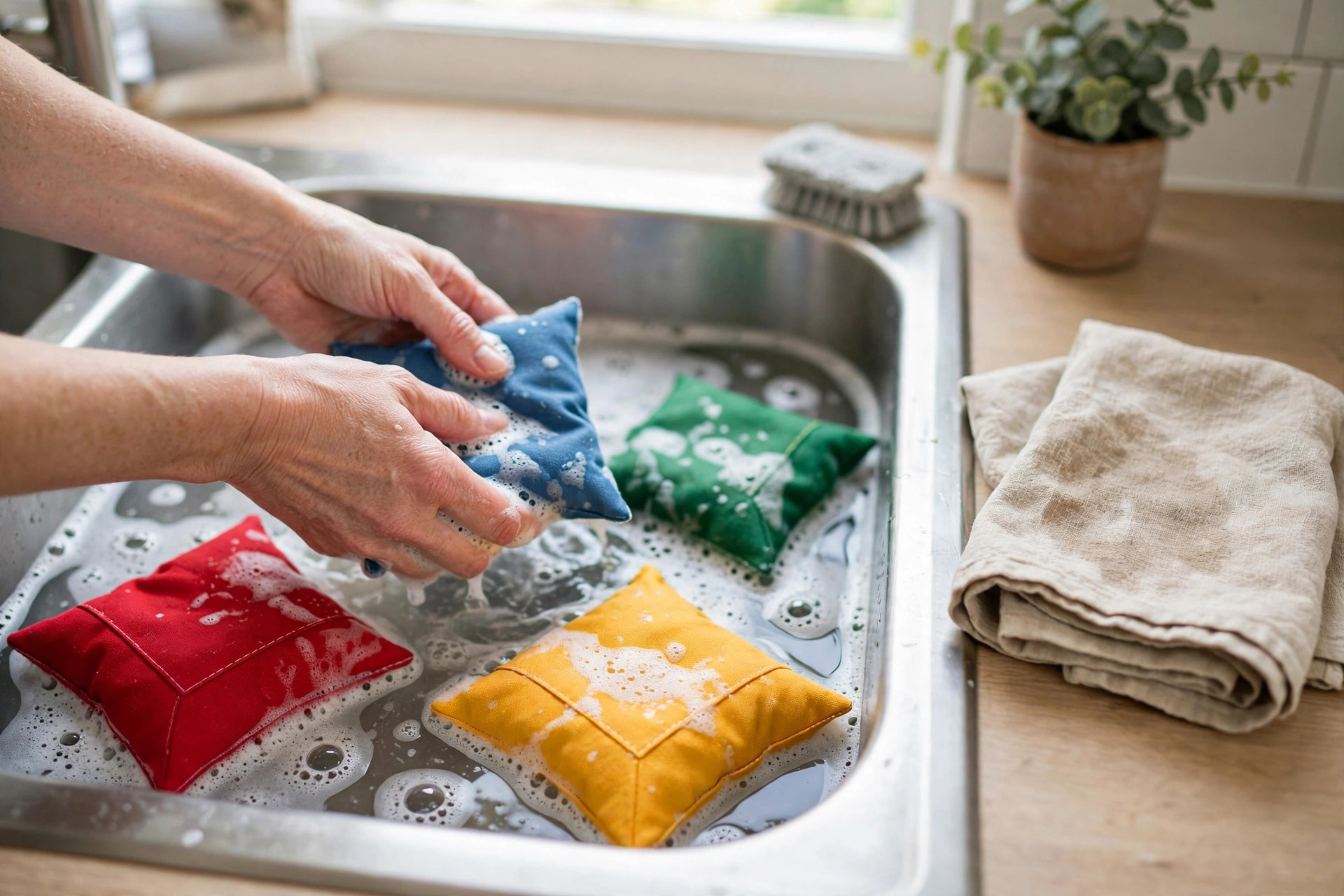
- Hand wash in lukewarm water with a small amount of mild detergent.
- Work the fabric gently by hand, no stiff brushes and no wringing.
- Rinse until the water runs clear.
- Press water out with a towel, then air dry flat, turning the bags now and then.
Skip bleach and strong solvents. Be cautious with fabric softener too: it coats fabric and makes bags slicker, which helps a sticky set and hurts a slick one. Use it only on purpose.
For corn-filled bags, drying matters most, because trapped moisture damages the fill. Give them extra time.
Cornhole Bag Storage That Prevents Speed Problems
Good cornhole bag storage keeps a fixed set fixed. Store bags clean, fully dry, and indoors in a breathable carry bag. A closet beats a garage, where heat, cold, and damp swing with the weather.
Keep bags out of direct sun, which weakens fabric. Do not store them compressed under heavy gear, or sealed up with moisture still in the fill.
Before the first game of the season, air the set out and throw a few test bags. If your family plays together, our chart for cornhole distance for kids by age helps you set a fair game for everyone.
When to Replace Your Bags Instead
Some bags cannot be fixed, and knowing when to stop saves money and frustration. Replace a bag, or the set, when you see:
- split seams, holes, or fill leaking out;
- a bag noticeably lighter than its teammates;
- flat spots, lumps, or fill that will not even out;
- fabric worn thin, shiny, or torn;
- corn fill that smells musty or was stored wet.
Regulation bags weigh about 16 ounces each and measure about 6 x 6 inches. A kitchen scale tells you more than guesswork: if one bag is well under weight, the set will never play evenly, however you wash it.
Frequently Asked Questions
How do you make slick cornhole bags slower?
Break them in first, with 50 to 100 real throws per bag. If they are still too fast, wash them gently in lukewarm water with mild detergent and air dry them fully. On dual-sided bags, throw with the grippier side down. Avoid sandpaper and scuffing, which damage fabric.
Why are my cornhole bags so sticky?
The usual causes are dirt, dust, spilled drinks, and moisture in the fabric or fill. Brush the bags off, wipe them with a damp cloth, and let them dry completely. If that is not enough, wash the set gently. Bags also feel stickier on humid days, so judge them in normal conditions.
How do you break in new cornhole bags?
Throw them. Several sessions of real throws soften the fabric gradually and evenly. Rotate the bags so they wear at the same rate. If the set still feels stiff and fast after a few sessions, one gentle wash usually finishes the job. Skip aggressive shortcuts that tear or coat the fabric.
Can you wash cornhole bags in a washing machine?
Hand washing is the safer default, because machine agitation can stress seams and shift fill. Some makers allow a gentle machine cycle, so check your set’s care guidance first and follow it if it differs. Never use bleach, rinse soap out fully, and air dry the bags until the fill is dry throughout.
How long do cornhole bags last?
It depends on fill, fabric, surface, and storage. A resin-filled set stored dry indoors will generally outlast a corn-filled set, because corn breaks down and is sensitive to moisture. Inspect seams and weight a few times a season, and replace bags with holes, leaks, or a clear weight loss.
Final Thoughts
Diagnose first, then use the gentlest fix that works: throws, cleaning, a careful wash, and proper drying. Most slick cornhole bags and sticky sets are a weekend away from playing properly again, and stored dry indoors, they stay that way.

8 Best Cornhole Covers and Carrying Cases

Cornhole Drinking Games for Your Next Tailgate Party