
Cornhole Distance for Kids by Age: The Chart Parents Actually Need7 min read
Set up cornhole at the full adult distance for a 6-year-old, and you will see the problem in about thirty seconds. The bags land halfway there. Your child throws harder, the form falls apart, and the game stops being fun. The fix is simple: use the right cornhole distance for kids, and move the boards closer as your child grows.
Below is a cornhole distance by age chart you can actually use, plus bag weights, setup steps, and scoring tweaks for mixed-age games.
Our top picks, compared:
Cornhole Distance for Kids: The Age Chart
All distances below are measured from the front edge of one board to the front edge of the other. That is how regulation distance is measured too, so the numbers stay consistent as kids grow.
| Age | Board Distance (front edge to front edge) | Bag Tip |
|---|---|---|
| 4-5 years | 12 feet | Lightweight kids bags, about 8-10 oz, smaller 4-5 inch bags are easier to grip |
| 6-7 years | 15 feet | Lightweight bags, about 10-12 oz, or regulation bags if your child is strong enough |
| 8-9 years | 18 feet | Regulation 16 oz bags work for most kids, lighter bags are fine for smaller kids |
| 10-12 years | 21 feet | Regulation 6 x 6 inch, 16 oz bags |
| 13 years and up | 24 feet, then 27 feet | Regulation bags, move to full distance once throws reach easily |
| Teens and adults (regulation) | 27 feet | Regulation 6 x 6 inch, 16 oz bags |
Start at the short end of each range, and stay there while throws look smooth. Success builds interest far better than distance does.
Why You See 12 Feet, 15 Feet, and 21 Feet Online
This is where parents get confused, because the junior cornhole distance advice online seems to contradict itself. Some guides say 12 to 15 feet for kids. Others say 21 feet for junior players. Both can be right, because they are talking about different ages.
The 12 to 15 foot range is a backyard starting distance for young kids, roughly ages 4 to 7, whose goal is simply reaching the board with a normal underhand throw.
The 21 foot figure shows up in organized junior play. It suits roughly ages 10 to 12, who have the strength to throw a regulation bag that far.
So there is no single kids distance. Use 12 to 15 feet for little kids, 21 feet for older juniors, and treat any one-size answer with suspicion. When you work out how far apart are cornhole boards for kids in your yard, age and arm strength matter more than a league rule.
How Regulation Distance Works for Adults
For adult regulation play, the boards sit 27 feet apart, front edge to front edge. Players throw from beside their board, and their foot cannot cross that front edge on the throw. It is the foul line. Kids do not need the full rulebook, but copying the real setup helps: boards facing each other, throwers beside the board, and the same measurement every time. Then, when your child graduates to 27 feet, nothing else changes.
If you need the full adult rules, our guide to cornhole rules and scoring covers fouls, cancellation scoring, and winning margins in detail.
How to Set Up a Kids Cornhole Setup in 5 Steps
A good kids cornhole setup takes five minutes and saves a lot of frustration.
Step 1: Measure From the Front Edges
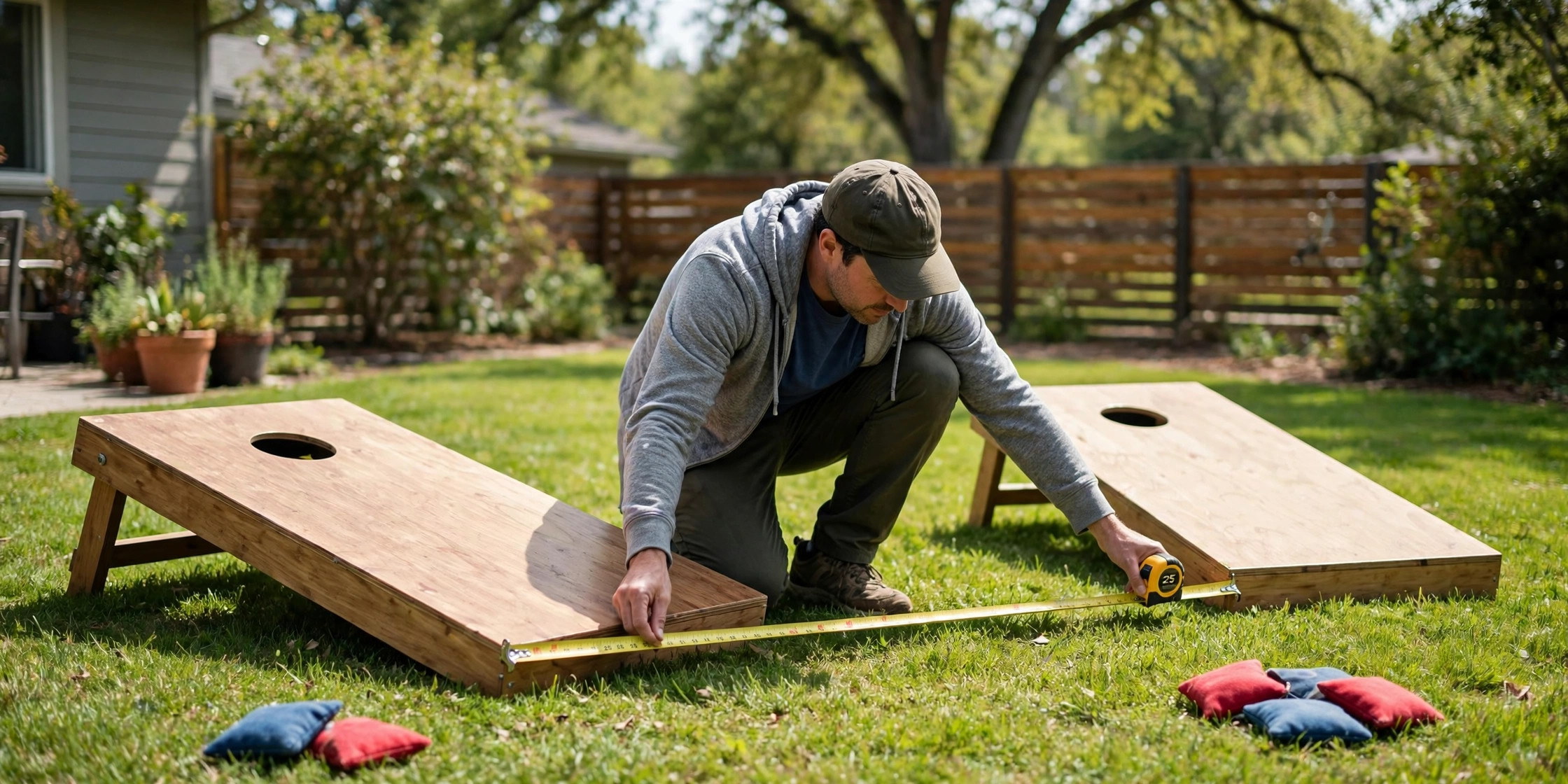
Measure front edge to front edge with a tape measure. Guessing with paces is how a 15 foot setup quietly becomes 19 feet.
Step 2: Give Young Kids a Closer Throwing Spot
For ages 4 to 5, you can also let the child stand a step or two in front of their board instead of shortening the boards further. Pick one method, so the distance stays consistent.
Step 3: Match the Bag to the Child
A regulation bag weighs about a pound, a lot for a small hand. Lighter, slightly smaller kids bags let young players use a smooth throw instead of a two-handed heave.
Step 4: Level the Ground as Best You Can
A board on a slope plays unfairly, and kids notice first. A flat driveway, patio, or patch of lawn works best.
Step 5: Mark the Spots
Mark the board positions with chalk, tape, or small cones. Kids can then set the game up themselves next time, which is half the point.
Signs the Distance Is Too Far or Too Close
You do not need a chart taped to the fence. Your child’s throws will tell you if the cornhole distance for kids is set right.
Move the boards closer if:
- most bags land short of the board, even with a good effort
- your child starts throwing overhand, jumping, or using two hands
- games end with almost no points scored by anyone
Move the boards farther apart if:
- nearly every bag lands on the board or in the hole
- your child is lobbing soft, lazy throws and still scoring easily
- games finish in just a few rounds
Change the distance in 2 or 3 foot steps, not all at once. A small move keeps confidence intact while the challenge quietly grows.
Playing With Mixed Ages Without Ruining the Game
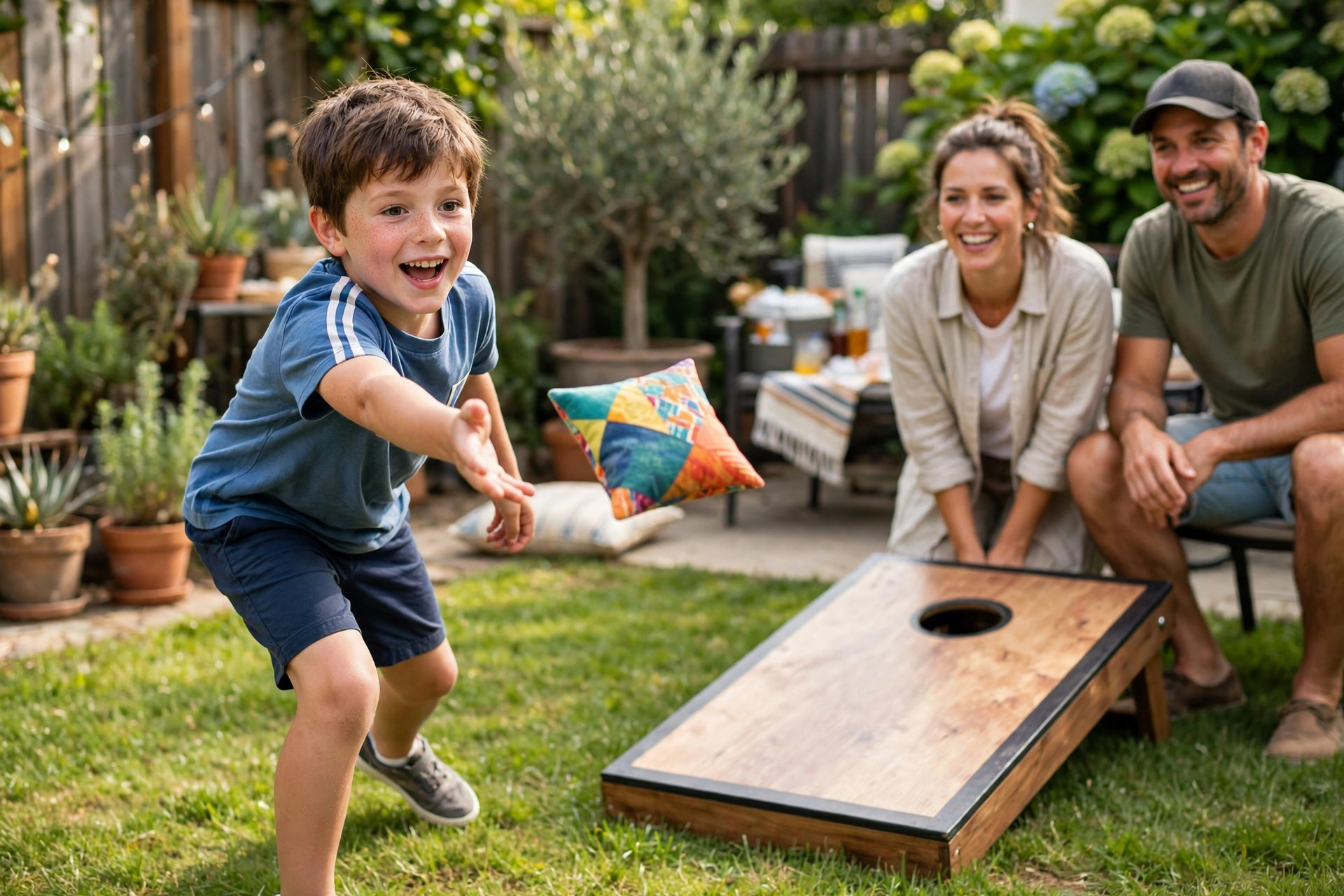
Family games usually include a 7-year-old, a teenager, and at least one competitive adult. One distance will not suit everyone, and it does not have to. Let each player throw from their own age distance. Boards stay put for the strongest player, and younger kids stand closer to the target board when they throw. It is the same handicap idea golf uses, and nobody feels singled out.
You can also adjust scoring for the youngest players: count a bag on the board as 2 points instead of 1 for kids under 8. Pick one house rule, write it down, and keep it all summer. If bags are part of the problem, speed matters too. Our guide on how to fix cornhole bags that are too slick or too sticky shows how to slow down or speed up a set you already own.
Choosing Boards and Bags for Kids
You do not need a separate kids set for most families. A regulation set works fine once you shorten the distance, and kids grow into it. Board size and bag weight are still worth a look before you buy.
Our roundup of the best cornhole boards covers regulation and smaller tailgate sizes, a smart middle step for ages 6 to 9.
Keep these basics in mind:
- Regulation boards are 2 x 4 feet, with the front edge 2.5 to 4 inches high.
- Lighter bags help kids under 8 far more than a smaller board does.
- Weather-resistant bags last longer if your set lives outside.
Frequently Asked Questions
What is the cornhole distance for kids ages 4 to 6?
Start at 12 feet between the front edges of the boards for ages 4 to 5, and about 15 feet for most 6 and 7 year olds. Use lightweight bags under the regulation 16 ounces, watch the throwing form, and shorten the distance if bags keep landing well short.
What is the junior cornhole distance in organized play?
Many junior formats use 21 feet for older kids, roughly ages 10 to 12, measured front edge to front edge. That is why you see 21 feet listed online so often. It is a junior competition distance, not a starting distance for a 5 or 6 year old in the backyard.
How far apart are cornhole boards for adults?
Regulation adult distance is 27 feet from the front edge of one board to the front edge of the other. Players throw from beside their own board, and a foot crossing that front edge on release is a foul in formal play. Backyard games often relax the foul rule.
Can kids use regulation cornhole bags?
Older kids usually can. A regulation bag is 6 x 6 inches and weighs about 16 ounces, which suits most kids from about age 8 to 10 up. Younger or smaller kids throw better with lighter 8 to 12 ounce bags, because they can use a smooth underhand motion.
When should my child move up to the next distance?
Move up in 2 or 3 foot steps when most throws reach the board comfortably and scoring feels easy. Good signs are a relaxed underhand throw, bags landing on the board most rounds, and games ending quickly. There is no deadline, so let confidence, not birthdays, decide.
Final Thoughts
Pick the cornhole distance for kids from the chart, measure it properly, and match the bag to the child. Start short, let them score, and add a few feet at a time as their throw grows.

7 Best Cornhole Bags for Your Next Tailgate Party

How to Fix Cornhole Bags That Are Too Slick or Too Sticky
