
Shuffleboard Wax Speed Chart: Which Speed Is Right for Your Table Length?9 min read
If your pucks either die before the foul line or fly off the end of the table, the problem is often not your shot. It is your wax. This shuffleboard wax speed chart matches wax speed to table length and player level, so you can stop guessing.
Shuffleboard wax, usually a dry powder despite the name, controls how fast and how far a puck glides. Too fast, and every shot feels wild. Too slow, and you push so hard that accuracy disappears.
The rule is simple: longer tables need faster wax, and better players prefer a faster surface than beginners do.
Our top picks, compared:
Shuffleboard Wax Speed Chart by Table Length
Start in the middle of the range for your table, then adjust after a few games.
| Table Length | Beginner / Family Play | Intermediate Players | Advanced / Competitive Play |
|---|---|---|---|
| 9 ft | Slow | Slow to medium | Medium |
| 12 ft | Slow to medium | Medium | Medium to fast |
| 14 ft | Medium | Medium to fast | Fast |
| 16 ft | Medium to fast | Fast | Fast to very fast |
| 22 ft | Fast | Fast to very fast | Very fast |
Table length moves the recommendation more than skill does. A beginner on a 22 foot table still needs fast wax, because a slow puck will not travel far enough. A skilled player on a 9 foot table needs restraint, because there is nowhere for a fast puck to go. A shuffleboard wax speed chart starts with the tape measure, not your ego.
Shuffleboard Wax Speeds Explained
Manufacturers do not all use one universal scale. Some label products slow, medium, and fast, while others use numbers, colors, or a rating system of their own.
How to Read a Shuffleboard Powder Speed Rating
Treat any shuffleboard powder speed rating as a ranking inside that brand, not a score you can compare across brands. A medium from one maker may play like a fast from another. What stays consistent is the order: slower products give more grip and control, faster products give more glide and distance. Pick your place in that maker’s range using the chart, then fine-tune with real shots. Our guide to the best shuffleboard wax and powders compares the main types and brands in their own ranges.
Powder, Spray, and Dressing Are Not the Same Thing
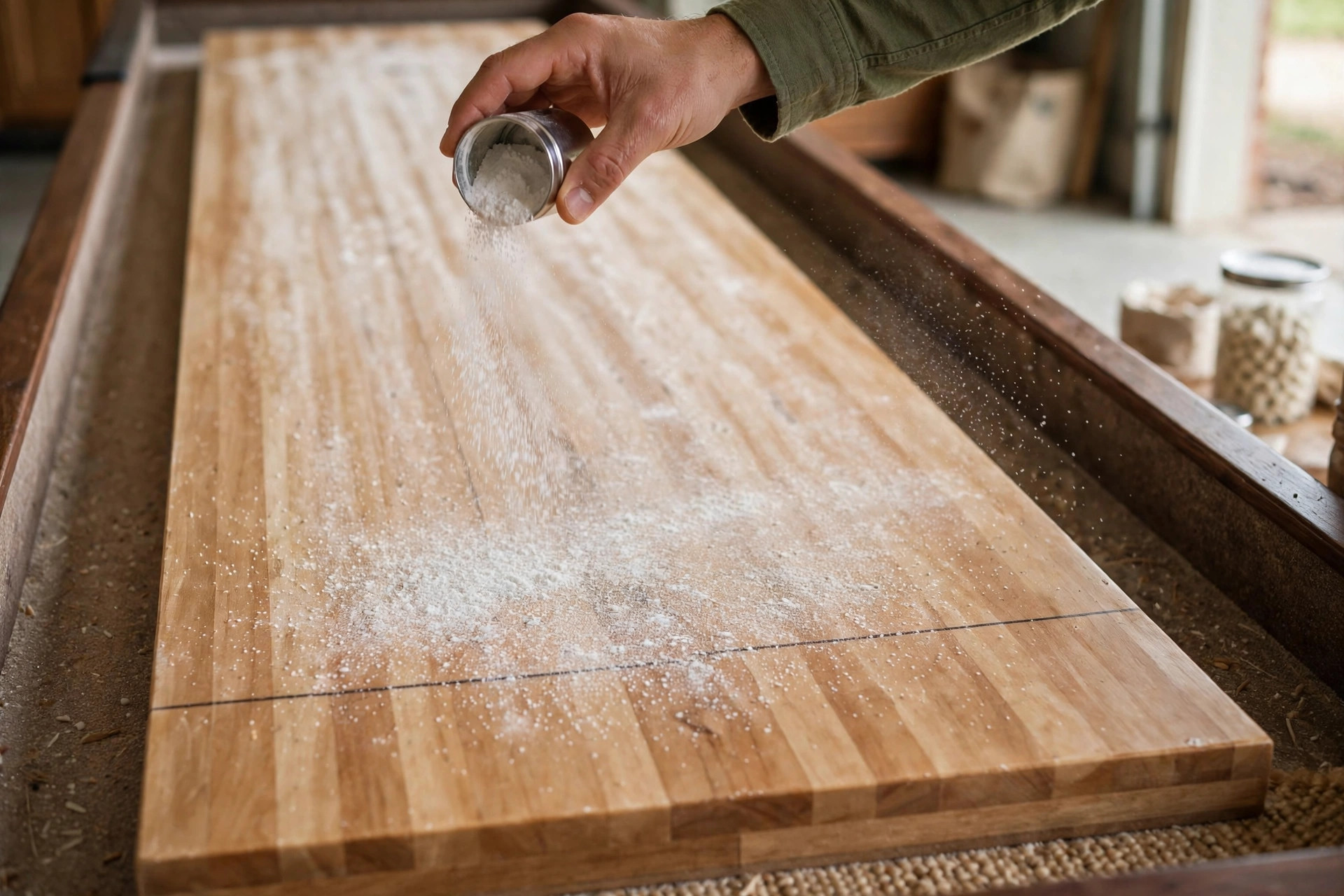
Most home players mean the dry powder sprinkled on the playfield when they say wax. It creates the fast surface pucks glide on, and it is the product this chart is about. Silicone spray and playfield dressing are surface treatments used between powder applications. They condition the surface, but do not replace powder for speed control. Our shuffleboard wax and powder FAQ answers the common application and cleanup questions.
How Table Length Changes the Right Speed
A puck has to travel the full length, still have speed left to knock an opponent’s puck, and then stop in a scoring zone only a few inches deep.
Short Tables: 9 and 12 Feet
On a short table, distance is easy and stopping is hard. Slower wax gives beginners a forgiving surface where a normal slide reaches the scoring area without sailing off the end. This is why the best shuffleboard wax for a 12 foot table is usually a medium for mixed groups: slow feels sticky for adults, fast frustrates kids and guests, and medium splits the difference.
Long Tables: 16 and 22 Feet
On a long table, distance is the problem. Friction has twice as long to slow the puck, so you need a faster product just to play a normal game. Very fast wax rewards a soft, practiced touch, and new players should expect a few pucks on the floor at first.
How to Choose Shuffleboard Wax Speed for Your Players
Length sets the range, and your players pick the spot inside it. Here is how to choose shuffleboard wax speed for the group that uses your table most: Mostly kids, guests, and casual family games: choose the slower end of your table’s range. A regular group that plays every week: choose the middle of the range. Experienced players who like knock-off shots and hangers: choose the faster end. One table, very mixed group: choose medium, and keep a slower option for family nights.
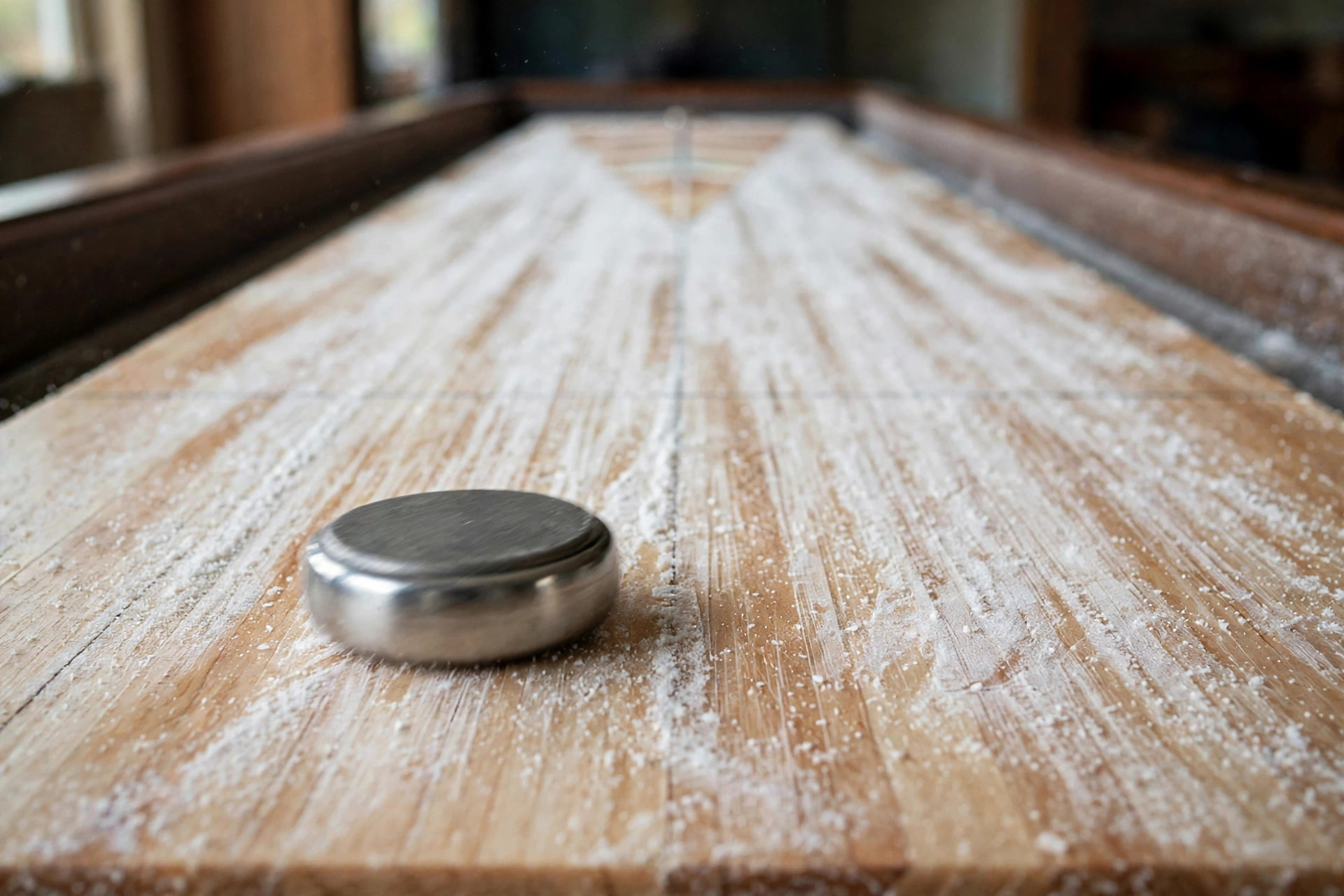
Signs Your Current Wax Speed Is Wrong
Watch for these signs before you blame your table or your technique:
- Most shots fall short of the foul line: your wax is too slow for the table length.
- Most shots slide off the back on gentle slides: your wax is too fast.
- Good shots stop well at one end but not the other: check leveling before changing wax.
- Play feels right for ten minutes, then slows: your powder is worn, dirty, or too thin.
- One player dominates after a wax change: the new speed suits one touch far more than the rest.
Wax cannot fix a tilted table. If drift and dead spots are your real problem, work through our guide to leveling a shuffleboard table and using climate adjusters first.
Applying Wax So the Speed You Bought Is the Speed You Get
Even the right product plays wrong when it is applied badly:
- Start with a clean playfield, old powder and dust change the speed.
- Apply a light, even layer, a heavy pile makes early shots unpredictable.
- Spread it the full width, thin edges play slower and pull pucks off line.
- Let a few test pucks run before a real game, they finish spreading the surface.
- Refresh during long sessions, a quick top-up beats one huge application.
Store powder dry and sealed, because damp powder clumps and plays slower than its rating.
Our Recommendation
Keep it simple. Owners of 9 and 12 foot tables should start slow-to-medium or medium, owners of 14 and 16 foot tables at medium-to-fast, and owners of a 22 foot table fast. Buy one product in the middle of your range, play several games, and only then step one speed up or down.
Frequently Asked Questions
What do shuffleboard wax speeds explained in numbers actually mean?
Shuffleboard wax speeds explained simply: a rating, whether a word, number, or color, ranks products from slowest to fastest within that one brand. There is no single industry scale, so a medium from one maker can play faster than a medium from another. Compare inside a brand, then test.
What is the best shuffleboard wax for a 12 foot table?
For most groups, the best shuffleboard wax for a 12 foot table is a medium speed product. It gives adults enough glide for knock-off shots while staying manageable for kids and guests. Mostly beginners should start slow-to-medium, while experienced regular players will prefer medium-to-fast.
Can I mix two shuffleboard wax speeds together?
You can, and many home players do it to land between two ratings. Mix a small batch thoroughly instead of layering one speed over the other on the table, because layers play unevenly. Test the mix with practice shots first, and note the ratio so you can repeat it.
How often should I replace shuffleboard wax during a game?
For casual home play, refresh the surface every few games, or whenever shots start falling noticeably shorter than at the start. A light top-up in a long session is normal. If you are refreshing constantly, the powder may be worn out, damp, or too slow for your table.
Why does my shuffleboard wax speed chart choice still feel too fast?
First, check how much you applied, because a heavy fresh layer plays faster than a thin settled one. Next, check that the table is level and the playfield slightly concave, since shape problems feel like speed problems. If both are right, step one speed slower.
Final Thoughts
Match the wax to the table first and the players second, start in the middle of that range, and change one step at a time.

Shuffleboard Table Buying Guide
Table Shuffleboard Bowling 101 – All You Need to Know
