
Rain, Humidity and Cornhole Bags: How Weather Changes Your Throw8 min read
The boards are the same and the bags are the same, but by the third game of a humid evening nothing slides the way it did at six o’clock. That is how humidity affects cornhole bags in practice: moisture creeps into the fabric and fill, bags gain weight and grip, and dialed-in throws start dying halfway up the board. Rain, dew, cold snaps and hot sun all change the game in different ways; once you know what a condition does, you can adjust on purpose instead of guessing.
A sealed board finish sheds moisture instead of drinking it in, and our roundup of the best cornhole boards explains which constructions hold up best outdoors.
Our top picks, compared:
How Humidity Affects Cornhole Bags: Slower, Stickier, Heavier
Corn-filled bags absorb moisture like a sponge: the fill swells slightly, the fabric softens, and the bag gets heavier and grippier as the evening goes on. Resin-filled bags resist the soak far better, but surface moisture makes the fabric tacky and a damp bag picks up grit, adding grip. The board changes too: a thin film of moisture acts like a brake, so slides shorten. If your bags stay gummy long after the weather clears, our guide on how to fix cornhole bags that are too slick or too sticky walks through the fixes.
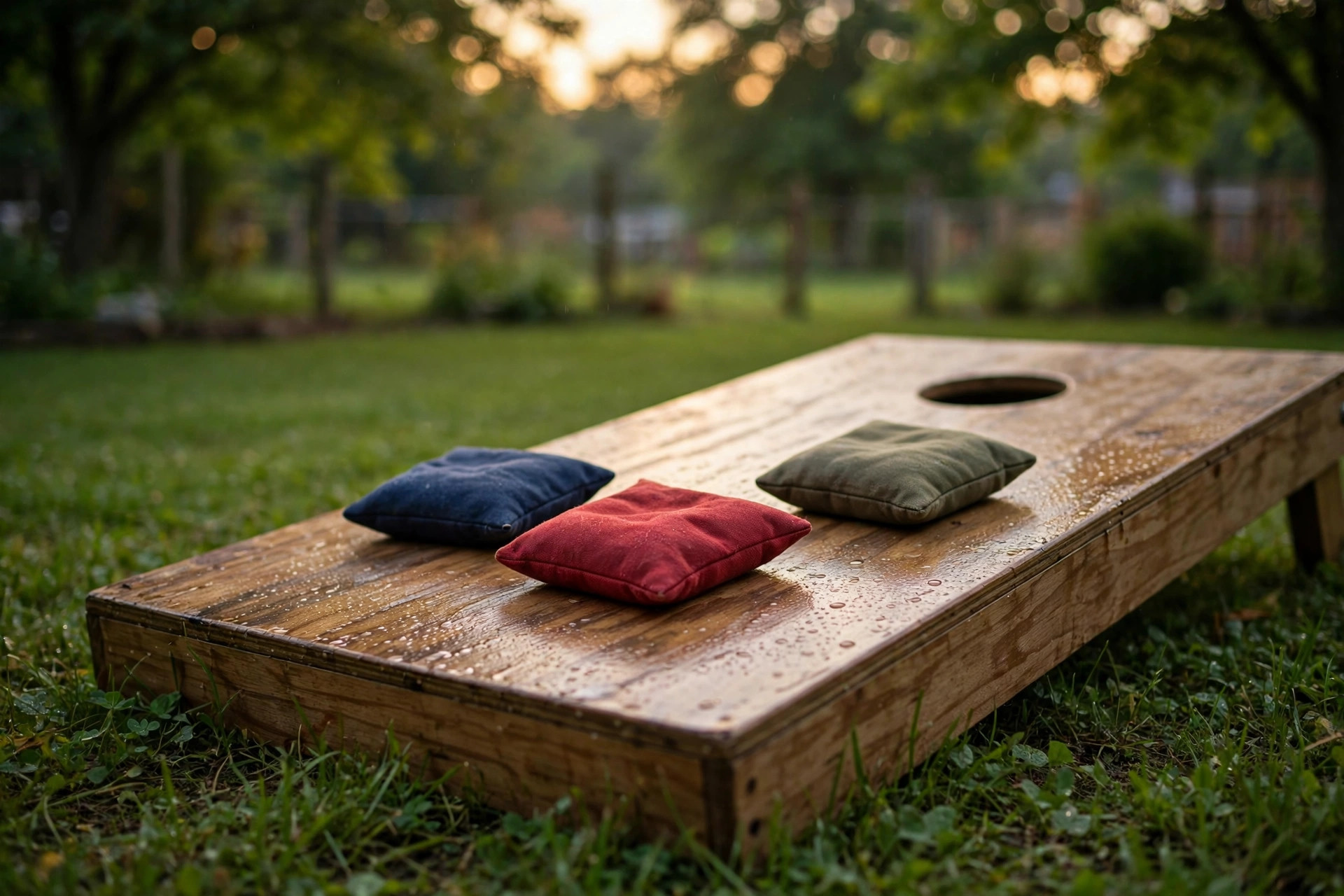
Rain and Wet Cornhole Bags: When to Play and When to Pause
A light drizzle is playable if everyone agrees: wet bags fly shorter and land deader, but the game stays fair. Wipe the board and bags between rounds. Steady rain is different: bags soak through, weights drift unevenly, and the honest move is to pause and cover the boards. Lightning ends the discussion entirely.
Leaving Cornhole Bags in the Rain Between Games
The worst rain damage happens when bags get left sitting on a wet board during a break or overnight. Corn fill that stays wet can mildew, and slow-drying fabric weakens. Bring bags under cover every break, even if the boards stay out.
Dew on Cornhole Boards: The Evening Slowdown
Dew is the sneak condition: the board slowly glazes over as the temperature drops, forming first in shaded spots and low areas, so one end can play slower than the other. Slides that reached the hole at sunset start stopping a foot short. Shine a phone light across the surface at a low angle and the moisture shows as a dull sheen. Wipe the board with a dry towel every few rounds and expect to keep wiping.
Cold Mornings and Hot Sun: The Other Extremes
Cold stiffens fabric and fill, and bags thud to a stop; cold bags also feel harder in the hand, changing grip and release. Hot sun dries bags out fast: a set left baking can go from tacky to slick in half an hour, and sun-dried bags play faster until touch shots sail off the back. The pattern: moisture and cold slow bags down; heat and dry air speed them up.
The Cornhole Weather Cheat Sheet
Here is the whole guide on one table.
| Weather Condition | What Happens to Bags and Boards | How to Adjust |
|---|---|---|
| Dry and warm | Bags slide true and the board plays fast and predictable | Play your normal game; this is the baseline |
| Humid evening | Bags absorb moisture, gain grip and a little weight; slides shorten | Add arc and a touch more force; use the slick side down for long slides |
| Light rain | Bags get heavy and sticky; the board slows unevenly | Wipe bags and board between rounds; favor airmail shots over long slides |
| Heavy dew | Board surface turns grabby, worse in shaded spots | Wipe the board often; aim deeper and let the bag land softer and shorter |
| Cold day | Fabric and fill stiffen; bags feel dead and stop quickly | Warm bags in your hands between rounds; add pace and height to the throw |
How to Adjust Your Throw for the Conditions
Start with arc: a higher throw spends less time sliding on a slow, wet board. Next, choose your bag side on purpose: on a wet or dewy board throw slick side down so the bag still travels; on a hot, dry, fast board, sticky side down gives you the brake near the hole. Finally, rethink shot selection: long slides get unreliable, while airmail shots barely touch the board; our breakdown of the four cornhole shots every player should know shows when each shot earns its place. Give yourself a few warm-up tosses after any weather change.
Protecting Your Bags During a Wet Game
Keep a dry towel with the bags: a quick wipe before each turn keeps weights consistent. Rotate a spare set if you have one, swapping every few rounds. Cover the boards during breaks too; boards with a sound, sealed finish shed water far better than worn ones, which is one reason our best cornhole boards roundup weighs finish quality for outdoor sets.
How to Dry Cornhole Bags After a Wet Game
Spread bags in a single layer with air on all sides, indoors or in a shaded breezy spot; a small fan speeds things up.
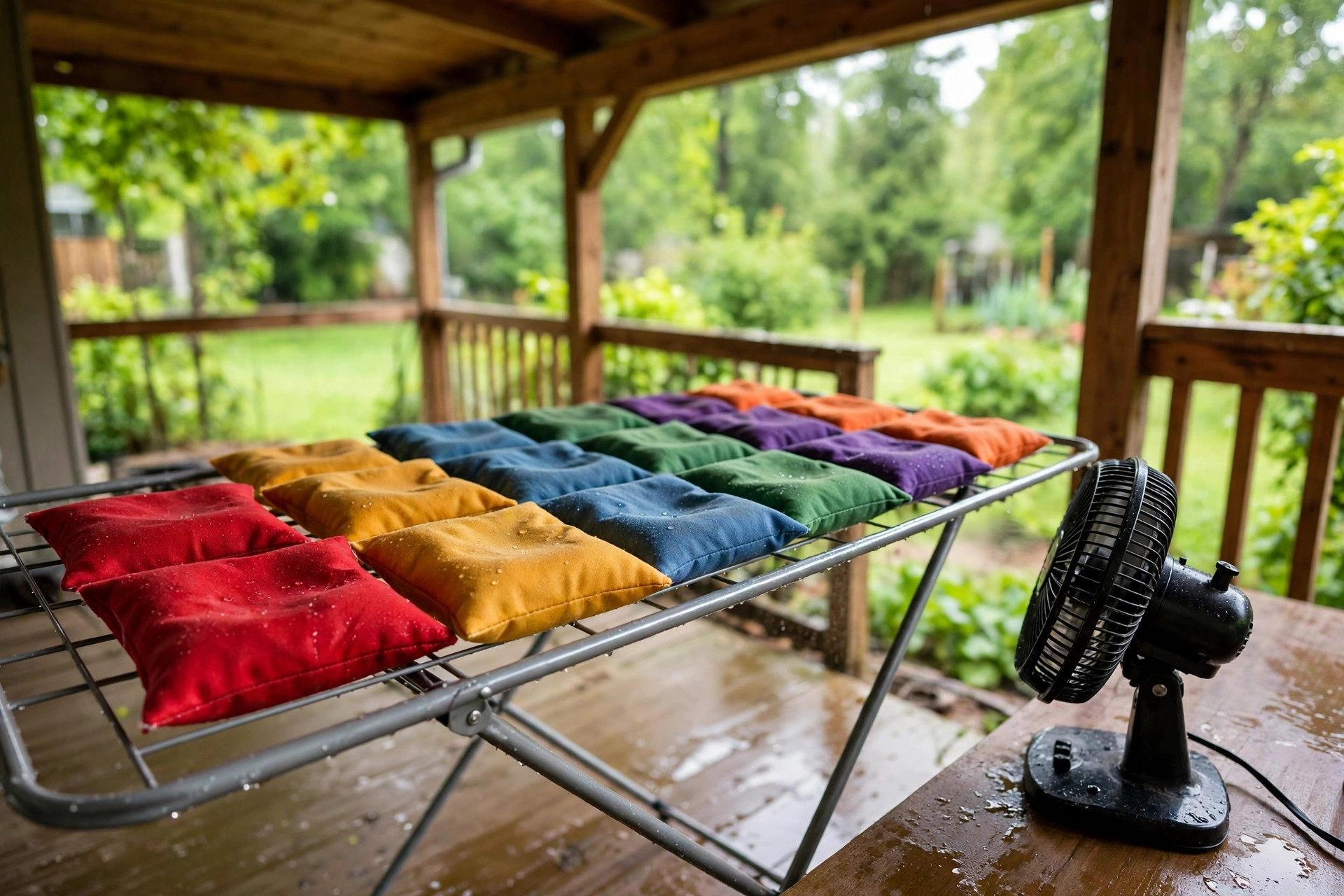
Never seal wet bags in a tote or car trunk: trapped moisture is how corn-filled bags mildew. If bags got soaked through, give them a full day of air before storing. Skip high dryer heat, which can warp resin fill and stress seams; patient air drying never damages a set.
Frequently Asked Questions
Can you play cornhole in the rain?
Light drizzle is fine if both sides agree and you wipe bags and boards between rounds. Steady rain soaks bags unevenly, so pausing is the better call. Any thunder or lightning ends the game immediately.
Do wet cornhole bags weigh more than dry ones?
Yes. Fabric and fill both hold water, and corn fill absorbs the most, so a soaked set feels heavier. Throws come up short, releases feel sluggish, and the two sets rarely gain weight at the same rate.
How do you dry cornhole bags after a wet game?
Spread them in a single layer with air moving around them, indoors or in shade, and add a fan if you can. Give soaked bags a full day before storing. Avoid sealing wet bags in a tote and avoid high dryer heat.
Will humidity permanently damage cornhole bags?
Usually not. A humid evening changes how bags play for a few hours, and normal drying restores them. The real damage comes from storage: bags put away wet can mildew, smell, and weaken at the seams.
Which side of the bag should you throw on a wet board?
Throw the slick side down on a wet or dewy board so the bag keeps sliding instead of grabbing early. Save the sticky side for fast, dry boards, where you want the bag to brake near the hole.
Final Thoughts
Weather is part of outdoor cornhole, not an interruption of it. Once you understand how humidity affects cornhole bags, the adjustments become small and automatic: a little more arc, the right side down, a towel kept handy, and a proper dry afterward.

6 Tips to Improve Your Cornhole Technique

A Handy 101 Guide to Cornhole Rules
