
Carrom Terms Glossary: 25 Words Every New Player Hears9 min read
Sit down at a carrom board for the first time and the game itself makes sense within minutes. The language takes longer. Players talk about covering the queen, paying a due, and avoiding a whitewash, and new players nod along while quietly guessing.
Most carrom terms are simple once someone translates them, and that is what this glossary does.
You do not need to memorize all 25 words before your first game. Learn the handful in the first rows of the table and the rest will click into place as you hear them used.
By your second or third game, you will be using them yourself.
A smooth, flat board also makes the vocabulary easier to learn, because shots behave the way the words describe. If you are still shopping, our roundup of the best carrom boards covers the boards that play true enough for these terms to mean something.
Our top picks, compared:
How to Use This Glossary
Read the table top to bottom once, then keep it nearby for your first few games. The terms are grouped in the order you will meet them: the pieces and the board first, then the shots, then the scoring and penalty words that decide who actually won. If you have not played at all yet, start with our step-by-step guide on how to play carrom for setup and turn order, then come back here when the table talk starts flying over your head.
Carrom Terms Glossary: The Full List of 25
Here are the 25 carrom terms that cover nearly everything said during a normal game, each with a plain meaning and the moment you will hear it.
| Term | Meaning |
|---|---|
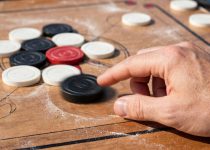
| Striker | The larger, heavier piece you flick with your finger to hit the coins toward the pockets |
| Carrom men | The 19 smaller wooden coins you shoot at: nine white, nine black, and the red queen |
| Queen | The red coin placed in the centre at the start; worth bonus points if you pocket and cover her |
| Cover | Pocketing one of your own coins on the shot right after pocketing the queen, which makes her count |
| Break | The very first shot of a board, taken at the arranged coins in the centre circle |
| Stroke | One single flick of the striker; each turn is made of one or more strokes |
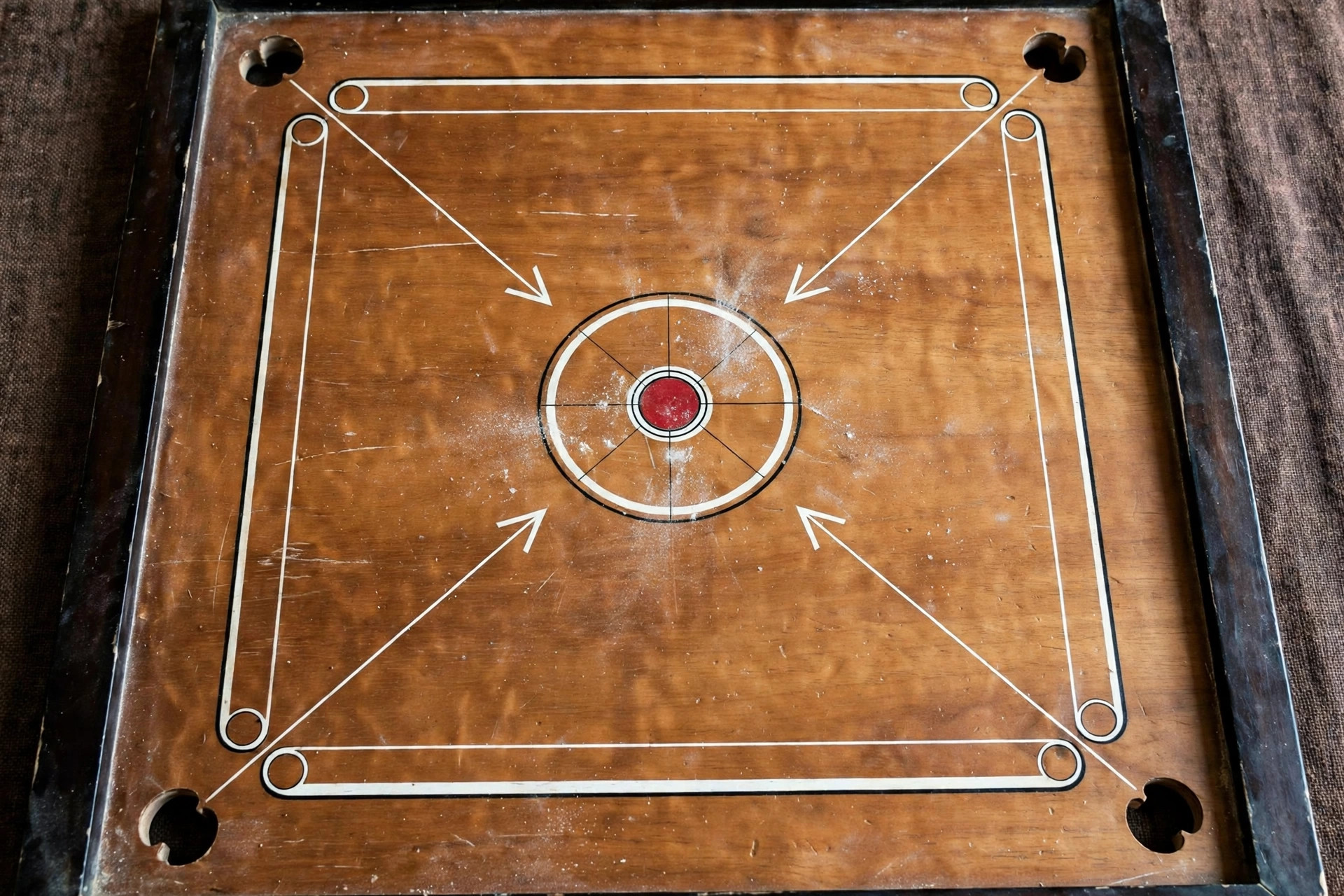
| Baseline | The two parallel lines at your end of the board, between which the striker is placed |
| Base circles | The circles at each end of the baseline; the striker must cover one fully or not touch it |
| Arrows | The diagonal lines pointing toward the pockets; your hand and elbow must stay behind them |
| Centre circle | The circle in the middle of the board where all the coins are arranged before the break |
| One of the four round holes in the corners of the board that coins and strikers fall into | |
| Frame | The raised wooden border around the playing surface that coins rebound off during shots |
| Net | The small net under each pocket that catches pocketed coins so they do not roll away |
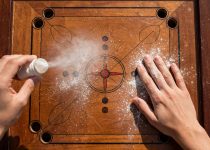
| Powder | Fine boric acid powder spread on the surface to reduce friction and keep shots gliding |
| Foul | Any illegal move, such as pocketing the striker, touching a coin, or crossing the arrows |
| Due | The penalty for a foul: one of your pocketed coins is placed back on the centre spot |
| Touching | Accidentally touching a coin, the striker, or the board with your hand or clothing while shooting |
| Board | One complete game, from the break until the last coin is pocketed and the score is settled |
| Whitewash | Winning a board while your opponent pockets nothing at all; a shutout win |
| Slam | Pocketing all nine of your coins, with the queen covered, in your very first turn of a board |
| Rebound | A shot played off the frame so the striker reaches a coin that is blocked from a direct line |
| Cut | Striking a coin off-centre so it leaves at an angle instead of travelling straight ahead |
| Double | Hitting one of your coins into a second one so the second coin drops into a pocket |
| Thumb shot | A backwards shot flicked with the thumb, used for coins sitting behind your own baseline |
| Last coin | Your final remaining coin; pocketing it before the queen is covered is a foul in strict rules |
The Words in Groups: Setup, Shooting and Scoring
The full list is easier to hold in your head when you split it by the moment each word shows up. Three groups cover the whole game.
Carrom Board Parts: Baseline, Arrows and Pockets
Before anyone shoots, you hear the geography words: baseline, base circles, arrows, centre circle, frame, and pockets. These carrom board parts are printed or built into every board, and knowing them makes setup instructions from other players instantly clear.
Shooting Words: The Carrom Striker, Stroke and Shots
Once play starts, the talk turns to the carrom striker and what it just did. A stroke is one flick. A rebound comes off the frame, a cut sends a coin off at an angle, a double uses one coin to sink another, and a thumb shot handles the awkward coin behind you.
Scoring Words: Queen, Cover and the Carrom Foul
Points bring their own vocabulary. The carrom queen only counts when she is covered. A carrom foul costs you a due, paid from coins you already pocketed. And the two result words, whitewash and slam, describe the wins players brag about afterward.
Carrom Terms in a Real Game: One Short Sequence
Watch how the words stack up in a single turn. A player places the striker on the baseline for the break and scatters the carrom men. Two strokes later she pockets the queen, then covers her with a gentle cut shot. Her opponent answers with a rebound, but his striker follows the coin into the pocket: a foul, so he pays a due back to the centre spot.
Nothing in that paragraph is complicated once each word has a meaning attached. That is the whole point of learning carrom terms early: the game speeds up, and the commentary finally keeps pace with the play.

How to Learn the Language Faster
Say the words out loud as you play. Announcing “queen, now I need the cover” fixes both terms in your memory far better than silent reading, and it helps every other beginner at the table too.
Learn the penalty words before you need them. Foul, due, and touching are the terms that cause arguments, because they move coins back onto the board. Knowing them in advance turns a dispute into a quick agreement.
Finally, play on a board that behaves. Coins that stop dead on a rough surface make words like rebound and cut meaningless. The flat, fast boards in our guide to the best carrom boards let you practise the shots the glossary describes.
Frequently Asked Questions
What are the most important carrom terms for a beginner?
Start with striker, queen, cover, break, and foul. The striker is the piece you flick, the queen is the bonus red coin, covering her makes her count, the break opens the board, and a foul costs you a coin. Those five words unlock most table talk in your first games.
What does cover mean for the carrom queen?
Cover means pocketing one of your own coins on the shot immediately after you pocket the queen. The queen only scores if she is covered; miss the cover and she goes back to the centre circle. In doubles, your partner can sometimes supply the cover, depending on the rules your group plays.
What is a due in carrom?
A due is the standard penalty coin for a foul. When you foul, for example by pocketing the striker or touching a coin, one of the coins you have already pocketed is placed back on the centre spot. Owing a due you cannot yet pay carries the debt over to your next pocketed coin.
What is the difference between a board and a game in carrom?
A board is one complete round of play, from the break until the last coin drops and the score for that round is settled. A game or match is usually made of several boards, with points added across them. Players often say “next board” the way other games say “next round.”
What does whitewash mean in carrom?
A whitewash is a shutout: you win the board while your opponent pockets no coins at all. It is the carrom equivalent of a clean sweep in a single board, and it is worth bragging rights in friendly games and maximum points in many scoring systems.
Final Thoughts
Carrom terms sound like a secret language for about one game. Learn the pieces, the shots, and the penalty words in that order, and by your second board you will be calling for the cover and warning about dues like everyone else at the table.
Carrom Board Maintenance: Powder, Polishing, Warping and Storage
Carrom Striking Techniques: Grip, Aim and the Basic Shots
