How to Build a Backyard Bocce Court on a Budget: Step by Step10 min read
Learning how to build a bocce court sounds like a contractor project, but a backyard version is mostly measuring, leveling, and hauling. No concrete, no special tools, and no rulebook telling you your yard is too small. A budget build works because bocce is forgiving: balls roll on almost any flat, firm surface, and the game plays just as well at 40 feet as at full regulation length.
What matters is a level base, a containing border, and drainage. This guide walks through the whole build: sizing, site prep, framing, drainage, surfaces, the step-by-step sequence, and maintenance. New to the game itself? Our guide on how to play bocce ball covers rules and scoring first.
Our top picks, compared:
Plan First: Bocce Court Dimensions That Fit a Real Backyard
Regulation bocce court dimensions run 76 to 90 feet long and 10 to 13 feet wide, but almost nobody’s yard needs a tournament court, and shrinking it does not shrink the fun. Practical backyard sizes look like this:
- Full-size feel, 60 feet long: fits larger yards, plays close to regulation, still cheaper to surface than 90 feet.
- The sweet spot, 40 to 50 feet long: the most common home build; long enough for real strategy, short enough to surface on a budget.
- Compact, 30 to 35 feet long: works in smaller yards and plays a faster, friendlier game for kids and casual groups.
For width, 8 to 10 feet is plenty at home: less material, less leveling, fewer stray balls. Leave two or three feet of walking room on one side, and standing room at both ends behind the foul line.
Choose the Site and Prep the Ground
Pick the flattest ground you have, away from tree roots and the low spot where water pools after rain. A slight slope is fixable. A swamp is not, so watch your yard after a storm before you commit. Prep work is simple but not skippable:
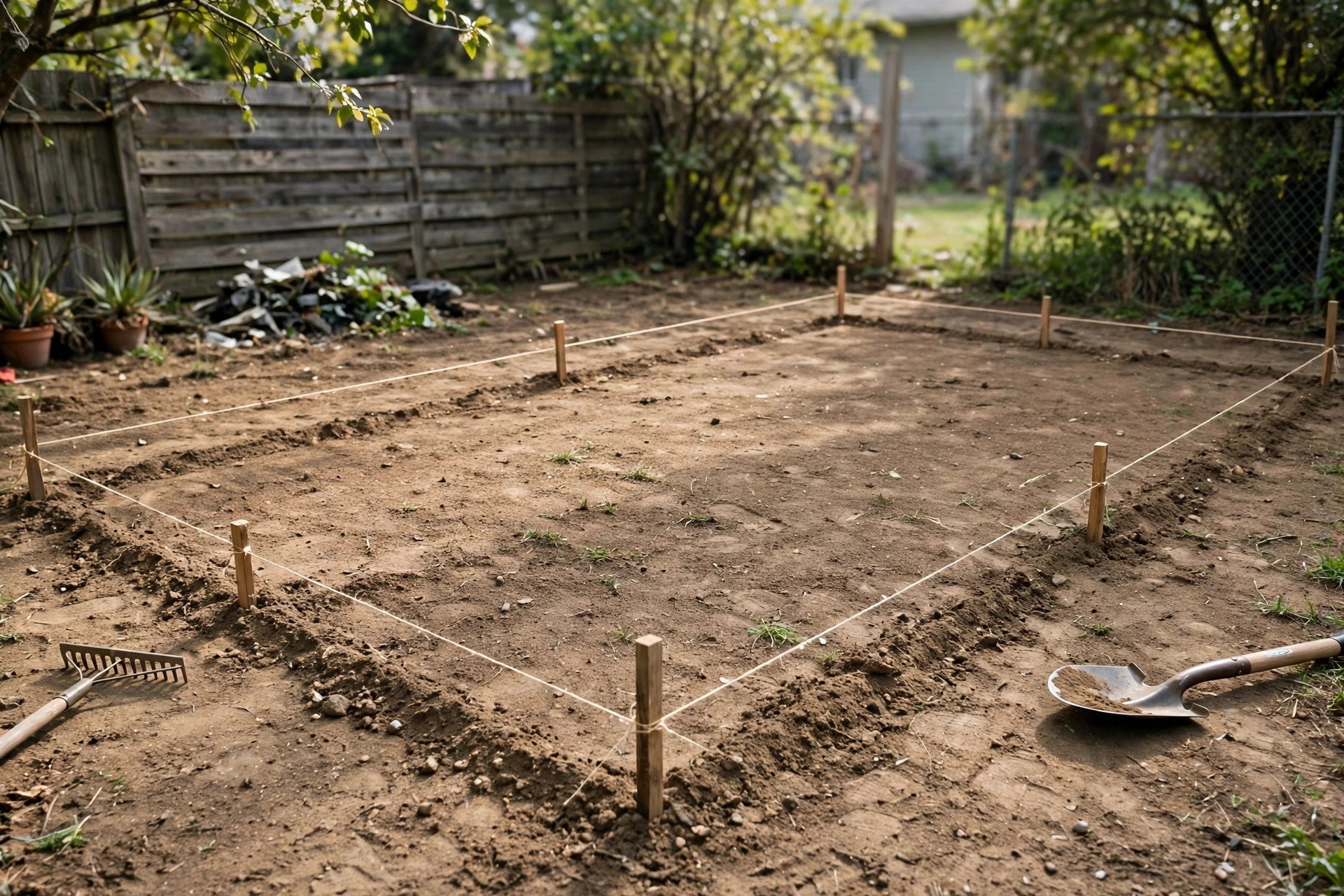
- Mark the outline with stakes and string; check corners are square by measuring both diagonals (equal diagonals mean a true rectangle).
- Strip the sod and topsoil inside the outline. Grass under your court becomes bumps and weeds later.
- Rough-level the dirt with a rake and a long straight board, pulling soil from high spots into low ones.
- Check level with a string line pulled tight, measuring down to the ground at several points. Aim for level within an inch or two across the whole court. More than that and every ball drifts the same way, which gets old fast.
Frame and Border Options That Keep Costs Down
The frame holds your surface in place and keeps balls on the court. No masonry or poured anything needed. Budget options, from cheapest up:
- Landscape timbers: the classic budget choice; sturdy, easy to cut, and heavy enough to stay put with long spikes or rebar pins.
- Pressure-treated lumber: boards on edge, stacked two high, give a clean look and a solid bank for rebound shots.
- Recycled materials: salvaged ties, leftover decking, or concrete edging; free is a fine price if pieces are straight and rot-free.
Build the frame two boards high if you can: a border eight to ten inches tall contains hard throws and gives players a bank for rebound shots. Set it on the leveled dirt, pin the corners, and check level again before any fill goes in. Fixing a crooked frame now takes minutes; after the surface is in, it takes a weekend.
The Base Layer and Drainage
Ask anyone how to build a bocce court that survives its first rainy season and you will get the same answer: drainage. The budget solution is a gravel base, and it does not need to be fancy. Lay landscape fabric over the leveled dirt to stop weeds and keep gravel from sinking into the soil. Then spread two to three inches of crushed gravel or road base and rake it smooth. Give the base a slight slope, about one inch of fall across the width, toward the side where water can escape. That invisible tilt moves rain off without affecting the roll. If your yard floods badly, add a shallow gravel-filled trench along the low side as a simple French drain. Compact the base by tamping it or rolling it with a water-filled lawn roller. A firm base keeps the finished court flat instead of wavy.
Bocce Court Surface Choices on a Budget
Your bocce court surface is the biggest cost decision in the build, and cheap surfaces play well. The main budget options:
- Decomposed granite or crushed stone dust: the budget champion; packs firm, rolls true, and tops up cheaply when it thins.
- Sand: the cheapest start, fine for casual play, but balls plow instead of rolling and it needs frequent raking.
- Clay: the traditional surface with a lovely roll, but it needs more upkeep and can crack in dry spells.
- Crushed oyster shell: the classic bocce finish with the best roll of the group, usually the priciest option here and harder to source inland.
Our full bocce ball court surface guide compares how each plays, drains, and ages, so read it before ordering. Plan on two to three inches of surface over the gravel base, plus a little extra for the first-year top-up.
Step by Step: How to Build a Bocce Court in a Weekend
Two people can finish a 40-foot court in a weekend: day one for prep and framing, day two for fill and finishing.
- Mark and square the outline with stakes and string, checking diagonals.
- Strip sod and topsoil to a depth of about four inches inside the outline.
- Level the dirt base with a board and rake, checking with a string line.
- Build the frame from timbers or pressure-treated boards, pin it, and re-check level.
- Lay landscape fabric across the base, overlapping seams by a few inches.
- Add the gravel base, two to three inches, raked smooth with a slight drainage slope.
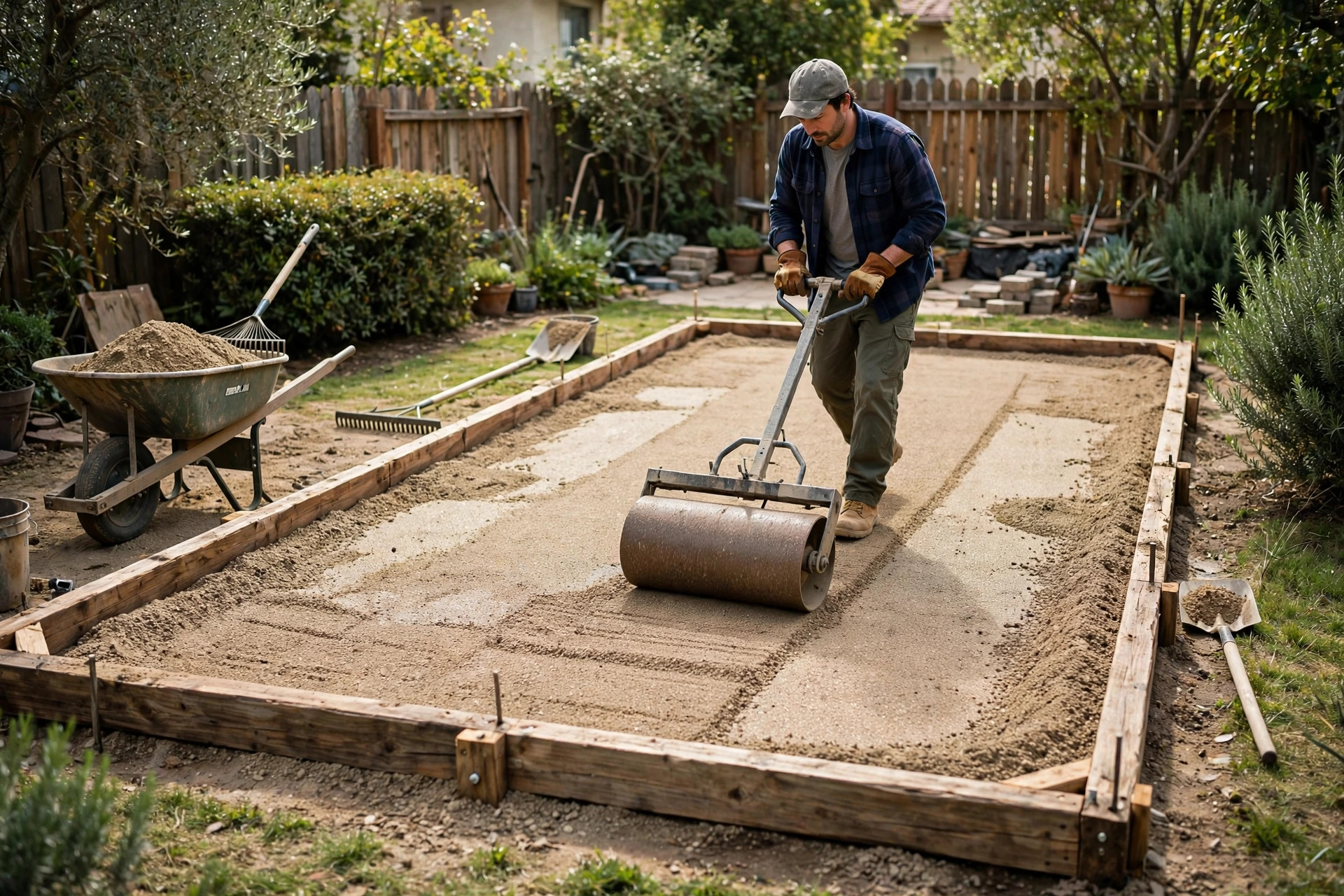
- Compact the base with a tamper or lawn roller until it feels hard underfoot.
- Spread the surface material two to three inches deep, in two thinner layers rather than one thick one.
- Water, roll, and level the surface. Light watering helps stone dust and granite bind. Check for low spots and top them up.
- Rest it, then play. Let it settle a day if you can, then roll the first game and note where balls drift. One more leveling pass after the first week finishes the job.
That is genuinely the whole build. How to build a bocce court on a budget is less about skill than about patience with leveling, so do not rush steps three and nine.
What a Budget Build Includes: Three Tiers
These tiers describe what you get at each level of effort and material, so you can pick your stopping point.
| Tier | Surface | Border | Best for |
|---|---|---|---|
| Bare-bones | Packed dirt or sand on leveled ground | Single row of landscape timbers | Testing whether your household actually plays |
| Mid-range | Decomposed granite over a gravel base | Pressure-treated boards, two high | Most families; the best value build |
| Upgraded | Oyster shell or premium clay finish | Timber frame plus a gravel drainage trench | Frequent players and league-night hosts |
Start bare-bones if you are unsure: the frame and base carry over when you upgrade the surface later, so almost nothing is wasted. And the balls matter as much as the court: our guide to the best bocce ball sets covers sets for every court size above.
Maintenance Basics for a DIY Bocce Court
Once you know how to build a bocce court, keeping it playable is the easy part. A budget court stays nice with about fifteen minutes of care after heavy use:
- Drag or brush the surface with a mat, broom, or the back of a rake to erase footprints and ball tracks.
- Top up thin spots a few times in the first year as the surface settles, then once or twice a season.
- Pull weeds at the edges before they root through the fabric.
- Re-level low spots in spring: add material, water, roll, done.
- Store the balls dry and out of the sun so the set outlasts the court.
Frequently Asked Questions
How much space do you need for a backyard bocce court?
A comfortable home court needs 40 to 50 feet of length and 8 to 10 feet of width, plus standing room at each end. Short on space? A 30-foot compact court still plays a fun game, especially for families.
What is the cheapest surface for a DIY bocce court?
Sand is cheapest to install, but decomposed granite or crushed stone dust is the cheapest surface that plays well long term. It packs firm, rolls true, drains decently, and costs very little to top up when it thins.
How long does it take to build a bocce court?
Two people can build a 40-foot budget court in a weekend: a day for stripping, leveling, and framing, and a day for the base, surface, and rolling. The slow part is hauling material, so have everything delivered close to the site.
Does a bocce court need drainage?
Yes, unless you enjoy raking mud. A gravel base with a slight slope, about an inch of fall across the court, moves rain off and keeps the court playable a day after storms. Flood-prone yards should add a gravel-filled trench along the low side.
Can you build a bocce court on a slope?
A gentle slope, yes: cut into the high side, fill the low side, and build a level frame on top, with a taller border on the downhill edge. A steep slope is a retaining-wall project, not a weekend build, so pick a flatter spot or terrace the yard first.
Final Thoughts
The short version of how to build a bocce court: level ground, a simple frame, a gravel base for drainage, and a surface you can afford to top up. A weekend of work buys years of low-maintenance play. Start with the size your yard fits, and upgrade the surface later if the game sticks. It usually does.

Bocce Ball Weight Guide: Does Heavier Actually Roll Straighter?

Bocce for Kids: Shorter Courts, Lighter Balls and Simpler Rules