
Bocce Ball Size Chart: Regulation, Backyard and Kids Sizes by Hand Size9 min read
Walk into a store and bocce sets all look the same, until you pick one up. One ball feels perfect. The next feels like a cannonball. That is why a bocce ball size chart matters before you buy. Diameter and weight change how a ball rolls, how easy it is to grip, and how much fun a new player has. Too big, and smaller hands cannot control the release. Too small, and experienced players lose the smooth, heavy roll that makes bocce satisfying. Below, we break down regulation, backyard, and kids sizes by diameter, weight, age, and hand size.
Our top picks, compared:
The Bocce Ball Size Chart at a Glance
Start here. Find the player, then read across for a sensible starting size.
| Ball Type | Diameter | Typical Weight Range | Best For |
|---|---|---|---|
| Regulation / league | 107 mm (4.2 in) | Heaviest standard range | League play, experienced adults, official courts |
| Standard backyard | 100 mm (3.9 in) | Heavy, slightly lighter than regulation | Most adult backyard games, mixed groups |
| Small backyard | 90 mm (3.5 in) | Medium | Smaller adult hands, casual and travel sets |
| Kids, ages 9-12 | 80-90 mm (3.1-3.5 in) | Light to medium | Older kids ready for real rules |
| Kids, ages 5-8 | 70-80 mm (2.8-3.1 in) | Light | Younger kids learning to roll underhand |
| Toddlers, ages 3-4 | Soft / foam, oversized light | Very light | Rolling games only, not formal bocce |
| Pallino (target ball) | About 50 mm (2 in) | Light | Included with every standard set |
These are typical ranges, not a rule for every brand, so check the diameter listed for the exact set you are considering.
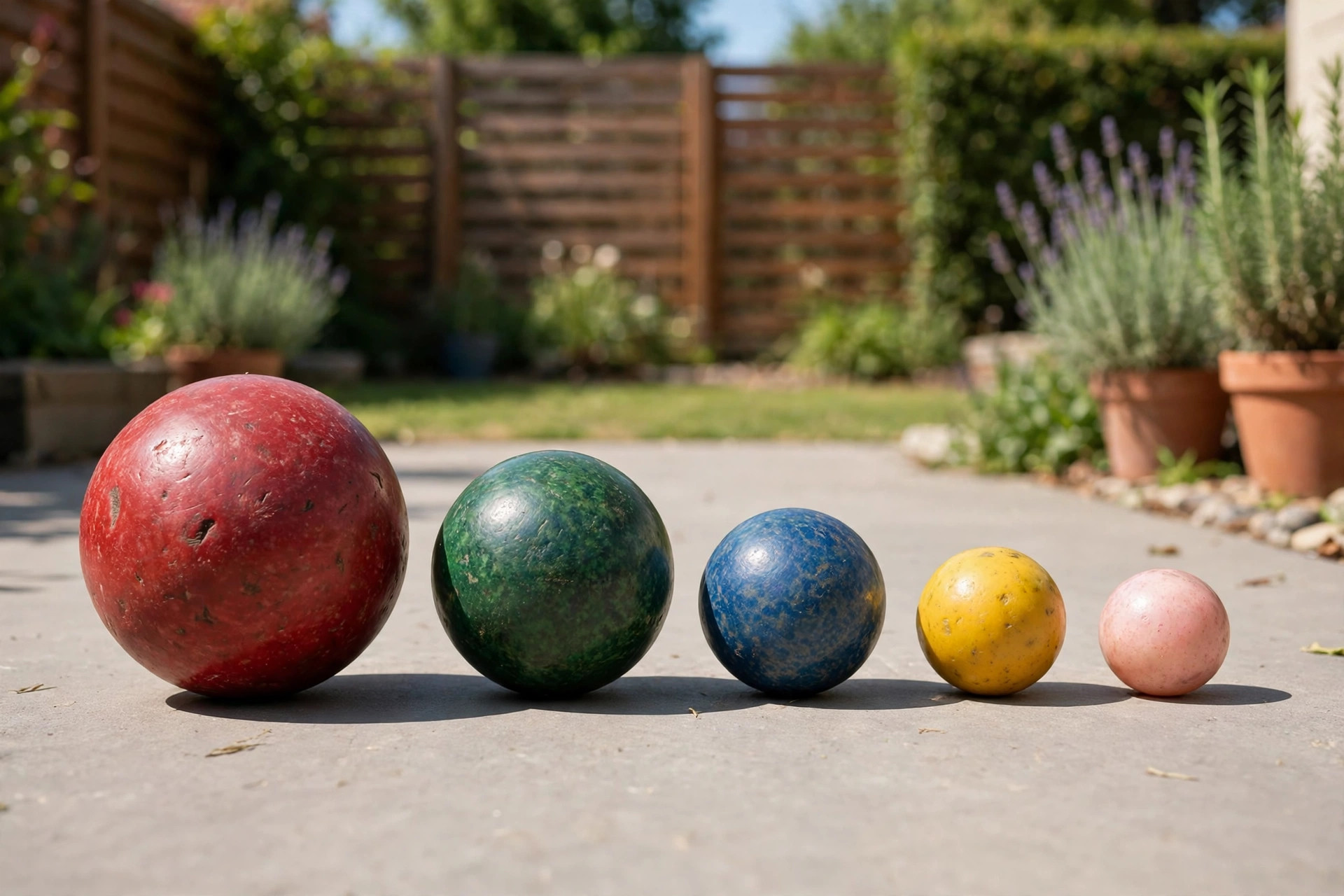
What Is the Regulation Bocce Ball Size?
The regulation bocce ball size used in formal play is 107 millimeters, about 4.2 inches in diameter. That is the size you will find on official courts and in league play. A regulation ball also has real heft. It is made to roll true on a groomed court, hold its line, and knock an opponent’s ball away on a hitting shot. If you plan to join a league, practice with regulation size from the start, so your grip and sense of distance transfer directly to match play. For backyard-only play, it still suits adults with average or larger hands, but it is not the only good choice. New to the rules themselves? Start with our guide on how to play bocce ball, then come back and fine-tune your equipment.
Backyard Bocce Ball Sizes Explained
Most backyard sets use 100 mm or 90 mm balls, and for good reason.
100 mm: The Best All-Around Size
A 100 mm ball feels close to regulation, but is a little easier for a mixed group to handle. For most families, this is the sweet spot in the bocce ball size chart. It rolls well on grass, packed dirt, and a home court, and suits teens and adults in the same game.
90 mm: Easier for Smaller Hands
A 90 mm ball is noticeably easier to grip and release cleanly. It suits adults with smaller hands, older players, and anyone who finds a regulation ball tiring over a long afternoon. The trade-off is hitting shots: a smaller, lighter ball moves an opponent’s ball less on contact. For friendly games, most players happily accept that.
What Size Bocce Balls for Kids?
Kids need a ball they can hold in one hand, roll underhand, and control without dropping it.
Ages 9 to 12
Look at 80 to 90 mm balls in a light to medium weight. Most kids this age can learn real scoring and basic strategy, as long as the ball does not fight them.
Ages 5 to 8
Look at 70 to 80 mm, light balls, ideally in a softer recreational material. Shorten the court, move the foul line closer, and keep games short. Success matters more than official distance.
Ages 3 to 4
Use soft or foam rolling balls and treat it as a rolling game, not bocce. Roll to a target, take turns, and celebrate close balls. Whatever the age, bright colors help. Kids track their own balls more easily, and fewer arguments break out over which ball is whose.
Choosing Bocce Ball Size by Hand Size
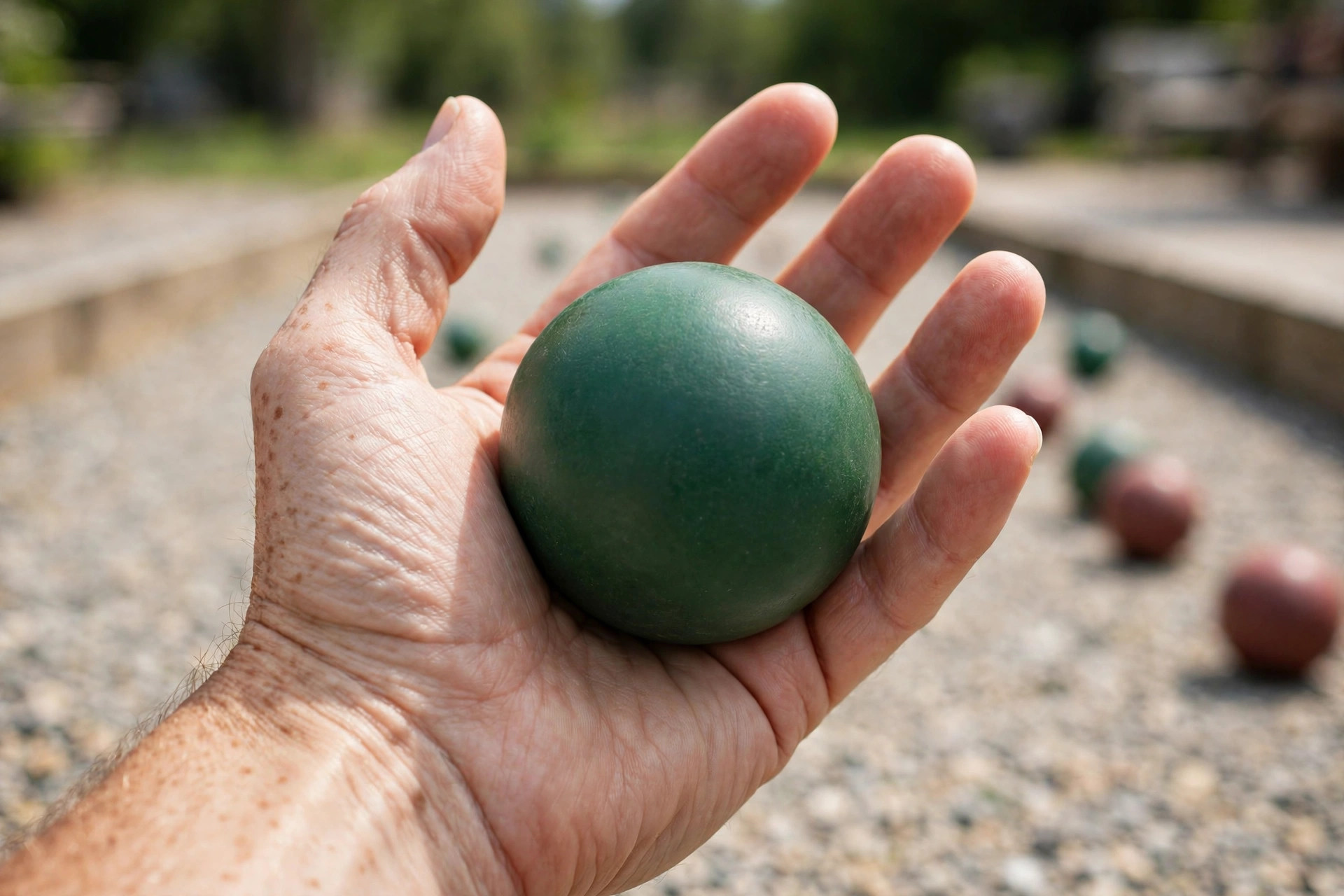
Age helps, but hand size is the better test, especially for adults and teens who fall between the rows in a bocce ball sizes by age table. Try this simple grip test:
- Hold the ball in your throwing hand, palm up, fingers spread naturally.
- You should be able to cradle it without your fingers straining wide.
- Flip your hand over slowly. The ball should stay controlled, not instantly drop.
- Make a gentle underhand practice motion. If your wrist bends back hard, the ball is probably too big or too heavy.
As a rough guide, smaller hands usually settle at 90 to 100 mm, average hands at 100 to 107 mm, and large hands at full regulation size, because a smaller ball feels cramped. Comfort beats the chart. If two sizes fit, choose the one the player can roll for a full game without grip fatigue.
Bocce Ball Weight Chart: Why Weight Follows Size
In most sets, bigger means heavier, which is why a bocce ball weight chart and a size chart tell the same story. Material matters too: dense resin feels heavier at the same diameter than lighter recreational balls. Weight changes three things: heavier balls hold their line better on rough grass and move other balls more on contact, while lighter balls are kinder over a long afternoon. If a player loves the diameter but tires quickly, look for the same diameter in a lighter material rather than dropping two sizes at once. And care for it properly: our guide to how to clean bocce balls covers cleaning by material and storage that protects the finish.
How to Choose: A Simple Decision Guide
Still torn between two rows in this bocce ball size chart? Ask, in order: league player in the group (choose 107 mm), mostly adults (100 mm), smaller hands or older players (90 mm), or kids under 9 as the main players (a light 70 to 90 mm set). Mixed group? Choose 100 mm, plus a smaller set for the kids. To compare actual sets by size, weight, and material, see our roundup of the best bocce ball sets, and the comparison table at the top of this article.
Frequently Asked Questions
What is the regulation bocce ball size in inches?
The regulation bocce ball size is 107 millimeters, which is about 4.2 inches in diameter. That is the standard used for official courts and league play. Most backyard sets are slightly smaller, usually 100 mm or 90 mm, which makes them easier for casual players and smaller hands to grip and roll.
What size bocce balls are best for beginners?
Most adult beginners do best with 100 mm balls. They feel close to regulation size, roll smoothly on grass and dirt, and are easier to control than a full-size league ball. Beginners with smaller hands should try 90 mm instead. The best beginner size is the largest ball you can hold and release comfortably for a full game.
How big is the pallino compared to a bocce ball?
The pallino, the small target ball, is about 50 millimeters, roughly 2 inches in diameter. That is less than half the diameter of a regulation bocce ball. Its small size is the point: it is a precise target. Every standard set includes one pallino, and games start with a player rolling it down the court.
Can kids use regular bocce balls?
Older kids, roughly 9 and up, can often use a small backyard set, but most kids struggle with a full regulation ball. It is heavy, hard to grip, and easy to drop. A light 70 to 90 mm set lets kids roll underhand with control, learn real scoring, and enjoy the game instead of fighting the equipment.
Does bocce ball size affect how the game is scored?
No. Scoring works the same way at every size: the team with the ball closest to the pallino scores, and earns a point for each of its balls that sits closer than the opponent’s best ball. Size affects grip, roll, and hitting power, not the rules. Use one consistent set for everyone in a game, so no player gains an unfair advantage.
Final Thoughts
Use this bocce ball size chart as a starting point, then trust the grip test. Regulation 107 mm for league players, 100 mm for most backyard groups, 90 mm for smaller hands, and light, smaller sets for kids cover almost every game you will host. Pick the size your group can roll comfortably all afternoon, and bocce stays what it should be: close, friendly, and last-ball-wins.

32 Bocce Ball Terms and Glossary

What is Bocce Ball & Why You Should Play Bocce
