
Bocce Ball Court Surface Guide: Grass, Sand, Clay, Turf and Oyster Shell Compared10 min read
The same bocce set can feel like two different games. On short grass it wobbles and dies early. On a groomed clay court it rolls smooth, straight, and fast. That difference is the bocce ball court surface under your feet. It controls roll speed, how true a ball tracks, and how much upkeep your court needs.
There is no single best surface for a bocce court. There is a best surface for your yard, your budget, and how seriously your group plays. Below, we compare grass, sand, clay, turf, and oyster shell side by side, so you can choose before you build or resurface.
Our top picks, compared:
Bocce Court Surfaces Compared at a Glance
Use this table as your short list, then read the sections below for the trade-offs behind each row.
| Surface | Cost Tier | Maintenance | Roll Speed | Best For |
|---|---|---|---|---|
| Grass | Lowest, usually already there | High, mowing and leveling | Slow and bumpy | Casual games, no-build play anywhere |
| Sand | Low | Medium, raking and topping up | Slow, balls dig in | Beach play, relaxed family games |
| Clay (crushed stone / Har-Tru style) | Medium | Medium to high, rolling and watering | Fast and true | Home courts that want a real-court feel |
| Artificial turf | Higher upfront | Low, brushing and rinsing | Medium-fast, consistent | Low-upkeep home courts, year-round play |
| Oyster shell flour | Medium | Medium, raking and periodic top-ups | Fast, smooth, classic | Traditional courts, league-style home play |
Cost tiers are relative, because local material and delivery prices vary widely. Get local quotes before you commit to a build.
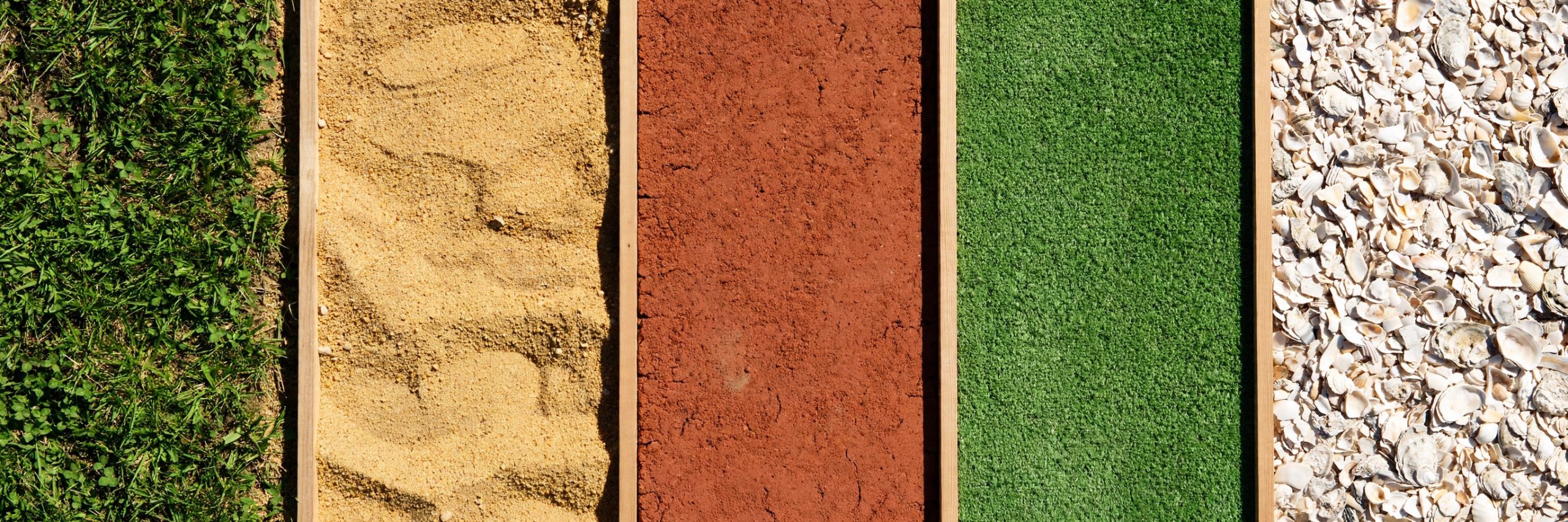
Grass: The Surface You Already Have
Grass is where most people play their first game, and it still works, with limits.
Roll and play: Slow and unpredictable. Longer or damp grass grabs the ball, short dry grass lets it run a little, and hidden bumps steal close points. Hitting shots lose power quickly.
Maintenance: The court is only as good as your mowing. Cut it short, fill low spots, and accept that it changes with the season.
Best for: Picnics, parks, and casual games where nobody wants to build anything. Our guide on how to play bocce ball covers a simple backyard setup that works fine on a lawn.
Sand: Soft, Slow, and Built for the Beach
Sand turns bocce into a placement game. Balls land, dig in, and stop close to where they arrive, instead of rolling out.
Roll and play: The slowest common surface. Long rolls die early, so players throw more and roll less. Spin has almost no effect, but a soft, well-judged toss can sit very close to the pallino.
Maintenance: Rake before play, level footprints, and top up sand that migrates out. Borders help keep a home sand court in place.
Best for: Beach trips and family groups who prefer short, forgiving games. Bring a set you do not mind getting gritty, and clean it afterward.
Clay: The Classic Court Feel at Home
When most players picture a proper court, they picture clay: a firm, fine, crushed material that is rolled flat and plays fast and true.
Roll and play: Fast, smooth, and predictable. Balls hold their line, gentle spin works, and hitting shots arrive with real pace. This surface rewards skill the most, which is why clubs favor it.
Maintenance: This is the trade. Clay-style surfaces want regular rolling, light watering in dry weather, sweeping, and patching. Skip the care for a month and ruts and inconsistent patches appear.
Best for: A dedicated home court for players who play weekly and want league-style conditions without leaving the yard.
Artificial Turf: Low Upkeep, Consistent Roll
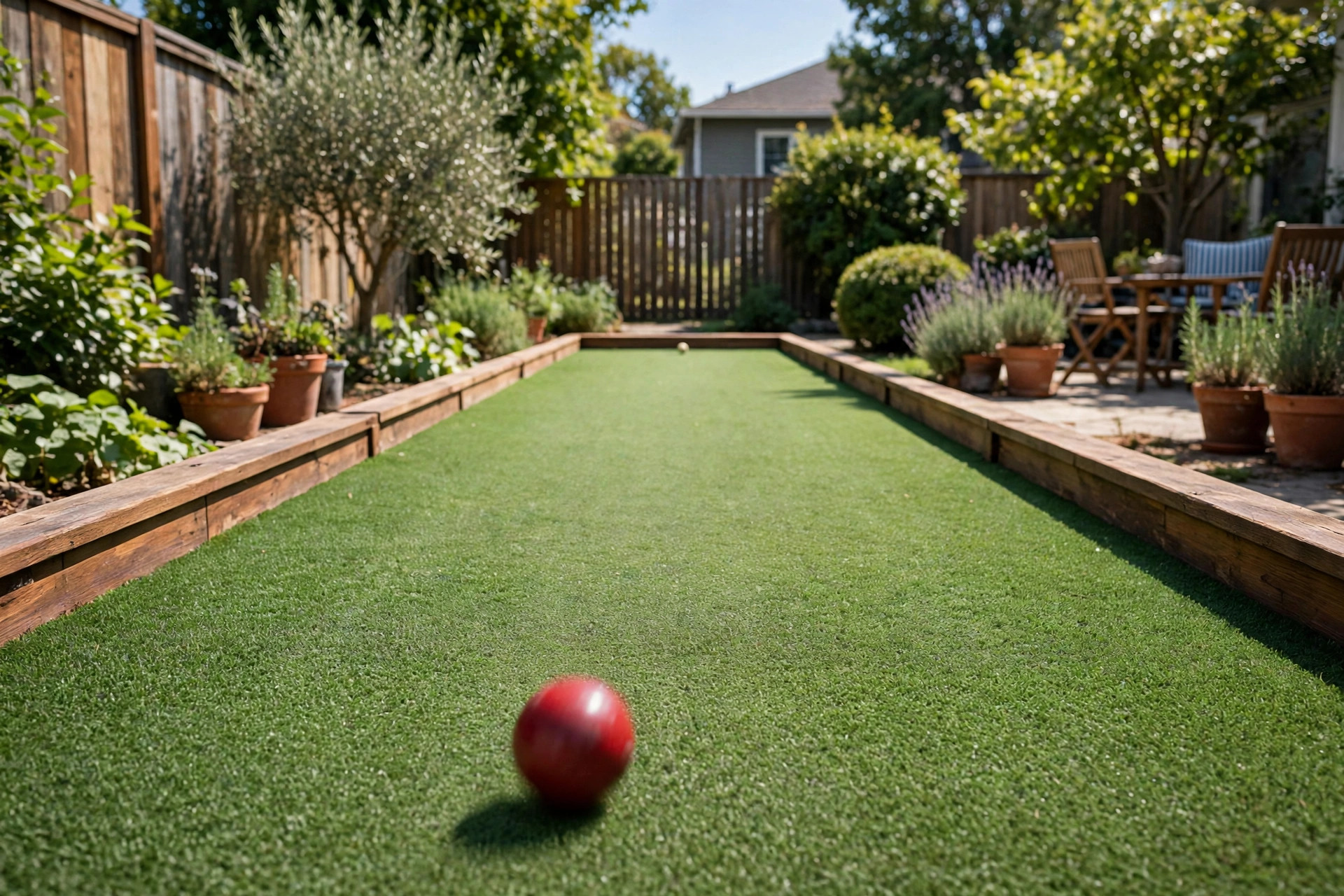
Turf has become the practical middle ground for home courts: no mud, no mowing, and a surface that plays almost the same in April and August.
Roll and play: Medium-fast and consistent. Quality court turf rolls truer than grass and slower than clay, which many casual players actually prefer, and balls track straight.
Maintenance: The lowest of any built court. Brush the fibers, rinse off debris, and check seams once in a while. No watering, rolling, or resurfacing.
Best for: Homeowners who want a real court without a real maintenance routine. The higher upfront cost tier is the main drawback, so weigh it against years of saved upkeep.
Oyster Shell: The Traditional Surface
Oyster shell flour is the old-school bocce court surface, used on traditional courts for generations. Crushed and rolled fine, it plays smooth, firm, and quick.
Roll and play: Fast and true, close to clay, with a distinctive light, bright look that makes balls easy to see. Many longtime players consider it the most enjoyable surface to roll on.
Maintenance: Rake and roll to keep it level, and plan on periodic top-ups as it compacts. Availability is the catch: oyster shell flour is easy to source in some regions and hard in others, which can change its real cost tier for you.
Best for: Traditionalists building a permanent court where the material is locally available.
How Surface Changes Your Game
Whichever bocce ball court surface you choose, expect it to change your tactics:
Slow surfaces (grass, sand): throw more, roll less; land the ball close, because it will not travel far.
Fast surfaces (clay, oyster shell): roll with touch; a gentle roll can travel the full court, and hitting shots carry real power.
Consistent surfaces (turf): play your normal game; distances you learn one week still apply the next.
Ball care changes too. Sand and shell are abrasive and scratch finishes faster. Follow our guide to how to clean bocce balls after gritty games, and store your set using our guide to the best bocce ball bags.
How to Choose Your Bocce Court Surface
Ask, in order: Are you building at all (if not, grass is fine)? How often will you play (weekly players get real value from a built court)? How much upkeep will you honestly do (very little means turf, enjoying tending a court means clay)? What is available near you (oyster shell and clay materials are regional)? And who is playing (kids and casual groups like grass or sand, competitive groups want fast and true)?
Once the surface is settled, match your set to it: heavier, durable balls for fast, hard courts, lighter sets for grass and sand. Compare materials and sizes in our roundup of the best bocce ball sets, and in the comparison table at the top of this guide.
Frequently Asked Questions
What is the best surface for a bocce court?
For serious, consistent play, a rolled clay or oyster shell bocce ball court surface is hard to beat, because balls roll fast and true. For most homeowners, artificial turf is the best practical choice: it plays consistently, needs very little maintenance, and works in almost any climate. The best surface is the fastest one you will actually maintain.
Can you play bocce on grass?
Yes. Grass is the most common backyard bocce ball court surface, and casual games work well on a short, level lawn. Expect slower, bumpier rolls, less predictable bounces, and weaker hitting shots than on a built court. Mow short, fill obvious low spots, and shorten the court a little, and a lawn game stays fun and fair for everyone playing.
How do you maintain a bocce court surface?
It depends on the material. Grass needs short mowing and leveling. Sand needs raking and top-ups. Clay and oyster shell need rolling, sweeping, light watering in dry spells, and patching. Turf needs the least: occasional brushing, rinsing, and a seam check. Every surface plays better right after basic care, so a quick pass before a game day pays off.
Is a turf bocce court worth it?
For players who play often and dislike upkeep, usually yes. Turf costs more upfront than grass, sand, or a simple dirt court, but it removes mowing, watering, rolling, and resurfacing from your routine, and it plays the same all season. If you only play a few times a year, a good lawn or a simple packed court is the smarter spend.
What surface do official bocce courts use?
Formal and club courts traditionally use firm, fine, rolled surfaces, most often clay-style crushed material or oyster shell flour, inside a framed, level court. Those surfaces are chosen because balls roll fast, straight, and predictably, so skill decides close points instead of a random bump. Home players can copy the feel with a well-rolled clay or shell court.
Final Thoughts
Pick your bocce ball court surface by how you actually live: grass for no-build fun, sand for the beach, clay or oyster shell for a traditional fast court you will tend, and turf for a real court you mostly want to play on, not work on.

Quick Guide to How to Play Bocce Ball
How to Build a Backyard Bocce Court on a Budget: Step by Step
