
Bocce Ball Weight Guide: Does Heavier Actually Roll Straighter?9 min read
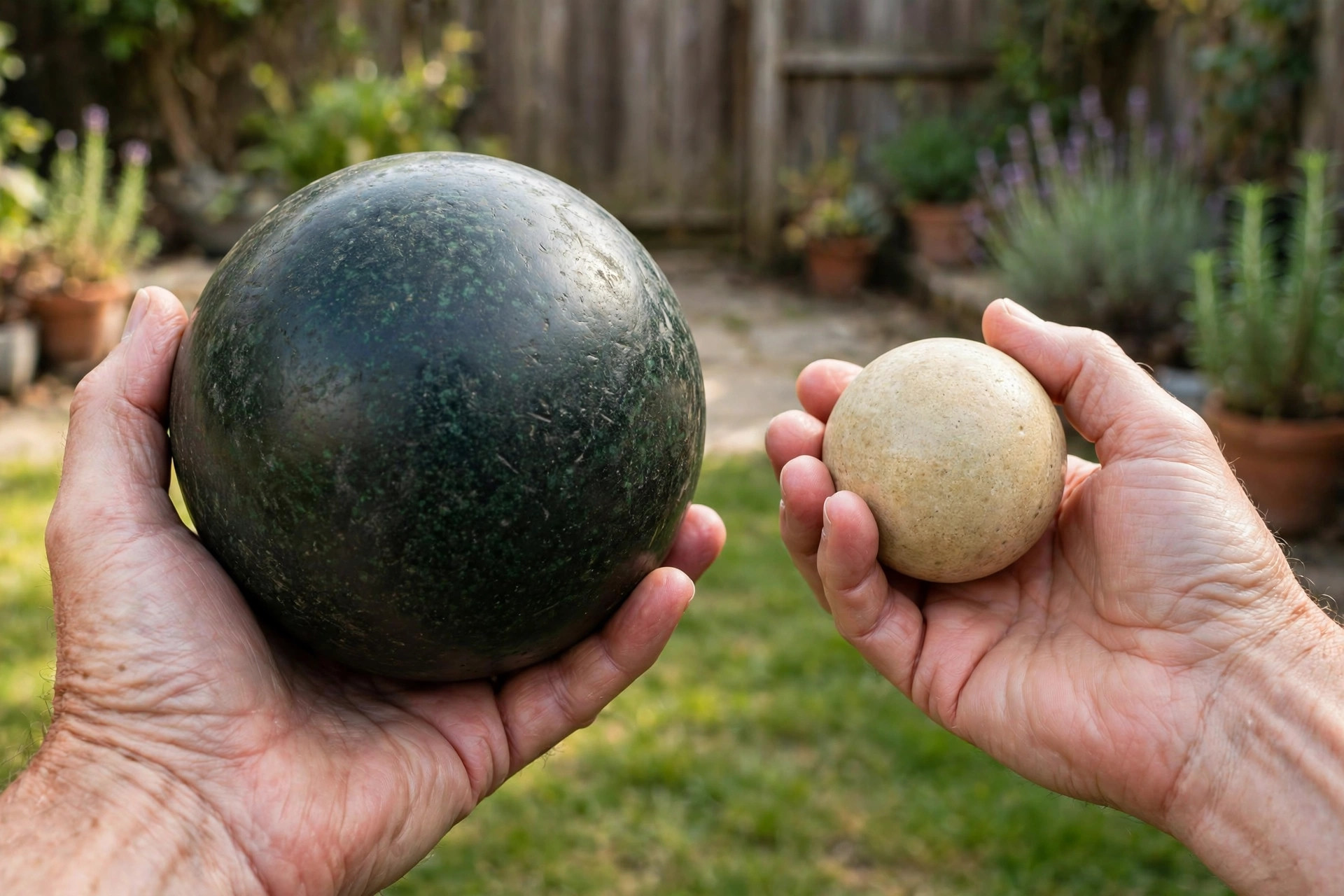
Pick up the balls from two different bocce sets and they rarely match. One feels like a grapefruit, the other like a cannonball, and that difference is bocce ball weight at work. Weight decides how a ball holds its line through grass, how it behaves when it clips another ball, and how tired your arm feels by the third frame.
So does heavier actually roll straighter? Partly, and the honest answer depends on your surface and your throw. This guide breaks down bocce ball weight by size, explains the simple physics behind the claim, and helps you match a weight to your hands, your court and your style.
Our top picks, compared:
Bocce Ball Weight by Size: The Chart
Bocce ball weight tracks closely with diameter, because most balls are made from similar resin or plastic. Bigger ball, heavier ball. Here are the typical ranges across backyard and league sets.
| Diameter | Typical Weight | Who It Suits |
|---|---|---|
| 73 mm | About 1 lb (0.45 kg) | Young kids, small hands, travel sets |
| 90 mm | About 1.5 to 2 lb (0.7 to 0.9 kg) | Older kids, casual backyard play |
| 100 mm | About 2 to 2.3 lb (0.9 to 1.05 kg) | Most adults, all-around backyard sets |
| 107 mm (regulation) | About 2.2 to 2.6 lb (1.0 to 1.2 kg) | League and tournament players |
| 110 mm and up | About 2.5 to 3 lb (1.15 to 1.35 kg) | Large hands, strong players, hitting shots |
Treat these as ranges, not guarantees. Two balls of the same diameter can differ by a few ounces depending on material, and water-filled plastic beach balls are the big exception: full size, far less weight. The regulation bocce ball weight most leagues play with sits in that 107 mm row: tournament balls are 107 mm across, and official weights cluster around 2 to 2.5 pounds.
If you want a set that can grow from backyard to league night, study that row in our roundup of the best bocce ball sets.
Does Heavier Actually Roll Straighter? The Physics in Plain Terms
The short answer: a heavier ball holds its line better on imperfect ground, and weight alone cannot fix a crooked throw. A rolling ball keeps moving because of momentum, which is mass times speed. At the same speed, a heavier ball carries more momentum, so the little things that deflect a ball, a twig, a thick patch of grass, a pebble, push it off course less. Inertia cuts both ways: a heavier ball also resists starting, stopping and changing direction, good when you want it to plow through light resistance, bad when you need a touch shot that dies right beside the pallino.
What weight cannot do is correct your release. On a smooth, groomed court the straightness gap nearly disappears.
The real rule: the rougher your surface, the more bocce ball weight helps you roll straighter. The smoother your court, the more technique decides everything.
Heavy vs Light Bocce Balls: How Each One Plays
Where Heavy Balls Win
Heavy balls earn their keep on hitting shots and rough ground. A raffa shot driven along the ground keeps its line and arrives with authority, moving the target ball and often staying in scoring position itself. On bumpy grass, a heavy ball tracks truer between release and pallino, and on windy days the extra weight settles a ball a gust might nudge.
Where Light Balls Win
Light balls are the control player’s friend. They start and stop with less effort, which makes the soft punto lag shot easier to judge, especially on fast surfaces where a heavy ball keeps trundling past the pallino. They are kinder on soft ground too: a heavy ball digs into sand and soft lawn and dies early, while a lighter ball skims and survives. And across a long afternoon, lighter balls tire your arm less.
How Bocce Ball Weight Plays on Different Surfaces
Grass
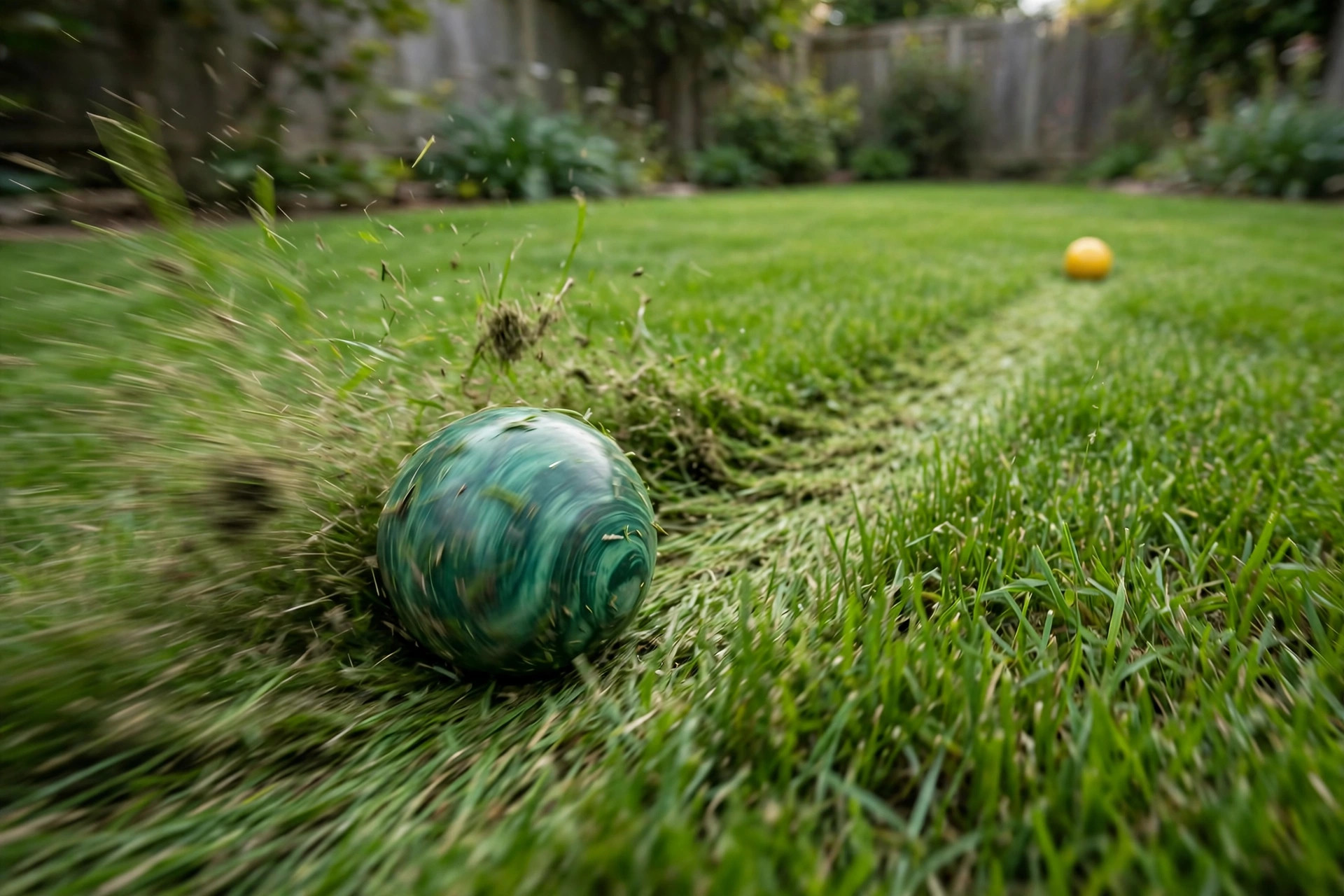
Backyard grass is the roughest common surface, full of hidden bumps and thick patches. This is where heavier balls shine, holding a line a light ball loses in the first ten feet. If your games live on the lawn, lean toward the heavier end of your comfortable range.
Sand
Sand flips the advice. Balls barely roll on sand, and a heavy ball plows a furrow and stops short. Lighter balls, thrown with a bit of arc so they land close to the target, play far better on the beach.
Clay
Clay and crushed-stone courts are the traditional bocce surfaces, and they reward the middle. A mid-weight ball rolls true, stops predictably and still has enough mass for hitting shots.
Hard Courts
On a smooth hard court, friction is low and consistent, so balls roll long and weight matters least for straightness. Touch matters most, and many hard-court players prefer a slightly lighter ball for finer speed control.
Weight and Throwing Style: Punto, Raffa and Volo
Punto, the soft lag shot, is a touch game: a light to mid-weight ball you can feather is ideal.
Raffa, the ground hitting shot, is a power game: heavier balls were made for this shot.
Volo, the aerial shot, lands the ball on or near the target from the air; in the backyard a mid to heavy ball works, as long as you can lift and aim it for a whole game.
Most recreational players throw a mix, which is why the 100 to 107 mm middle of the chart is the sweet spot: heavy enough to hit, light enough to lag.
Choosing a Bocce Ball Weight for Your Hands, Strength and Age
Do the grip test. Cradle the ball in one hand, palm up, fingers relaxed. If you can hold it comfortably and roll it underhand without straining, the size and weight fit you.
Guidelines:
- Kids under 8: 73 to 90 mm balls around 1 to 1.5 lb.
- Kids 8 to 12 and smaller adults: 90 to 100 mm, roughly 1.5 to 2.3 lb.
- Most adults: 100 to 107 mm at 2 to 2.6 lb.
- Players with grip or joint issues: stay at the light end of your size range.
- Strong players who love hitting shots: 107 mm and up, if the grip test still passes in the last frame.
Size and weight travel together, so read our bocce ball size chart alongside this guide.
Myth Check: Weight Claims That Do Not Hold Up
- “Heavier always rolls straighter.” Only on rough ground, and only if your release is clean.
- “Regulation weight is best for everyone.” Regulation weight is best for regulation play.
- “A heavy ball always wins the hitting shot.” Momentum is mass times speed, and speed is half the product.
- “Light balls are just for kids.” Light balls are a legitimate choice for sand, finesse players, and anyone whose arm gives out first.
Whatever weight you settle on, keep the set in shape with our guide on how to clean bocce balls.
Frequently Asked Questions
How much do bocce balls weigh?
Most bocce balls weigh between about 1 and 3 pounds, depending on size. Small 73 mm kids and travel balls sit near 1 pound, common 100 mm backyard balls weigh about 2 to 2.3 pounds, and full-size 107 mm balls typically weigh 2.2 to 2.6 pounds.
What is the regulation bocce ball weight?
Tournament bocce uses a 107 mm ball, and the regulation bocce ball weight most federations play with is roughly 2 to 2.5 pounds, with many official sets built around 920 grams, just over 2 pounds. Backyard sets vary more.
Do heavier bocce balls really roll straighter?
On rough surfaces, yes, within limits. Extra weight gives a ball more momentum, so bumps, twigs and thick grass deflect it less. On a smooth court the advantage mostly disappears, and no weight corrects a wobbly release.
What bocce ball weight is best for kids?
For most kids, lighter is better: about 1 to 1.5 pounds in a 73 to 90 mm ball for younger children, moving up to around 2 pounds at 100 mm for older kids. Use the grip test: if a child cannot cradle the ball in one hand and roll it underhand smoothly, it is too heavy.
Can you mix ball weights in one game?
You can, and casual groups do, but it is not a fair fight: a heavier ball holds its line and hits harder. For games anyone cares about, play one matched set.
Final Thoughts
Bocce ball weight is a tool, not a ranking. Heavier balls hold a line through rough grass and power the hitting game. Lighter balls give you touch, save your arm and survive the sand. Match the weight to your surface, your shots and your hands, and pass the grip test in the last frame as well as the first.
Bocce Ball Size Chart: Regulation, Backyard and Kids Sizes by Hand Size
Bocce Scoring Disputes Solved: Measuring, Ties and the Kiss Explained
