Indoor Soccer Variations for Rainy Days and Gyms9 min read
Rain, snow, and frozen fields cancel a lot of youth soccer. Indoor soccer games rescue those lost sessions, because almost any gym, hall, garage, or basement can host a version of the sport with a softer ball and a few simple rule changes. The trick is picking the right variation for your space and your players. A full gym can handle a near-regulation game, while a garage needs something slower and smaller. The five indoor soccer games below cover everything from a school gym to a cleared-out hallway. Whatever version you choose, you need clear boundaries. The flat disc cones in our roundup of the best sports and soccer cones mark indoor courts without scratching floors or tripping players, which is why coaches reach for them first.
Indoor Soccer Games at a Glance
Here are the five variations side by side. Match the space you have to the game that fits it, then read the full section for the rules that make each one work.
| Variation | Space | Players | Key Rule Change |
|---|---|---|---|
| Futsal-style 5v5 | Full gym or sports hall | 10 plus goalkeepers | Low-bounce futsal ball, no offside, kick-ins instead of throw-ins |
| Wall ball / rebound soccer | Gym or hall with sturdy walls | 6 to 12 | Walls are in play, so there are no throw-ins or corners |
| 3v3 gym soccer | Half gym or large classroom | 6 | Low-bounce ball, small goals, no goalkeeper |
| Hallway or garage keep-away | Hallway, garage, or basement | 3 to 6 | No goals; points scored by completing passes in a tight grid |
| Balloon or foam ball soccer | Living room or small hall | 4 to 8 young kids | Balloon or foam ball only, walking pace, goals are chairs or cones |
Every game here runs on the same basic kit: a ball that suits the room, markers for goals and boundaries, and a floor that will not punish a fall.
Futsal-Style 5v5: The Closest Thing to the Real Game
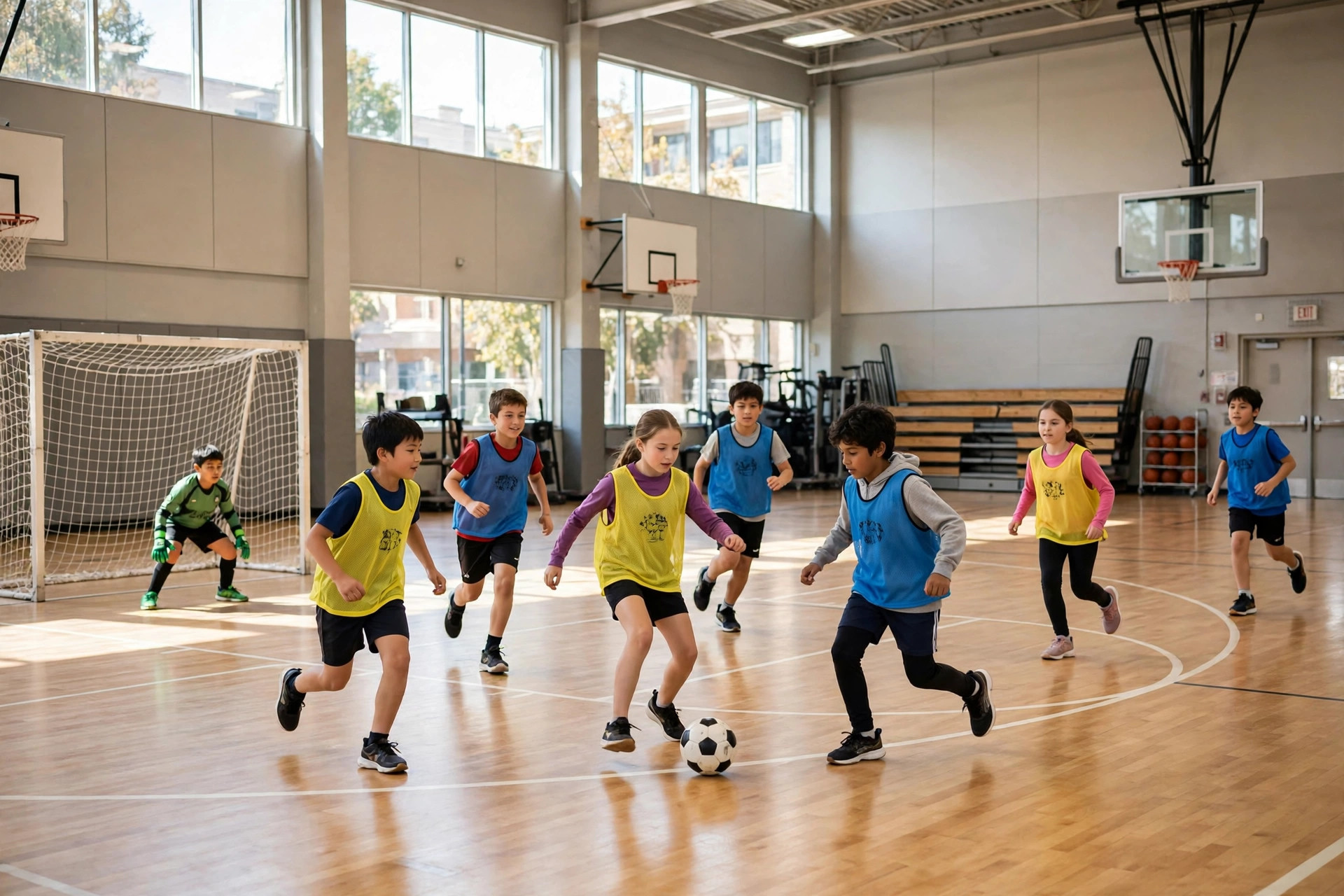
Futsal is the indoor game FIFA actually sanctions, and it is the best option when you have a full gym. Teams play five against five including goalkeepers, on a hard court with a smaller, low-bounce ball that stays on the floor and rewards close control. A few indoor soccer rules define the futsal feel. There is no offside, restarts from the sideline are kick-ins rather than throw-ins, and goalkeepers have only a few seconds to release the ball, which keeps the tempo high.
Why Futsal for Kids Works So Well
For youth groups, futsal works brilliantly because every player touches the ball constantly. Shrink the court for younger ages, use four players a side if numbers are thin, and rotate goalkeepers so nobody spends the whole session in goal.
Wall Ball: Let the Walls Play Too
If your gym has sturdy walls and no fragile fixtures, wall ball removes the biggest interruption in indoor play: the ball leaving the field. In this version the walls are live, so players can pass off them, shoot off them, and keep rallies going without throw-ins or corners. Set two rules before you start. First, decide whether the end walls behind the goals are in play or out of bounds, because rebounds off the back wall create easy tap-ins. Second, ban deliberate wall-slams at head height in mixed-age groups. Wall ball suits slightly older kids and adult pickup groups. The game runs fast, the ball rarely stops, and players learn to use angles the outdoor game never teaches. A standard gym soccer game with live walls also needs no extra equipment beyond goals and a ball.
3v3 Gym Soccer With a Low-Bounce Ball
When you have half a gym and a handful of players, 3v3 with a low-bounce ball is the sweet spot. Three-a-side means constant involvement, and a futsal-style ball or a slightly deflated standard ball keeps shots and passes from flying into lights and windows. Play to small pop-up goals or cone goals, and skip goalkeepers entirely. Most groups use a “no shooting inside the cone box” rule, marking a small arc in front of each goal where shots are not allowed, which stops players camping on the goal line. This is also the easiest of the indoor soccer games to run as a mini-tournament. Short four-minute games, winners stay on, and a round-robin chart on a whiteboard keeps a rainy-day practice moving for an hour.
Hallway and Garage Keep-Away
No goals, no problem. Keep-away turns a hallway, garage, or basement into a passing game: mark a small rectangle, put two or three attackers against one or two defenders, and award a point for every five or eight consecutive passes the attackers complete. The tight space is the coach. Players have to move off the ball, call for it, and control passes quickly because there is nowhere to hide. Rotate the defenders every couple of minutes, since chasing in a small grid is the hardest job in the game.
Rainy Day Soccer Drills That Transfer Outdoors
As rainy day soccer drills go, keep-away is the one that transfers best to the outdoor field. It also scales down to three players in a driveway-sized space, which makes it the go-to option for home practice when the weather turns.
Foam Ball and Balloon Soccer for Young Kids
For players under about seven, swap the ball before you change anything else. A foam ball or even a balloon slows the game to walking pace, removes the fear of being hit, and protects both the room and the children in it.
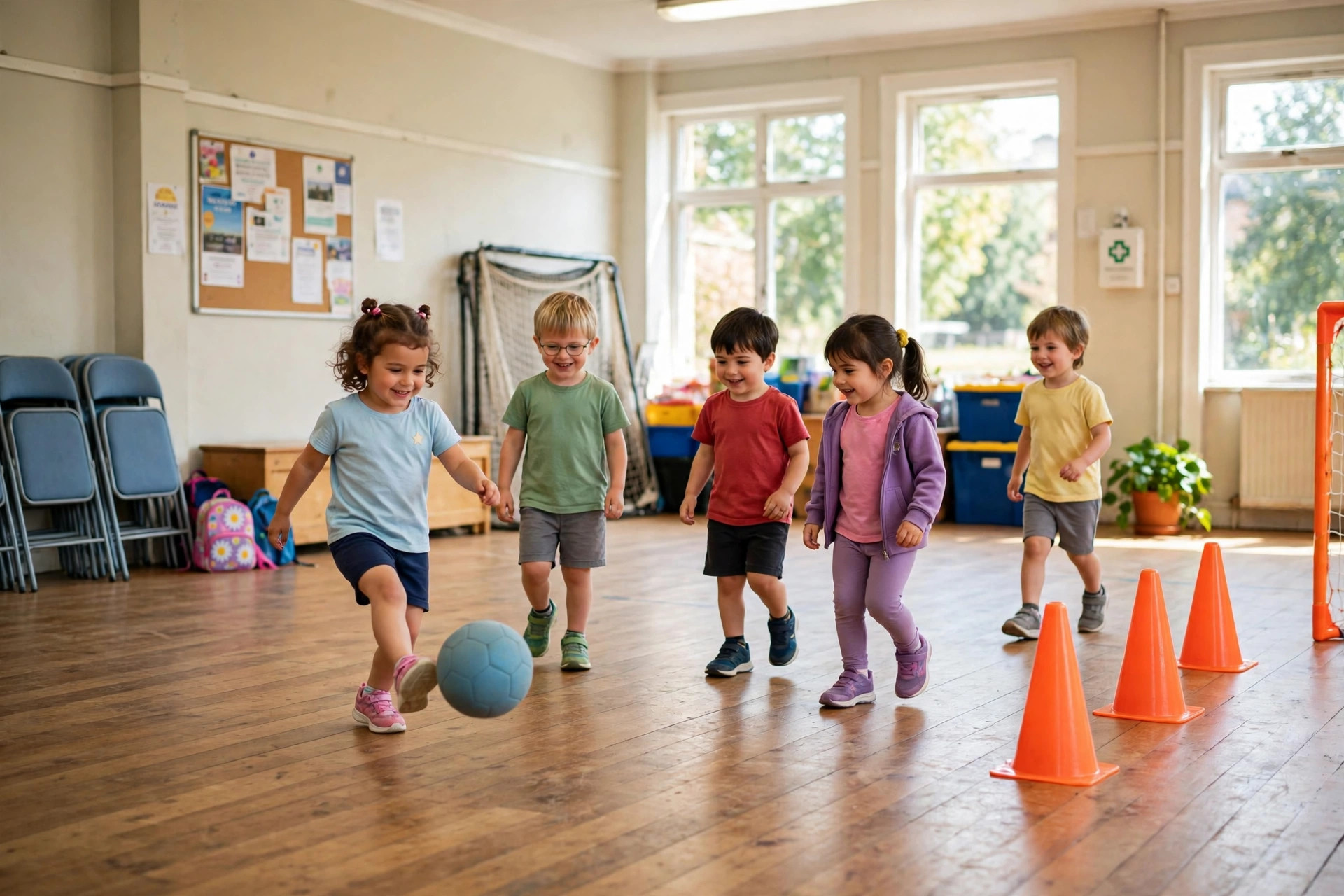
Set goals from chairs, cushions, or cones, and play short rounds of three or four minutes. Balloon soccer works best with no kicking at all: players tap the balloon with feet or knees to keep it moving toward the goal, and the first team to float it through wins the round. These soft versions are indoor soccer games in training-wheels form. Young players learn where to stand, how to celebrate a goal, and how to take turns, all before anyone cares about technique.
What You Need: Balls, Goals, and Boundaries
The ball decides how the session feels. A futsal ball has a smaller size and a muted bounce made for hard floors. A foam ball suits young kids and small rooms. Avoid taking a fully inflated outdoor ball into a gym with lights and windows unless the group is old enough to control it. Goals can be pop-up goals, cone gates, or tape lines on the wall. The compact options in our guide to the best portable soccer nets and goals fold flat for storage, which matters when the gym is shared. For boundaries, the low-profile disc cones from our best sports and soccer cones roundup stay put on gym floors and are safe to step on.
Ground Rules That Keep Indoor Play Safe
Indoor soccer rewards a few firm ground rules. No slide tackling, ever: gym floors punish falls far more than grass does. Keep shots below waist height in small spaces and mixed-age groups, and clear the playing area of bags, benches, and anything with a hard edge. Check the floor before you play. Dusty gym floors are slippery, so a quick sweep or a damp mop makes a real difference to ankles. Players should wear court shoes or trainers with clean soles, not outdoor cleats, which most halls ban anyway. Finally, agree on how physical the game gets before the first kick. Indoor soccer games stay fun when everyone knows the contact level in advance.
Frequently Asked Questions
What is the difference between futsal and other indoor soccer games?
Futsal is the official indoor version, played five-a-side on a hard court with a low-bounce ball, no offside, and kick-ins instead of throw-ins. Other indoor soccer games are informal adaptations, such as wall ball or 3v3, that borrow futsal ideas but change team sizes, walls, and scoring to fit the space available.
What ball should we use for indoor soccer in a gym?
A futsal ball is the best choice for most gyms because its smaller size and reduced bounce keep it on the floor and under control. For young children or small rooms, use a foam ball instead. A fully inflated outdoor ball bounces too much indoors and risks lights, windows, and smaller players.
How do you set up gym soccer games in a small space?
Shrink the game, not just the field. Use three or four players a side, a low-bounce or foam ball, and cone goals instead of full goals. In very tight spaces like hallways and garages, skip goals entirely and play keep-away, scoring points for strings of completed passes.
Are there indoor soccer rules about walls?
Only the ones your group agrees on. In wall ball, walls are in play and the ball never goes out, which keeps the game flowing. In futsal-style games, the court lines rule and sideline restarts are kick-ins. Decide before you start whether end walls behind the goals are live, and tell every player.
Can young kids play indoor soccer safely?
Yes, with the right adjustments. Use a foam ball or balloon, walking pace, small teams, and short rounds. Keep shots low, ban slide tackles, and clear the area of hard edges and furniture. With those changes, children as young as four can enjoy simple indoor soccer games at home or in a hall.
Final Thoughts
Bad weather only cancels soccer if you let it. Futsal gives older players a real game, wall ball keeps a session flowing, keep-away sharpens passing in a garage, and a foam ball turns a living room into a first pitch. Pick the variation that fits your room, set the ground rules before kickoff, and the rainy day becomes the session your players talk about most.

7 Best Portable Soccer Nets and Goals to Buy

How to Choose a Soccer Ball Size by Age: Size 1 to 5 Chart