How to Clean and Store Soccer Balls, Cones and Goals8 min read
Soccer gear leads a rough life. Balls get kicked into fences, cones get stood on, and portable goals live in damp garages between matches. None of that has to shorten their life, but skipping the simple care does. Learning how to clean soccer balls, cones and goals properly takes about ten minutes after a session, and it is the difference between gear that lasts one season and gear that lasts for years.
Dirt itself is rarely the problem. The real damage comes from what rides along with it: moisture that feeds mold, grit that grinds into surfaces, and sunlight and heat that crack and warp. A rinse, a proper dry and a sensible storage spot defeat all three.
It is worth protecting the pieces you rely on every week, starting with the training staples. The disc cones in our roundup of the best sports and soccer cones, for example, are cheap to replace once, but a looked-after set survives season after season of being stood on.
Cleaning and Storage at a Glance
Here is the whole routine on one table. The sections below cover each item in the order most families actually clean them, starting with how to clean soccer balls and working through to the smallest accessories.
| Item | Clean With | Store How |
|---|---|---|
| Soccer balls | Warm water, mild soap, soft cloth | Fully dry, lightly deflated for long breaks, indoors away from heat |
| Disc cones | Hose rinse or a bucket of soapy water | Stacked flat in a mesh bag or on a cone carrier |
| Tall cones | Soapy water and a soft brush for scuffs | Stacked upright in a corner or hung on a hook |
| Portable goal frames | Damp cloth, mild soap for mud | Disassembled or folded, dry, off damp floors |
| Nets | Gentle hose rinse, mild soap if needed | Fully dry, loosely folded or hung, out of sunlight |
| Pumps and needles | Wipe dry; keep needles clean and straight | Needles in a small hard case with the pump, indoors |
How to Clean Soccer Balls the Right Way
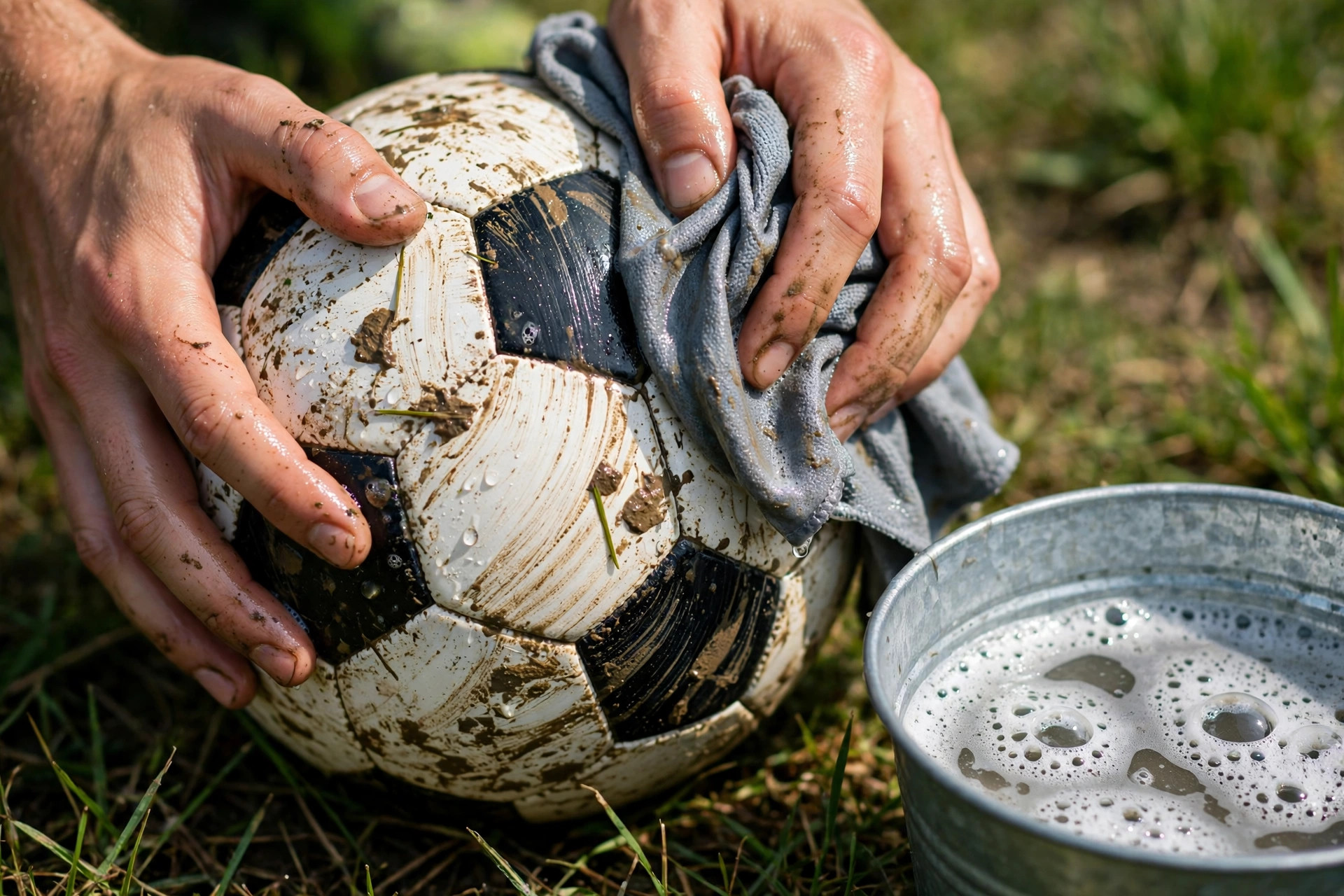
Start by knocking or brushing off loose dirt and grass while the ball is dry, because wet mud smears. Then wipe the whole ball with a cloth dampened in warm water with a drop of mild soap, working around the panels and into the seams where grit collects. Resist the urge to dunk the ball or hold it under a running tap. Water forced through the valve and seams soaks the inner bladder and lining, adds weight, and can leave the ball feeling dead for weeks. A damp cloth cleans the surface, which is the only dirty part. Skip harsh cleaners, bleach and stiff brushes. They strip the outer coating that gives the ball its grip and weather resistance. Finish by drying the ball with a towel, then letting it air-dry at room temperature, away from radiators and direct sun, before it goes back in the bag.
How to Store Soccer Balls Between Games
Knowing how to clean soccer balls is only half the job, because storage does as much damage as dirt when it is done badly. For balls in weekly use, keep them inflated to their normal pressure and store them indoors at room temperature, ideally on a shelf or in a mesh bag where air can circulate. For a long off-season break, let out a little air, roughly half, so the bladder and seams rest without pressure, and store the ball somewhere dry. Never leave balls in a hot car trunk or a freezing garage for weeks: heat softens and warps panels, and cold makes the outer coating brittle and prone to cracking. Keep them out of direct sunlight too, since UV fades and weakens synthetic panels, and never store anything heavy on top of a ball, which can leave it permanently out of shape.
Clean Soccer Cones: Disc Cones and Tall Cones
Cones are the easiest gear to clean and the most often skipped, which is why they end up slimy. Shake off the loose dirt, then rinse disc cones under a hose or swish them in a bucket of warm soapy water. Ground-in scuffs on tall cones come off with a soft brush. Let cones dry fully before stacking them. Stacking damp disc cones traps moisture between them, and they can stick together and grow mildew spots over a winter. Store them stacked on a cone carrier strap or threaded onto a length of cord, or loose in a mesh bag that lets them breathe. If a set is cracked beyond saving, the durable sets in our best sports and soccer cones guide are the ones built to survive exactly this weekly wash-and-stack routine.
Portable Soccer Goal Care: Frames and Nets
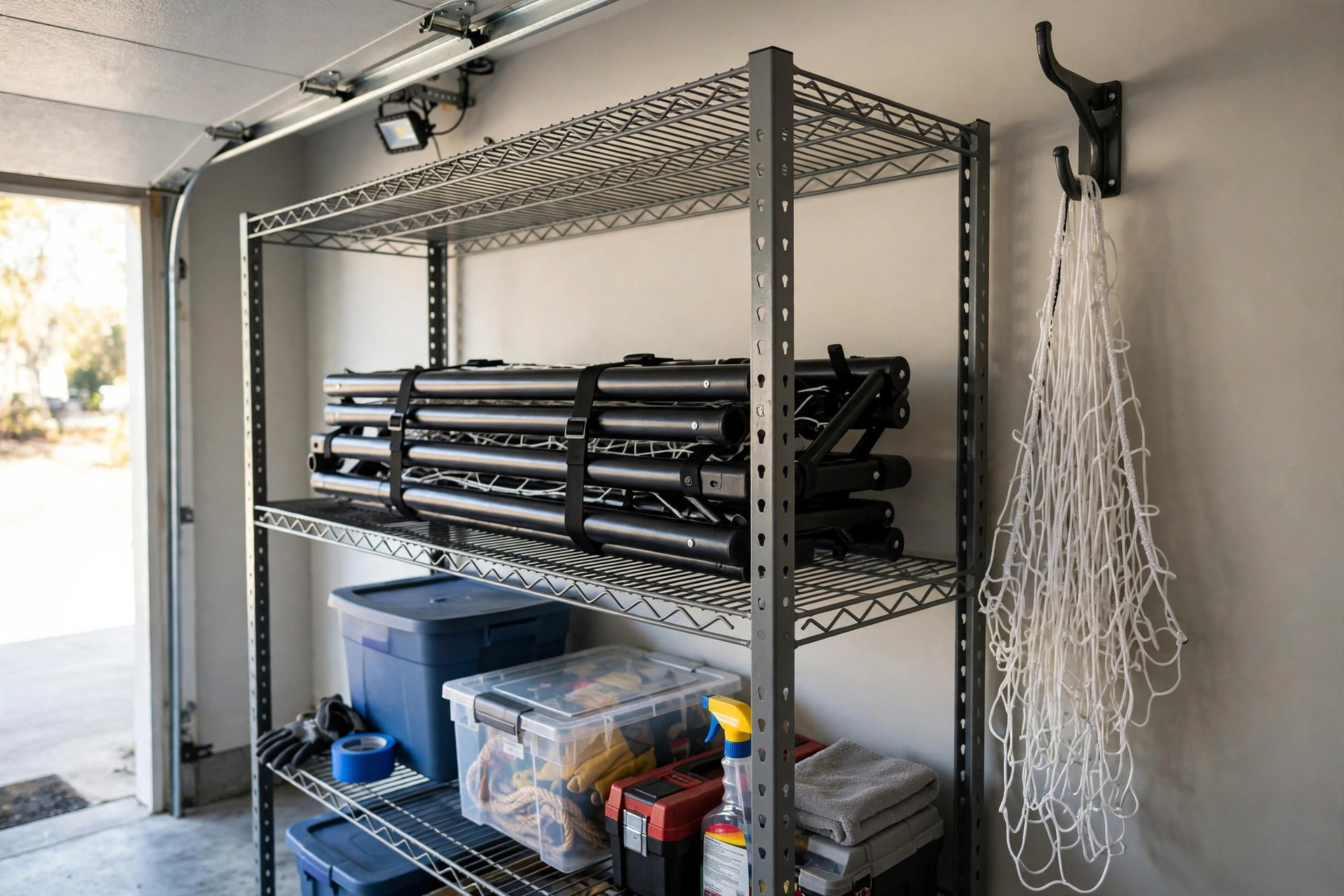
Portable goals fail at the joints and the net, rarely in the middle of a frame tube. Wipe frames down with a damp cloth after muddy sessions, and check push-button joints, clips and corner pieces for grit before you fold the goal away, because trapped grit grinds the fittings loose over time. Nets need a gentler routine: a hose rinse, mild soap only if they are genuinely filthy, and a full dry before storage. A net folded away damp will mildew, and mildew weakens the fibres even when the smell washes out. Store the folded frame off damp floors, on a shelf or hung on hooks, with the net loosely folded or hung rather than compressed into a ball. The folding designs in our roundup of the best portable soccer nets and goals come apart in minutes, which makes this kind of storage realistic instead of a chore.
Pumps, Needles and the Small Stuff
The smallest items cause the most frustrating failures. A bent inflating needle, or a lost one, turns a flat match ball into a crisis, so keep two spare needles in a small hard case stored with the pump, not loose in a kit bag. Moisten the needle with water or a little petroleum jelly before inflating. A dry needle tears the valve, and a damaged valve is the one ball fault that cleaning and storage cannot fix. Wipe the pump down, keep it indoors, and check ball pressure as part of your routine: a correctly inflated ball plays better and wears more evenly than a soft one being kicked hard to compensate.
Soccer Equipment Storage Tips for the Off-Season
Before the long break, run the full routine one last time, from how to clean soccer balls, cones and goals to drying every piece properly, then store it all as a single kit: balls lightly deflated, cones stacked and bagged, goal folded with its net and pegs in one place, pump and needles in their case. Label the bag or bin. It sounds fussy, but the first session of next season starts on time when nobody is hunting for the needle case or discovering the net is still damp from October.
Do one mid-break check if gear lives in a garage or shed. A quick look for damp, pests and mildew in midwinter is far cheaper than replacing a net in spring.
Frequently Asked Questions
How often should you clean a soccer ball?
Wipe it down after muddy or wet sessions, and give it a proper soapy-cloth clean whenever dirt builds up in the seams, which for most youth players means every few weeks. A ball used on dry grass or turf in good weather needs far less attention than one used through a wet winter season.
Can you wash a soccer ball with water?
Yes, but wipe it rather than soak it. A cloth dampened with warm water and a drop of mild soap removes dirt without forcing water through the seams and valve. Submerging a ball or hosing it down can soak the inner layers, adding weight and shortening its life, so keep the water on the surface only.
How do you stop soccer gear going moldy in storage?
Mold needs moisture, so the whole answer is drying. Clean the gear, let it air-dry completely at room temperature, and only then store it, ideally in a mesh bag or open bin where air moves. Never seal damp balls, cones or nets in a plastic bag or a closed car trunk, which is where most mold starts.
Should soccer balls be stored inflated or deflated?
Both, depending on the gap. Balls in weekly use stay inflated to normal pressure so they are ready to play. For a break of a month or more, let out about half the air so the bladder and seams rest, and top the ball back up before the first session back. Avoid storing a ball fully deflated and crushed under other gear.
What is the best way to store soccer gear in a garage?
Get it off the floor and away from the door. Use a shelf, hooks or a lidded bin on a raised platform, keep nets and balls out of direct sun from windows, and choose the most temperature-stable corner you have. If the garage freezes hard or bakes in summer, an indoor cupboard is kinder to balls and nets.
Final Thoughts
None of this is complicated: rinse off the dirt, dry everything properly, and store it indoors, dry and out of the sun. Ten minutes of care after a session is the cheapest upgrade in youth soccer, because the gear you already own simply keeps working. Master how to clean soccer balls and the rest of the kit, and replacement shopping becomes a rare event instead of a seasonal one.

Dribbling Drills Kids Can Do Alone in a Driveway
How to Set Up a Portable Soccer Goal Safely (Anchors Matter)