How to Set Up a Portable Soccer Goal Safely (Anchors Matter)8 min read
A portable soccer goal takes about ten minutes to put up, and only a gust of wind or one climbing child to knock down if nobody anchors it.
The lightness that makes it easy to carry also makes it a genuine tip-over hazard.
That is fixable in minutes. The right anchor for your surface, a quick stability check, and a few habits that never change will keep the goal upright through seasons of backyard games.
If you are still choosing a goal, our roundup of the best portable soccer nets and goals notes which models include anchors in the box and which need them bought separately.
Why Anchoring a Portable Soccer Goal Is Not Optional
Unanchored goals tip. It happens when wind catches the net like a sail, when a player hangs on the crossbar, or when a hard shot rocks a light frame on uneven ground. Safety bodies and leagues treat anchoring as mandatory for exactly this reason. A falling goal is heavy enough to seriously injure a child, and nearly every reported tip-over involves a goal that was never secured. The anchor is not an accessory; it is part of the setup, every single time. Make it a simple rule in your house: the goal is not ready until it is anchored and tug-tested. Players can wait the extra two minutes.
Anchor Types at a Glance
Match the anchor to your surface. Here are the four common options, with the ground each one suits.
| Anchor Type | Best Surface | Notes |
|---|---|---|
| Ground stakes / spikes | Grass and soil | Push or drive in at a backward angle over the frame’s base; the standard fix for most backyards |
| Sandbags | Concrete, turf, indoors | Draped over the rear base bar; the go-to option where nothing can go into the ground |
| Auger anchors | Firm grass and soil | Screw deep into the ground and strap to the frame; the strongest hold, slower to move |
| Weighted base frames | Any flat surface | Bases filled with sand or water; heaviest option, best for semi-permanent spots |
Whichever type you use, secure the back of the frame, because that is where a tipping goal pivots from. Follow the goal manufacturer’s guidance on anchor count and placement for your model.
Step-by-Step: Setting Up Your Portable Soccer Goal
- Pick level ground. Walk the spot first. Move the goal rather than play on a slope or over holes and roots that rock the frame.
- Assemble the frame fully. Push every joint home and attach the net before you position the goal. A half-seated pole works loose during play.
- Position the goal. Face it away from windows, fences, and garden beds, with clear space behind it for overhit balls.
- Anchor it. Fit the anchors for your surface, as covered in the sections below. Both rear corners, every time.
- Tug-test it. Push and pull the crossbar and posts firmly from a few angles. The goal should not lift, shift, or rock.
- Check the net. Tighten loose net clips so balls do not tangle players, and clear any trip hazards around the base.
That sequence takes under ten minutes once you have done it twice. Skipping step 4 or 5 is where nearly all problems start.
Ground Stakes and Spikes: The Standard Fix
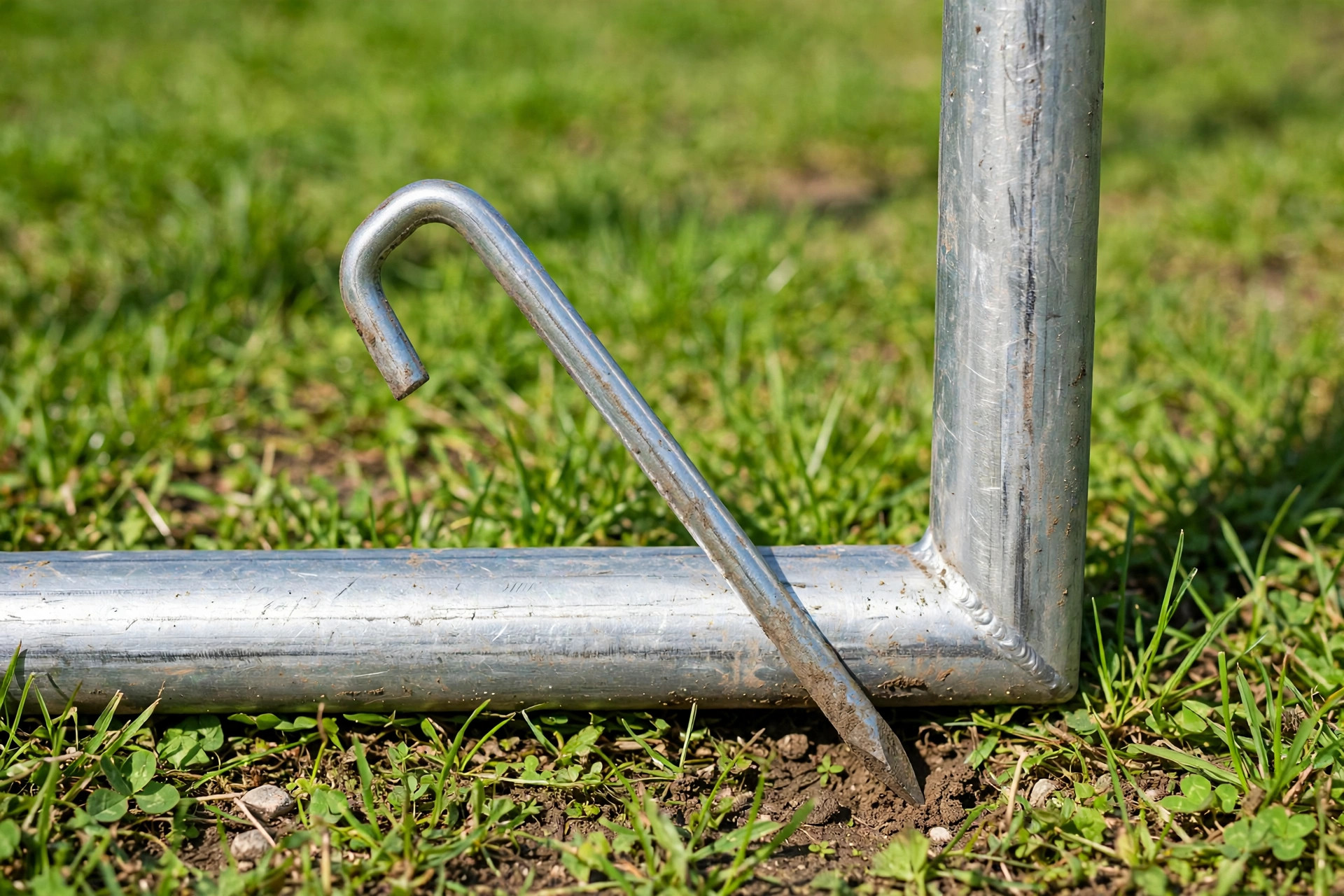
Most portable goals ship with ground stakes, and on grass they are all most families need. Push each stake through or over the frame’s base bar at the rear corners, angled slightly away from the goal so it resists pulling straight out. On soft or wet soil, standard short stakes can work loose. Longer stakes, or an extra stake per corner, hold far better. Re-seat stakes after heavy rain, because softened ground lets them creep. Learning how to anchor a soccer goal properly is mostly this: the stake only works if the ground grips it. If you can pull a stake out easily by hand, the goal is not anchored yet.
Sandbags: The Answer for Hard Surfaces
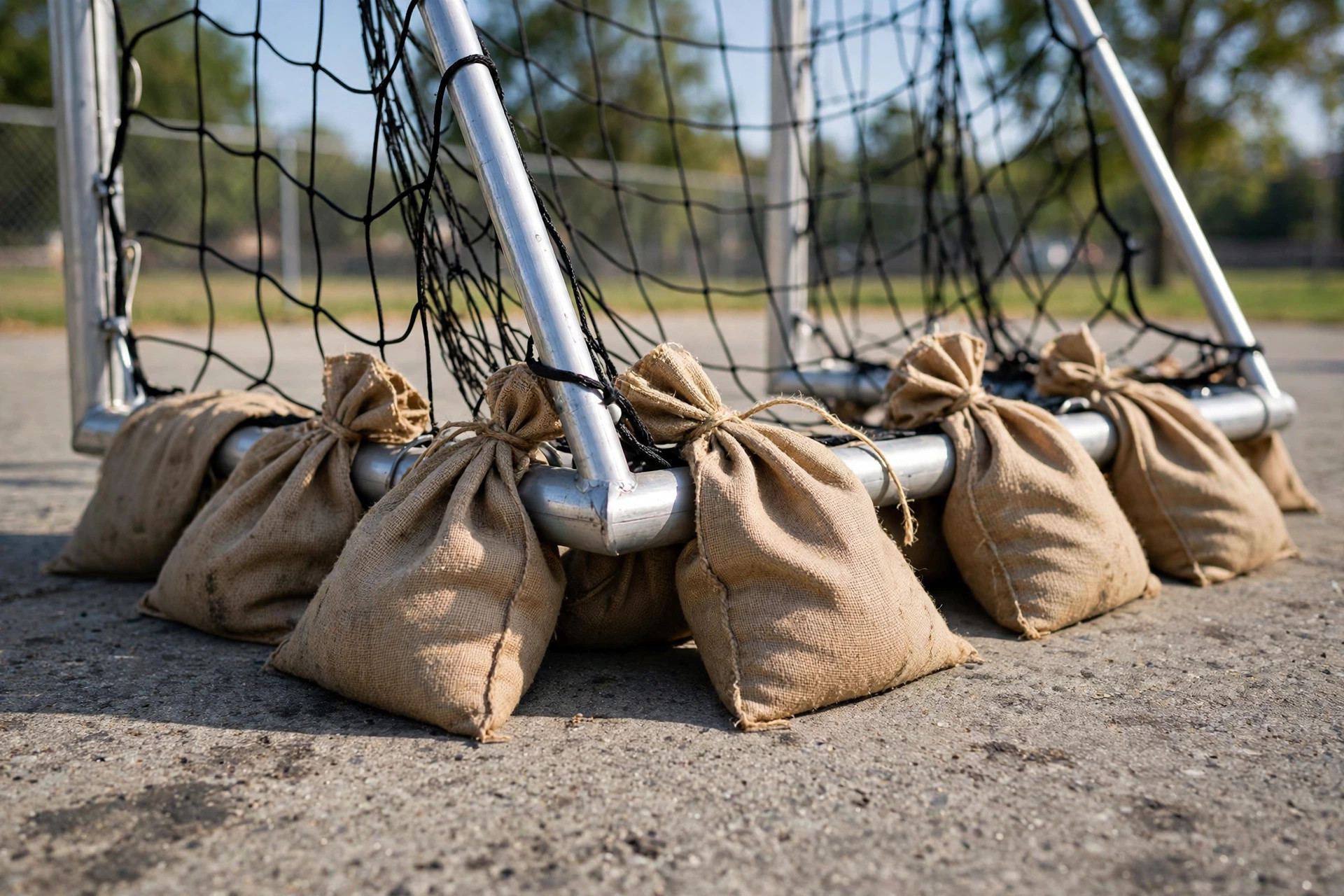
On concrete, artificial turf, or indoors, nothing goes into the ground, so weight has to do the work. Sandbags draped over the rear base bar are the standard solution, and most goal makers sell or specify them for hard-surface use. Use bags made for the job, with no rips that leak sand onto the playing surface. Place them on the back bar, not the side posts, because the goal tips forward and the rear weight is what stops it. Check the bags when you tug-test. If the frame still lifts at the back, add another bag rather than hoping for the best. Portable goal safety on hard surfaces lives or dies on rear weight.
Auger Anchors and Weighted Bases: When Stakes Are Not Enough
Auger anchors screw into the ground like oversized corkscrews, then strap or clip to the frame. On firm soil they hold better than any stake, which makes them the choice for bigger goals, windy gardens, and goals that stay in one place for weeks. Weighted base frames go the other way: the goal’s own base tubes or trays fill with sand or water. They work on any flat surface and suit semi-permanent spots, but a filled base makes the goal heavy, so plan on two adults to move it. Both options cost more than stakes or sandbags. For a small goal on sheltered grass they are overkill; for a large goal in an exposed yard, they are cheap insurance.
Moving, Storing and Off-Season Care
Move a portable goal carefully, with two people for anything beyond the smallest sizes. Lift it, never drag it: dragging bends base bars and tears nets, and a dragged goal can tip onto the person pulling it. Before storing, rinse mud off the frame, let the net dry fully, and check poles and joints for bends or cracks. Store the goal under cover, with the anchors kept in the same bag so next season’s setup starts complete. If a frame does bend or a net tears beyond repair, the folding replacement models in our best portable soccer nets and goals guide list frame and anchor details worth comparing before you buy.
Safety Rules That Never Change
Anchors do most of the work, but habits finish the job. These rules apply to every goal, on every surface:
- Anchor before every use, even for a ten-minute kickabout, and re-check after moving the goal.
- Never climb or hang on the goal. No swinging on the crossbar, no sitting on the frame, ever.
- Take the goal down or secure it extra in high wind, and never leave it unanchored overnight in a storm.
- Keep the area behind the goal clear of players and spectators; a line of cones from our best sports and soccer cones guide makes a visible boundary for younger kids.
- Inspect before play. Bent poles, frayed nets, and loose anchors get fixed before the game, not after.
- Supervise young children around the goal at all times, including while it is being set up or moved.
Frequently Asked Questions
Do you really need to anchor a portable soccer goal?
Yes, every time you use it. A portable goal is light enough for wind, a climbing child, or a hard shot to tip, and tip-overs are how these goals cause injuries. Anchoring with stakes, sandbags, or auger anchors takes two minutes and is part of setting the goal up, not an optional extra.
How do you anchor a soccer goal on concrete or turf?
Use weight instead of stakes. Drape sandbags over the rear base bar, or choose a goal with a weighted base frame you can fill with sand or water. Add bags until a firm tug on the crossbar does not lift the back of the frame, and follow the manufacturer’s guidance for your model.
How many sandbags does a portable goal need?
Follow the weight guidance in your goal’s manual, because it varies with goal size and frame design. As a working rule, start with a bag on each rear corner and tug-test the crossbar. If the back of the frame lifts or shifts, add more weight until it stays planted.
Can kids climb on a portable soccer goal?
No. Climbing and hanging on the crossbar is the classic way these goals tip over, and the falling frame can cause serious injury. Set the rule from day one: the goal is for scoring, not climbing. If children want to climb, that is what playgrounds and climbing frames are for.
How do you move a portable soccer goal without damaging it?
Lift it with two people for all but the smallest goals, keeping the frame level as you walk. Never drag it by the net or one post, which bends base bars and can tip the goal onto you. Remove the anchors first, carry them separately, and re-anchor fully in the new spot.
Final Thoughts
Setting up a portable soccer goal safely comes down to one habit: anchor it every time, then tug-test before anyone plays. Match the anchor to your surface, stakes on grass, sandbags on hard ground, augers where wind and size demand more, and the goal stops being a hazard. Add the standing rules, no climbing, clear space behind, inspect before play, and a backyard soccer goal setup stays safe season after season.
Soccer Goalkeeper Basics for Kids Who Just Got Put in Goal

7 Best Portable Soccer Nets and Goals to Buy